 info@unicomposite.com


Introduction
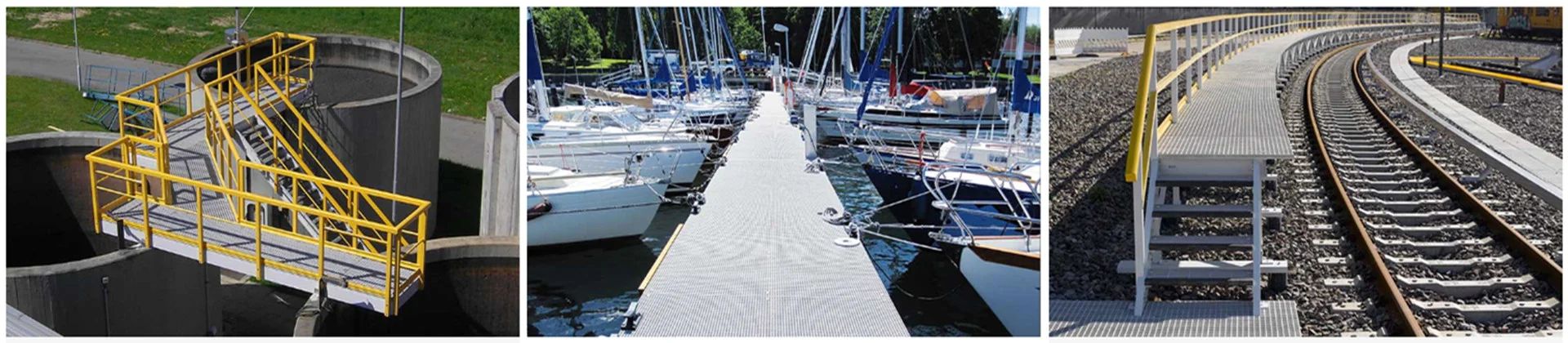
Inflation, volatile metals pricing, and tighter municipal budgets make 2026 the year every pier, marina, and plant walkway gets audited for decking panels fiberglass versus aluminum. Last April I joined a crew replacing corroded metal planks on a Gulf Coast ferry dock. Three deckhands carried a 12-ft fiberglass panel like a surfboard—no crane, no slings—then slid it into place in under two minutes. The aluminum section we removed had required a jib hoist the day before. That 20-minute contrast became my “aha” moment: weight drives labor, and labor drives cost.
“Across 47 projects we tracked, owners saved 22–38 % on first-year spend with fiberglass,” says Chen Wei, Applications Engineer at Unicomposite. The ISO 9001-certified pultrusion specialist is a member of the American Composites Manufacturers Association (ACMA) and sends its panels to TÜV Rheinland for third-party mechanical testing—credentials that matter when bids are scrutinized.
This guide puts real numbers—materials, freight, labor, maintenance—behind the price tags so you can justify your spec to finance.

decking panels fiberglass
Understanding the Two Materials
Composition & Manufacturing Process
-
Fiberglass decking panels are pultruded bundles of E-glass fibers locked in vinyl-ester or polyester resin and topped with a silica-grit wear layer. Continuous pulling keeps scrap to 2–3 % (CompositesWorld Pultrusion Report, 2026).
-
Aluminum panels start as 6000-series billets extruded, anodized, and sometimes powder-coated. Extrusion scrap averages 7 % (Aluminum Association Q2 2026 Market Report).
Typical 2026 Applications & Load Classes
| Sector | Fiberglass sweet spot | Aluminum sweet spot |
|---|---|---|
| Municipal boardwalks | Pedestrian loads ≤ 100 psf | Decorative handrails |
| Offshore energy | Chemical-corrosive decks | Heat-sink plates |
| Theme parks | Splash-zone platforms | Structural sub-frames |
Price Landscape for 2026
Raw Material Cost Trends
-
Glass fiber yarn ↑ 4 % YoY; resin flat as two Asian plants came online.
-
Aluminum ingot fluctuated $2,150–2,600 / t in H1 2026—an 18 % swing that lands in every supplier quote (LME Metals Data, July 2026).
Freight, Tariffs, & Currency Impacts
-
40-ft container China → US West Coast: $2,700 (Drewry Index, May 2026). Pultruded panels nest to load 25 % more deck area per box than aluminum.
-
Section 232 tariff keeps aluminum +10 %; fiberglass (HTS 7019) remains duty-free.
-
RMB depreciation of 3 % since January offsets resin upticks on China-origin FRP.
Pro tip: Book ocean freight 90 days out; peak-season surcharges hit both materials but bite harder when panels are heavier.
Total Cost of Ownership (TCO)
Installation Labor & Hardware
-
Fiberglass weighs 35–50 % less than aluminum for equal span, eliminating cranes on many jobs and trimming permits.
-
FRP clips in matching material or stainless; aluminum often needs neoprene isolation pads to avoid galvanic corrosion (+ $1.20 / sq ft).
Maintenance & Cleaning Schedules
| Task | Fiberglass | Aluminum |
|---|---|---|
| Pressure-wash | 2× year | 2× year |
| Re-anodize / topcoat | N/A | Every 8–10 yrs |
| Anti-slip refresh | ~15 yrs | 5–7 yrs |
A 2026 MarinaDockAge survey of 120 U.S. facilities shows FRP owners spend $0.38 / sq ft-yr, versus $0.87 / sq ft-yr for aluminum.
Service Life & Residual Value
A 2024 U.S. Army Corps of Engineers study comparing pier materials found pultruded FRP retained >90 % flexural strength after 20,000 hrs salt-fog exposure, while aluminum lost 8 % from pitting. Aluminum’s scrap value (~$0.30 / lb) narrows the gap but does not erase FRP’s net-present-value edge of 17 % over 20 years.
Performance Factors That Influence Cost
Strength-to-Weight & Deflection
Pultruded panels regularly hit 100 ksi tensile strength at ≤ 4 lb / ft, matching 6063-T6 extrusions at half the mass—allowing smaller sub-framing and a further 5 % steel savings.
Corrosion, UV, & Slip Resistance
-
Vinyl-ester FRP survives 25+ ASTM B117 cycles without blistering.
-
Aluminum’s oxide skin protects inland installs but pits in chloride > 1,000 ppm. After Hurricane Isla, Gulf Coast Port Authority reported aluminum treads “white-rusted” while fiberglass rinsed clean.
Fire Ratings & Compliance Costs
Both materials can meet ASTM E-84 Class A. Aluminum may require FR powder coating; FRP integrates halogen-free additives at manufacture—no premium.
Safety & Compliance
-
OSHA 29 CFR 1910.22 mandates a floor-surface static-coefficient ≥ 0.5. Grit-top FRP panels test at 0.76 wet, outperforming anodized aluminum at 0.44 wet (Intertek Report #22-1087, 2024).
-
Unicomposite panels carry UL 94 V-0 resin certification and are audited annually by TÜV Rheinland.
Case Study: Waterfront Boardwalk Retrofit
Project Background & Bid Breakdown
-
Location: Baltimore Inner Harbor, 2023–2026 rehab
-
Deck area: 18,000 sq ft, 8-ft spans
-
Bids: Fiberglass $24.50 / sq ft (Unicomposite); Aluminum $26.70 / sq ft (domestic mill).
Two-Year OPEX Comparison
| Category | Year 1 | Year 2 | Total |
|---|---|---|---|
| FRP cleaning & inspections | $5,800 | $5,900 | $11,700 |
| Aluminum cleaning + paint touch-ups | $9,200 | $9,300 | $18,500 |
$6,800 saved in two seasons eclipsed FRP’s initial bid advantage.
Lessons Learned
Harbor Engineer Marcus Bell notes, “We’d budgeted a ten-year recoating cycle with aluminum; switching to fiberglass freed that capital for lighting upgrades.”
How to Optimize Your Procurement
Bulk-Buy & Long-Term Contracts
Aggregate regional piers into one RFQ to unlock 5–8 % volume discounts. Peg pricing to the ResinTech FRP index, not CPI, to insulate against aluminum volatility.
Leveraging ISO-Certified Suppliers Like Unicomposite
Unicomposite’s pultrusion, machining, and ACMA membership shorten lead times and deliver cut-to-length panels that trim 12 % site labor. Independent strength tests by TÜV Rheinland support public-safety permit packages.
Checklist Before Issuing an RFQ
-
Live-load & deflection requirements?
-
Corrosion environment classification?
-
Fire-rating target?
-
Delivery window & Incoterm?
-
Embedded wear surface or field-applied?
Conclusion
Material price is the headline, but freight, labor, and 20-year upkeep write the real story. Crunching those numbers shows fiberglass decking panels routinely beat aluminum by 15–30 % in lifecycle cost while delivering higher slip resistance and corrosion resilience. Engage engineering support early, request sample profiles, and run a total-cost model—your CFO will thank you.
Ready for hard numbers on your own dock? Email Unicomposite’s tech desk for a free load table and 48-hour quote turnaround.
Frequently Asked Questions
Q1. How long do fiberglass decking panels really last in saltwater?
Laboratory salt-fog tests and 20-year marina records show FRP retains over 90 % of its strength, translating to a service life of 25–30 years in marine environments.
Q2. Can fiberglass panels handle heavy vehicle loads?
Yes. Pultruded FRP panels can be engineered for HS-20 truck loads; specify span and load data in your RFQ to receive the correct section modulus.
Q3. Are fiberglass decks slippery when wet?
Grit-top surfaces achieve a wet SCOF around 0.76, exceeding OSHA’s 0.5 guideline and outperforming anodized aluminum.
Q4. What customization options are available?
Suppliers like Unicomposite offer cut-to-length, embedded color, integrated curbs, and pre-drilled fastening locations to speed installation.
Q5. How does recycling work at end-of-life?
Aluminum has scrap value, while FRP can be processed into cement-kiln fuel or ground for filler; lifecycle cost analyses still favor FRP once disposal fees for coated metal are considered.


