Fiberglass Driveway Markers and Snow Stakes Guide

time:2026-5-26

Introduction

When snow covers a driveway, curb, parking lot edge, or roadside boundary, a simple line on the ground disappears. For snow removal contractors, municipal crews, property managers, and distributors, that creates a costly operational problem.

Plow operators need to know where pavement ends, where curbs begin, and where hidden obstacles sit below snowpack. Fiberglass driveway markers and snow stakes help solve that problem with a lightweight, flexible, reflective marking solution that can be installed before winter and reused across seasons.

This guide explains what fiberglass driveway markers are, where they are used, how they compare with plastic, steel, and wood markers, and what B2B buyers should confirm before placing a bulk or custom order.

Fiberglass Driveway Markers and Snow Stakes Guide

fiberglass driveway markers and snow stakes

What Are Fiberglass Driveway Markers?

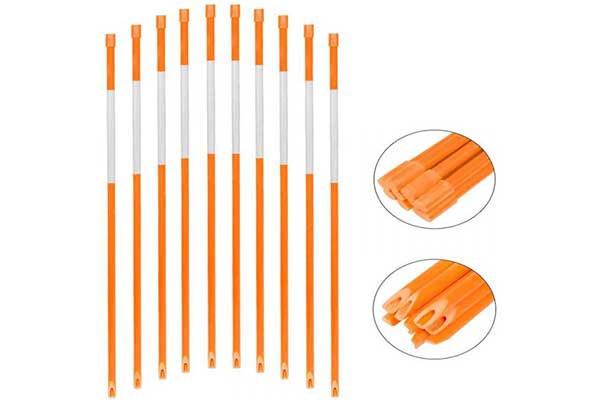
Fiberglass driveway markers are rod shaped outdoor markers used to identify driveways, road edges, curbs, parking lot islands, property boundaries, and snow removal zones. Many markers include reflective tape or reflective caps so drivers and equipment operators can see them at night, in snowfall, or under low visibility conditions.

The core material is usually pultruded fiberglass. In pultrusion, continuous glass fiber reinforcement is combined with a resin system and formed into a consistent rod profile. This gives the marker a useful balance of flexibility, strength, weather resistance, and lightweight handling.

What are driveway markers used for?

Driveway markers are used to show the visible edge of pavement, curbs, lawns, sidewalks, parking areas, road shoulders, and snow removal routes. They help snow removal crews and drivers avoid property damage when pavement edges are covered by snow, ice, leaves, or poor lighting.

In field use, crews often install markers before the first major snow event. This gives plow operators a clear reference line before curbs, drainage edges, mailbox lines, and landscape borders disappear under snow.

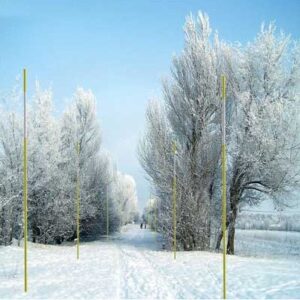
A common starting placement range is every 10 to 15 feet along straight driveway edges. Curves, entrances, curb returns, parking lot islands, loading zones, and high risk property edges usually need closer spacing.

Why fiberglass works well for snow stakes

Fiberglass works well for snow stakes because it can flex under contact, resist moisture, and avoid rust. A marker that bends when brushed by snow equipment may survive minor impact better than a rigid marker.

Weather resistance still depends on specification quality. Resin quality, UV resistance, rod diameter, glass fiber reinforcement, reflective tape adhesion, tape placement, and installation depth all affect performance.

For distributors, contractors, and municipal buyers, fiberglass markers also offer strong specification control. Length, diameter, color, reflective tape, packaging, labels, and bundle quantity can be standardized for repeat seasonal purchasing.

Key Benefits of Fiberglass Driveway Markers and Snow Stakes

Beyond simple marking, fiberglass snow stakes support safer and faster winter operations. The strongest value appears when buyers manage many sites, repeated snow events, or seasonal service contracts.

Better route visibility for snow removal crews

Reflective fiberglass markers help operators identify driveways, parking lot edges, curbs, and traffic islands under snow cover. Bright orange markers are common because they contrast clearly against snow and are easy to recognize as safety markers.

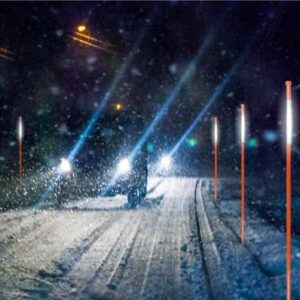
For night work, reflective tape improves marker visibility under headlights, plow lights, and site lighting. This can help crews create cleaner plow lines and reduce curb strikes, lawn damage, and hidden obstacle contact.

In a typical commercial snow removal route, crews often mark curb returns, landscaped islands, loading zones, drainage edges, fire lane boundaries, and mailbox lines first. These areas create the highest damage risk once snow covers the ground. A consistent marking plan helps operators understand the site faster and reduces guesswork during storms.

Weather resistance and seasonal durability

Fiberglass driveway markers are designed for wet, cold, and outdoor environments. Unlike steel, fiberglass does not rust. Unlike wood, it does not rot in the same way under repeated moisture exposure.

Common marker lengths include 4 ft, 5 ft, 6 ft, and 8 ft. Longer markers improve visibility in deep snow areas. Shorter markers may suit residential driveways, parking lots, and lower snow regions.

Durability varies by product design. Buyers should confirm rod diameter, resin quality, UV package, reflective tape width, tape adhesion, and carton packing before ordering large quantities. These details often determine whether a marker performs reliably through repeated installation, removal, storage, and reuse.

Flexible, lightweight, and reusable

Fiberglass markers are lightweight enough for fast seasonal installation. A contractor crew can carry bundles around a property and place markers along edges without heavy equipment.

The flexibility of fiberglass helps the marker absorb light contact. This does not mean every marker will survive every impact, but it gives fiberglass an advantage in many driveway and snow removal applications.

Reuse depends on handling. After winter, crews should remove markers carefully, clean soil from the lower end, check reflective tape condition, and store them in straight bundles. Organized storage reduces replacement pressure before the next season.

Fiberglass vs Plastic, Steel and Wood Markers

Material choice affects initial cost, visibility, breakage risk, maintenance, and seasonal replacement. The table below compares common marker materials used for driveways, snow removal, and outdoor boundary marking.

Marker Material Visibility Options Durability Weather Resistance Maintenance Best Use
Fiberglass Bright colors, reflective tape, custom colors Flexible with good impact tolerance Strong resistance to moisture, UV exposure, and corrosion when specified well Low, with seasonal inspection Driveways, snow stakes, highway markers, parking lots, commercial properties
Plastic Bright colors and some reflective options Quality varies, some types become brittle in cold weather Moderate Low initial effort, higher replacement risk Low cost temporary marking
Steel Reflective options available Strong but rigid Can rust if coating fails Medium to high in wet environments Fixed marking where corrosion and impact are controlled
Wood Painted or plain Can crack, split, or rot Limited in wet winter use Medium Temporary or low demand marking

For many seasonal marking programs, fiberglass provides the best balance of visibility, flexibility, corrosion resistance, and reusable value. Plastic can reduce upfront cost. Steel can suit fixed, rigid installations. Wood may work for temporary marking, but it usually lacks the consistency needed for larger professional programs.

The right choice depends on the job site. A municipal roadside marker, commercial parking lot marker, and residential driveway marker may require different length, diameter, color, and reflectivity.

Common Applications

After selecting the material, buyers should match marker specifications to the operating environment. Fiberglass driveway markers and snow stakes serve several winter and outdoor marking needs.

Residential and commercial driveways

Driveways are the most familiar application. Markers help drivers and plow operators identify pavement edges, lawn borders, curbs, drainage channels, mailbox lines, and landscape features.

Straight residential driveways may use wider spacing. Commercial entrances, curved drives, loading areas, and high traffic property edges often require closer marker placement for better route guidance.

Snow removal contractors

Snow removal contractors use fiberglass snow stakes to protect client property and speed up route orientation. A marked property reduces uncertainty during night work and repeated snowfall.

Contractors often prefer high visibility orange markers with reflective tape. For these buyers, packaging matters. Carton quantity, bundle size, pallet packing, and fast unloading can affect how efficiently crews prepare for the season.

Parking lots, roadsides and municipal marking

Parking lots and municipal areas require consistent marking across larger spaces. Fiberglass markers can identify traffic islands, curbs, road shoulders, fire lanes, sidewalks, drainage edges, pedestrian areas, and maintenance zones.

For roadside or public projects, buyers should check local requirements for color, height, reflectivity, spacing, and placement. Public road applications may require additional compliance review before procurement.

Agricultural and landscape marking

Fiberglass markers can also support agricultural boundaries, irrigation points, tree rows, landscape zones, temporary safety zones, and outdoor site identification.

This broader usability makes fiberglass markers useful for distributors and OEM buyers serving multiple customer groups. One rod design can often support driveway, winter, agricultural, and light industrial marking programs when dimensions and packaging are selected carefully.

How to Choose the Right Fiberglass Snow Stake

The correct snow stake depends on snow depth, ground type, visibility needs, and installation method. Buyers should evaluate the full specification, not only the unit price.

What length and diameter should buyers choose?

Buyers should choose marker length based on expected snow depth, desired visible height, and installation depth. Common lengths include 4 ft, 5 ft, 6 ft, and 8 ft.

A 4 ft marker may work for residential driveways or moderate snow conditions. A 5 ft or 6 ft marker often suits commercial properties and snow removal contractors. An 8 ft marker may be better for deeper snow areas, roadside marking, or higher visibility needs.

Diameter affects stiffness, flexibility, handling, and ground holding. A thicker rod may stand more firmly in some ground conditions. A slimmer rod may be easier to install and more flexible under light contact.

Color, reflective tape and tape placement

Orange is widely used because it stands out against snow and signals caution. Other colors, such as red, yellow, blue, green, or custom colors, may be used for site systems, customer branding, or product differentiation.

Reflective tape should be specified clearly. Buyers should confirm tape color, tape width, single side or double side placement, tape height, adhesion quality, and outdoor durability.

For commercial snow programs, consistent tape placement makes installed markers look professional and easier to identify under headlights.

Ground conditions and spacing

Soft soil, frozen ground, gravel shoulders, asphalt edges, and landscaped areas all affect installation. In hard ground, crews may need pilot holes or installation tools to reduce rod damage.

Spacing should follow the site layout. The 10 to 15 foot range is a practical starting point for many straight edges. Curves, entrances, curb returns, hidden obstacles, parking islands, and high damage risk zones need closer spacing.

Buying Guide for B2B Buyers

Procurement teams need consistent products, usable packaging, reliable shipment, and clear customization options. A strong RFQ helps suppliers quote the right marker and avoid specification mistakes.

What should buyers confirm before ordering?

Buyers should confirm length, diameter, color, reflective tape, tape placement, material, quantity, carton quantity, pallet packing, labels, delivery schedule, and application.

The table below summarizes practical RFQ details for bulk and custom orders.

RFQ Item What to Specify Why It Matters
Length 4 ft, 5 ft, 6 ft, 8 ft, or custom Controls visibility above snow
Diameter Standard or custom rod diameter Affects stiffness, flexibility, and ground holding
Color Orange or custom color Supports safety marking and brand needs
Reflective tape Tape color, width, side, and placement height Improves night visibility
Quantity Pieces, cartons, pallets, or annual volume Supports accurate bulk pricing
Packaging Bundle size, carton size, pallet packing Improves storage, unloading, and distribution
Application Driveway, highway, parking lot, agriculture, municipal use Helps match specification to environment
Custom needs Logo, label, private label carton, cut length Supports distributors and OEM programs

Supplier quality and production consistency

A reliable supplier should control rod diameter, straightness, color, reflective tape placement, package count, and repeat order consistency. These details matter when buyers supply contractors, retailers, municipal users, or seasonal distributors.

Unicomposite Technology Co., Ltd. manufactures fiberglass and FRP composite products in Nanjing, China, with ISO 9001 certification and an 18,000 square meter facility. Its manufacturing capabilities support fiberglass rods, driveway markers, snow stakes, plant stakes, and other pultruded composite profiles. For B2B buyers, this means custom pultrusion, repeat production consistency, export packaging, and distributor or private label packaging can be discussed during the RFQ stage.

Common purchasing mistakes to avoid

The most common mistake is ordering only by length and price. Two fiberglass markers can look similar but perform differently because of rod diameter, resin quality, UV resistance, reflective tape quality, and packaging protection.

Buyers should also avoid unclear requests such as “orange snow stakes” without specifying tape, diameter, carton count, and application. A complete specification helps reduce delays, sample revisions, and seasonal supply problems.

Installation and Maintenance Tips

Even a well made marker performs better when installed correctly. Installation quality affects stability, visibility, reuse, and breakage rate.

Fiberglass Driveway Markers and Snow Stakes Guide

fiberglass driveway markers and snow stakes 2

How far apart should driveway markers be?

Driveway markers are commonly placed every 10 to 15 feet along straight driveway edges. Installers should use closer spacing near curves, entrances, curbs, drainage areas, mailbox lines, parking islands, and other high risk locations.

For large commercial lots, crews should mark the highest damage areas first. These usually include curb returns, landscaped islands, loading zones, fire lanes, drainage edges, and pedestrian boundaries.

How should snow stakes be installed?

Markers should be installed before the ground freezes whenever possible. Crews should place each marker deep enough to stay upright while leaving enough visible height above expected snow levels.

For hard ground, a pilot hole or installation tool can reduce end damage. For larger sites, consistent installation depth helps all markers line up visually and makes the site easier for operators to read during storms.

How should markers be stored after winter?

After winter, crews should remove markers carefully, wipe off dirt, inspect reflective tape, and separate damaged pieces. Reusable markers should be stored in straight bundles in a dry area.

Sorting markers by length, color, or customer site can save time before the next season. For contractors managing many properties, labeled bundles can reduce setup time and inventory confusion.

Conclusion

Fiberglass driveway markers and snow stakes help winter operations become safer, faster, and more predictable.

Four procurement takeaways matter most:

Fiberglass markers improve route guidance for driveways, curbs, parking lots, roadsides, and snow removal zones.

Specification quality matters. Length, diameter, color, reflective tape, UV resistance, tape placement, installation depth, and packaging all affect performance.

Spacing should start with the site layout. Straight edges may use wider spacing, while curves, entrances, curb returns, and hidden obstacles need closer placement.

B2B buyers should provide complete RFQ details to improve pricing accuracy, production consistency, packaging efficiency, and seasonal supply planning.

[Contact Unicomposite for a custom fiberglass driveway marker quote →]

Share this article: