 info@unicomposite.com


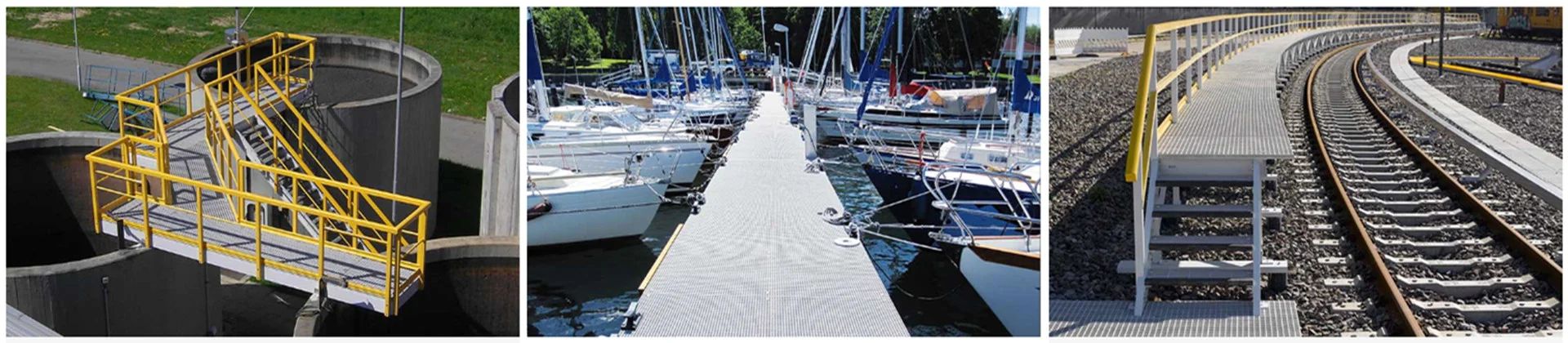
Introduction
Wet platforms, cooling tower walkways, chemical access areas, and marine structures often fail where downtime hurts most. A decking surface may look suitable during design, then become costly after corrosion, slipping risk, fastener wear, coating repair, and replacement labor enter the project.
Fiberglass decking gives engineers and procurement teams a corrosion resistant, lightweight, and customizable FRP option for industrial access systems. This guide explains what fiberglass decking is, where it is used, how it compares with wood, steel, and aluminum, and what buyers should specify before requesting a quote.
The goal is practical selection. Buyers need the right decking type, resin system, surface finish, load rating, span, fastening method, and installation plan before the project reaches the job site.

fiberglass decking
What Is Fiberglass Decking?
Fiberglass decking is a composite decking material made with glass fiber reinforcement and a resin matrix. The reinforcement provides structural strength, while the resin system helps define corrosion resistance, weatherability, surface quality, flame behavior, and chemical compatibility.
How fiberglass decking is made
Most industrial fiberglass decking is produced through pultrusion, molded composite processing, or custom FRP fabrication. Pultruded decking uses continuous glass fibers pulled through resin and a heated die to form constant cross section profiles such as planks, hollow panels, and structural shapes.
Performance depends on more than the word “fiberglass.” Resin type, glass fiber content, profile height, wall thickness, surface treatment, support spacing, and installation quality all influence the final result. A 38 mm profile and a 50 mm profile may behave very differently under the same span and load.
Is fiberglass deck the same as fiberglass decking?
“Fiberglass deck” is often used broadly to describe a deck structure, while “fiberglass decking” usually refers to FRP panels, planks, or profiles used as walking surfaces, platforms, walkways, and industrial flooring. For B2B projects, fiberglass decking is the more precise term for procurement and engineering specifications.
This distinction matters because many searches for “fiberglass deck” have a residential meaning. Industrial buyers usually need information about load capacity, support span, corrosion exposure, slip resistance, fastening methods, and custom panel dimensions.
Common fiberglass decking profile types
Common fiberglass decking options include pultruded hollow decking, open decking, multi leg panels, covered panels, and custom FRP profiles. Each type serves a different structural or access purpose.
Open decking may suit drainage heavy walkways. Covered decking can provide a more continuous walking surface. Multi leg panels can improve stiffness across specific support spans. Custom profiles may be needed for OEM assemblies, cooling tower access routes, or marine structures.
A good specification starts with the environment, then moves to load, span, profile type, resin, and surface.
Key Benefits of Fiberglass Decking
Once buyers understand the product structure, the next decision is whether fiberglass decking solves the project’s real operating problems. In demanding sites, performance usually depends on corrosion resistance, handling weight, maintenance access, electrical properties, and surface safety.
Corrosion resistance in harsh environments
Fiberglass decking resists rust, rot, and many forms of environmental attack. That makes it useful in wastewater plants, chemical processing areas, cooling towers, marine walkways, and other wet or corrosive locations.
In metal decking systems, corrosion often begins near cut edges, fasteners, supports, and areas where water or chemicals collect. FRP decking can reduce that risk when the resin system and installation method match the exposure.
Actual performance depends on resin formulation, glass fiber reinforcement, profile design, UV package, fire retardant system, installation method, and site conditions. Buyers should describe the environment clearly before selecting the panel.
Lightweight structure with practical strength
FRP is much lighter than steel by volume. Many fiberglass structures are commonly described as about one quarter the weight of steel, depending on profile geometry, resin content, fiber reinforcement, and wall thickness.
Lower weight can reduce handling difficulty, support load, shipping burden, and installation effort. This matters in retrofit projects, elevated platforms, remote work areas, and maintenance routes where heavy lifting equipment is difficult to use.
Strength still depends on engineering details. Buyers should confirm live load, concentrated load, support span, deflection limit, traffic type, profile height, and fastening layout before selecting a panel.
Low maintenance over the project lifecycle
Fiberglass decking does not require routine rust painting like steel or anti rot treatment like wood. For procurement teams, that can reduce maintenance labor, shutdown planning, coating work, and replacement frequency.
Initial price only tells part of the story. If a site requires scaffold access, confined area work, or production shutdowns to replace corroded decking, lifecycle cost can matter more than the unit price per panel.
Non conductive performance for utility areas
Fiberglass decking is non conductive, which can be valuable in utility access zones, substations, cable areas, and electrical maintenance platforms. This property helps reduce concerns associated with metal walking surfaces near electrical equipment.
Final electrical performance should be confirmed against the project specification. Fasteners, support frames, handrails, grounding plans, and adjacent metal components also affect the full system.
Slip resistant and customizable surface options
Industrial fiberglass decking can be supplied with grit surfaces, textured surfaces, covered panels, color options, UV packages, and flame retardant resin systems. Wet, oily, or chemical exposed walkways usually need stronger surface grip than dry indoor access areas.
The value is flexibility. Buyers can match the panel to the site condition instead of forcing a generic decking material into a demanding environment.
Fiberglass Decking vs Wood, Steel and Aluminum
Material selection usually comes down to exposure, structural need, installation cost, and long term maintenance. The table below compares common decking materials used in industrial and infrastructure projects.
| Factor | Fiberglass Decking | Wood | Steel | Aluminum |
|---|---|---|---|---|
| Corrosion resistance | Strong in wet and chemical environments with correct resin | Can rot or absorb moisture | Can rust without coating | Good in many environments, limited in some corrosive exposure |
| Weight | Lightweight | Moderate | Heavy | Lightweight |
| Maintenance | Low maintenance | May need sealing or replacement | May need coating and inspection | Moderate |
| Electrical conductivity | Non conductive | Generally non conductive when dry | Conductive | Conductive |
| Slip resistance | Grit or textured options available | Varies by surface | Requires surface treatment | Requires surface treatment |
| Customization | Profiles, colors, resin, surface, size | Easy to cut, limited industrial precision | Strong fabrication options | Good fabrication options |
| Typical use case | Platforms, walkways, cooling towers, marine, utility | Decorative or light duty use | Heavy duty metal structures | Lightweight access structures |
When does fiberglass decking outperform traditional materials?
Fiberglass decking performs best where corrosion resistance, low maintenance, electrical insulation, slip resistance, or lightweight installation matter more than the lowest initial material price. It is especially suitable for wastewater platforms, cooling tower walkways, marine structures, chemical plant access areas, and utility facilities.
In field evaluations, engineers often look beyond the surface panel. They check whether corrosion has started at supports, bolts, clips, panel edges, and drainage points. When those areas drive repair work, FRP decking becomes a stronger lifecycle option.
When wood, steel, or aluminum may still be suitable
Wood can still work for low cost, decorative, or temporary applications. Steel may be preferred for very high impact areas or projects with metal only specifications. Aluminum can fit lightweight access structures where conductivity and chemical exposure are manageable.
The strongest projects match material choice to actual site conditions, maintenance expectations, and safety requirements.
Common Uses of Fiberglass Decking
Fiberglass decking is most useful when access surfaces must stay reliable in wet, corrosive, or electrically sensitive environments.
Industrial platforms and walkways
Factories, warehouses, processing plants, and equipment areas use fiberglass decking for elevated walkways, operating platforms, and service access. Before purchasing, buyers should confirm live load, support span, traffic type, surface grip, and fixing method.
A walkway used only by technicians has different requirements from a platform that carries carts, tools, or maintenance equipment.
Cooling tower walkways
Cooling tower environments expose decking to moisture, chemical treatment residues, airflow, and frequent maintenance access. Resin selection and slip resistant surface design matter in these conditions.
For cooling tower walkways, buyers often need decking that handles wet foot traffic, resists corrosion, and can be installed with consistent panel sizing across repeated access routes.
Chemical and wastewater plants
Chemical and wastewater facilities often use fiberglass decking because metal panels can corrode quickly in splash zones, wet floors, and vapor exposed areas. In one anonymized wastewater access project, a maintenance team replaced coated steel panels after corrosion appeared around fasteners and support contact points in wet service areas.
The team prioritized resin compatibility for the wastewater environment, grit surface for wet foot traffic, support spacing for platform stiffness, and fastener material to avoid creating new corrosion points. FRP decking was approved for the access zones where corrosion maintenance created repeated downtime.
Marine, dock and seawall projects
Marine projects expose decking to salt air, water contact, sun exposure, and slip risk. Lightweight fiberglass panels can simplify handling near docks, seawalls, and access walkways where heavy equipment access may be limited.
Anti slip surface, UV package, resin choice, and fastening material should be confirmed before ordering.
Utility and electrical facilities
For utility facilities, non conductive performance and corrosion resistance are major selection drivers. FRP decking can be used for cable access areas, electrical maintenance platforms, and walkways near equipment zones.
The full system should be reviewed, including supports, fasteners, handrails, grounding plans, and nearby conductive components.
How to Choose Fiberglass Decking for Your Project
A good decking specification starts with site conditions and structural requirements. Product selection should follow the load, span, resin, surface, and installation method.

fiberglass decking 2
What load and span data should buyers confirm?
Buyers should confirm live load, concentrated load, support span, panel direction, deflection limits, traffic type, and whether carts, tools, or equipment will move across the decking. These details determine profile height, panel type, reinforcement direction, support spacing, and whether standard or custom fiberglass decking is required.
Live load refers to people, tools, carts, or temporary work loads on the decking. Concentrated load refers to a load applied to a smaller area, such as a cart wheel, equipment foot, or maintenance stand. Deflection limit defines how much panel movement is acceptable under load.
Load data should come before price comparison. Two panels may look similar online, yet perform very differently if one is used beyond its intended span.
Resin system and corrosion exposure
Resin choice affects corrosion resistance, chemical compatibility, and outdoor durability. Polyester may suit general industrial use, while vinyl ester or project specific resin systems may be preferred for stronger chemical exposure.
Buyers should describe the environment clearly: salt air, wastewater, acids, alkalis, solvents, washdown, UV exposure, and temperature conditions. Corrosion resistance depends on both material selection and actual exposure conditions.
Surface finish and slip resistance
Smooth decking may suit covered or low risk areas, while grit or textured surfaces are better for wet, oily, outdoor, or chemical exposed access zones. Covered panels may be preferred where tools, small parts, or foot traffic need a more continuous surface.
Slip resistance should be treated as a safety requirement, not an appearance detail.
Panel size, profile type and installation method
Confirm panel length, width, profile height, support spacing, cutting plan, fastening method, edge treatment, and installation sequence. If panels need field cutting, ask the supplier whether cut edges require sealing.
Fasteners and supports can become weak points when they are mismatched with the exposure environment.
Color, UV resistance and fire retardant requirements
Color may support site standards, hazard visibility, or brand consistency. Outdoor decking should also be reviewed for UV resistance and surface durability.
Some facilities may require flame retardant performance. Buyers should confirm the project requirement before finalizing resin and panel type.
Buying Guide for B2B Procurement Teams
Procurement teams can reduce quoting errors by sending complete specifications early. The table below shows what to confirm before requesting a fiberglass decking quote.
| Specification | What to Confirm | Why It Matters |
|---|---|---|
| Decking type | Hollow, open, covered, multi leg, custom | Affects drainage, stiffness, and walking surface |
| Panel size | Length, width, tolerance | Controls installation fit |
| Profile height | Required depth or section | Affects span and stiffness |
| Resin system | Polyester, vinyl ester, or custom | Matches corrosion exposure |
| Load and span | Live load, point load, support layout | Determines structural suitability |
| Surface finish | Smooth, grit, textured, covered | Affects slip resistance |
| Color and UV package | Indoor or outdoor use | Supports visibility and durability |
| Fire retardancy | Project requirement | Affects resin selection |
| Drawings | Layout, cuts, holes, supports | Reduces quotation and production errors |
| Packaging | Bundle size, labels, pallet method | Improves handling and site distribution |
What information should buyers send to suppliers?
Buyers should send drawings, panel dimensions, load requirements, span, support layout, surface type, resin preference, exposure environment, color, quantity, installation method, and any cutting or packaging requirements. Complete information helps the supplier quote accurately, recommend suitable profiles, and reduce production delays.
If drawings are unavailable, provide photos, sketches, sample dimensions, and a description of the site. For repeat orders, include tolerances and packaging requirements.
When should buyers request custom fiberglass decking?
Custom fiberglass decking makes sense when buyers need non standard sizes, specific resin systems, special colors, pre cut panels, drilled holes, OEM packaging, or a profile designed around a repeated assembly.
Unicomposite can review drawings, exposure conditions, load and span data, resin requirements, surface finish, cutting plans, packaging methods, and quantity requirements before production. Its manufacturing capabilities include pultrusion, pulwinding, SMC/BMC molding, hand lay up, and vacuum infusion, supporting both standard and customized composite products.
How to compare initial price and lifecycle value
Compare material price, freight, installation labor, maintenance access, coating, shutdowns, and replacement cycles. A lower upfront material cost can become expensive if the decking requires frequent repair in a corrosive or wet environment.
For remote or difficult access sites, maintenance labor can outweigh the difference in panel cost.
Installation and Maintenance Considerations
After procurement, installation quality determines whether the decking performs as expected.
Support layout and fastening
Confirm support spacing, bearing surface, clip type, fastener material, and fixing method before installation. A panel designed for one span should not be installed across a wider support gap without engineering review.
In corrosive environments, hardware should match the site exposure. A durable FRP panel can still create maintenance issues if the fasteners corrode first.
Cutting, edge sealing and site adjustment
Many fiberglass panels can be cut on site with suitable tools and dust control practices. Plan cuts carefully, especially around supports, openings, corners, drains, and equipment bases.
Follow supplier guidance for cut edges. Some applications may require sealing or finishing to protect the exposed composite edge.
Inspection and maintenance routine
Fiberglass decking is low maintenance, but industrial sites still need planned inspection. Check fasteners, supports, surface wear, impact damage, debris buildup, and areas exposed to unusual chemical contact.
A simple inspection schedule helps catch hardware or installation issues before they become safety problems.
Quick Buyer Checklist
Use this quick checklist before sending an RFQ.
| Item | Confirm Before Quoting |
|---|---|
| Application | Platform, walkway, cooling tower, marine, utility, wastewater |
| Loads | Live load, concentrated load, cart traffic, equipment access |
| Span | Support spacing, panel direction, deflection limit |
| Material | Resin system, UV package, fire retardant requirement |
| Surface | Smooth, grit, textured, covered |
| Fabrication | Cutouts, holes, edge sealing, pre cut panels |
| Hardware | Clips, fasteners, support material, corrosion exposure |
| Logistics | Quantity, packaging, labels, delivery schedule |
Conclusion
Fiberglass decking is a strong option for industrial and infrastructure projects where corrosion resistance, lightweight handling, slip resistance, and reduced maintenance matter. It fits platforms, walkways, cooling towers, chemical plants, wastewater facilities, marine structures, and utility access systems.
Four buying actions matter most. Define the exposure environment. Confirm load, span, and deflection requirements. Select resin, surface finish, UV package, and fire performance based on the site. Send drawings, quantities, cutting needs, and installation details before requesting a quote.
For the best quotation, buyers should share project conditions early so the supplier can recommend the right FRP decking profile and fabrication plan.
[Contact Unicomposite for a custom fiberglass decking quote →]


