 info@unicomposite.com


Introduction
Industrial stairs rarely become unsafe overnight. The risk usually builds step by step: wet surfaces, worn nosing, rusted edges, loose anti slip tape, chemical residue, outdoor exposure, and poor visibility in high traffic areas.
Fiberglass stair tread covers give buyers a practical retrofit option when the existing stair structure is still usable, while the walking surface needs better slip resistance, corrosion protection, and visibility. For engineers, procurement managers, facility safety teams, marine operators, wastewater site managers, and commercial maintenance teams, the goal is clear: improve stair safety without replacing the entire stair system.
This guide explains what fiberglass stair tread covers are, where they are used, how they compare with steel and rubber options, how to choose the right design, and what buyers should prepare before requesting a quote. The existing page already positions these covers as durable, low maintenance FRP solutions for stairways with heavy foot traffic and slip resistance needs.
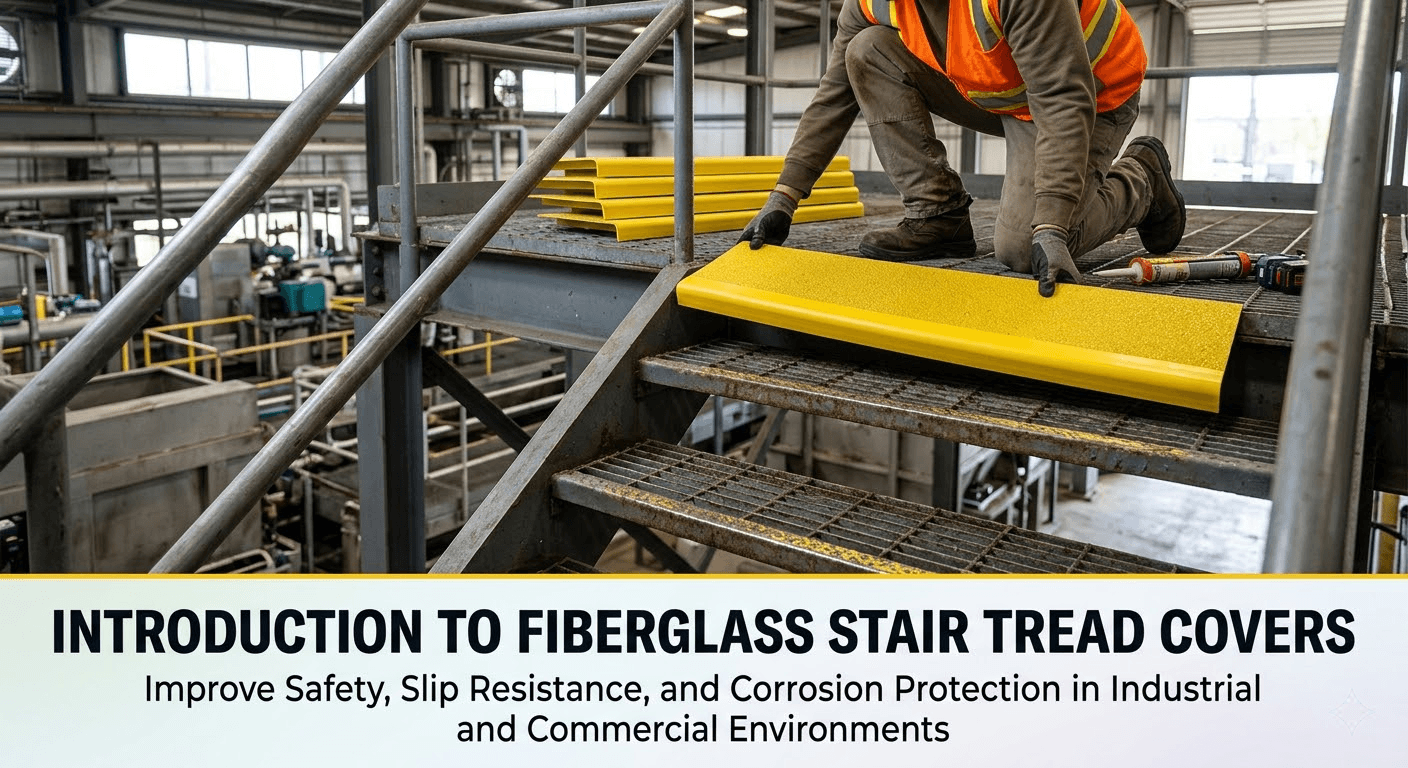
introduction to fiberglass stair tread covers
What Are Fiberglass Stair Tread Covers?
Fiberglass stair tread covers are FRP covers installed over existing stair treads to improve traction, protect worn surfaces, and increase step visibility. They are commonly used on steel, concrete, wood, and other stair surfaces in industrial, commercial, marine, and outdoor environments.
A typical cover is selected by stair width, tread depth, nose size, thickness, surface texture, resin system, fixing method, and color requirement. In retrofit work, accurate measurements matter because stair sets often look uniform at first glance, while older stairs may vary slightly from step to step.
Definition of fiberglass stair tread covers
Fiberglass stair tread covers are molded or fabricated FRP safety covers designed to sit over the top surface and front edge of an existing stair. The walking surface usually includes a grit or textured finish for better traction.
They are different from full replacement stair treads. A cover upgrades the existing stair surface, while a full FRP stair tread may replace the stair component itself.
How do fiberglass stair tread covers work on existing stairs?
Fiberglass stair tread covers work by adding a durable, slip resistant FRP layer over an existing stair surface. They can improve traction, protect worn steps, increase visibility, and extend stair service life when the base stair structure remains suitable for continued use.
In field retrofit projects, buyers often use them when steel stairs are still structurally sound but the walking surface has become slippery, corroded, or difficult to maintain. They can be bonded, mechanically fastened, or installed with a combined fixing method depending on the substrate and exposure conditions.
Stair tread covers vs stair treads vs walkway covers
Stair tread covers are retrofit parts installed over existing steps. Fiberglass stair treads usually refer to full FRP stair components, often made from grating or molded profiles. Fiberglass walkway covers are wider panels used on walking paths, platforms, ramps, or access zones.
Buyers should specify whether the project needs covers for existing stairs, replacement stair treads, or flat walkway protection. This prevents wrong sizing, wrong nose design, and incorrect installation planning.
Why Choose Fiberglass Stair Tread Covers?
Beyond basic traction, FRP covers can help solve recurring stair safety and maintenance problems. The strongest value usually appears in wet, corrosive, outdoor, or high traffic environments.
Slip resistance for wet and high traffic stairs
Wet steps, oil mist, mud, cleaning residue, and worker traffic can make stairs unsafe. Fiberglass covers can use grit surfaces or textured finishes to improve traction in these conditions.
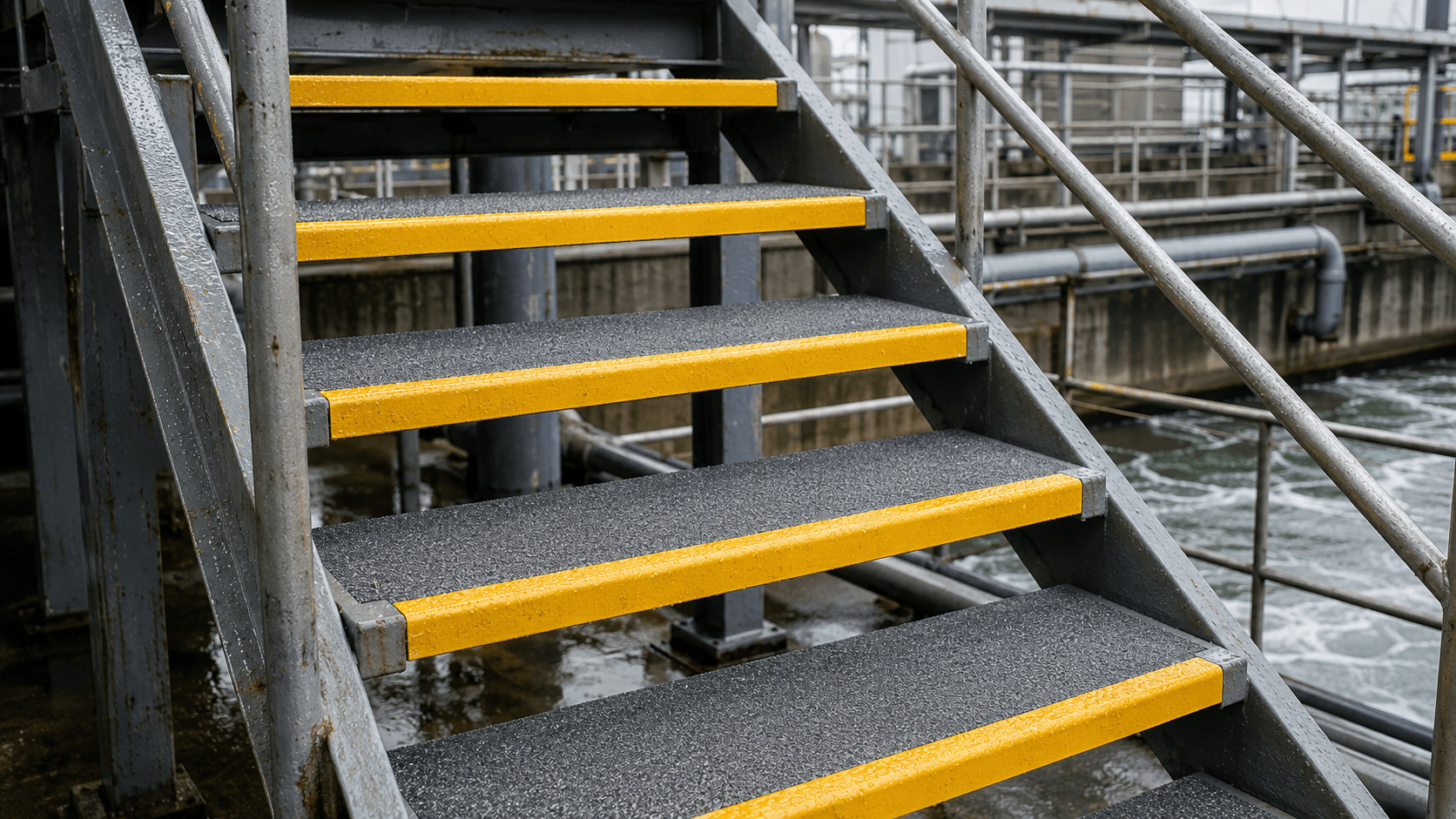
Key specifications include grit level, surface type, stair nose coverage, and visibility color. Many industrial buyers choose a contrasting stair nose, such as safety yellow, to make the step edge easier to see.
Aggressive grit can improve grip in wet or oily areas, but it may require different cleaning practices. A moderate texture may suit commercial or public access stairs where appearance and cleaning efficiency matter more.
Corrosion resistance in harsh environments
FRP does not rust like carbon steel. That makes fiberglass covers useful in chemical plants, wastewater facilities, marine sites, outdoor stairways, and washdown areas.
Performance depends on resin system, surface grit bond, UV package, adhesive selection, fastener material, installation quality, traffic level, cleaning process, and site exposure. Buyers should describe chemicals, moisture, salt air, temperature, cleaning methods, and sunlight exposure before production.
Lightweight retrofit installation
Fiberglass covers are usually easier to handle than many metal retrofit parts. That matters on elevated stairways, narrow access routes, and facilities with short maintenance windows.
In field installations, crews often prefer lightweight covers because they can position and fasten them with less handling effort. This can help reduce disruption when stairs serve active production areas.
Low maintenance compared with metal stair parts
Fiberglass covers can reduce rust repair, repainting, and repeated anti slip tape replacement in corrosive or wet environments. They can also protect worn stair edges from further surface deterioration.
They still require inspection. Maintenance teams should check fasteners, bond condition, edge damage, grit wear, debris buildup, and any change in chemical exposure.
Custom colors, sizes and surface textures
Buyers can request custom width, depth, thickness, nose design, color, surface texture, and packaging. Common choices include gray walking surfaces with yellow nosing, fully colored covers, and different grit levels.
Custom sizing is useful when the project includes older stairs, nonstandard steps, or repeated stair sets across multiple platforms.
Fiberglass Stair Tread Covers vs Steel and Rubber Options
Material selection should reflect the environment, traffic, installation method, and maintenance plan. The table below compares common stair retrofit options.
| Factor | Fiberglass Stair Tread Covers | Steel Stair Treads | Rubber Covers | Buyer Takeaway |
|---|---|---|---|---|
| Slip resistance | Grit or textured surfaces available | Serrated or punched surfaces available | Good for light indoor use | Match surface to traffic and contamination |
| Corrosion resistance | Strong in wet and corrosive areas | Can rust if coating fails | Does not rust, yet may degrade in harsh exposure | FRP fits many industrial wet zones |
| Outdoor durability | Good with suitable UV package | Depends on coating or galvanizing | Varies by rubber type | Confirm UV and weather exposure |
| Installation weight | Lightweight | Heavier | Lightweight | FRP can simplify retrofit work |
| Maintenance | Low rust related maintenance | May need repainting or coating repair | May need replacement if worn | Compare lifecycle effort |
| Chemical exposure | Depends on resin system | Depends on coating and alloy | Depends on compound | Exposure details drive selection |
| Visibility | Custom colors and nosing available | Paint or coating needed | Color options available | Contrast nosing improves step recognition |
| Customization | Size, color, nose, surface options | Fabrication possible | Often limited by product range | FRP suits project specific retrofits |
| Lifecycle value | Strong in corrosive areas | Strong in mechanically abusive areas | Useful for light duty needs | Choose by environment and traffic |
When should buyers choose fiberglass stair tread covers?
Buyers should choose fiberglass stair tread covers when stairs need improved slip resistance, corrosion protection, outdoor durability, bright visibility, and lower maintenance without replacing the full stair structure. They are especially useful for industrial, marine, wastewater, chemical, and commercial safety retrofit projects.
They fit wet process areas, exterior stairs, aging steel stairs, pedestrian access zones, maintenance platforms, and equipment access stairs. Steel may still fit severe mechanical abuse, while rubber may suit light indoor traffic.
When steel or rubber may still be suitable
Steel can be suitable when the project requires complete stair replacement, strong impact resistance, welding, or compatibility with an existing metal structure. It may also fit dry indoor areas with standard maintenance routines.
Rubber covers can be practical for light traffic indoor stairs or temporary anti slip improvement. Buyers should avoid using rubber as a long term solution in chemical, oily, high UV, or heavy industrial conditions unless the compound is suitable.
Common Applications of FRP Stair Tread Covers
Different sites create different stair problems. The table below shows how buyers can match cover features to application conditions.
| Application Area | Common Stair Problem | Recommended Cover Feature | Why It Matters |
|---|---|---|---|
| Industrial facilities | Worn steps and heavy foot traffic | Grit surface and durable nose | Improves traction and edge visibility |
| Outdoor stairways | Rain and UV exposure | UV package and contrast color | Supports outdoor safety |
| Marine sites | Salt air and moisture | Corrosion resistant resin and fasteners | Reduces rust related maintenance |
| Chemical plants | Chemical residue and washdown | Compatible resin and sealed edges | Helps match exposure conditions |
| Wastewater plants | Wet, corrosive stairs | Drainage planning and grit surface | Improves access safety |
| Commercial buildings | Public access wear | Consistent color and moderate texture | Balances safety and appearance |
| Platforms and ladder access | Narrow access routes | Custom sizing and nose coverage | Improves step control |
Industrial facilities
Factories, mezzanine stairs, maintenance platforms, and processing areas often have worn metal steps or failed anti slip tapes. During scheduled maintenance windows, teams may install FRP covers to improve traction without replacing the stair frame.
In one anonymized facility retrofit, the safety team reported repeated slip concerns on steel access stairs where anti slip tape had peeled and stair edges had started to rust. Before ordering, the buyer confirmed stair width, tread depth, nose size, yellow nosing, aggressive grit texture, combined adhesive and mechanical fixing, and packaging by stair set. This helped the installation crew work faster during a planned shutdown.
Outdoor stairways
Outdoor stairs face rain, dust, sunlight, and temperature changes. Buyers should confirm UV package, surface texture, color, fixing method, and substrate condition before ordering.
High visibility nosing can also help workers identify step edges in poor lighting or bad weather.
Marine and coastal environments
Marine and coastal stairs face salt air, constant moisture, and corrosion pressure. FRP covers can help protect walking surfaces while reducing dependence on repainting.
Fastener material and resin system must match the environment. Poor hardware selection can undermine an otherwise suitable cover.
Chemical plants and wastewater sites
Chemical plants and wastewater facilities often combine moisture, cleaning chemicals, odor rich air, and corrosion. Buyers should provide chemical type, concentration, cleaning method, temperature range, and whether exposure is splash, vapor, or routine washdown.
This information helps suppliers recommend a suitable resin system and fixing method.
Commercial buildings and public access areas
Commercial stairs may need improved appearance, safer footing, and easier maintenance. A moderate texture can improve traction while keeping cleaning manageable.
Project teams should check applicable facility safety rules and local requirements before installation.
How to Choose the Right Fiberglass Stair Tread Covers
A strong specification starts with the stair itself. Buyers should measure, inspect, and document the site before requesting pricing.
What stair measurements should buyers confirm?
Buyers should confirm stair width, tread depth, stair nose size, existing material, surface condition, quantity, traffic level, indoor or outdoor exposure, fixing method, and any color or visibility requirements. Accurate dimensions help suppliers recommend the right cover size, thickness, surface, and edge design.
For retrofit work, measuring only one step may create problems. Older stair sets can vary, especially after repairs, corrosion, coating buildup, or previous modifications.
Stair size and tread dimensions
Key dimensions include clear stair width, tread depth, front nose profile, edge condition, and riser clearance. Buyers should also confirm whether every step in the stair set shares the same size.
Photos and drawings help suppliers understand the existing structure and installation constraints.
Surface texture and slip resistance
Surface texture affects traction and cleaning. Aggressive grit can improve grip in wet or oily areas, while a moderate texture may be easier to clean in public or commercial spaces.
The best surface depends on traffic type, contaminants, footwear, cleaning process, and safety goals.
Nose design and edge coverage
The stair nose is critical because workers often step on or near the front edge. A covered nose can improve visibility, protect worn edges, and reduce poor foot placement.
Nose design is especially important on worn steel or concrete stairs where the original edge has become rounded or damaged. If the nose does not fit the existing step profile, the cover may sit poorly or create an unwanted edge condition.
Resin system and chemical exposure
The resin system should match the operating environment. Chemical exposure, salt air, UV, temperature, moisture, and cleaning agents can all affect product selection.
Buyers should avoid vague descriptions such as “chemical area.” Specific exposure details produce better recommendations.
Color, visibility and safety marking
Safety yellow nosing is common because it creates visual contrast. Gray, black, green, and custom colors may also be used depending on the facility.
Visibility needs vary by site. A public stairwell may need a cleaner appearance, while an industrial platform may prioritize high contrast safety marking.
Adhesive, fasteners and installation method
Installation may use adhesive bonding, screws, bolts, or a combined fixing method. Adhesive bonding can provide broad contact when the substrate is clean and suitable. Mechanical fixing adds positive attachment through screws or bolts. A combined method can help in high traffic, outdoor, or vibration prone locations.
The right choice depends on substrate, exposure, traffic, vibration, and maintenance expectations. Poor surface preparation often causes avoidable installation issues, so cleaning, degreasing, drying, and removing loose rust or debris should happen before installation.
fiberglass stair tread covers for industrial safety
Installation Guide for Fiberglass Stair Tread Covers
Even a well specified cover needs correct installation. Preparation, alignment, fixing method, and inspection all affect performance.
Prepare the existing stair surface
The existing stair should be cleaned, degreased, dried, and checked for structural condition. Loose rust, loose coatings, oil, dust, and debris should be removed before bonding or fastening.
Fiberglass stair tread covers improve the walking surface, traction, and edge protection. They should not be used as structural repair when the base stair is damaged, unstable, or no longer suitable for service.
Measure and cut the covers
Covers can be supplied pre cut or trimmed in the field. For large projects, pre cut covers can reduce jobsite errors and installation time.
When field cutting is needed, crews should use suitable tools, dust control, and edge finishing. Cut edges should be checked before installation.
Apply adhesive or mechanical fasteners
Adhesive, mechanical fasteners, or combined fixing may be used depending on the stair material and environment. Fastener material should match outdoor, marine, chemical, or washdown exposure.
Hole layout should avoid weak edges and allow secure installation without creating trip points.
Seal edges and check alignment
Installers should check nose alignment, edge contact, color contrast, and consistent positioning across the stair run. Poor alignment can create uneven edges or visual confusion.
Edge finishing can also help reduce handling risk and improve appearance.
Inspection and maintenance after installation
Routine inspection should check fasteners, bond condition, grit wear, edge damage, chemical exposure changes, and debris buildup. High traffic or chemically exposed stairs should be checked more frequently.
FRP covers can reduce maintenance, yet scheduled inspection still protects long term stair safety.
Buying Guide for B2B Procurement Teams
A complete RFQ helps suppliers quote the right product and reduces revision cycles. The table below shows the key information buyers should send.
| Requirement | Buyer Should Provide | Why It Matters |
|---|---|---|
| Application | Industrial, marine, wastewater, commercial | Defines exposure and safety needs |
| Existing stair material | Steel, concrete, wood, FRP | Guides fixing method |
| Stair width | Clear width per step | Controls cover size |
| Tread depth | Walking surface depth | Affects fit and coverage |
| Nose size | Front edge shape and depth | Defines nose design |
| Quantity | Number of covers and stair sets | Supports production planning |
| Surface texture | Aggressive grit or moderate texture | Matches traction and cleaning needs |
| Resin system | General or chemical resistant | Matches exposure |
| UV exposure | Indoor or outdoor | Guides weathering package |
| Chemical exposure | Type, concentration, cleaning method | Helps material selection |
| Color | Safety yellow, gray, custom | Supports visibility and branding |
| Fixing method | Adhesive, fasteners, combined | Affects installation planning |
| Drawings or photos | Site dimensions and stair images | Reduces sizing errors |
| Packaging | Pallets, labels, stair set grouping | Helps site handling |
| Delivery schedule | Required arrival date | Aligns production and installation |
What information should buyers send for a quote?
Buyers should send the application, existing stair material, stair width, tread depth, nose size, quantity, surface texture, resin system, UV exposure, chemical exposure, color, fixing method, drawings or photos, packaging needs, and delivery schedule. Complete RFQ data reduces quote revisions, wrong sizing, installation delays, and packaging issues.
For older stairs, site photos and measurements from several steps can be more useful than a single nominal dimension.
Custom size and bulk order options
Custom options may include pre drilled holes, safety color, custom nose design, cut to size covers, project labels, and bulk packaging. Large retrofit projects may require grouping by stair set or installation zone.
Unicomposite Technology Co., Ltd is an ISO 9001 certified FRP and GRP composite manufacturer in Nanjing, China, with an 18,000 square meter facility. Its capabilities include pultrusion, pulwinding, SMC and BMC molding, hand lay up, and vacuum infusion for standard and custom composite products.
Unicomposite can review stair photos, drawings, measurements, existing stair material, substrate condition, exposure conditions, color requirements, fixing method, quantity, packaging, and delivery schedule before production. This helps buyers reduce sizing errors and align the product with the real stair environment.
Packaging and project delivery considerations
Packaging should match installation sequence. Labels, pallet grouping, export packaging, and stair set organization can reduce sorting time on site.
For bulk orders, procurement teams should confirm storage conditions, handling equipment, delivery date, and whether covers need to be grouped by building, platform, or stair run.
How to compare initial cost and maintenance cost
Buyers should compare material price, installation labor, downtime, repainting, anti slip tape replacement, corrosion repair, replacement frequency, and inspection access. A lower initial price may create higher maintenance cost in harsh environments.
Fiberglass covers should be justified by the operating environment, safety goals, and expected maintenance savings.
Quick Buyer Checklist
Use this checklist before sending a quote request.
| Item | Confirm Before Ordering |
|---|---|
| Stair dimensions | Width, depth, nose size, quantity |
| Existing substrate | Steel, concrete, wood, FRP, surface condition |
| Traffic level | Worker access, public access, maintenance access |
| Surface texture | Aggressive grit, moderate texture, cleanability needs |
| Environment | Indoor, outdoor, marine, chemical, wastewater |
| Resin needs | General, chemical resistant, UV resistant |
| Color | Yellow nosing, gray surface, custom color |
| Fixing method | Adhesive, mechanical fasteners, combined fixing |
| Fabrication | Pre cut, pre drilled, custom nose, labels |
| Packaging | Stair set grouping, pallet, export packaging |
| Schedule | Required delivery date and installation window |
Conclusion
Fiberglass stair tread covers help improve stair safety, slip resistance, corrosion protection, visibility, and retrofit efficiency. They are useful for industrial, marine, wastewater, chemical, outdoor, and commercial stair safety projects.
Buyers should confirm stair dimensions, substrate condition, surface texture, resin system, UV exposure, chemical exposure, color, fixing method, quantity, packaging, and delivery requirements before ordering. Material choice should compare fiberglass, steel, and rubber by environment, traffic, maintenance, and lifecycle value.
A clear RFQ helps suppliers recommend the right cover size, surface texture, nose design, fixing method, and packaging plan.
[Contact Unicomposite for a custom sized or bulk fiberglass stair tread cover quote →]


