 info@unicomposite.com


Introduction
Reflective driveway markers look simple, yet they can influence winter safety, snow removal efficiency, property protection, and seasonal maintenance cost. For B2B buyers, a low unit price may lose its appeal once reflector quality, rod diameter, carton labeling, pallet packing, and delivery timing are reviewed together.
Reflective fiberglass driveway markers are commonly purchased by snow removal contractors, municipal maintenance teams, commercial property managers, warehouses, farms, landscape distributors, and roadside safety suppliers. These buyers often need hundreds or thousands of markers with consistent length, reflector placement, color, packing, and reorder quality.
This guide explains what reflective fiberglass driveway markers are, why they matter for safety, what affects price, how fiberglass compares with plastic and metal markers, and what information buyers should send before requesting a quote.
reflective fiberglass driveway markers price guide
What Are Reflective Fiberglass Driveway Markers?
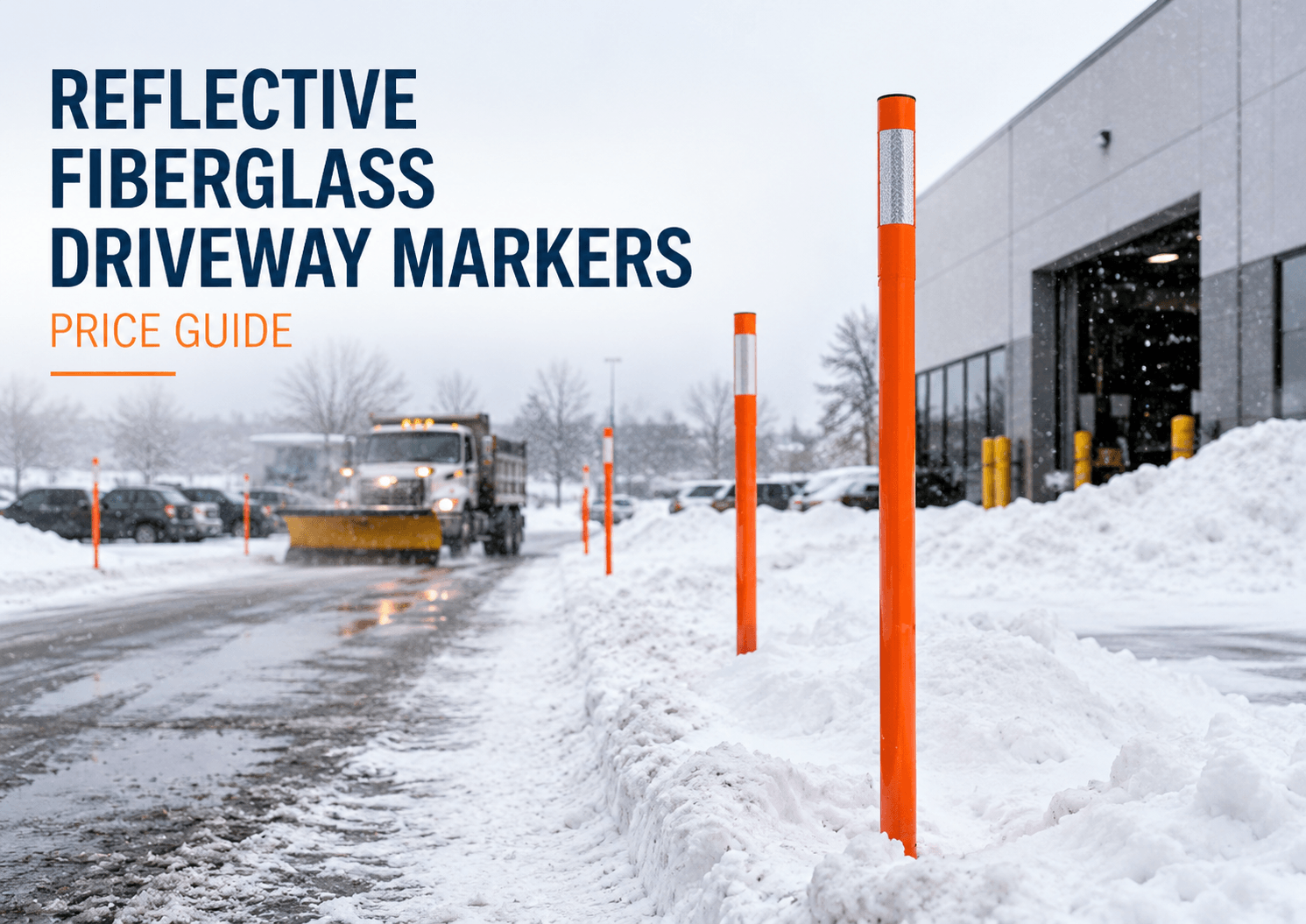
Reflective fiberglass driveway markers are FRP marker rods designed to improve visibility along driveways, roadsides, parking lots, walkways, curbs, entrances, loading areas, and property boundaries. They usually combine a fiberglass rod with reflective tape or reflector panels so drivers and maintenance crews can identify edges in low light, snow, fog, or poor weather.
Fiberglass is often used for marker rods because it offers lightweight handling, flexibility, corrosion resistance, and outdoor performance when the product is specified correctly. Actual performance depends on rod length, diameter, reflector option, installation depth, storage, snow exposure, and site conditions.
For B2B buyers, the main specification points include rod length, diameter, color, reflector type, reflector placement, tip design, cap option, bundle count, carton label, pallet packing, and repeat order consistency.
What are reflective fiberglass driveway markers used for?
Reflective fiberglass driveway markers are used to mark driveways, parking lots, roadsides, walkways, curbs, loading areas, property boundaries, and snow removal zones. They help drivers, pedestrians, snow crews, and maintenance teams identify edges and hazards during low light, winter weather, and poor visibility conditions.
In field use, contractors often install these markers before the snow season begins. Once snow covers curbs, grass edges, drainage areas, or landscaping, the markers provide visual guidance for plows, trucks, and pedestrians.
Takeaway: reflective driveway markers should be treated as safety and maintenance products with site-specific specifications.
Why Reflective Markers Matter for Safety
After defining the product, buyers should connect markers to the real operating environment. The main value of reflective markers is visibility. In snow, rain, fog, darkness, or low-contrast outdoor areas, visible boundary markers reduce guessing for drivers and maintenance crews.
Reflective markers are especially useful where snow removal equipment operates close to curbs, walls, landscaped islands, utility boxes, loading docks, or roadside edges. A small marker can help prevent a costly repair if it keeps a plow blade away from buried obstacles.
The table below summarizes common B2B use cases and why reflective fiberglass markers are used:
| Application | Safety Function | Buyer Priority |
|---|---|---|
| Snow removal routes | Guides plow operators along curbs and road edges | Visibility, flexibility, repeat supply |
| Commercial parking lots | Marks islands, curbs, entrances, and pedestrian zones | Bulk quantity, easy installation |
| Municipal roadsides | Helps identify shoulders, ditches, and boundaries | Reflectivity, durability, consistent length |
| Farms and rural roads | Marks lanes, gates, drainage edges, and access routes | Weather resistance, simple packing |
| Warehouses and loading areas | Defines vehicle movement areas and hazards | Visibility, custom placement, reorder control |
How do reflective driveway markers improve winter safety?
Reflective driveway markers improve winter safety by making boundaries, road edges, curbs, entrances, and hazards easier to see in snow, darkness, fog, and low light. They help drivers and snow removal crews follow the correct path and reduce the risk of property damage or vehicle accidents.
For example, a commercial property manager may install markers along a curved driveway, parking lot island, and loading entrance before the first major snowfall. When snow covers ground features, reflectors still help drivers judge where the safe travel path is.
Takeaway: visibility creates the safety value, while correct size and reflector placement make that value reliable in the field.
Reflective Fiberglass Driveway Markers Price Factors
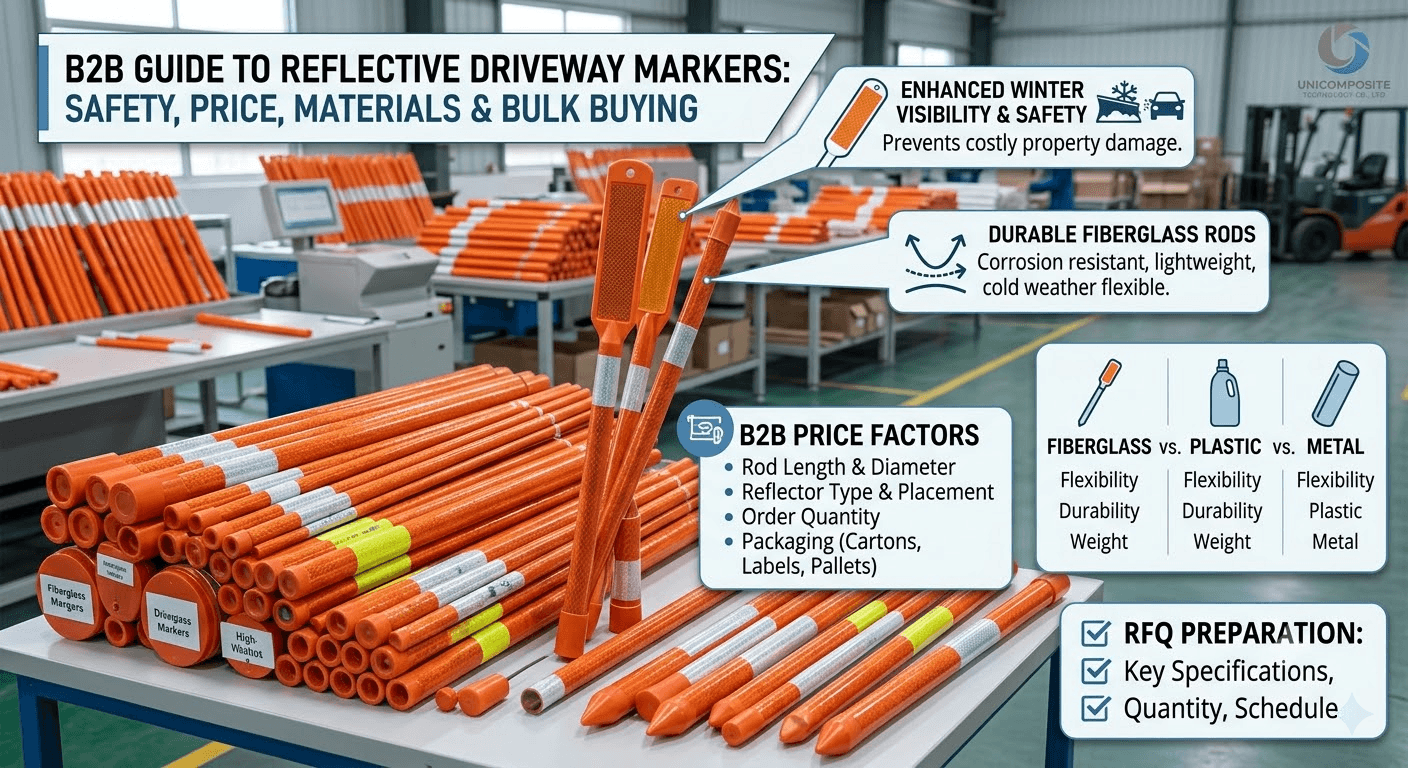
Once buyers understand the safety function, price comparison becomes more practical. The price of reflective fiberglass driveway markers depends on more than the rod itself. Length, diameter, reflector type, color, cap, tip, order quantity, packaging, labels, destination, and lead time all affect the final quote.
Standard sizes usually cost less than custom lengths because they reduce cutting, setup, and sorting work. Thicker rods may increase material cost, but they can improve stiffness in exposed sites. Reflective tape, single reflector panels, and double reflector panels also create different cost levels because they require different materials and assembly steps.
Packaging can change the real landed cost. Bulk bundles may suit snow removal crews, while retail cartons, barcode labels, private-label packaging, and pallet protection may matter more to distributors. Freight also matters, especially when seasonal timing, destination, carton size, and pallet dimensions affect transport planning.
The table below shows the major price factors buyers should review before comparing quotes:
| Price Factor | What Affects Cost | Buyer Note |
|---|---|---|
| Length | Taller rods use more material and may change carton size | Match length to snow depth and visibility needs |
| Diameter | Thicker rods use more fiberglass and resin | Diameter affects stiffness, flexibility, and handling |
| Reflector type | Tape, single reflector, double reflector | Confirm visibility direction and application |
| Color | Standard orange or custom color | Orange is common for winter visibility |
| Tip design | Pointed tip, flat end, cap option | Affects installation speed and field use |
| Packaging | Bundle, carton, pallet, private label | Impacts labor, storage, and shipping |
| Quantity | Small order, pallet order, container order | Bulk volume affects unit cost and production planning |
What affects the price of reflective fiberglass driveway markers?
The price of reflective fiberglass driveway markers is affected by length, diameter, reflector type, reflector placement, color, tip design, order quantity, packaging, labeling, destination, and delivery schedule. B2B buyers should compare total delivered value instead of unit price alone.
In an anonymized seasonal procurement case, a buyer first selected the lowest marker quote. After checking details, the buyer found that the quote excluded carton labels, pallet packing, fixed reflector placement, and the delivery date needed before winter demand. A slightly higher quote became the better option because it reduced warehouse sorting, route preparation time, and late-season delivery risk.
Takeaway: price comparison should include specification, reflector quality, packing format, delivery timing, and field labor impact.
Fiberglass vs Plastic vs Metal Reflective Markers
After reviewing price factors, buyers should compare material options. Plastic, metal, and fiberglass markers may all be available, but they perform differently in cold weather, outdoor exposure, and bulk use.
Fiberglass offers a balanced combination of flexibility, visibility support, corrosion resistance, and lightweight handling. Plastic markers may fit low-cost residential use, but some lower-grade plastic products can become brittle in cold conditions. Metal markers may provide stiffness, but they can bend, corrode, or create handling concerns depending on the site.
The table below compares common marker materials for B2B purchasing:
| Factor | Fiberglass Markers | Plastic Markers | Metal Markers |
|---|---|---|---|
| Cold weather flexibility | Good when specified correctly | Varies by grade | Can bend or deform |
| Outdoor durability | Strong with proper material selection | Varies by plastic type | Depends on coating |
| Corrosion resistance | Strong | Strong | Depends on metal and coating |
| Handling | Lightweight and crew-friendly | Lightweight | Often heavier |
| Reflector options | Tape or reflector panels | Tape or molded reflectors | Tape or attached reflectors |
| Bulk consistency | Strong with manufacturing control | Varies by supplier | Usually consistent |
Are fiberglass driveway markers better than plastic markers?
Fiberglass driveway markers can be better than plastic markers for B2B buyers who need flexibility, outdoor durability, repeat supply, and consistent bulk specifications. Plastic markers may work for short-term or low-cost residential use, while fiberglass often fits snow removal, municipal, commercial, and distributor programs better.
Material choice should still match the application. A small residential driveway may need a basic marker, while a municipal roadside program may require consistent length, stronger reflectors, palletized packaging, and repeat order support.
Takeaway: fiberglass is often a strong B2B option when buyers need consistent winter performance and bulk supply control.
How B2B Buyers Should Compare Suppliers
Once buyers shortlist marker materials, supplier comparison becomes the next risk point. A supplier should do more than provide a unit price. Buyers need clear specifications, sample quality, reflector consistency, lead time, packaging details, and repeat order support.
In field purchasing, problems often appear after the order arrives. Reflectors may be misaligned, bundles may contain mixed lengths, cartons may lack labels, or the rods may not match the approved sample. These issues create extra labor for distributors and jobsite crews.
The table below can help buyers compare suppliers before placing a bulk order:
| Supplier Check | What Buyers Should Ask | Why It Matters |
|---|---|---|
| Specification clarity | Can the supplier confirm length, diameter, color, and reflector type? | Reduces quote errors |
| Sample approval | Can buyers approve a sample before bulk production? | Confirms quality expectations |
| Reflector consistency | Is reflector placement controlled across batches? | Supports visibility and appearance |
| Packaging method | Are bundles, cartons, labels, and pallets defined? | Helps warehouse and field handling |
| Lead time | Can the supplier confirm production and shipment timing? | Supports seasonal planning |
| Repeat order support | Can future shipments match the approved order? | Helps distributors and contractors |
How should buyers compare driveway marker suppliers?
Buyers should compare driveway marker suppliers by specification clarity, sample approval, reflector consistency, packaging method, lead time, communication, and repeat order support. A low quote is less useful if the supplier cannot confirm product details, labels, carton packing, or future shipment consistency.
For seasonal products, timing matters. Snow removal contractors and distributors often need markers before winter demand peaks. Late delivery can reduce the value of even the lowest price.
Takeaway: supplier comparison should focus on order reliability as much as product cost.
b2b guide to reflective driveway markers
What to Send Before Requesting a Quote
After buyers compare suppliers, the quote request should turn project needs into exact purchasing details. A message that only says “quote reflective driveway markers” leaves too many variables open and usually creates delays.
Buyers should provide length, diameter, color, reflector option, quantity, application, packaging needs, destination, and delivery schedule. If private labels, retail cartons, barcode labels, or pallet requirements are needed, those details should be included at the beginning.
The table below can be copied into a procurement email:
| RFQ Item | Example Detail |
|---|---|
| Product | Reflective fiberglass driveway markers |
| Length | Required length or acceptable range |
| Diameter | Required diameter or tolerance |
| Color | Orange, red, yellow, or custom color |
| Reflector | Tape, single reflector, double reflector |
| Quantity | Pieces, bundles, cartons, pallets, container order |
| Packaging | Bulk bundle, retail carton, private label, pallet |
| Destination | Port, warehouse, or jobsite |
| Quote request | Unit price, lead time, packing, freight terms |
What information is needed for a driveway marker quote?
For a driveway marker quote, buyers should send length, diameter, color, reflector option, quantity, packaging needs, destination, application, and delivery schedule. Buyers should also include private label, carton, pallet, barcode, and sample requirements when relevant.
For repeat buyers, it is also useful to ask whether future shipments can match the approved sample in rod color, length, reflector position, bundle count, and carton labeling.
Takeaway: a complete RFQ helps suppliers quote accurately and helps buyers compare offers fairly.
Why Buy Driveway Markers from Unicomposite?
After defining product and quote details, buyers should choose a supplier with manufacturing capability that supports bulk orders. Unicomposite Technology Co., Ltd is a professional FRP/GRP composite manufacturer based in Nanjing, China. The company is ISO 9001 certified and operates an 18,000 square meter factory.
Unicomposite manufactures standard and custom composite products through pultrusion, pulwinding, SMC/BMC molding, hand lay-up, and vacuum infusion. For reflective fiberglass driveway marker buyers, this manufacturing base can support consistent rod diameter, controlled reflector placement, color matching, sample-matched production, export carton labels, pallet packing, and repeat shipment matching.
Unicomposite also supplies related FRP products such as fiberglass rods, plant stakes, snow markers, FRP profiles, grating, handrail systems, cable trays, ladders, and other custom composite parts. This can help buyers sourcing multiple FRP items for infrastructure, agriculture, utilities, or industrial use.
Takeaway: a capable FRP manufacturer should support both product consistency and the purchasing process behind the order.
Conclusion
Reflective fiberglass driveway markers help B2B buyers improve visibility, snow removal guidance, boundary marking, and winter safety. Final price and field performance depend on specification, order quantity, reflector option, packaging, installation method, storage, snow exposure, and site conditions.
Four purchasing takeaways matter most. Compare total delivered value instead of unit price alone. Match marker specifications to site conditions and visibility needs. Confirm sample quality, packaging, labels, and delivery timing before bulk production. Choose a supplier that can support repeat orders, export packing, and seasonal delivery planning.
For snow removal contractors, municipal teams, distributors, property managers, farms, and commercial facilities, reflective fiberglass driveway markers can support safer winter operations when correctly specified.
[Contact Unicomposite for a custom fiberglass driveway marker quote →]


