 info@unicomposite.com


Introduction
One failed tree stake can turn into hundreds of leaning trees when the project involves a nursery block, municipal planting zone, orchard expansion, or commercial landscape job. For bulk buyers, the real cost is rarely the stake alone. It includes crew time, replacement work, plant loss, site appearance, and customer complaints after wind or soil movement.
8 ft fiberglass tree stakes give buyers a taller support option for young trees that need stable above-ground guidance during establishment. The right product should match tree height, soil conditions, wind exposure, installation method, packaging needs, and delivery schedule.
This guide helps procurement teams, nursery operators, landscape contractors, tree farms, and agricultural buyers compare fiberglass stakes with other materials, define practical specifications, prepare a clear RFQ, and choose a supplier for repeat bulk orders.
8 ft Fiberglass Tree Stakes
What Are 8 ft Fiberglass Tree Stakes?
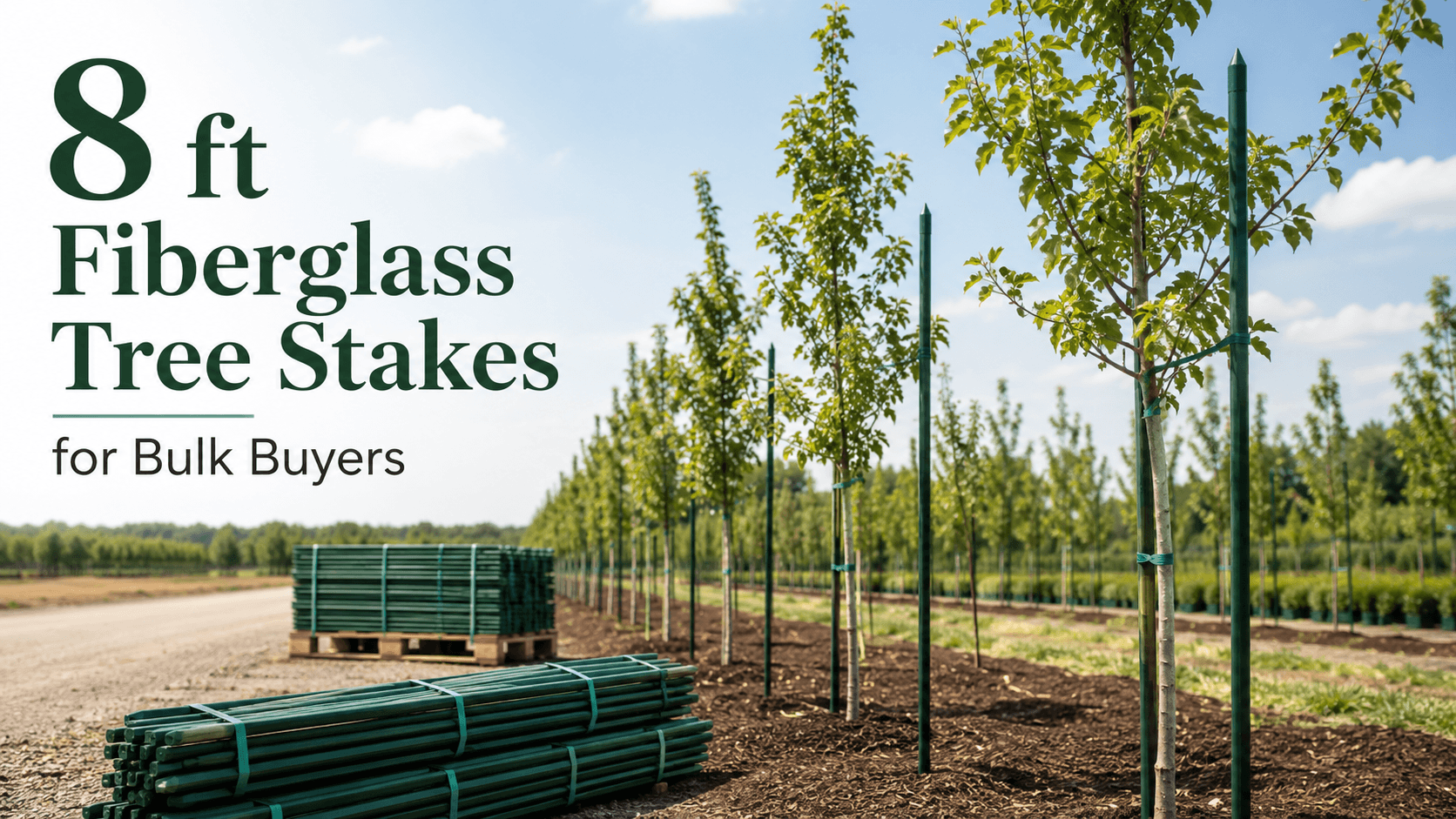
8 ft fiberglass tree stakes are long FRP support rods or poles used to stabilize young trees, taller nursery stock, orchard trees, and landscape plantings. They are made with glass fiber reinforcement and resin, giving the stake a useful balance of strength, flexibility, weather resistance, and handling efficiency.
The 8 ft length is useful when shorter stakes cannot provide enough above-ground support. Buyers often consider this size for taller young trees, exposed planting sites, municipal greening projects, commercial landscaping, and nursery production where consistent presentation matters.
What are 8 ft fiberglass tree stakes used for?
8 ft fiberglass tree stakes are used to support young trees, taller nursery stock, orchard trees, and commercial landscape plantings. They help reduce leaning, support vertical growth, and stabilize trees in windy or exposed sites when installed with proper spacing, soft ties, and regular inspection.
In field use, crews may install two stakes around a standard young tree or add more support when soil is loose, the canopy is heavy, or wind exposure is higher. The final layout should reflect tree size, root ball condition, soil firmness, and expected support duration.
Takeaway: 8 ft fiberglass stakes work best as part of a planned tree support system.
Why Bulk Buyers Choose Fiberglass Tree Stakes
After confirming the application, buyers usually compare fiberglass with wood, bamboo, plastic, or metal stakes. For commercial buyers, the strongest reasons to choose fiberglass are durability, consistency, clean handling, and potential reuse.
Fiberglass does not rot like untreated wood and does not rust like many metal stakes. It also offers more consistent dimensions than low-grade natural stakes, which can vary in straightness, diameter, and surface quality.
A nursery procurement team, for example, may replace wood stakes after repeated issues with splitting, moisture damage, and inconsistent bundle quality. In that situation, fiberglass stakes can reduce sorting time before installation and help crews work with a more predictable product across multiple planting cycles.
The table below compares common stake materials for bulk planting projects:
| Factor | Fiberglass Stakes | Wood Stakes | Metal Stakes |
|---|---|---|---|
| Outdoor durability | Resists moisture and weathering well when properly specified | Can rot, split, warp, or weaken outdoors | Can corrode if coating fails |
| Handling | Lightweight and uniform | Quality can vary by batch | Often heavier |
| Reuse potential | Often reusable after inspection | Usually limited after long exposure | Reusable if corrosion is controlled |
| Appearance | Clean and consistent | Natural look, less uniform | Industrial appearance |
| Bulk buying fit | Good for repeat planting, nurseries, landscaping, and tree farms | Useful for short-term low-cost projects | Useful for heavy-duty support in selected sites |
Reuse should always depend on inspection. A fiberglass stake can often be reused only when it remains straight, clean, undamaged, and suitable for the next planting application.
Takeaway: fiberglass makes sense when buyers value repeatable quality, outdoor durability, and reduced handling problems.
How to Choose the Right 8 ft Fiberglass Tree Stakes
Once buyers choose fiberglass, the next step is specification. Length is only one factor. Diameter, stiffness, profile type, surface, color, packaging, and bundle size can all affect field performance and purchasing efficiency.
Larger tree stock, windier sites, looser soil, and longer support duration may require buyers to review diameter, stiffness, insertion depth, and tie method more carefully. A light stake may be enough for smaller nursery trees, while taller or more exposed trees may need a stronger stake and more controlled installation.
The table below summarizes the main checkpoints to confirm before ordering:
| Specification | What to Confirm | Why It Matters |
|---|---|---|
| Length | 8 ft standard length or custom length | Matches tree height and support target |
| Diameter | Required size or acceptable range | Affects stiffness and handling |
| Profile | Solid rod or tube, based on supplier options | Changes weight and support behavior |
| Color | Green, black, white, or custom | Supports site appearance and product identification |
| Surface | Smooth or textured finish | Affects handling and tie contact |
| Packaging | Bundles, pallets, labels, cartons | Improves storage and crew distribution |
| Quantity | Pieces, pallets, or container volume | Impacts price, lead time, and freight planning |
When should buyers choose 8 ft stakes instead of shorter stakes?
Buyers should choose 8 ft stakes when trees need taller support, when planting sites are exposed to wind, or when tree height makes shorter stakes insufficient. They are also useful for nurseries, landscape contractors, and municipal planting teams that want consistent support for larger young trees.
A common buying mistake is selecting by unit price alone. If the stake is too short, too thin, or poorly matched to the site, the project may pay later through leaning trees, crew rework, or replacement orders.
Takeaway: the right stake specification should match tree size, site exposure, support duration, and crew workflow.
Installation Tips for Better Tree Stability
Good product selection still needs correct installation. Even a durable fiberglass stake will perform poorly if crews place it too close to the trunk, tie it too tightly, or drive it too shallow into the soil.
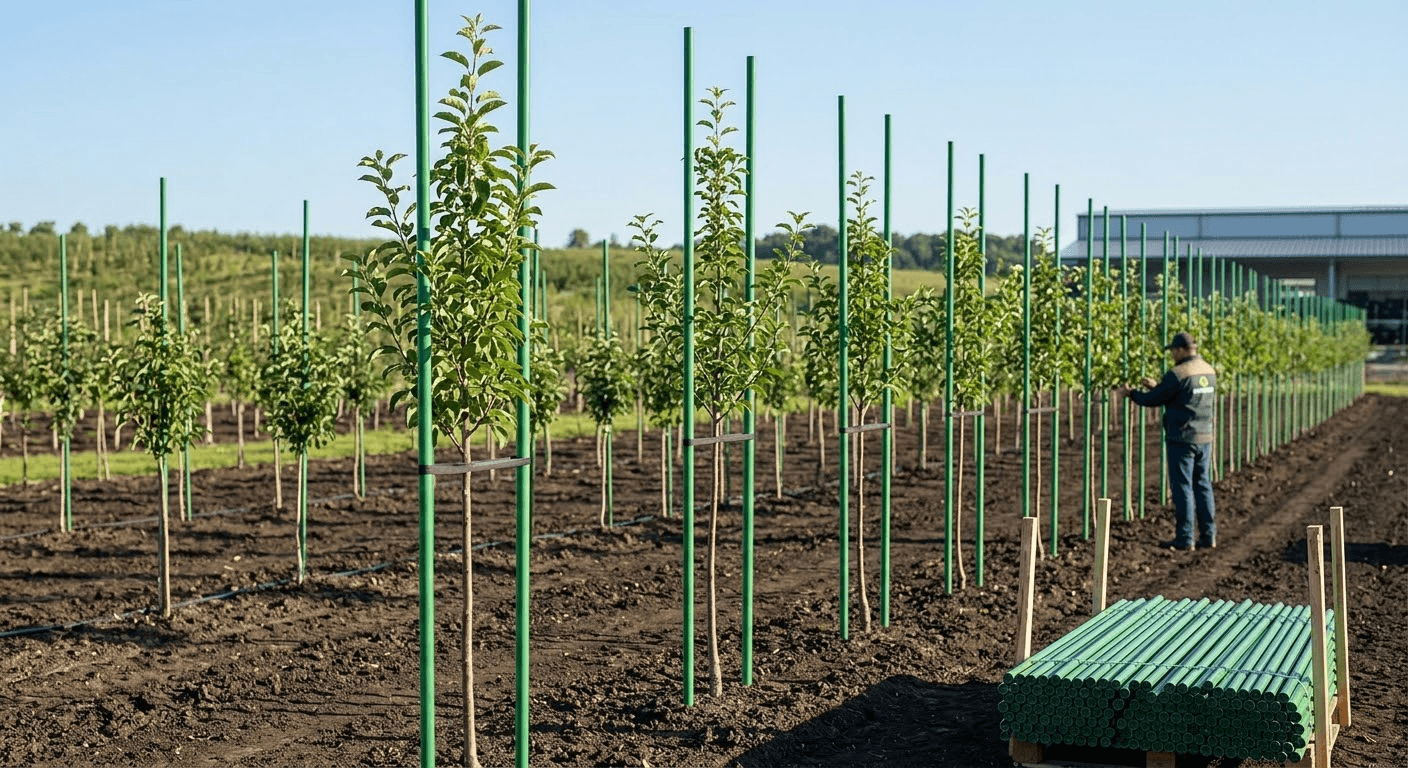
For many young trees, stakes are placed about 1 to 1.5 ft away from the trunk. Crews commonly use two stakes for balanced support, with additional support considered for windy sites, loose soil, or larger trees. Soft, flexible ties help support the tree without cutting into bark.
How should 8 ft fiberglass tree stakes be installed?
Install 8 ft fiberglass tree stakes away from the trunk, drive them securely into the soil, and use soft ties that allow limited natural movement. Avoid excessive tie tension. Inspect ties regularly because tree growth can turn correct support into restrictive support over time.
An anonymized roadway planting project shows why process matters. The stakes were strong enough, but some ties were too tight after installation. After the crew switched to softer ties and scheduled follow-up inspection, bark contact problems dropped and tree alignment improved.
For large projects, give crews a short checklist covering stake spacing, drive depth, tie height, tie tension, and inspection date. This creates consistency when multiple teams work across the same site.
Takeaway: stake placement and tie management protect both the tree and the support system.
8 ft Fiberglass Tree Stakes 2
What to Send Before Requesting a Bulk Quote
Once buyers know the required product and installation method, the RFQ should be specific. A request that only says “quote 8 ft tree stakes” forces the supplier to guess, which can lead to mismatched pricing and slow communication.
For bulk orders, include length, diameter, quantity, color, packaging, application, destination, delivery schedule, and private-label needs. If the stakes will support nursery stock, orchard trees, municipal planting, or commercial landscaping, state the use case clearly.
What information is needed for a bulk quote?
Send the supplier your required stake length, diameter, quantity, color, application, packaging method, delivery destination, and target delivery schedule. Include custom labels, bundle size, pallet packing, private-label requests, and repeat-order plans when relevant so the supplier can quote more accurately.
The table below can be copied into a procurement email:
| RFQ Item | Example Detail |
|---|---|
| Product | 8 ft fiberglass tree stakes |
| Diameter | Required diameter or acceptable range |
| Quantity | Pieces, bundles, pallets, or container order |
| Color | Green, black, white, or custom |
| Application | Nursery, orchard, landscaping, municipal planting |
| Packaging | Bundle quantity, pallet, label, carton |
| Destination | Country, port, warehouse, or jobsite |
| Quote need | Unit price, lead time, packaging, freight terms |
Repeat buyers should also ask about batch consistency. A nursery or contractor needs the next shipment to match the approved product in diameter, finish, color, and handling feel.
Takeaway: a complete RFQ helps suppliers quote the right product and helps buyers compare offers fairly.
Why Work with an FRP Manufacturer for Bulk Supply
Supplier capability matters more when the order moves from small retail purchase to scheduled bulk supply. Local garden centers may help with urgent small needs, while direct FRP manufacturers can offer stronger control over specification, packing, repeat supply, and custom requirements.
Unicomposite is a Nanjing-based FRP/GRP composite manufacturer with ISO 9001 certification and an 18,000 square meter factory. Its production capabilities include pultrusion, pulwinding, SMC/BMC molding, hand lay-up, and vacuum infusion. For fiberglass tree stake buyers, this manufacturing base can support custom length, diameter, color, bundled packaging, private label options, and repeat-order consistency.
This also helps when buyers need related fiberglass products, such as FRP rods, plant stakes, garden supports, profiles, ladders, grating, or other composite components. Sourcing from a broader FRP manufacturer can reduce supplier fragmentation across a project or product line.
Takeaway: for bulk supply, the best supplier should support both the product and the purchasing process behind it.
Conclusion
Bulk buyers should treat tree stakes as part of the planting system, because the wrong support can create rework across an entire site.
Four practical takeaways matter most: match stake size to tree height and site exposure, compare material performance beyond unit price, qualify reuse through inspection, and send a complete RFQ before requesting pricing.
8 ft fiberglass stakes are especially useful for nurseries, tree farms, commercial landscaping, municipal planting, and agricultural projects that need consistent outdoor support and reliable bulk supply.
[Contact Unicomposite for a custom fiberglass tree stake quote →]


