 info@unicomposite.com


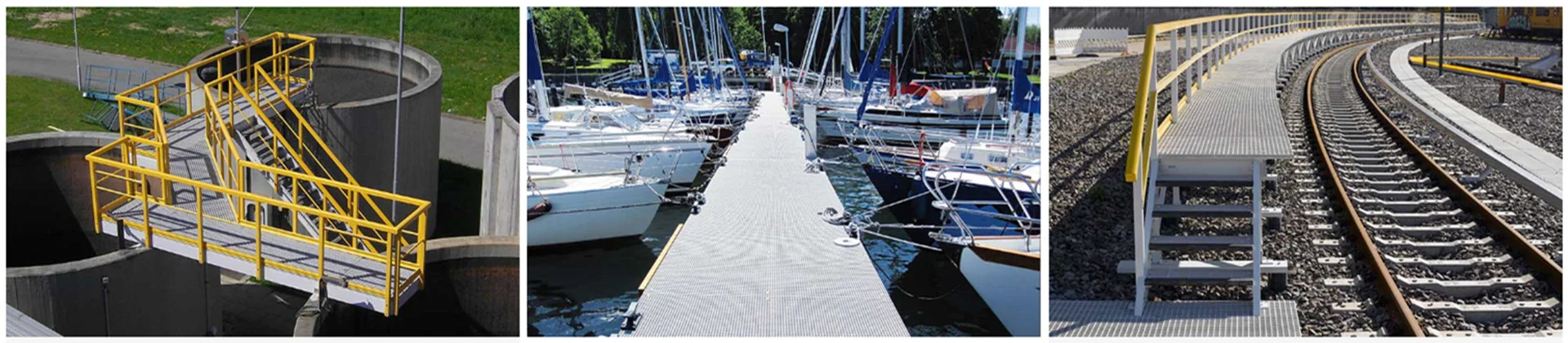
Fiberglass bridge systems are becoming a preferred choice for modern infrastructure projects that demand long service life, fast installation and low maintenance.
Compared with traditional steel or concrete bridges, a bridge made in fiberglass offers low weight, excellent corrosion resistance and safe, non-conductive performance in harsh environments.
This guide explains what a fiberglass (FRP) bridge is, which components are typically used, and where Unicomposite FRP solutions can help you design more durable and cost-effective bridge projects.

Fiberglass Bridge
Why Choose a Fiberglass Bridge vs. Steel or Concrete?
When owners and engineers compare materials for pedestrian bridges, pipe racks, access platforms or small vehicle bridges,
fiberglass reinforced plastic (FRP) provides several clear advantages:
- Lightweight structure
FRP profiles and deck panels are about 1/4 the weight of steel and much lighter than reinforced concrete.
This reduces lifting equipment requirements, simplifies foundations and allows modular bridge sections to be shipped and installed quickly. - Corrosion and chemical resistance
In coastal, wastewater, chemical and de-icing salt environments, steel corrodes and concrete cracks or spalls.
FRP is inherently corrosion-resistant, making it ideal for bridges exposed to moisture, salt spray, acids, alkalis or industrial fumes. - Low maintenance & long service life
Painted steel bridges often need blasting and repainting every few years. FRP bridges do not rust and do not require periodic painting,
which significantly reduces lifecycle maintenance cost. - Electrical & thermal insulation
Fiberglass is non-conductive and non-sparking, which improves safety near power lines, substations, rail systems and industrial equipment. - Design flexibility
Pultruded profiles, molded gratings and deck panels can be combined into many different bridge shapes, spans and load capacities.
Surface textures and colors can be customized to meet both safety and aesthetic requirements.
Key FRP Components Used in Fiberglass Bridges
A typical fiberglass bridge is not a single part, but a system of FRP components working together.
Unicomposite can supply the main structural and decking elements required for complete bridge solutions.
FRP Beams and Girders
Pultruded
FRP I-beams and box beams act as the primary load-carrying members of the bridge:
- Used as main girders, cross-beams and stringers
- High strength-to-weight ratio with predictable mechanical properties
- Available in multiple sizes, wall thicknesses and resin systems for different load classes
Fiberglass Bridge Deck Panels
The bridge deck provides the walking or driving surface. Depending on the application, you can use:
- pultruded FRP decking planks for solid, continuous decks
- molded or pultruded grating for open mesh, anti-slip walking surfaces
- Special surface treatments (grit top, patterned top) for improved skid resistance
FRP Rebar in Deck Slabs and Foundations
FRP rebar
can be used in concrete elements related to the bridge, such as:
- Concrete abutments and foundations
- Composite FRP–concrete deck slabs
- Edge beams, parapets and retaining walls
Because FRP rebar does not rust, it significantly extends the life of reinforced concrete structures exposed to salt or chemicals.
Handrails, Fencing and Access Structures
A complete fiberglass bridge solution normally includes:
FRP handrails and guardrails for fall protection- FRP ladders and platforms for access and maintenance
- FRP fencing or barriers where required by safety codes
These systems are non-conductive, corrosion-resistant and color-stable, making them ideal for wastewater plants, power utilities and chemical facilities.
Typical Applications of Fiberglass Bridges
Because of their unique properties, fiberglass pedestrian and utility bridges are widely used in:
- Industrial plants
Access bridges over tanks, process lines, clarifiers and channels in wastewater treatment or chemical plants. - Coastal and marine environments
Walkways and small bridges for docks, marinas, offshore platforms and coastal protection structures, where steel quickly corrodes. - Municipal & public infrastructure
Pedestrian bridges in parks, greenways, golf courses and residential communities, often replacing aging steel or timber bridges. - Power & telecommunication
Non-conductive FRP bridges carry cables, pipes or personnel in substations and power plants, reducing electrical risks. - Agriculture & environmental projects
Lightweight bridges over irrigation channels, fish ponds or eco-tourism walkways where minimal maintenance is required.
Design & Installation Considerations for FRP Bridges
When designing a bridge made in fiberglass, engineers should consider:
- Span length and loads
Define clear span, live load (pedestrian, maintenance vehicle, equipment), impact and dynamic effects.
Unicomposite can provide section properties and recommended spans for different profiles. - Deflection and vibration
FRP has lower modulus than steel, so checking serviceability (deflection, vibration comfort) is as important as ultimate strength. - Connections and fasteners
FRP beams and decks can be bolted, bonded or clamped. Stainless steel or FRP fasteners are typically used to avoid corrosion. - Fire performance
Select appropriate resin systems and fire-retardant formulations according to local fire codes and project requirements. - Surface finish and anti-slip
For pedestrian bridges, a gritted anti-slip surface or patterned top is recommended, especially in wet or icy conditions. - Transport and modularity
Because of their light weight, FRP bridge modules can often be pre-assembled in sections and lifted into place with smaller cranes,
minimizing road closures and installation time.
Case-Style Example – Lightweight Pedestrian Bridge
A typical fiberglass pedestrian bridge solution from Unicomposite may include:
- Two or more FRP I-beam girders as the main structure
- Cross-beams connected with bolted stainless steel fasteners
- Pultruded deck panels with anti-slip grit surface
- FRP handrail system integrated with the deck
- FRP rebar used in the concrete abutments and approach slabs
Compared with a traditional steel bridge, this solution:
- Can reduce total bridge weight by more than 50%
- Eliminates the need for periodic repainting
- Offers excellent corrosion resistance in wastewater or coastal environments
- Allows fast installation with minimal disruption to existing operations
Why Work with Unicomposite for Fiberglass Bridge Projects?
Unicomposite has been focused on FRP pultruded profiles and solutions since 1998, supplying customers worldwide in infrastructure, wastewater treatment, electrical power, marine and other industries.
By working with Unicomposite on your fiberglass bridge project, you benefit from:
- Complete range of FRP structural profiles and gratings
- Custom pultrusion and machining for special bridge geometries
- Application experience in harsh industrial and coastal environments
- Quality management and traceability from an ISO-certified factory
- Engineering support for material selection, section choices and connection details
Whether you need a small pedestrian bridge, an access bridge in a wastewater plant or corrosion-resistant walkways in a chemical facility,
Unicomposite can provide reliable FRP components and technical support.
Request a Fiberglass Bridge Quote
Frequently Asked Questions About Fiberglass Bridges
With correct design and installation, FRP bridge components can provide a service life of 30 years or more in many environments,
especially where steel would suffer from corrosion or where timber would rot.
Yes. Properly designed FRP bridges can be engineered for pedestrian, maintenance vehicle or light truck loads.
For higher load classes, hybrid solutions with FRP decks on steel or concrete structures are also possible.
Always consult with structural engineers and follow local codes.
This is one of the main advantages of FRP. Fiberglass bridges are widely used in
coastal, offshore, wastewater and chemical projects because of their corrosion resistance and low maintenance requirements.
You can send bridge span, width, load requirements and environmental conditions to Unicomposite.
Our engineering team will recommend suitable FRP beams, deck panels, gratings and accessories, and provide a tailored quotation.


