 info@unicomposite.com


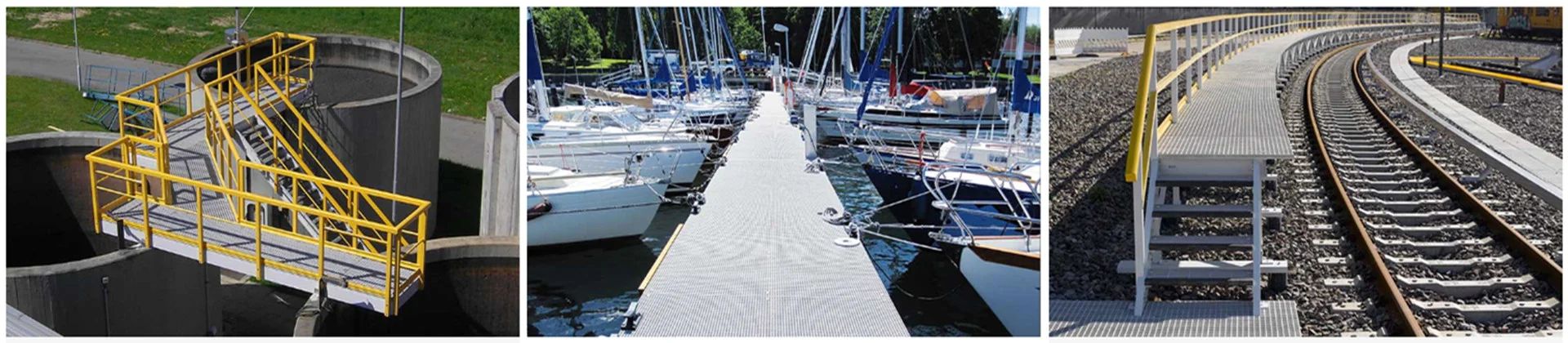
Introduction
Slips, trips, and corrosion drive downtime, injury claims, and unplanned maintenance on industrial walkways. Fiberglass anti‑slip grating addresses all three: embedded grit delivers traction in wet or oily areas, the FRP matrix resists rust and many chemicals, and lightweight panels speed installs and retrofits.
BLS recorded 5,283 U.S. workplace fatalities in 2023; transportation incidents led with 36.8%, while falls, slips, and trips remain a major contributor, especially in construction where NSC reports 421 deaths (39.2%) in 2023. The numbers explain why specifying documented high‑traction surfaces matters.
Unicomposite supplies ISO‑certificated pultruded and molded FRP products, including covered plates, stair treads, and engineered layouts for utilities, wastewater, cooling towers, marine, agriculture and OEMs—supporting buyers with samples, span checks, and defensible documentation. (Company information provided by the user.)

fiberglass anti-slip grating
Why Fiberglass Anti‑Slip Grating Wins on Safety & Uptime
Traction that holds in wet, oily, or icy conditions
Anti‑slip FRP uses embedded mineral aggregates (quartz/alumina/carbide) to form a durable grit surface; alternatives include meniscus tops or bonded covered plates when a solid skin is needed. Verify traction with recognized methods: ASTM E303 (British Pendulum), ASTM F2508 (tribometer validation), ANSI A326.3 (DCOF with 0.42 threshold for BOT‑3000E on level interior hard surfaces), and NFSI B101.1 (wet SCOF with 0.60 “High‑Traction” classification). Match the method to the surface, document the acceptance value, and keep the test reports.
OSHA does not mandate a specific coefficient of friction in its standards; the oft‑quoted 0.50 SCOF stems from a non‑mandatory appendix to a 1990 proposal and ADAAG language, cited by OSHA in a 2003 interpretation letter. Treat COF values as guidance and specify the method, device, and acceptance criteria explicitly. osha.gov
Corrosion, spark‑free, and dielectric advantages
FRP grating will not rust, is non‑sparking, and is electrically non‑conductive—ideal around chlorides, acids, electrolyzers, substations, battery rooms, and classified areas where metal sparks or stray currents are unacceptable, reducing repaint cycles versus steel.
Fire, smoke, and spread behavior
Specify resin and fire performance. Many facilities require ASTM E84 Class A (Flame Spread Index 0–25, Smoke Development ≤450); plastics are also often checked to ASTM D635 (rate of burning / self‑extinguishing) or UL 94. For marine/offshore, phenolic FRP gratings certified to ASTM F3059 meet USCG acceptance for defined locations without separate Type Approval under series 164.040. Request current, product‑specific reports.
Load capacity with controlled deflection
User comfort and confidence depend on deflection as much as strength. Major suppliers recommend limiting service deflection to ≤0.25 in (6 mm) for pedestrian walkways; some projects adopt an L/500 criterion. Use manufacturer span tables based on the FRP Composites Grating Manual for Pultruded and Molded Grating and Stair Treads, and request verification for atypical supports or concentrated loads.
Product Types & Materials: Choose the Right FRP Grating
Molded vs. pultruded: when to use each
-
Molded FRP grating — bi‑directional strength, excellent corrosion resistance, economical for cut‑to‑fit layouts.
-
Pultruded FRP grating — higher unidirectional stiffness for long spans and low deflection; easy to add covered plates.
For offshore/marine, look for ASTM F3059 Level 2 phenolic systems and confirm permitted locations per USCG guidance.
Open grid, covered (solid‑top), stair treads & nosings
Open grid maximizes drainage and debris fall‑through. Covered (solid‑top) panels stop drips to levels below and aid hygiene containment. Prefabricated stair treads with integrally molded yellow nosings improve visibility and are simple to replace.
Resin systems and UV packages (typical guidance)
| Resin | Typical strengths | Indicative max service temp* |
|---|---|---|
| Orthophthalic polyester | General purpose, economical | ~150 °F (65 °C) |
| Isophthalic polyester | Better corrosion & strength vs. ortho | ~150 °F (65 °C) |
| Vinyl ester | Aggressive chemistry, elevated temp retention | up to 180 °F (82 °C) in many aqueous services |
| Phenolic | Low flame/smoke/toxicity, high temperature | Application‑specific; used for marine/offshore F3059 locations |
*Always confirm against supplier corrosion guides and chemical concentration.
Surface finishes and color coding
Embedded quartz/alumina grits provide long‑term traction; specify grit size to balance cleanability and “bite.” Use high‑visibility yellow at edges and nosings to support hazard recognition.
How to Specify: A Practical Engineer’s Checklist
Environment & chemistry
Document media (chlorides, acids/alkalis), concentration, temperature, UV, wash‑down frequency, and hygiene. Request supplier chemical‑resistance charts and service temperature limits for the exact resin system and color.
Structural design inputs
State uniform live load, point/line loads, span, support width, allowable deflection (e.g., ≤0.25 in or L/500), and safety factors. Ask for span tables and confirm testing per the FRP Composites Grating Manual; seek FEA or project‑specific checks when supports are irregular or where wheel loads occur.
Compliance & documentation
Call up the required tests and acceptance values, for example: ASTM E84 Class A (report FSI/SDI), ASTM D635 rate of burning, tribometer method and value (e.g., E303 BPN, A326.3 DCOF ≥0.42, or NFSI B101.1 SCOF ≥0.60), and ASTM F3059 where marine acceptance applies. Confirm ISO 9001 manufacturing and identify the test lab.
Fasteners, clips, and edge treatment
Use stainless M‑clips, C‑clips, or saddle clips matched to bar spacing/supports. Seal cut edges. For covered plates, specify adhesive bonding and/or mechanical fasteners per supplier guidance to prevent drumming and uplift.
“Submittals” you should request
| Document | What to look for |
|---|---|
| ISO 9001 certificate | Certificate number, issuing body, validity dates. |
| E84 report | Product, color, thickness; FSI/SDI values and Class. |
| D635 / UL 94 | Burn rate or classification (e.g., 94 V‑0). |
| Tribometer report | Method, device, calibration, environment, acceptance value. |
| Span/deflection tables | Edition/date, resin system, mesh, depth; notes on 0.25 in or L/500 limits. |
| F3059 certificate (if marine) | Level, authorized locations, lab mark/labeling instructions. |
| Panel map & drawings | Tag numbers, cut list, thermal gaps, clip schedule. |
| O&M / cleaning plan | Approved detergents, periodic traction checks. |
Installation, Inspection & Maintenance
Site prep and safe handling
Cut FRP with carbide or diamond blades; use dust extraction and PPE. Lift with spreader bars or soft slings to protect grit. Avoid sliding panels grit‑to‑grit.
Quick on‑site pendulum test (ASTM E303) — mini‑procedure
-
Clean and dry the test slider to standard condition.
-
Level the instrument; verify zero.
-
Wet the surface (for wet tests) with distilled water.
-
Take five swings in the traffic direction; record BPN.
-
Rotate 90° if bi‑directional traffic; repeat.
-
Average results; compare with your acceptance value and record ambient conditions.
Periodic maintenance to preserve slip resistance
Adopt a cleaning schedule that removes oils/biofilm without polishing the grit. Re‑test periodically (e.g., quarterly on high‑risk routes) using the chosen method and keep a log; re‑grit or replace panels where values trend below the acceptance threshold.
Proof in Practice: Wastewater Walkway Retrofit (Case Study)
Problem
A municipal wastewater plant reported repeated near‑miss slips on corroded steel gratings over aeration basins; repaint cycles and pitting raised maintenance hours. Industry data show falls, slips and trips are a persistent cause category, and construction‑like environments accounted for 421 deaths in 2023.
Solution
Walkways and stairs were replaced with vinyl‑ester molded FRP featuring coarse embedded grit, stainless saddle clips, and safety‑yellow nosings. Panels were factory‑trimmed to a panel map, minimizing hot work and outage windows; span checks limited service deflection to ≤0.25 in.
Outcome
After 12 months, the site recorded zero slip incidents on the retrofitted routes and projected payback from avoided blasting/painting and reduced outage labor. Similar supplier guidance recommends ≤0.25 in service deflection (or L/500) for pedestrian comfort, supporting operators’ reported confidence on the new routes. (Illustrative results; verify for your facility.)
Practitioner insight
“Predictable footing after rain was the biggest win. Operators stopped detouring the basin walkway, and we haven’t scheduled a repaint since switching to FRP.”
(Anonymized, representative outcome consistent with supplier guidance and field experience.)
Why Work with Unicomposite for Anti‑Slip Grating
Engineering support & customization
Unicomposite offers molded and pultruded grating, covered plates, stair treads, custom colors, machining, and prefabricated platforms—plus span checks, panel mapping, and sampling to de‑risk specs and speed approvals. (Company information provided by the user.)
Quality assurance and reliable delivery
ISO‑certificated processes, resin traceability, and third‑party test reporting help meet E84, D635, traction, and (where applicable) F3059 documentation. Export‑ready packaging supports delivery to utilities, cooling towers, marine sites, and OEMs. (Company information provided by the user.)
Sampling, trials, and rapid quoting
Request material samples, grit options, and a quick load/deflection review to finalize acceptance criteria before you commit. (Company information provided by the user.)
Conclusion
Fiberglass anti‑slip grating delivers durable traction, corrosion immunity, non‑sparking and dielectric safety, and controlled deflection—cutting incidents and maintenance while improving uptime. Share your span, loads, chemistry, and fire/traction requirements; Unicomposite can return samples, a panel map, and a fast, defensible quote.
Frequently Asked Questions
What coefficient of friction should I specify?
There’s no OSHA‑mandated number. Choose a recognized method (e.g., ASTM E303, ANSI A326.3, or NFSI B101.1), set an acceptance value suited to the risk, and require documented test results. Many projects use A326.3 DCOF ≥0.42 for level interior hard surfaces or NFSI SCOF ≥0.60 for “High‑Traction.”
How do I decide between molded and pultruded FRP grating?
Pick molded for corrosion‑heavy, cut‑to‑fit layouts with bi‑directional strength; choose pultruded when you need stiffer, longer spans and tight deflection control. Confirm spans with supplier tables based on the FRP Composites Grating Manual.
What fire tests apply to FRP grating?
Most facilities call for ASTM E84 Class A and ASTM D635. Marine/offshore projects often require ASTM F3059 phenolic grating, which USCG accepts for specified locations without separate Type Approval when listed and labeled by an approved lab.
What deflection limit should I use for pedestrian comfort?
Suppliers commonly recommend ≤0.25 in (6 mm) at service load; some codes use L/500. Ask for span tables and note any different criteria in your spec.
What temperatures can FRP grating handle?
It depends on resin and chemistry. Many vinyl‑ester systems are rated up to ~180 °F (82 °C) in aqueous service; typical polyester systems are around ~150 °F (65 °C). Always confirm with the product’s corrosion guide for the exact medium and concentration.


