FRP Fencing Systems for Power and Industrial Sites

time:2026-5-22

Introduction

In power substations, industrial plants, and utility facilities, fencing does more than mark a boundary. It affects electrical safety, corrosion control, maintenance workload, and long-term operating cost.

Traditional steel fencing is familiar, but it can create problems in high-voltage, high-humidity, coastal, wastewater, and chemical environments. Conductivity, magnetic behavior, rust, coating repair, and heavy handling all become real engineering concerns over time.

FRP fencing systems give engineers and procurement teams a practical material option for these demanding sites. Made from fiberglass reinforced plastic profiles, FRP fencing provides non-conductive, non-magnetic, corrosion-resistant, and lightweight performance when metal fencing creates safety or maintenance challenges.

This guide explains how FRP fencing works, where it is used, what design details matter, and how B2B buyers can specify a fencing system for power and industrial projects.

FRP Fencing Systems for Power and Industrial Sites

frp fencing systems

What Is an FRP Fencing System?

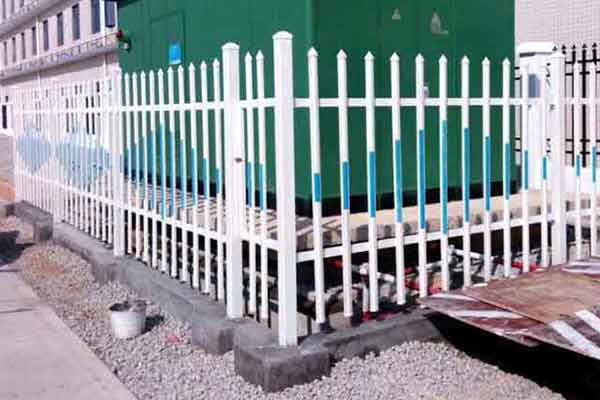
An FRP fencing system is a fence, guardrail, or restricted-area barrier made from fiberglass reinforced plastic profiles. A typical system includes posts, horizontal rails, vertical infill bars, panels, base plates, brackets, connectors, and fasteners.

FRP combines glass fiber reinforcement with a resin matrix. The glass fiber provides strength, while the resin contributes corrosion resistance, weather resistance, and electrical insulation. Final performance depends on the resin system, profile geometry, fiber content, surface finish, fastener material, and installation method.

For power and industrial sites, the main value is not only perimeter control. FRP fencing helps reduce conductive metal exposure, lower corrosion maintenance, and support custom layouts around equipment, platforms, cable trenches, and restricted zones.

Main components of an FRP fencing system

A typical FRP fencing system may use square tube posts, round tube rails, pultruded channels, angles, vertical bars, molded panels, and mechanical fasteners.

In utility fencing designs, reference profile sizes may include 50×50×4 mm square tube posts, 40×40×4 mm horizontal rails, and 30×3 mm round tube infill members. These dimensions should be treated as project references. Final sizes need to match fence height, post spacing, site load, wind exposure, impact risk, and anchor method.

Fasteners also affect system reliability. Stainless steel hardware is often used for corrosion resistance, while non-metallic or insulated accessories may be evaluated when electrical isolation is a key requirement.

Where FRP fencing is commonly used

FRP fencing is commonly used in power substations, transformer zones, switchyards, restricted utility areas, wastewater facilities, chemical plants, coastal sites, platforms, and outdoor equipment protection zones.

Engineers often specify FRP when a site has one or more difficult conditions: high corrosion exposure, electrical safety requirements, magnetic interference concerns, limited maintenance access, humid climate, or a need for customized lightweight structures.

The more demanding the environment, the stronger the lifecycle case for FRP becomes.

Why Use FRP Fencing in Power Utilities?

Power utilities often evaluate fencing by initial cost. That approach can miss the real cost drivers. Over a fence’s service life, corrosion inspection, coating repair, equipment access, safety risk, and replacement work can cost more than the original material.

FRP fencing helps address these issues when metal systems create unwanted electrical, magnetic, or corrosion-related concerns.

Why do power utilities specify non-conductive FRP fencing?

Power utilities specify non-conductive FRP fencing because it helps separate personnel and assets without adding a conductive metal barrier near energized equipment. FRP does not replace site electrical design, grounding review, or safety procedures, but it supports safer material selection around substations, transformers, switchgear, and restricted electrical zones.

This property matters in areas where accidental contact, induced voltage, or conductive pathways could increase risk. In field installations, FRP fencing is often considered around transformer areas, equipment separation zones, and restricted work areas where operators want access control without adding unnecessary conductive structures.

Procurement documents should clearly state whether non-conductive performance is required. That helps suppliers recommend the right profiles, accessories, and connection details.

Why does non-magnetic performance matter?

FRP is non-magnetic, which makes it useful in high electromagnetic environments where steel fencing may create design concerns. In power systems, non-magnetic materials can help reduce unwanted interaction with sensitive equipment or electromagnetic fields.

This does not make FRP a universal solution for every power facility. Site engineers still need to review equipment layout, clearance, local rules, grounding plans, and project standards. However, non-magnetic behavior gives design teams another material option when conventional metal fencing complicates the system.

How does FRP reduce corrosion maintenance?

FRP fencing can reduce corrosion maintenance because it does not rust like steel. In outdoor, coastal, wastewater, and chemical environments, the resin matrix helps protect the glass fiber reinforcement from moisture and corrosive exposure.

Performance still depends on the specification. Resin type, UV package, surface veil, fastener selection, cleaning chemicals, and chemical splash exposure all affect long-term durability. General-purpose resin may suit moderate outdoor use, while harsher chemical environments may require higher-resistance resin systems.

In an anonymized coastal utility site scenario, a facility team replaced a rust-prone metal barrier around outdoor electrical equipment with FRP fencing. The decision reduced repainting needs and simplified visual inspections, especially in sections exposed to salt air and high humidity.

FRP Fencing Design Considerations

After selecting FRP as the material, the next step is system design. A reliable fence depends on the relationship between profile size, fence height, spacing, anchoring, resin system, and site exposure.

A strong FRP profile cannot perform well if the base connection, span, or fixing method is poorly designed.

Recommended post and rail profiles

FRP fencing commonly uses pultruded square tubes, round tubes, channels, angles, and custom profiles. Square tubes are often used as vertical posts because they provide stable support and clean connection surfaces. Round or square tubes may serve as horizontal rails or infill members.

Profile selection should reflect the application. A low equipment-separation barrier has different requirements from a perimeter fence, platform guardrail, or high-exposure industrial boundary.

Engineers should confirm post spacing, rail layout, unsupported span, connection type, and expected service loads before approving production drawings.

FRP Fencing Systems for Power and Industrial Sites

frp fencing systems 2

Fence height and spacing

Fence height depends on the protection requirement. Guardrail-style barriers may use heights above 1150 mm, while perimeter fencing may require taller structures based on project standards.

Spacing between vertical members should limit unsafe access while maintaining visibility and airflow. Some utility-style layouts may keep infill spacing below 110 mm, especially when restricted access or personnel safety is a concern.

Buyers should confirm site standards, owner specifications, local safety requirements, and equipment clearance before finalizing spacing.

Base fixing and anchor design

The base fixing method has a major impact on fence stability. FRP fencing can be installed on concrete, steel structures, FRP platforms, or prepared foundations using base plates, brackets, embedded supports, or mechanical anchors.

Anchor bolts such as M12 expansion bolts may be used in concrete fixing, depending on the project design. Final anchor selection should match the base material, fence height, wind exposure, load requirement, and impact risk.

Connections deserve close review in high-wind areas, vehicle-access zones, and retrofit projects around existing equipment.

Key specifications to confirm

The table below summarizes the main design inputs buyers should define before requesting a quotation:

Specification What to Confirm Why It Matters
Fence height Guardrail height, perimeter height, or custom height Affects post size, spacing, and safety function
Profile type Square tube, round tube, channel, angle, or custom profile Determines strength, connection design, and fabrication method
Resin system Polyester, vinyl ester, or project-specific resin Affects corrosion and chemical resistance
Infill spacing Vertical bar or panel opening size Supports access control, visibility, and safety requirements
Installation base Concrete, steel platform, FRP platform, or foundation Determines bracket and anchor design
Surface finish Smooth, coated, pigmented, UV-resistant, or custom finish Affects outdoor durability and appearance
Fasteners Stainless steel, insulated, or project-specific hardware Affects corrosion resistance and electrical design
Quantity and packaging Posts, rails, panels, fittings, spare parts Supports bulk ordering and site installation planning

Clear specifications reduce quotation errors and help manufacturers prepare practical fabrication drawings.

FRP Fencing vs Steel and Aluminum Fencing

Material choice should reflect site risk, lifecycle cost, and required performance. FRP is a strong option when electrical insulation, non-magnetic behavior, corrosion resistance, and low maintenance matter. Steel and aluminum still have valid roles in other conditions.

The table below compares common fencing materials for power and industrial sites:

Property FRP Fencing Steel Fencing Aluminum Fencing
Electrical behavior Non-conductive Conductive Conductive
Magnetic behavior Non-magnetic Magnetic in most common grades Non-magnetic in many cases
Corrosion resistance High with suitable resin and hardware Requires coating or galvanizing Moderate to high, environment-dependent
Weight Lightweight Heavy Lightweight
Maintenance Low when properly specified Higher due to rust and coating repair Moderate
Fabrication Good for pultruded and custom profiles Strong welding and fabrication options Good, but joining method matters
Common use Substations, wastewater, chemical, coastal sites General fencing and heavy-duty barriers Lightweight general or architectural fencing

When may FRP fencing not be the best fit?

FRP fencing may not be the best fit in severe impact zones, applications with project-specific fire requirements, or sites where local codes require metal fencing. Engineers should also review long-span designs, high wind loads, and unusual connection details before selecting FRP as the final material.

This balanced approach helps avoid over-specification. Steel may remain the right choice for heavy impact areas. Aluminum may suit lightweight general fencing. FRP becomes more attractive when the site requires corrosion resistance, electrical insulation, or non-magnetic performance.

Common Applications of FRP Fencing

FRP fencing delivers the most value in difficult environments. Clean, dry, low-risk areas may not need it. Harsh operating sites often do.

Power substations and transformer areas

Substations and transformer zones require controlled access and careful material selection. FRP fencing can be used around transformer areas, switchgear zones, restricted equipment spaces, and utility boundaries where non-conductive and non-magnetic properties are useful.

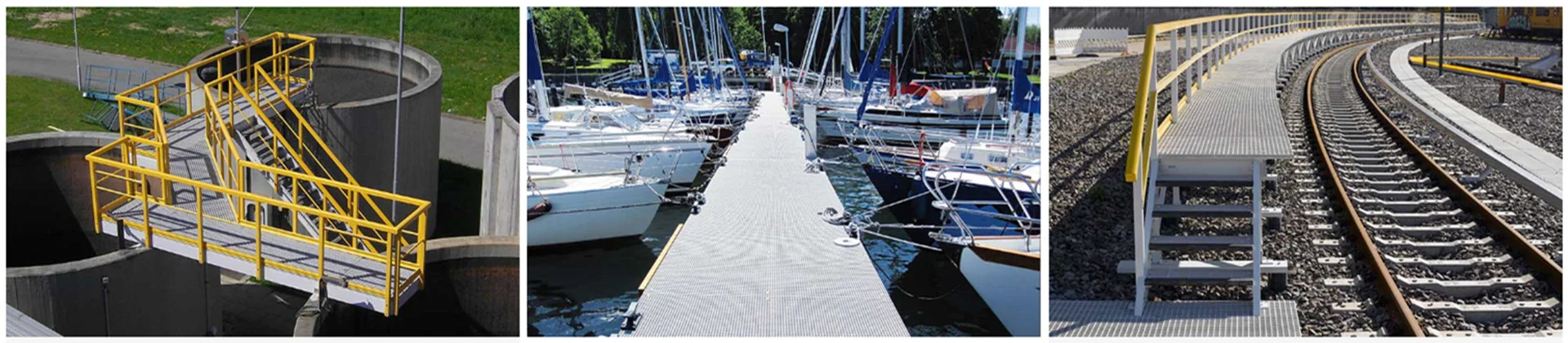
It can also work with FRP handrails, platforms, ladders, and grating systems to create a consistent non-metallic access structure.

Wastewater and chemical facilities

Wastewater plants and chemical facilities expose fencing to moisture, corrosive gases, splashes, and cleaning chemicals. Steel fencing may require frequent inspection and recoating in these locations.

FRP fencing can reduce corrosion-related maintenance around tank areas, pump stations, chemical storage spaces, drainage zones, and industrial walkways. Buyers should provide chemical exposure details during the RFQ stage so the resin system can be selected properly.

Coastal and humid environments

Coastal sites expose fencing to salt air, humidity, and UV. FRP can support ports, coastal substations, marine-related facilities, and outdoor industrial zones where metal systems may corrode quickly.

For these projects, specifications should include UV resistance, resin type, fastener material, color, surface finish, and packaging requirements for outdoor storage.

Daily Maintenance of FRP Fencing

FRP fencing is low maintenance, but it still benefits from scheduled inspection. Maintenance teams should focus on cleaning, fasteners, anchors, surface condition, and impact damage.

Routine cleaning can use water and mild cleaning agents. Dust, mud, chemical residue, or organic buildup should be removed when it affects appearance or safety.

Inspections should check for cracks, loose fasteners, anchor movement, surface wear, and accidental impact damage. Small surface marks may not affect performance, but cracked members, broken posts, or damaged anchor points require repair or replacement.

Coatings are not usually required for corrosion protection, though some projects may request coating for color, UV performance, or owner standards. If coating is applied, the finish should be checked for adhesion, pinholes, bubbles, flow marks, or exposed base material.

How to Buy FRP Fencing Systems

Procurement teams get better results when they provide complete project information early. A useful RFQ should include layout drawings, fence height, total length, post spacing, gate requirements, installation base, color, site exposure, and performance requirements.

For power sites, buyers should specify whether non-conductive or non-magnetic performance is required. For chemical and wastewater sites, buyers should list chemical exposure, cleaning methods, UV exposure, temperature range, and humidity conditions.

FRP fencing can be supplied as raw profiles, cut-to-size kits, modular sections, or custom fabricated systems. The best option depends on installation labor, project schedule, shipping method, and site complexity.

Unicomposite Technology Co., Ltd. manufactures FRP/GRP composite products in Nanjing, China. The company operates an ISO 9001-certified, 18,000 square meter facility and supports pultrusion, pulwinding, SMC/BMC molding, hand lay-up, and vacuum infusion. For fencing projects, these capabilities can support custom pultruded profiles, project drawings, cut-to-size kits, bulk packaging, and coordinated supply for utility or industrial buyers.

A qualified supplier should help clarify profile selection, resin system, hardware, installation details, packaging, and replacement parts before production begins.

Conclusion

FRP fencing systems help power utilities and industrial facilities solve problems that metal fencing can create in electrical, corrosive, magnetic, and high-maintenance environments.

Key takeaways:

FRP fencing supports non-conductive and non-magnetic barrier design for substations, transformer areas, and restricted utility zones.

Corrosion resistance depends on resin system, UV package, fastener material, surface finish, and site exposure.

Good design requires confirmed profile size, fence height, infill spacing, anchoring method, load requirement, and installation base.

FRP may not suit every project, especially severe impact areas or applications where local codes require metal fencing.

The best buying process starts with clear drawings, complete site conditions, and a supplier that can support custom fabrication.

[Contact Unicomposite for a custom FRP fencing system quote →]

Share this article: