 info@unicomposite.com


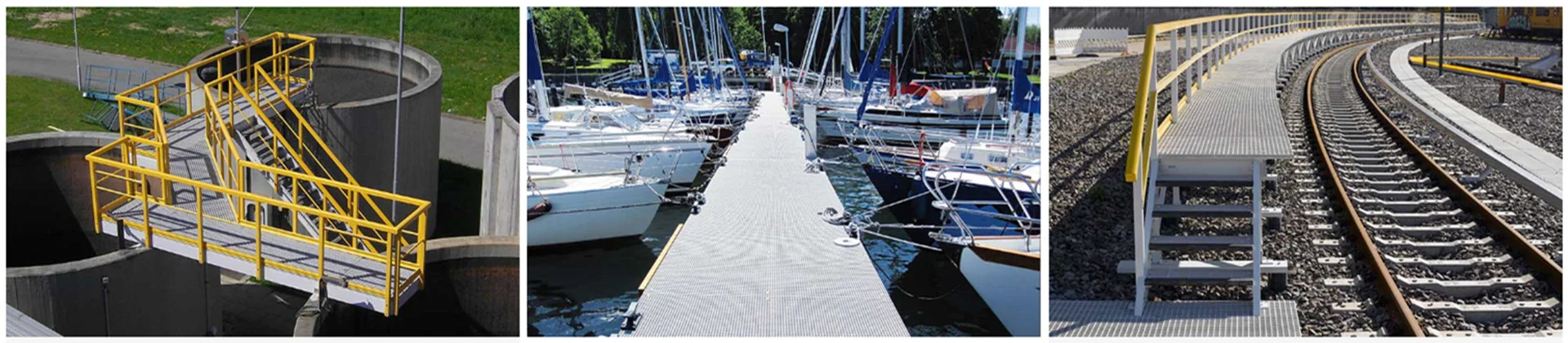
Livestock flooring does more than separate animals from manure. It affects drainage, ventilation, cleaning speed, hoof safety, corrosion risk, and long service cost. If the flooring material is too weak, too slippery, too heavy, or poorly matched to the animal, the farm pays for it through maintenance problems and replacement work.
That is why agricultural buyers, farm equipment distributors, and OEM manufacturers evaluate FRP grating for livestock flooring. Fiberglass reinforced plastic grating can provide corrosion resistance, open drainage, lightweight handling, and custom panel design for wet farm environments.
This guide explains where FRP grating can be used in animal facilities, what benefits matter most, how it compares with traditional livestock flooring materials, and what buyers should confirm before placing bulk or custom orders.
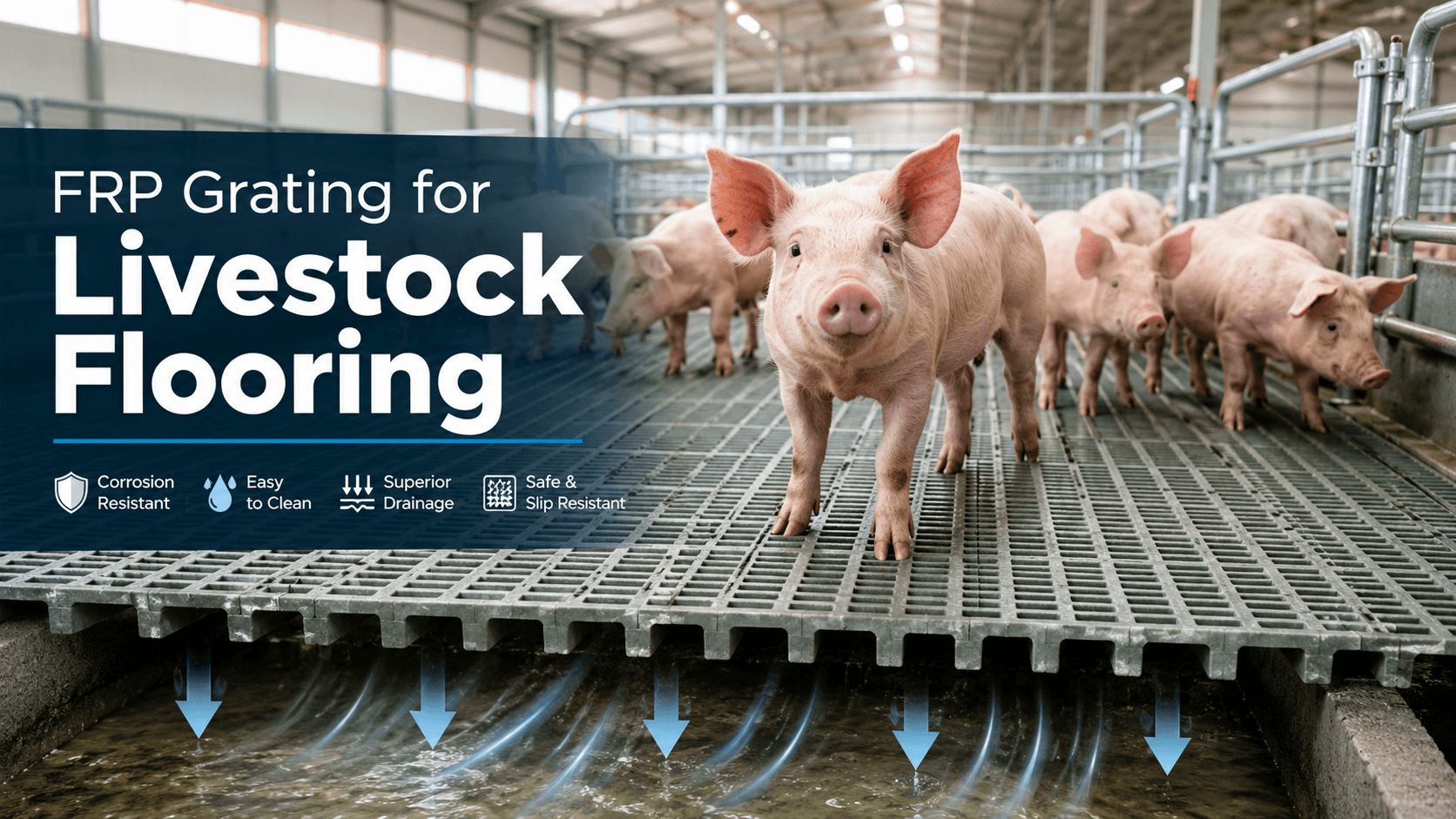
frp grating for livestock flooring
What Is FRP Grating for Livestock Flooring?
FRP grating for livestock flooring is a fiberglass reinforced plastic panel used as a raised or open floor surface in animal facilities. It supports animals while allowing manure, wastewater, and air to pass through the openings.
The material combines glass fiber reinforcement with a resin matrix. The glass fiber provides strength, while the resin helps the panel resist moisture, corrosion, and repeated cleaning exposure. In agricultural applications, buyers often use this type of grating for pig farms, poultry houses, sheep and goat pens, rabbit cages, kennel flooring, and manure drainage areas.
Can FRP grating be used for livestock flooring?
FRP grating can be used for livestock flooring when the panel size, load capacity, bar spacing, surface texture, opening shape, and support method match the animal type and farm environment. Buyers should confirm hoof or foot safety, cleaning method, drainage needs, and chemical exposure before approving FRP panels for animal facilities.
Agricultural flooring needs a different review process from industrial walkway grating. A panel that works for workers may not suit piglets, poultry, goats, or rabbits if the opening size, edge shape, or surface texture creates foot injury risk.
The phrase “fecal leakage plate” should also be replaced in most English B2B content. More natural terms include livestock flooring, manure drainage floor, animal flooring, slatted floor, and FRP grating for farm applications.
The first decision is terminology. The more important decision is whether the floor design actually fits the animal and cleaning workflow.
Why Use FRP Grating in Farm and Livestock Facilities?
After defining the product, buyers need to understand why farms use FRP instead of familiar materials such as bamboo, wood, cement, cast iron, or plastic. The strongest reasons are moisture resistance, corrosion resistance, drainage, ventilation, and service consistency.
Traditional bamboo and wood flooring can absorb moisture, rot, splinter, or become harder to clean after long use. Cement floors are durable, but they are heavy and difficult to modify. Cast iron floors can support heavy loads, yet corrosion and handling weight can create maintenance problems in wet animal environments.
FRP grating gives buyers a lighter and corrosion resistant option. Its open structure helps manure drainage and ventilation, while custom panel sizes can support different pen layouts and cleaning systems.
The table below summarizes key benefits from a farm buyer’s perspective:
| Benefit | Why It Matters in Livestock Facilities | Buyer Checkpoint |
|---|---|---|
| Corrosion resistance | Helps resist moisture, manure, and cleaning exposure | Confirm resin system and chemical exposure |
| Open drainage structure | Allows manure and wastewater to pass through | Confirm opening size and cleaning method |
| Lightweight handling | Supports easier installation and panel removal | Confirm panel size and support layout |
| Custom sizing | Fits pens, cages, channels, and farm layouts | Provide dimensions and quantity |
| Surface design | Helps reduce slipping and animal foot risk | Check texture, edge shape, and bar spacing |
In field installations, buyers often find that cleaning efficiency depends on more than panel material. Floor height, opening size, support frame, slope, manure channel design, and washdown routine all affect performance.
Good livestock flooring starts with animal safety and farm workflow, then moves into material selection.
Common Applications in Animal Farming
Once buyers understand the basic value of FRP, they should narrow the application. A pig farm, rabbit cage, poultry house, and cattle area should not use the same flooring assumptions.
Pig farm flooring may need higher load capacity, hoof safe openings, and panels that tolerate repeated washdown. Poultry houses may prioritize drainage, ventilation, and easy cleaning. Sheep and goat pens need spacing that reduces hoof trapping risk, while rabbit cages and small animal flooring require tighter opening control.
Where is FRP grating livestock flooring commonly used?
FRP grating livestock flooring is commonly used in pig farms, poultry houses, sheep and goat pens, rabbit cages, kennels, cattle areas, and manure drainage zones. Buyers use it where they need ventilation, waste drainage, moisture resistance, corrosion resistance, and panels that can be customized for farm layouts.
In one anonymized pig farm drainage project, the buyer first requested standard FRP panels by size only. After reviewing hoof size, manure flow, washdown frequency, and support frame spacing, the specification changed. The final request included adjusted bar spacing, a safer opening size, thicker panels for load stability, and removable sections for cleaning access.
The table below connects common farm applications with specification priorities:
| Application Area | Main Flooring Need | Key Specification Priority |
|---|---|---|
| Pig farm flooring | Support weight and allow manure drainage | Load capacity, bar spacing, support span |
| Poultry house floor | Ventilation and washdown cleaning | Opening size, surface texture, easy cleaning |
| Sheep or goat pen | Hoof safety and moisture resistance | Rounded edges, spacing, panel stiffness |
| Rabbit cage floor | Small animal foot safety | Smaller openings and smooth edges |
| Kennel or small animal area | Drainage and hygiene | Corrosion resistance and removable panels |
| Manure drainage zone | Waste movement and cleaning access | Open area, resin system, support design |
Livestock flooring material choice should be judged by animal safety, cleaning workflow, wet exposure, and long service maintenance.
FRP Grating vs Traditional Livestock Flooring Materials
With the application defined, material comparison becomes easier. Traditional livestock flooring materials all have strengths, but they also carry limitations in wet, waste exposed, and high cleaning environments.
Plastic slatted floors can be lightweight and affordable, but buyers should confirm stiffness, deformation resistance, and service conditions. Cast iron can support heavy loads, but corrosion and handling weight may increase maintenance concerns. Cement can be durable, though it is heavy and hard to modify. Wood and bamboo may reduce initial cost, yet moisture exposure can shorten service life.
FRP grating becomes attractive when buyers need corrosion resistance, lower handling weight, ventilation, drainage, and custom panel sizing together.
The table below compares common livestock flooring materials:
| Material | Corrosion Resistance | Cleaning | Weight | Durability | Typical Use |
|---|---|---|---|---|---|
| FRP grating | Strong in many wet farm environments | Open structure supports washdown | Light to moderate | Good when specified correctly | Livestock floors, manure drainage, animal pens |
| Plastic slatted floor | Good moisture resistance | Easy to clean | Light | Depends on stiffness and quality | Poultry, piglets, light duty areas |
| Cast iron floor | Can corrode without protection | Moderate | Heavy | Strong under high load | Heavy livestock areas |
| Cement floor | Moisture tolerant | Cleaning depends on slope and finish | Very heavy | Durable but hard to modify | Permanent farm floors |
| Wood or bamboo floor | Weak in wet environments | Harder after aging | Light to moderate | Can rot, crack, or splinter | Low cost or temporary use |
Is FRP grating better than wood or bamboo flooring?
FRP grating is often better than wood or bamboo flooring in wet livestock environments because it resists moisture, does not rot like untreated wood, supports manure drainage, and can be easier to clean. Buyers should still confirm animal foot safety, support span, panel thickness, and opening size before ordering.
Material choice should follow the farm environment. Wood or bamboo may still appear attractive for dry, low cost, temporary use. For wet manure drainage, frequent cleaning, and longer service requirements, FRP grating usually deserves stronger consideration.
The best flooring choice is the one that matches animal safety, cleaning workflow, and actual service conditions.
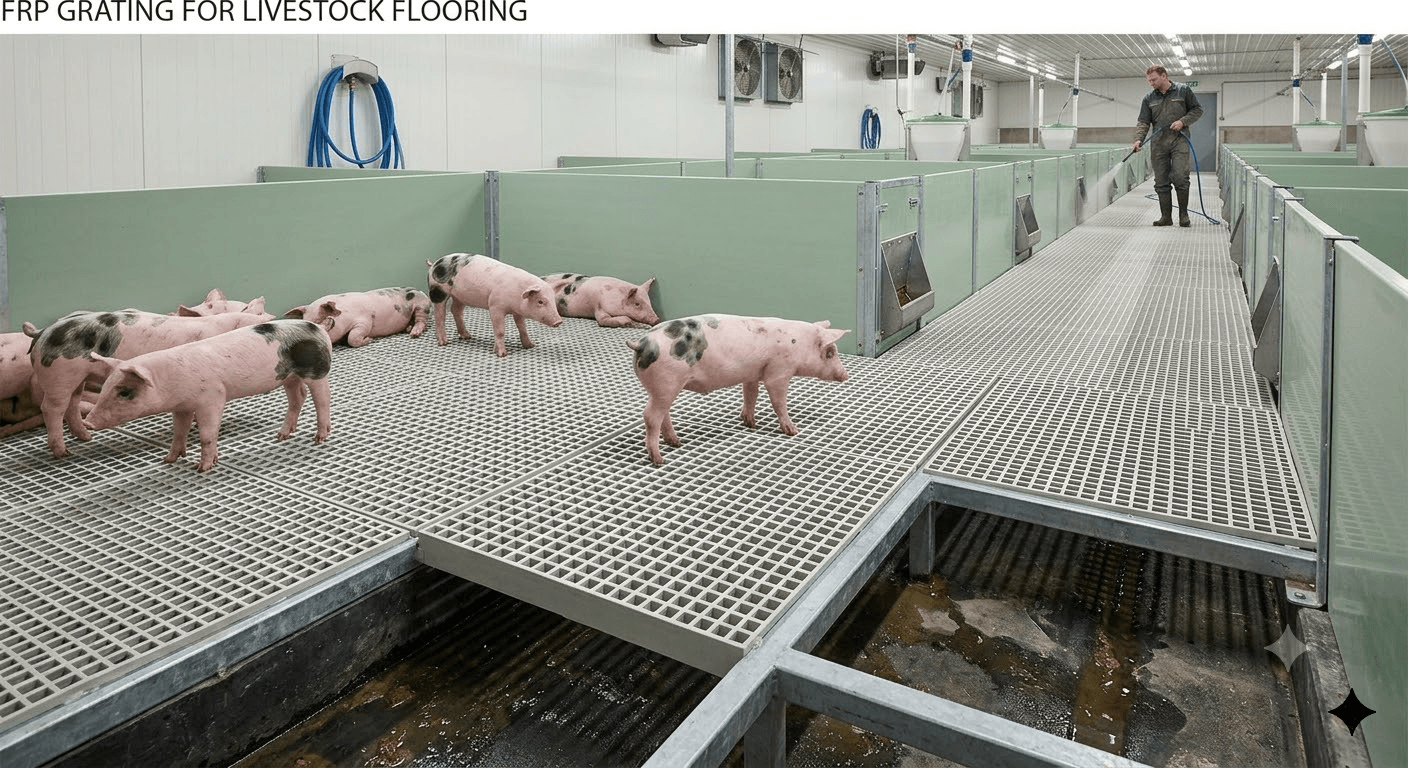
frp grating for livestock flooring 2
How to Choose FRP Grating for Livestock Flooring
After comparing materials, buyers should define the technical specification. The most important factors are animal type, animal weight range, hoof or foot size, load capacity, support span, bar spacing, opening size, panel thickness, surface texture, resin system, and installation method.
Load capacity should match the animal group and stocking conditions. A panel used for rabbits or poultry faces different loading than a panel used for pigs, goats, sheep, or cattle. Buyers should also define whether workers, carts, or cleaning equipment will access the flooring.
Bar spacing and opening size require special attention. Openings must allow manure drainage without creating foot or hoof injury risk. Edge radius, smooth transitions, surface texture, and expected panel deflection should be reviewed before bulk ordering.
Cleaning exposure also matters. Livestock facilities may use water, disinfectants, alkaline cleaners, manure handling systems, and frequent washdown routines. Buyers should describe cleaning chemicals and exposure frequency so the supplier can review resin compatibility.
Use the table below to prepare a livestock flooring inquiry:
| Requirement | What to Provide | Why It Matters |
|---|---|---|
| Animal type | Pig, poultry, sheep, goat, rabbit, cattle, kennel | Guides opening size and load needs |
| Weight range | Average and maximum animal weight | Helps confirm panel capacity |
| Panel size | Length, width, thickness | Supports fit and installation |
| Load requirement | Animal weight, worker access, equipment load | Helps confirm panel structure |
| Opening size | Bar spacing, mesh pattern, open area | Affects drainage and animal safety |
| Edge and surface | Edge radius, texture, anti slip need | Helps reduce injury and slipping risk |
| Support method | Frame, beams, card slot, removable panel | Affects span and stability |
| Cleaning exposure | Washdown method, disinfectants, chemicals | Guides resin compatibility |
| Quantity and packaging | Project order, repeat supply, export packing | Supports production and logistics |
What should buyers check before ordering FRP livestock flooring?
Buyers should check animal type, weight range, hoof or foot size, bar spacing, opening size, panel thickness, support span, deflection expectations, surface texture, resin system, cleaning chemicals, installation method, quantity, and packaging. Sample panels should be tested before bulk purchase when animal safety or fit is uncertain.
Final FRP livestock flooring specifications should be confirmed against animal welfare needs, actual load conditions, cleaning chemicals, installation method, support design, and supplier provided product data before approval.
Unicomposite Technology Co., Ltd, based in Nanjing, China, manufactures FRP and GRP composite products and supplies standard and customized composite profile and system solutions. Its manufacturing capabilities support livestock flooring needs such as custom mesh openings, molded or textured surfaces, cut to size panels, repeat panel dimensions, resin selection, OEM packaging, and export bulk supply.
For farm and OEM buyers, that flexibility matters because livestock flooring often needs repeated panel sizes, suitable openings, cutouts, packaging, and stable supply across multiple barns or product programs.
Common Mistakes When Buying FRP Livestock Flooring
The first mistake is using standard industrial grating without checking animal safety. Industrial grating may work for walkways, but livestock flooring needs careful review of opening size, bar spacing, edge shape, surface texture, and deflection.
The second mistake is ignoring hoof, claw, or foot size. A gap that drains well may still create injury risk if it does not match the animal type and age group.
The third mistake is ordering by panel dimensions only. Load capacity, support span, support frame, and installation method all affect performance. A panel that looks correct in size may fail if the support design is weak.
The fourth mistake is choosing by price only. Low cost panels can create higher service costs if resin quality, thickness, or structure does not match manure, moisture, and cleaning exposure.
The fifth mistake is skipping sample testing. For new animal flooring designs, sample panels can help buyers review fit, opening size, cleaning behavior, and animal movement before bulk orders.
Avoiding these mistakes helps turn FRP grating into a practical livestock flooring system.
Final Recommendation
FRP grating for livestock flooring can be a strong option for farms, agricultural equipment suppliers, and OEM buyers that need corrosion resistance, manure drainage, ventilation, lightweight handling, and custom panel sizes.
Key takeaways:
- Match the panel to animal type, weight range, hoof or foot size, support span, and cleaning method.
- Confirm bar spacing, opening size, surface texture, edge design, panel thickness, resin system, and installation details before ordering.
- Compare FRP with plastic, cast iron, cement, wood, and bamboo based on service environment, cleaning labor, durability, and animal safety.
- Test sample panels before bulk purchase when the application involves new animal groups, uncertain opening size, or custom support layouts.
[Contact Unicomposite for a custom FRP livestock flooring quote →]


