 info@unicomposite.com


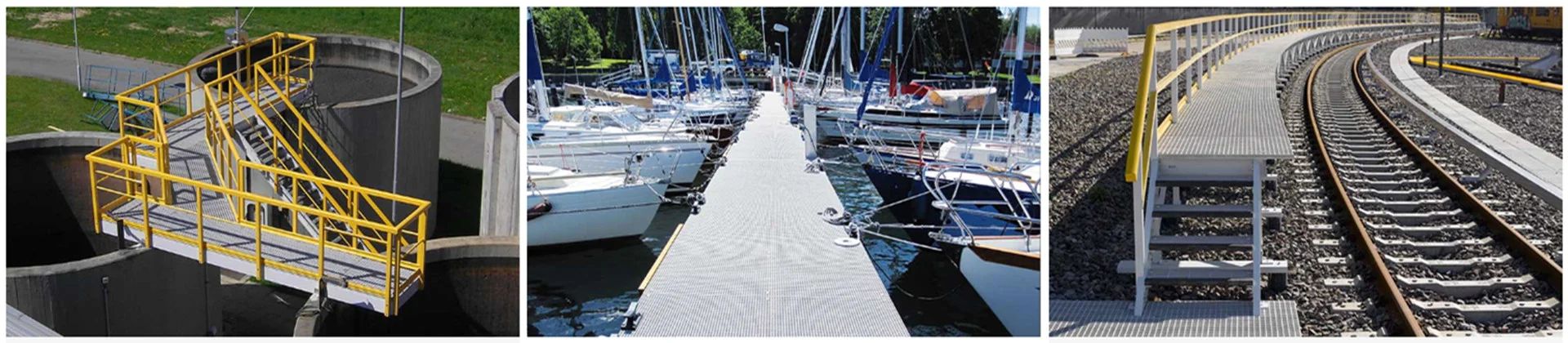
Introduction
Buying an FRP Grating Aisle Board for a plant isn’t about chasing “stronger material.” It’s about preventing the specific problems that shut operations down: slippery walkways after washdowns, rusted metal treads that turn into sharp edges, hardware that loosens, and decking that flexes enough to make crews uneasy.
This guide is built for B2B buyers who need a repeatable way to spec aisle boards across multiple areas—wastewater, cooling towers, chemical zones, marine/coastal sites, and utility platforms—without overbuying.
Perspective note (Who/How/Why): Unicomposite is an ISO certificated pultrusion manufacturer with its own factory producing FRP pultruded profiles and custom composite parts in China, and supporting other forming processes (Pulwound, SMC/BMC, hand lay-up) for custom requests. We use the same “spec-first” approach internally because most aisle-board failures trace back to missing inputs at the quote stage.

frp grating aisle board
Key Buying Criteria for an FRP Grating Aisle Board
1) Define the service profile (where, who, how often)
Before you compare quotes, write a simple service profile:
- Location: indoor/outdoor, splash zone, near drains, near process chemicals
- Exposure: acids/alkalis, chlorides, solvents, UV, steam, temperature swings
- Traffic: pedestrians only, occasional carts, maintenance staging nearby
- Cleaning: pressure washing, detergents, oily residue, grit buildup
Field note (Experience): The most common mismatch we see is a “pedestrian-only” walkway that quietly becomes a maintenance route. The board doesn’t fail immediately—people just start reporting bounce, fasteners creep, and edges get nicked during staged work.
2) Load is important—deflection is what people feel
Ask for both load rating and deflection at your actual span. Even when a board is structurally adequate, too much flex makes crews slow down and can increase hardware fatigue.
Worked example (practical, not overly mathy):
If your support spacing changes from 900 mm to 1200 mm, you’ll usually notice a big jump in “springiness” under the same foot traffic. The right move is not guessing thicker boards—it’s requesting the supplier’s span/load/deflection table for the exact profile and surface.
Why plants push toward FRP in the first place (stat): Corrosion isn’t a minor budget line—NACE’s IMPACT study estimated the global cost of corrosion at US$2.5 trillion, about 3.4% of global GDP (2013). That’s the context behind many “replace steel in wet/chemical areas” programs.
3) Pick resin by exposure, not habit
A shortcut that works: choose resin based on what the aisle board actually sees.
- Isophthalic polyester: common “general industrial” choice
- Vinyl ester: often selected for tougher chemical splash environments (application-dependent)
- Phenolic: considered where fire performance/smoke behavior is a priority (site standards vary)
Also flag:
- UV inhibitors / surface veil for outdoor/cooling tower exposure
- Color for visibility (safety contrast) vs blend-in aesthetics
Choose the Right Surface, Profile, and Dimensions
Surface selection: traction vs cleanability
Surface is where safety and maintenance meet:
- Gritted top: strong traction in wet/oily zones; plan periodic checks for grit wear
- Smoother textures: easier cleaning; can underperform when oils/film show up
- Aggressive traction finishes: useful outdoors where algae/salt film is common
If your EHS team needs a benchmark, OSHA’s guidance has referenced a recommended static coefficient of friction (COF) of 0.5 for walking surfaces. This isn’t meant to turn purchasing into lab testing—just a shared reference when you’re deciding between surface options.
Solid aisle board vs full grating panels
Aisle boards are typically a great fit when you want:
- A defined, comfortable footpath
- Fast retrofit over existing frames
- Modular maintenance (“replace one board” instead of pulling a whole deck)
Full grating panels tend to win when drainage/airflow and debris drop-through are your top priorities.
Anonymized buyer quote (Experience): “We stopped patching rusty tread covers every outage. The aisle boards made the inspection walkdowns calmer.”
Dimensions that avoid surprises
Your supplier can’t “guess” the right profile without these basics:
- Clear span (support-to-support distance)
- Bearing length at each support
- Finished length and cut tolerance
- Any field cuts (and whether edges must be sealed/protected)
- Transition details at steps/thresholds (trip risk)
Installation and Hardware That Prevent Premature Failures
The hardware is part of the system
A lot of “material complaints” are really installation/hardware issues:
- Keep supports level and continuous where required (avoid rocking points)
- Use corrosion-resistant clips/fasteners appropriate for splash zones
- Maintain consistent clip spacing—don’t “stretch” it at the ends
- Consider isolation details where metal corrosion conditions are aggressive
Why this matters (stat): The U.S. Department of Labor noted that BLS recorded 865 fatalities due to slips, trips and falls in 2022. Walkway components don’t solve safety alone, but a correct surface + secure installation removes a big chunk of preventable risk.
Assumptions and limits (Trust)
- This article is selection guidance, not a substitute for your site engineer/EHS requirements.
- Always confirm final spans, loads, and compliance needs with your project standards and local codes.
- If carts, pallet jacks, or staged equipment will cross the aisle board, treat that as a design input, not an afterthought.
Quality, Manufacturing, and Supplier Vetting for B2B Buyers
What repeatable quality looks like
A good FRP Grating Aisle Board feels boring in the best way: consistent dimensions, consistent traction, consistent performance from batch to batch. In pultrusion, that comes from controlled inputs and process discipline—fiber alignment, resin wet-out, cure control, and surface finish consistency.
This is where ISO-style manufacturing control helps buyers: you’re not just purchasing a board—you’re purchasing repeatability, documentation, and traceability for bulk orders. Unicomposite’s in-house pultrusion lines also make it easier to match aisle boards with related FRP profiles or fabricated components so you’re not mixing incompatible specs across a plant.
Documents and tests to request in your quote package
Ask suppliers to include:
- Resin system + any UV additives/veil details
- Load/deflection basis (tables or tested references)
- Dimensional tolerances and QA checkpoints
- Recommended clips/fasteners and installation notes
- A simple first-order sampling plan (what you’ll inspect on arrival)
A concrete spec-style expectation (stat/benchmark): Many grating references talk about limiting deflection for service feel; for example, Fibergrate notes a recommended maximum deflection of 0.25 inch under normal loading conditions (and mentions code-driven criteria like L/500 in some cases). Use this type of language to keep “bounce” and comfort aligned with your site expectations.
Receiving inspection checklist (fast, practical)
When the first shipment lands, spot-check:
- Surface traction consistency (especially grit coverage)
- Straightness/flatness and cut accuracy
- Edge condition (chips, cracks, exposed fibers)
- Hardware fit and clip engagement
- Labeling/document match (resin/surface/profile)
Conclusion
A reliable aisle board spec is a sequence:
- lock the service profile, 2) confirm span + load + deflection targets, 3) match resin and UV needs to your exposures, 4) choose surface traction with cleaning reality in mind, 5) install with the right hardware, 6) vet documentation so you can reorder the same performance later.
If you’re buying in bulk, send a simple package (span drawing, exposure list, traffic assumptions, cleaning method) and ask for a recommended FRP Grating Aisle Board spec plus installation hardware. If you need engineering support or custom dimensions, Unicomposite can support standard pultruded fiberglass profiles and custom fabrication across industries like power utilities, wastewater, cooling towers, marine, and industrial OEM builds.
Frequently Asked Questions
Service life depends on exposure, traffic, and installation quality. In corrosive or wet areas, buyers often choose FRP specifically to avoid the corrosion-driven replacement cycle common with metal treads.
Start by listing the specific chemicals (even low concentrations) and cleaning agents. Suppliers commonly recommend vinyl ester for more aggressive chemical environments, while isophthalic polyester may work for general industrial zones—your exposure list drives the choice.
Not always. Gritted surfaces are great for wet/oily zones, but they can require periodic inspection for wear and may hold debris in some cleaning regimes. For dry, controlled areas, a less aggressive surface can be easier to maintain.
Request resin details, load/deflection references at your span, dimensional tolerances, recommended clips/fasteners, and a simple first-order sampling/inspection plan. Those items protect consistency across reorders.
Yes, but treat field cuts as a quality risk. Plan how edges will be protected/sealed, confirm hardware locations after cutting, and avoid leaving exposed fibers where they’ll see impact or chemical splash.


