Fiberglass Bar Grating Factory Guide

time:2026-7-2

Introduction

Choosing a fiberglass bar grating factory is not only about finding the lowest unit price. For engineers, procurement managers, and operations teams, the real risk is ordering panels that do not match the support span, load direction, resin exposure, surface requirement, clip system, or installation layout.

This guide helps buyers evaluate factories for fiberglass bar grating, I-bar grating, floor grating, and bulk FRP grating projects. It covers grating types, factory capability, price factors, RFQ details, and practical checks before ordering.

A good factory should help buyers turn site conditions into a workable specification, not simply quote square meters.

Fiberglass Bar Grating Factory Guide

choosing a fiberglass bar grating factory

What Is Fiberglass Bar Grating?

Fiberglass bar grating is an FRP or GRP grating structure made with fiberglass reinforcement and resin. It is used for industrial platforms, walkways, floors, stair treads, trench covers, wastewater facilities, chemical plants, marine access areas, and utility platforms.

Bar Grating Material and Structure

Typical bar grating includes bearing bars, cross rods or cross members, resin system, surface finish, clips, panel size, and support direction. The bearing bars carry the main load, while cross members help stabilize the panel structure.

Key specifications include panel thickness, bar height, spacing, support span, load requirement, resin, surface finish, color, and fabrication needs. Performance depends on how these details work together.

I-Bar Grating vs Other Fiberglass Grating Types

I-bar grating is a common pultruded FRP bar grating type with I-shaped bearing bars. Buyers often consider it when directional load support, controlled panel weight, drainage, and corrosion resistance matter.

It differs from T-bar grating, molded grating, and general floor grating. I-bar and T-bar products usually relate to pultruded structures, while molded grating uses a molded grid structure with more multidirectional support.

Where Fiberglass Bar Grating Is Used

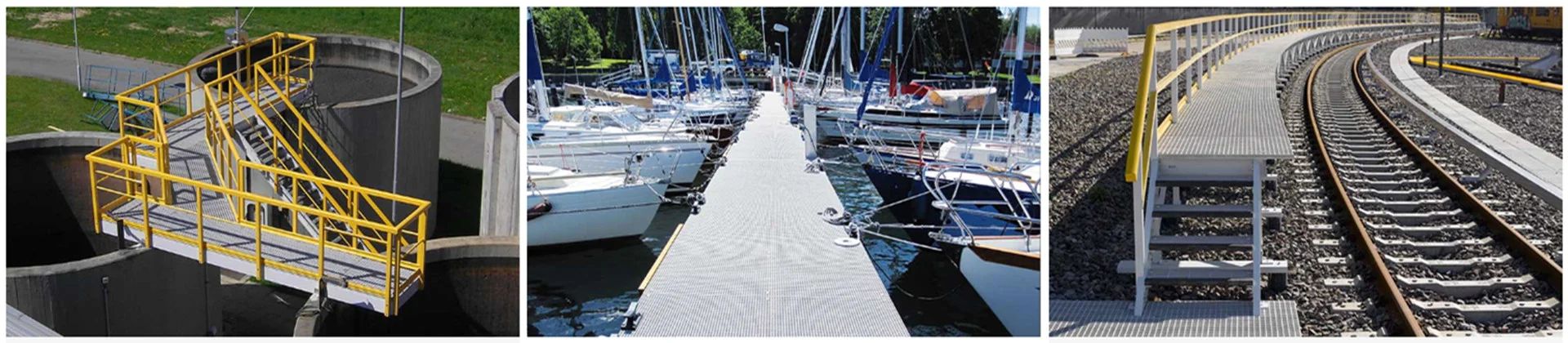
Fiberglass bar grating is used in industrial platforms, wastewater treatment areas, chemical processing plants, offshore and marine walkways, electrical utility access areas, floor grating, stair treads, and maintenance routes.

Suitability depends on resin system, load and span design, bearing direction, surface finish, support layout, fastening method, cleaning process, and inspection routine.

Why Buyers Search for a Fiberglass Bar Grating Factory

Buyers searching for a factory usually have procurement intent. They may need custom dimensions, I-bar or T-bar profiles, bulk supply, export packaging, fabrication, or technical support before sending a purchase order.

Factory Intent Behind the Keyword

A factory search is rarely casual. Buyers using terms like “fiberglass bar grating factory,” “I-bar grating factory,” or “bar grating price factory” usually want a supplier that can manufacture, customize, inspect, package, and ship grating for a real project.

A price-only quote can be risky if it ignores span, load, resin, surface finish, and installation conditions.

What Makes Bar Grating Different from Generic Grating

Fiberglass grating is a broad category. Fiberglass bar grating is more specific because buyers must consider bearing bar shape, bar spacing, cross members, panel depth, support span, load direction, surface finish, and resin type.

For example, an I-bar panel for a utility platform and molded grating for a wastewater trench may both be FRP grating, but they are not selected in the same way.

When should buyers choose a direct fiberglass bar grating factory?

Buyers should choose a direct fiberglass bar grating factory when the project needs custom panel sizes, I-bar or T-bar profiles, resin selection, cutting, drilling, fixing clips, bulk quantities, export packaging, repeat orders, or technical review of load and span requirements.

Direct factory support is especially useful for platform retrofits, chemical plant walkways, wastewater floor grating, and distributor bulk orders. These projects often need repeatable dimensions, matched clips, and clear packaging labels.

Common Fiberglass Bar Grating Types

After confirming the buying intent, buyers should identify the grating type before asking for price. The wrong type can create installation problems, unsafe assumptions, or unnecessary cost.

I-Bar Fiberglass Grating

I-bar fiberglass grating is often used where directional strength, lighter panel weight, drainage, and corrosion resistance matter. It should be reviewed by bearing direction, support span, load requirement, bar height, panel width, resin, and surface finish.

I-bar grating can be useful for platforms and walkways where the structural frame has a clear support direction.

T-Bar Fiberglass Grating

T-bar fiberglass grating can support walkways and platforms where surface profile, drainage, and walking comfort matter. Buyers should check bar shape, bar spacing, support layout, and surface finish before ordering.

The profile should match the walking surface requirement and the frame design, not just the target price.

Fiberglass Floor Grating

Fiberglass floor grating may refer to FRP grating used for floors, access areas, drainage zones, maintenance decks, or industrial platforms. The phrase is broad, so buyers should specify whether they need I-bar, T-bar, molded, or covered grating.

Molded Fiberglass Grating

Molded fiberglass grating may fit chemical, wastewater, and corrosion-heavy environments where open mesh and multidirectional support are needed. It is related to bar grating but not identical to pultruded I-bar or T-bar grating.

Product Type Comparison Table

The table below helps buyers match fiberglass grating types with common applications and key specifications:

Type Typical Use Buyer Benefit Key Specification
I-bar fiberglass grating Industrial platforms, walkways Directional load support and weight control Bearing direction, span, load
T-bar fiberglass grating Walkways and platforms Walking surface and drainage Bar shape, spacing, surface
Fiberglass floor grating Floors and access areas Corrosion resistance and drainage Panel size, resin, load
Molded fiberglass grating Chemical and wastewater areas Multidirectional support Mesh, resin, thickness
Stair tread grating Industrial stairs Step access with anti-slip options Nosing, width, fixing method

This comparison helps buyers avoid treating every FRP grating panel as interchangeable.

How to Choose the Right Fiberglass Bar Grating Factory

Once the product type is clear, factory evaluation should focus on technical capability. Custom and bulk projects require more than catalog panel supply.

Manufacturing Capability

Buyers should check whether the factory supports I-bar grating, T-bar grating, pultruded grating, molded grating, floor grating, cutting, drilling, fixing clips, custom color, surface finish, and export packaging.

A capable factory should also explain production route, available profiles, sample options, and fabrication limits before final pricing.

Load, Span, and Engineering Support

A factory should discuss support spacing, bearing direction, load type, deflection expectations, and installation layout. Panel thickness alone does not confirm performance.

Buyers should send drawings or at least basic span and load information. This helps prevent under-specification and avoids comparing quotes that are based on different assumptions.

Resin System and Application Matching

Resin selection should match general industrial use, chemical exposure, wastewater, marine or salt exposure, outdoor UV exposure, and fire-retardant project requirements.

The right choice depends on chemical type, concentration, temperature, UV exposure, cleaning method, fasteners, and inspection schedule. A generic resin recommendation is not enough for harsh environments.

Surface Finish and Safety

Surface finish affects traction, drainage, cleaning, maintenance, and worker access. Common options include gritted top, concave surface, anti-slip finish, smooth surface, and covered options.

Slip resistance depends on surface profile, contamination, slope, footwear, cleaning routine, and inspection. Wet platforms, stairs, and outdoor access areas need careful review.

Quality Control and Repeat-Order Consistency

Quality control should cover panel dimensions, surface inspection, clip matching, package labels, batch consistency, sample confirmation, and pre-shipment photos.

In one anonymized walkway retrofit, an earlier order arrived without zone labels and clip grouping, so installers spent extra time sorting panels on site. The revised order used drawings, labeled bundles, and matched clip packs by work zone, which reduced placement confusion during installation.

What should buyers check before choosing a fiberglass bar grating factory?

Buyers should check grating types, factory production capability, resin systems, load and span support, surface finish options, fabrication services, clip supply, QC process, sample availability, export packaging, lead time, and communication quality before choosing a fiberglass bar grating factory.

Warning signs include vague resin answers, no span questions, no fabrication support, unclear packaging, and quotes that only list price per square meter.

Fiberglass Bar Grating Factory vs Supplier

Provider type affects technical control, lead time, and customization. A factory, trading supplier, stock distributor, or fabricator can all work, but each fits a different buying situation.

Direct Factory

A direct factory is better suited for custom sizes, I-bar or T-bar profiles, repeat orders, bulk quantities, and technical specification control. Buyers should ask about production process, samples, drawings, QC steps, packaging, and export experience.

Trading Supplier

A trading supplier may help with mixed sourcing or smaller orders. The main risk is weaker production control, unclear factory source, limited technical feedback, and less repeat-order consistency.

Stock Distributor

A stock distributor can help with urgent replacement panels or standard sizes. This route may work for local maintenance, but customization is usually limited.

Project Fabricator

A project fabricator may supply installation-ready packages, but may not manufacture panels in-house. Buyers should ask where the panels are produced and who controls quality.

Provider Comparison Table

The table below gives buyers a simple way to compare provider types:

Provider Type Best For Main Risk What to Ask
Direct factory Custom and bulk bar grating Capability must be verified Production process, QC, samples
Trading supplier Mixed sourcing Less control over specs Factory traceability
Stock distributor Urgent standard panels Limited customization Stock sizes and resin
Project fabricator Installation-ready packages May not produce panels Source and fabrication scope

After choosing the provider type, buyers should compare prices only against the same specification baseline.

What Affects Bar Grating Price?

Bar grating price varies because factories may quote different structures, materials, finishes, fabrication levels, and shipping terms. Buyers should avoid comparing numbers without comparing the specification behind them.

Grating Type and Bar Profile

I-bar, T-bar, molded grating, floor grating, stair tread grating, and trench cover grating can have different cost structures. Bearing bar height, spacing, panel depth, and profile shape affect material use and production requirements.

Resin, Surface, Thickness, and Span

Resin system, panel thickness, support span, anti-slip surface, color, and fire-retardant requirements can all affect pricing. The cheapest option may not fit chemical exposure, load requirements, or safety expectations.

Cutting, Clips, Packaging, and Quantity

Cutting, drilling, edge finishing, fixing clips, labels, pallets, export packaging, and bulk quantity also affect the final quote. A quote with clips, cut-to-size service, and export pallets should not be compared with a basic stock-panel quote.

Fiberglass Bar Grating Factory Guide

fiberglass bar grating factory

Why do bar grating prices vary between factories?

Bar grating prices vary because factories may quote different grating types, bar profiles, resin systems, thicknesses, surface finishes, fabrication levels, clip packages, packaging methods, quantities, and shipping terms. Buyers should compare quotes only after confirming the same technical specification.

A fair quote comparison should use the same application, size, load, span, resin, surface, quantity, and destination. That bridge leads directly into the RFQ.

What Buyers Should Send for a Quote

A clear RFQ reduces quote revisions and prevents under-specification. It also gives engineering and purchasing teams one shared baseline.

RFQ Information Buyers Should Provide

Buyers should define the application, grating type, geometry, load, span, resin, surface, fabrication, quantity, packaging, destination, and lead time. For repeat orders, previous specifications, approved samples, and packaging photos can improve consistency.

Fiberglass Bar Grating RFQ Checklist

The table below can be used as a practical RFQ checklist for fiberglass bar grating projects:

RFQ Item What to Provide Why It Matters
Application Platform, floor, walkway, stair Defines use environment
Grating type I-bar, T-bar, molded, floor grating Guides production route
Panel size Length, width, thickness Supports accurate quote
Load/span Support spacing and load type Prevents under-specification
Resin system Chemical, UV, marine, fire needs Matches exposure
Surface finish Gritted, concave, covered Matches safety and cleaning
Fabrication Cutting, drilling, clips Reduces site work
Quantity Panels or square meters Affects pricing
Drawings Layout or support frame Reduces errors
Destination Country, port, warehouse Supports shipping quote

Do buyers need drawings for fiberglass bar grating?

Buyers should provide drawings, support span, installation area, load requirement, and panel layout for fiberglass bar grating whenever possible. If drawings are not available, buyers can start with application, dimensions, photos, quantity, and destination, but quote accuracy may be lower.

Retrofit projects need extra care because existing frames, bolt locations, drainage direction, and edge support can affect panel fit.

Source Fiberglass Bar Grating from Unicomposite

For custom and bulk FRP grating projects, factory capability should translate into fewer specification errors, clearer packaging, and more stable repeat orders.

Manufacturing and Customization Capabilities

Unicomposite Technology Co., Ltd. is an ISO 9001 certified FRP and GRP composite manufacturer based in Nanjing, China, with an 18,000-square-meter facility. The company supports fiberglass grating, pultruded profiles, molded FRP products, custom size, resin selection, surface finish, cutting, drilling, clips, packaging, and bulk order support.

These capabilities map to buyer outcomes: pultruded profiles support I-bar and T-bar options, molded FRP products support corrosion-focused grating, fabrication supports cut-to-size panels, and packaging support helps with export handling and repeat-order control.

Best-Fit Buyers and Applications

Unicomposite fits engineering contractors, distributors, wastewater facilities, chemical plants, municipal infrastructure buyers, marine projects, utilities, and industrial platform builders.

These buyers often need corrosion-resistant resin, slip-resistant surfaces, I-bar or bar grating options, cutting, clips, and repeat supply.

Quote Preparation Checklist

Buyers should send application, grating type, size, thickness, support span, load requirement, resin, surface finish, drawings, quantity, destination, packaging needs, and lead time.

For complex projects, drawings and photos help the factory review panel layout and fabrication requirements before quoting.

Conclusion

Fiberglass bar grating factory searches usually show B2B sourcing intent. Buyers should distinguish I-bar grating, T-bar grating, floor grating, molded grating, and stair tread grating before requesting quotes.

Load, span, resin, surface finish, fabrication, clips, packaging, and quantity all affect factory selection and price. Direct factories can support custom and bulk projects when capability, QC, and export packaging are verified.

A complete RFQ helps reduce quote errors, installation issues, and repeat-order confusion.

[Contact Unicomposite for a custom fiberglass bar grating quote →]

Share this article: