 info@unicomposite.com


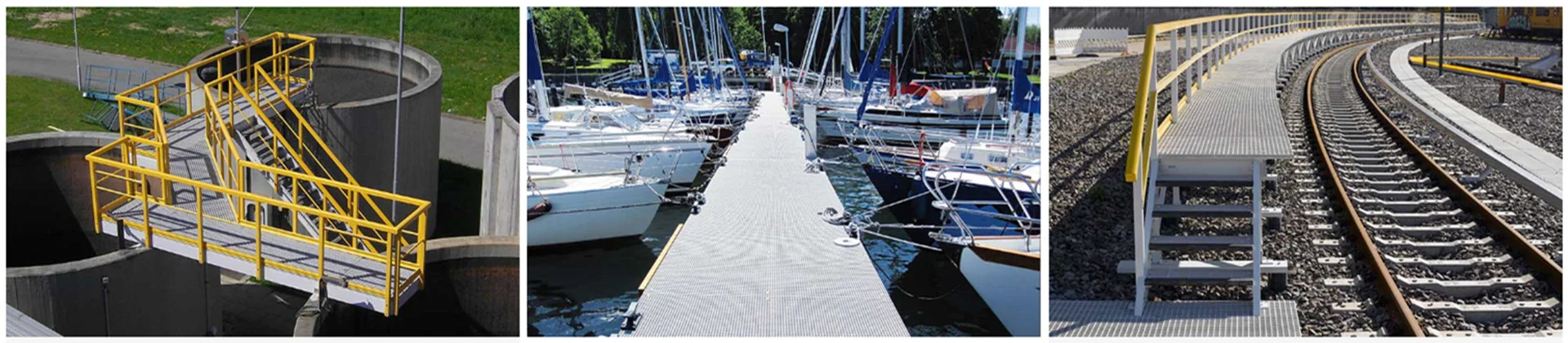
Fiberglass reinforced covers, also called fiberglass grating covers or solid top FRP covers, are widely used to protect walkways, platforms, trenches and equipment from corrosion, contamination and slipping hazards. Compared with steel or aluminum covers, fiberglass products offer a lighter weight, longer service life and much lower maintenance cost, especially in corrosive and high-moisture environments.
As an experienced FRP manufacturer since 1998, Unicomposite supplies fiberglass covers that can be matched with molded or pultruded gratings and customized to your project requirements. The following guide explains how these covers are made, which properties they offer and how to select the right fiberglass cover for your application.

fiberglass grating covers
What Is a Fiberglass Reinforced Cover?
A fiberglass reinforced cover is a flat or slightly profiled FRP plate installed on top of a support structure or fiberglass grating. It creates a solid, closed surface that prevents tools or small objects from falling through, stops splash from tanks or channels and improves walking comfort for workers. Depending on the project, the cover can be supplied as a standalone plate or factory-bonded to a molded or pultruded grating panel.
Inside the cover, continuous fiberglass reinforcements and a thermosetting resin system form a high-strength composite. The glass fibers carry the mechanical loads, while the resin protects against chemicals, moisture and UV, providing excellent durability even in aggressive environments where metal covers would quickly rust.
Structure and Manufacturing of Fiberglass Covers
Reinforcement and Resin System
High-quality fiberglass covers use layers of fiberglass roving, woven fabrics and mats that are fully impregnated with resin. This creates a strong, monolithic structure with good stiffness in both directions. Depending on the required performance, polyester, vinyl ester or other corrosion-resistant resins can be selected to match the chemical environment, temperature and fire requirements.
Surface Options
The top surface of a fiberglass cover can be finished in different ways to balance slip resistance, cleanability and visual appearance. Common options include smooth surfaces for easy cleaning, grit-embedded surfaces for maximum anti-slip performance and patterned surfaces such as diamond or concave profiles that provide traction even when wet or oily.
Molded vs. Pultruded Grating Covers
Fiberglass covers are often supplied together with molded or pultruded gratings. Molded grating covers offer excellent bi-directional strength and corrosion resistance and are suitable for most industrial platforms, walkways and trench covers. Pultruded grating covers provide higher stiffness in the pultrusion direction and are ideal for applications requiring longer spans or higher concentrated loads. You can learn more about the base grating options in our fiberglass grating product section.
Key Properties and Performance Advantages
Compared with traditional steel, aluminum or concrete covers, fiberglass reinforced covers provide several important advantages that are highly valued in modern industrial construction.
- Excellent corrosion resistance – FRP covers resist a wide range of acids, alkalis, salts and gases, making them ideal for wastewater plants, chemical processing facilities, coastal structures and fertilizer plants.
- Superior slip resistance – Gritted or profiled surfaces help workers maintain secure footing in wet or oily conditions, improving safety and reducing accident risks.
- Electrical and thermal insulation – Fiberglass is non-conductive and has low thermal conductivity, which protects workers from electrical hazards and reduces heat transfer in hot or cold process areas.
- High strength-to-weight ratio – FRP covers offer comparable strength to steel at a fraction of the weight, allowing easier handling, faster installation and reduced demand on supporting structures.
- Non-magnetic and non-sparking – In sensitive environments such as electronic plants or explosive atmospheres, fiberglass covers will not interfere with instruments or create sparks.
- Long service life – In many outdoor and industrial applications, a properly selected fiberglass cover can provide 20 years or more of reliable service with minimal degradation.
- Low maintenance cost – Unlike steel, FRP does not require regular painting, galvanizing or rust removal. Routine cleaning is usually sufficient, significantly reducing lifecycle costs.
Typical Applications of Fiberglass Grating Covers
Because of these advantages, fiberglass reinforced covers are used in many different industries and construction projects.
- Walkways and operating platforms – Solid-top grating covers provide a comfortable walking surface while allowing drainage underneath, commonly used in process plants, refineries and power stations.
- Trench and pit covers – FRP covers are widely used to close drainage channels, cable trenches and valve pits, preventing debris from falling in and protecting personnel from open gaps.
- Wastewater treatment facilities – Corrosion-resistant covers are ideal for clarifiers, aeration tanks and odor control areas in wastewater treatment plants, where constant moisture and chemicals quickly damage steel.
- Chemical processing plants – In environments with aggressive acids and solvents, fiberglass covers on platforms, sumps and ditches maintain structural integrity and safety over many years.
- Dock and marine structures – On piers, docks, offshore platforms and shipyards, FRP covers withstand salt spray, UV exposure and wave splash far better than metal alternatives.
- Architectural and commercial projects – Lightweight, colored covers are also used for rooftop walkways, stair landings and decorative facades where a clean, corrosion-free appearance is important.
How to Select the Right Fiberglass Cover
To achieve the best performance and service life, the fiberglass cover should be specified according to the mechanical, environmental and safety requirements of your project. The following aspects are usually considered during design.
- Design loads and span – Determine whether the cover will carry pedestrian traffic, trolleys, light vehicles or forklifts. Based on this, choose the appropriate panel thickness, grating type and support spacing.
- Chemical environment – Identify the main chemicals, concentrations and temperatures. For strong acids or high temperatures, a vinyl ester resin system is often recommended, while standard industrial environments may be served by polyester resins.
- Temperature range and fire performance – Check the operating temperature and any fire-rating requirements. Fire-retardant fiberglass covers are available to meet many industrial standards.
- Surface finish and slip resistance – Select smooth surfaces for hygienic or easy-to-clean areas and gritted or patterned surfaces where maximum slip resistance is required.
- Color and visibility – FRP covers can be produced in different colors such as grey, green, yellow or custom shades to improve visibility, mark safe zones or match corporate branding.
- Connection and fastening method – Proper clips, bolts and support details are necessary to prevent cover movement and ensure safe load transfer to the structure.
For complex projects, our engineering team can assist in checking load tables, recommending spans and suggesting the most cost-effective combination of grating and cover.
Standard Sizes and Custom Options
Unicomposite can supply fiberglass reinforced covers as standard panels matching common molded and pultruded grating sizes, or as fully customized components cut and drilled according to your drawings. Typical options include different panel thickness ranges for pedestrian or heavy-duty loads, various surface textures, and edge treatments such as banding or sealing to improve durability and appearance.
Panels can be delivered as loose covers for on-site installation or factory-bonded to gratings to create integrated solid-top grating panels. This flexibility allows designers and contractors to balance performance, cost and installation efficiency.
Why Choose Unicomposite as Your Fiberglass Cover Supplier
With more than two decades of experience in FRP composites manufacturing, Unicomposite offers a complete range of fiberglass gratings, profiles and accessories that work together as a system. For fiberglass covers specifically, our advantages include professional material selection, strict process control, quality inspection for mechanical and surface performance, and flexible production capabilities for both small batches and large projects.
In addition to fiberglass covers and gratings, we supply related FRP products such as handrail systems, ladders and structural profiles, helping you build a fully corrosion-resistant platform or access system from one reliable source.
Request a Quote for Fiberglass Grating Covers
If you are planning a new project or looking to replace corroded steel covers, upgrading to fiberglass reinforced covers can significantly improve safety, reliability and lifecycle cost. Please send us your drawings, loading requirements and operating conditions, and our team will recommend a suitable fiberglass cover solution and provide a competitive quotation.
You can contact Unicomposite via the Contact Us page or email us directly at info@unicomposite.com. We will be glad to support your next project with durable and cost-effective fiberglass grating covers.


