 info@unicomposite.com


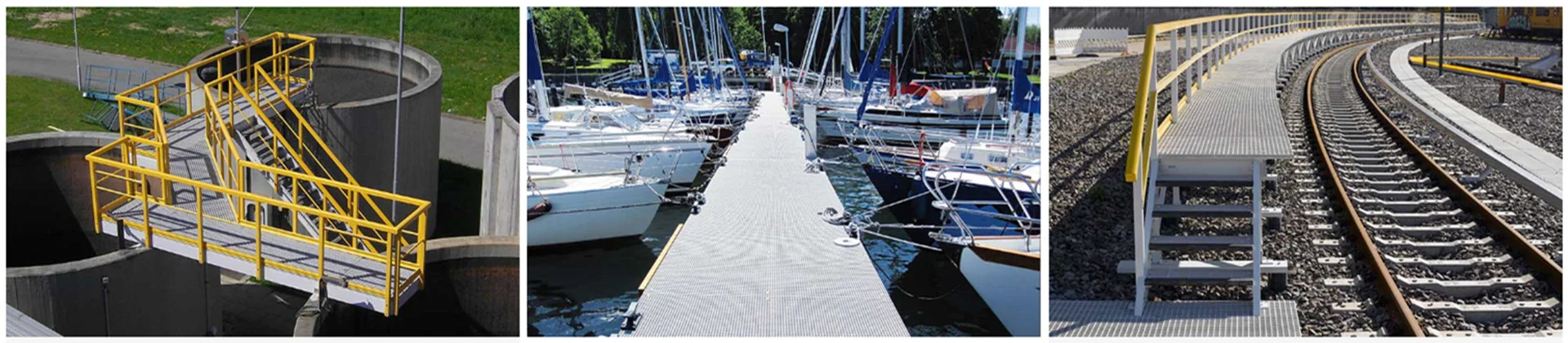
Introduction
Steel corrodes. Aluminum creeps under sustained load. Both conduct heat in ways that create thermal bridging, insulation failures, and accelerated fatigue in high-temperature structural applications. Pultruded FRP profiles behave differently — and understanding exactly why is what separates a well-specified project from an expensive retrofit.
This guide breaks down the material science behind dimensional stability and heat resistance in pultruded fiberglass profiles. Whether you are an engineer selecting structural members for a chemical processing facility or a procurement manager evaluating long-term performance against initial cost, you will leave with the technical grounding to make a confident specification decision — including resin system selection, creep allowance, and thermal expansion management.
Unicomposite is an ISO-certified pultrusion manufacturer with dedicated production lines for standard and custom FRP profiles in polyester, vinyl ester, and phenolic resin systems. Their engineering team works directly with buyers across power utilities, wastewater treatment, cooling tower construction, and chemical processing — environments where dimensional stability and thermal performance are baseline requirements, not premium features.

pultruded frp profiles
What Is Dimensional Stability — and Why It Matters in Structural Profiles
Dimensional stability is a material’s ability to hold its shape and size under mechanical load, temperature change, and time. For structural profiles — beams, channels, angles, and tubes — it determines whether a structure stays true to its engineered tolerances after years of continuous service. A profile that creeps, warps, or thermally distorts compromises joint integrity, load distribution, and ultimately structural safety.
How the Pultrusion Process Locks in Shape
Pultrusion is a continuous manufacturing process in which glass fiber reinforcements are pulled through a resin bath and then through a heated die. The die simultaneously shapes the profile and triggers thermosetting resin crosslinking — a chemical reaction that permanently fixes the polymer network into a rigid, three-dimensional structure.
This cure-in-place mechanism is the foundation of dimensional stability. Unlike injection-molded thermoplastics, which cool from a molten state and exhibit significant post-mold shrinkage, pultruded profiles cure under controlled tension and heat. Post-cure shrinkage is typically less than 0.1% — negligible for most structural tolerances.
Fiber alignment is the second contributor. In pultrusion, continuous rovings run axially through the profile while mats provide transverse reinforcement. This controlled fiber architecture means the profile’s stiffness is fiber-dominated, not resin-dominated — and glass fibers do not creep.
Creep Performance Under Sustained Load
Creep is the slow, time-dependent deformation of a material under constant stress. It is the failure mode that most often catches engineers off guard, because it is invisible at installation and becomes structurally significant only months or years later.
In metals, creep becomes relevant at elevated temperatures — structural steel begins to creep meaningfully above 300°C. In unreinforced thermoplastics, creep occurs at room temperature under sustained load, which is why they are rarely used as primary structural members. Pultruded FRP profiles occupy a favorable middle ground: the continuous glass fiber reinforcement carries the majority of the structural load, and glass fiber exhibits virtually no creep under typical service conditions.
The resin matrix does exhibit some viscoelastic behavior, particularly at elevated temperatures or in the transverse direction. In fiber-dominated orientations — axial loading of a pultruded beam — long-term deflection is controlled and predictable. When designing for sustained loads, engineers apply a creep reduction factor of 0.3–0.5 to the short-term modulus, consistent with reduction factors specified in recognized FRP structural design guidance including the ASCE Pre-Standard for Load and Resistance Factor Design of Pultruded FRP Structures.
The table below compares dimensional stability and creep characteristics across common structural materials:
| Property | Pultruded FRP | Structural Steel | Aluminum Alloy | Thermoplastic Composite |
|---|---|---|---|---|
| Post-process shrinkage | <0.1% | Negligible | Negligible | 0.5–2.0% |
| Creep under sustained ambient load | Very low (fiber-dominated) | Negligible | Low–Moderate | High |
| Axial CTE (×10⁻⁶/°C) | 8–14 | 12 | 23 | 50–100 |
| Long-term shape retention in corrosive environments | Excellent | Poor (rusts) | Moderate (pitting) | Variable |
Understanding creep and shrinkage behavior sets the foundation for the next critical question: what happens to these profiles when temperature rises — and how far can you push them before performance degrades?
High-Temperature Performance: What the Numbers Actually Mean
Dimensional stability under load is only part of the equation. In applications involving process heat, electrical equipment, or outdoor thermal cycling, a material’s behavior at elevated temperature defines its real service life. Pultruded FRP profiles offer a range of heat resistance options depending on resin system — and selecting the wrong one is among the most common and costly specification errors in composite structural design.
Heat Deflection Temperature by Resin System
Heat deflection temperature (HDT) is the temperature at which a standardized specimen deflects 0.25 mm under a flexural load of 1.86 MPa, per ASTM D648. It is the industry-standard proxy for the point at which a material begins to soften under structural load.
For pultruded FRP profiles, HDT is primarily governed by the resin matrix, not the glass reinforcement. Glass fiber itself remains stable well above 500°C — the resin determines the practical temperature ceiling.
- Polyester resin: HDT approximately 150°C. Suited for general industrial environments with moderate heat exposure.
- Vinyl ester resin: HDT approximately 180°C. The preferred upgrade where chemical resistance combines with elevated temperature — common in chemical processing and offshore platform structures.
- Phenolic resin: HDT 220–260°C under sustained load; instantaneous peak resistance up to 350°C. The standard specification for applications requiring both high heat resistance and flame, smoke, and toxicity (FST) compliance.
In structural practice, a service temperature derating of 20–30°C below HDT is standard, reflecting the combined effect of long-term load duration and environmental exposure factors. A polyester-based profile rated at 150°C HDT should therefore be specified for sustained service environments no hotter than 120–130°C.
Thermal Conductivity and Insulation Value
Pultruded FRP profiles have a thermal conductivity of approximately 0.35–0.47 W/m·K. Structural steel conducts heat at roughly 50 W/m·K; aluminum at approximately 205 W/m·K. FRP conducts heat at roughly 1/100th the rate of steel — a difference with direct structural and operational consequences.
In electrical utility applications — cable trays, substation walkways, transformer platforms — FRP profiles eliminate thermal bridging between electrically active components and the supporting structure. In industrial buildings with significant interior heat loads, FRP structural members reduce heat transfer to exterior panels. In cryogenic or high-temperature process environments, FRP supports minimize conductive heat gain or loss along the support path.
Resin Selection for Temperature-Critical Applications
Matching the resin system to the application requires aligning three variables: sustained operating temperature, chemical exposure, and regulatory flame performance requirements. The wrong default — specifying polyester because it is the standard offering — creates foreseeable failures.
In a chemical plant expansion project, the initial specification called for polyester-based pultruded profiles, a common default choice. Once the engineering team confirmed sustained ambient temperatures of 140°C near the reactor wall, the specification was upgraded to vinyl ester — avoiding a likely field replacement within the first service cycle and the associated downtime costs. That single resin upgrade decision, made during specification rather than after installation, justified the cost premium several times over.
The table below summarizes key performance parameters across the three primary resin systems. Note that cost premium figures are indicative over a polyester baseline and will vary with order volume, resin grade, and market conditions:
| Parameter | Polyester | Vinyl Ester | Phenolic |
|---|---|---|---|
| Heat deflection temperature | ~150°C | ~180°C | 220–260°C |
| Max continuous service temperature | 110–130°C | 140–160°C | 180–220°C |
| Flame resistance | Moderate (with additives) | Good | Excellent (inherent) |
| Chemical resistance | Good | Excellent | Moderate–Good |
| Indicative cost premium vs. polyester | Baseline | +20–35% | +50–80% |
For general industrial structural use, polyester is the cost-effective default. Where chemical exposure combines with heat, vinyl ester is the correct upgrade. Where fire safety codes are prescriptive — offshore, rail, tunnel, or public infrastructure — phenolic is typically mandatory regardless of cost premium.
Dimensional Stability vs. Metals: A Structural Trade-Off Analysis
Selecting between pultruded FRP profiles and conventional metals is rarely a straightforward substitution. Each material has a defined performance envelope, and the goal is to match that envelope to the application — not to declare a universal winner.
Coefficient of Thermal Expansion
Thermal expansion mismatch between connected structural members causes joint stress, fastener loosening, and cumulative fatigue in structures that experience significant temperature cycling. CTE alignment between materials is therefore a genuine engineering concern, not a theoretical one.
Pultruded FRP profiles have an axial CTE of approximately 8–14 × 10⁻⁶/°C, depending on fiber volume fraction and fiber orientation. This range is engineerable: higher fiber content in the axial direction drives CTE toward the lower bound, approaching structural steel’s 12 × 10⁻⁶/°C. Aluminum, at 23 × 10⁻⁶/°C, expands nearly twice as much — a meaningful differential in large-span structures exposed to outdoor temperature cycling of 40–60°C.
One important note for connection design: FRP’s CTE is anisotropic. The axial value (8–14 × 10⁻⁶/°C) differs from the transverse value, which can reach 20–30 × 10⁻⁶/°C depending on the laminate. Buyers should confirm both axial and transverse CTE values with their supplier before finalizing bolted connection details. When FRP profiles connect to steel structures, slotted holes in the FRP member accommodate differential thermal movement — a standard detailing practice that does not compromise structural integrity when properly engineered.
Where FRP Outperforms — and Where It Does Not
A credible specification decision requires an honest accounting of trade-offs. Pultruded FRP profiles outperform metals in corrosive environments, electrical isolation requirements, weight-sensitive designs, and applications where thermal conductivity must be minimized. A fiberglass profile weighs roughly 25% of an equivalent steel section — a meaningful advantage in elevated or suspended structures where dead load is a design constraint.
Where steel retains its advantage: isotropic strength and stiffness (FRP is anisotropic — significantly stronger axially than transversely), impact resistance, and connection design simplicity. High-impact environments such as vehicle barriers or heavy equipment mounts still favor steel. The decision framework for buyers is direct: if corrosion resistance, electrical isolation, or thermal conductivity is a primary performance constraint, FRP is likely the superior long-term value even at a higher initial unit cost.

pultruded frp the advanced material solution
Industries and Applications Driving Demand for These Properties
The combination of dimensional stability, controlled thermal expansion, and genuine heat resistance makes pultruded FRP profiles the material of choice across several structurally demanding sectors.
In chemical processing, structural members face simultaneous exposure to corrosive media, process heat, and sustained mechanical load. FRP grating, channels, and beams replace steel in walkways, platforms, and pipe supports where corrosion maintenance costs for steel are prohibitive over a 15–20 year asset life.
In electrical utilities, the dielectric properties of FRP — combined with its low thermal conductivity — make it standard for cable management systems, substation platforms, and transformer supports. In a coastal substation project, galvanized steel cable tray supports were replaced with pultruded FRP channel sections after recurring corrosion failures within three to five years of initial installation. The FRP installation required no corrosion-related maintenance in subsequent years, though periodic visual inspection for UV surface degradation and mechanical damage remains part of the asset maintenance schedule.
In cooling tower construction, pultruded FRP profiles address the specific combination of high humidity, cyclic thermal loading, biological exposure, and structural demand that deteriorates conventional materials rapidly:
| Material | Typical Service Life in Cooling Tower Structures |
|---|---|
| Treated wood | 8–12 years |
| Galvanized steel | 8–15 years |
| Pultruded FRP | 20–25 years |
Service life ranges based on comparative field installation data reported across the cooling tower industry.
In oil and gas offshore platforms, phenolic-based pultruded profiles satisfy both structural load requirements and mandatory fire safety compliance — a dual performance requirement that previously required either expensive stainless steel or fire-proofed carbon steel with ongoing coating maintenance.
How to Specify Pultruded FRP Profiles for Temperature-Critical Projects
Effective specification begins with five parameters that your profile supplier needs before any engineering or quotation can proceed:
1. Sustained operating temperature: The continuous temperature the profile will experience in service. This is the primary driver of resin system selection and HDT derating calculation.
2. Peak or transient temperature: Short-duration temperature spikes — steam purges, equipment startup cycles, emergency scenarios — that the profile must survive without permanent deformation.
3. Load type and duration: Axial compression, bending, or sustained dead load each carry different implications for fiber architecture selection and creep reduction factor application.
4. Chemical exposure: Direct contact with process media, cleaning agents, or atmospheric pollutants determines whether polyester, vinyl ester, or phenolic resin is appropriate — and at what concentration and temperature combination.
5. Flame, smoke, and toxicity (FST) requirements: Regulatory or project-level fire performance specifications often dictate resin system selection independently of temperature requirements. Confirm applicable standards (ASTM E84, IMO FTP Code, EN 13501) before issuing an RFQ.
Unicomposite’s engineering team collaborates directly with buyers to convert these five parameters into a complete profile specification — including cross-section geometry, fiber architecture, resin system, surface finish, and custom fabrication requirements. Production lines accommodate standard profiles in polyester, vinyl ester, and phenolic resin systems, with custom fiber architectures available for applications requiring tailored CTE or enhanced transverse strength. Full material test reports and ISO-compliant quality documentation are standard deliverables.
Bringing these parameters to your first supplier conversation eliminates the most common source of specification errors: assuming that all pultruded FRP profiles are thermally and chemically equivalent.
Conclusion
Pultruded FRP profiles deliver dimensional stability through the combination of thermosetting resin cure, continuous fiber reinforcement, and controlled manufacturing geometry — not as a marketing claim, but as a measurable, specifiable material outcome. Five takeaways for engineers and procurement managers:
- Resin system determines your temperature ceiling — polyester to 130°C sustained, vinyl ester to 160°C, phenolic to 220°C and above. Apply a 20–30°C derating below HDT for sustained structural service.
- Fiber-dominated stiffness controls creep — for sustained axial loads, pultruded FRP performs predictably with appropriate creep reduction factors (0.3–0.5 on short-term modulus) applied at the design stage.
- CTE is anisotropic and engineerable — confirm both axial and transverse values with your supplier; axial CTE of 8–14 × 10⁻⁶/°C can be specified close to steel, minimizing joint stress in thermally cyclic structures.
- Thermal conductivity at 1/100th of steel — an underappreciated performance advantage in electrical isolation, thermal bridging reduction, and cryogenic or high-temperature support applications.
- FRP is not isotropic — transverse strength and impact resistance require design attention; connection details and load path geometry matter more with FRP than with steel.
[Contact Unicomposite for a custom pultruded FRP profile quote →]
Frequently Asked Questions
It depends on the resin system specified. Polyester-based profiles are suitable for sustained service up to approximately 110–130°C; vinyl ester extends this to 140–160°C; phenolic resin systems handle 180–220°C continuously. All figures assume a 20–30°C derating below the material’s heat deflection temperature under structural load. Share your operating temperature range with your supplier before finalizing the specification.
Phenolic-based pultruded profiles are the standard specification for fire-rated structural applications, offering inherent flame resistance and compliance with FST requirements in offshore, rail, tunnel, and public infrastructure projects. Polyester and vinyl ester profiles can incorporate flame retardant additives to meet specific ASTM E84 smoke and flame spread classifications, but they do not match phenolic for FST performance in prescriptive fire code environments.
Under ambient conditions and axial loading, pultruded FRP profiles exhibit very low creep because load is carried primarily by the glass fiber reinforcement, which does not creep. For sustained load design, engineers apply a creep reduction factor of 0.3–0.5 to the short-term modulus — a conservative, well-established practice. Structural steel does not creep meaningfully below 300°C, so for ambient-temperature sustained load applications, both materials perform well; the FRP advantage appears in corrosive or electrically sensitive environments where steel cannot be used without significant protection.
Yes — custom cross-sections are available for OEM and project-specific applications. Lead times depend on whether a new pultrusion die is required: standard profile sizes ship from stock or within standard production lead times, while custom tooling typically adds 4–8 weeks to the initial order. Unicomposite’s team can advise on die costs and amortization across order volumes during the quotation process.
Unicomposite operates under ISO-certified quality management systems. Standard deliverables include material test reports covering mechanical properties, resin content, and fiber volume fraction. Project-specific documentation — third-party test reports, flame performance certifications, and custom material datasheets — can be arranged based on project requirements. Specify your documentation requirements at the RFQ stage to ensure they are built into the production and delivery schedule.


