 info@unicomposite.com


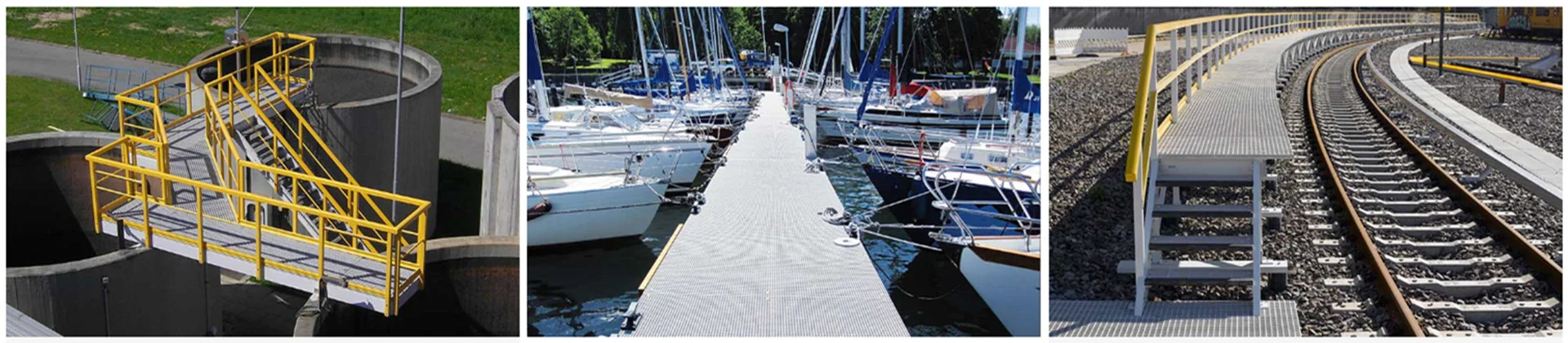
FRP (fiberglass reinforced plastic) is widely used in corrosive, electrical and weight-sensitive environments. It offers excellent corrosion resistance, low weight and electrical insulation. But engineers and buyers often ask a key question: what are the real disadvantages of FRP compared with steel, concrete or aluminium?
Understanding the disadvantages of FRP – and how to minimize them – helps you choose the right material, design profiles correctly and avoid unpleasant surprises on site. This guide summarizes the main FRP limitations, gives a quick pros & cons overview and explains how we at Unicomposite help customers manage these risks.

disadvantages of FRP
FRP Pros and Cons at a Glance
If you are still comparing materials, the table below gives a quick view of the advantages and disadvantages of FRP against traditional metals.
| FRP Advantages | FRP Disadvantages |
|---|---|
| Excellent corrosion resistance in water, salt, many chemicals | Lower modulus of elasticity (less stiff) than steel or aluminium |
| Very low weight, easy handling and installation | Limited long-term temperature and fire resistance |
| Electrical and thermal insulation, non-magnetic | More sensitive to UV, moisture and long-term aging |
| Design flexibility for complex shapes and profiles | Interlaminar shear and impact damage can cause hidden defects |
| Low maintenance – no painting or galvanizing required | Recycling and end-of-life treatment are more difficult than metals |
| Good fatigue resistance in many applications | Upfront material price can be higher than carbon steel |
If you only need a quick summary, this table already answers most queries such as “FRP pros and cons” or “advantages and disadvantages of FRP”. The rest of this article goes deeper into each major drawback.
Main Disadvantages of FRP
1. Lower Modulus of Elasticity (Stiffness)
The elastic modulus of typical structural FRP profiles is around 20–30 GPa, roughly twice that of wood but only about 1/5–1/7 of steel. As a result, FRP members reach serviceability limits (deflection and vibration) long before they reach ultimate strength.
In practice this means:
- Beams and decks may feel “springy” if they are designed with the same span and section size as steel.
- Handrails and platforms can show noticeable deflection under human load if post spacing is too large.
- Long-term creep under constant load must be checked, especially for continuous beams and tanks.
How to reduce this disadvantage:
- Use deeper or thicker sections, or switch to sandwich panels with foam or honeycomb cores.
- Add stiffening ribs or intermediate supports to limit span and deflection.
- Follow conservative span/deflection criteria and allow for creep in long-term design.
2. Limited Long-Term Temperature and Heat Resistance
Standard FRP based on polyester or vinyl ester resins is usually recommended for long-term service temperatures up to about 80–100 °C. At higher temperatures the resin softens, strength and stiffness drop and long-term creep increases rapidly.
For applications like flue gas ducts, chimneys or hot process pipelines, this can be a serious limitation compared with steel.
Mitigation options:
- Select high-temperature resin systems (special vinyl ester or epoxy) for continuous service above 100 °C.
- Use insulation or ventilation to keep FRP surface temperature within recommended limits.
- For very high temperatures, consider a hybrid design where FRP is used only in cooler zones.
3. Fire Performance and Smoke
Unlike steel or concrete, FRP is an organic composite. In a severe fire it will soften, char and eventually burn. Even fire-retardant systems generate smoke and toxic gases. This is one of the most discussed disadvantages of glass reinforced plastic in buildings and public infrastructure.
Mitigation options:
- Use fire-retardant resins and additives designed to meet specific fire standards where required.
- Combine FRP with passive fire protection (intumescent coatings, fire-resistant boards or claddings).
- Place FRP away from escape routes and critical fire-safety elements when possible.
4. Aging, UV and Environmental Degradation
Aging is a common issue for plastics, and FRP is no exception. Over time, exposure to UV radiation, moisture, freeze–thaw cycles, chemicals, wind and mechanical stress can cause:
- Surface chalking, discoloration and micro-cracking.
- Loss of gloss and rougher surfaces, which trap dirt and bio-growth.
- Gradual reduction of mechanical properties in harsh environments.
How to control aging:
- Specify topcoats, UV-resistant surfacing veils or gelcoats on exposed surfaces.
- Choose resins that are proven for the specific chemical or outdoor environment.
- Follow good installation and maintenance practice to avoid unnecessary mechanical damage.
5. Low Interlaminar Shear Strength and Impact Damage
The fibers in FRP mainly carry load along their direction. The bond between layers depends on the resin, so the interlaminar shear strength is much lower than in-plane tensile or compressive strength.
Sharp impacts, drilling without proper tools or local overload can cause delamination, which may not be visible from the outside but reduces strength.
Design and fabrication tips:
- Avoid designs that rely on large interlaminar shear stresses, such as very short, heavily loaded overhangs.
- Use correct drilling tools, avoid hammering directly on FRP profiles and follow recommended hole spacing and edge distances.
- Consider toughened resin systems where impact is expected.
6. Creep and Fatigue Under Constant Load
Like most polymers, FRP shows visco-elastic behaviour. Under sustained load, even below the short-term allowable stress, the material can creep over time. Cyclic loading can also cause fatigue damage.
For platforms, bridges, tanks and long-span structures, this must be considered in design.
How to deal with creep and fatigue:
- Use long-term creep reduction factors and fatigue design curves from reliable test data.
- Keep sustained stress levels well below short-term strength, especially in hot environments.
- Design details to avoid stress concentrations at connections and supports.
7. Recyclability and End-of-Life Treatment
Metals can be melted and recycled relatively easily. In contrast, thermoset FRP cannot be remelted. Mechanical grinding, co-processing in cement kilns or chemical recycling are possible, but infrastructure is still limited in many regions.
This is an important environmental disadvantage of FRP, especially for large-volume applications.
8. Higher Initial Material Cost in Some Cases
Per kilogram, FRP profiles and gratings are usually more expensive than carbon steel. However they are lighter and often need less support and maintenance. Over the full life cycle, FRP can still be the more economical solution in corrosive or remote environments.
The key is to compare total installed and life-cycle cost, not just the price per ton of material.
How to Minimize FRP Disadvantages in Your Project
Good design and material selection can greatly reduce most of the disadvantages listed above.
- Choose the right resin and fiber system for your environment (chemical, temperature, outdoor exposure). See our FRP raw materials list for typical options.
- Design for stiffness, not only strength: limit spans and deflection, use deeper sections or sandwich panels.
- Specify fire-retardant systems where building codes require them and combine with passive fire protection.
- Protect exposed surfaces with UV-resistant veils, gelcoats or coatings when necessary.
- Use proven connection details and avoid high interlaminar shear at joints.
- Work with an experienced FRP manufacturer who can provide design data, fabrication advice and quality control.
At Unicomposite we not only produce standard FRP structural profiles and gratings, but also support customers with design suggestions and custom pultrusions to balance performance, cost and durability.
FRP Doors, Pipes and Rebar: Typical Limitations
FRP Doors – Advantages and Disadvantages
FRP doors are popular in coastal, chemical and food-processing environments because they do not rust, peel or swell like steel or wood. However their disadvantages include:
- Lower stiffness than steel doors, so hardware positioning and frame design are important.
- Fire-rating limitations unless special fire-resistant constructions are used.
- Colour matching and surface finish may differ from adjacent metal or timber doors.
FRP Pipes
FRP pipe offers excellent corrosion resistance and low weight compared with steel or ductile iron. Typical disadvantages are:
- More sensitive to impact and incorrect installation (improper bedding, supports or lifting).
- Lower stiffness than steel pipe – deflection must be controlled in buried installations.
- Limited very-high-temperature and fire performance, as discussed earlier.
FRP Rebar
FRP rebar eliminates corrosion of reinforcing steel in concrete, especially in bridges, marine structures and parking decks. On the other hand:
- FRP rebar is elastic but non-ductile – it does not yield like steel, so crack control must be designed carefully.
- It has different bond behaviour with concrete and requires special design codes.
- Field cutting and bending are different from steel and need correct tools and procedures.
If you would like to discuss whether FRP is suitable for your next project, or need help evaluating the pros and cons of FRP for a specific application, please feel free to contact Unicomposite or send us your drawings for a quick review.
FAQ: FRP Advantages and Disadvantages
In terms of strength-to-weight ratio, FRP can be comparable or even higher than steel. However its modulus of elasticity is much lower, so stiffness and deflection usually control the design.
In corrosive environments where steel would need frequent repainting or replacement, properly designed FRP structures can offer 25–50 years or more of service with minimal maintenance. Aging is mainly controlled by resin choice, UV protection and correct installation.
FRP’s disadvantages matter most in very high-temperature, fire-critical or extremely stiff structures where deflection limits are tight. In such cases, hybrid solutions or traditional materials may still be the best choice.
Compare the full life-cycle cost, safety requirements and environment of your project. If corrosion, weight or electrical insulation are key concerns, the advantages of FRP often outweigh its disadvantages. Our engineering team can help review your application and recommend the right product.


