 info@unicomposite.com


Corrosion of steel reinforcement is one of the main causes of premature deterioration in concrete structures. In marine, chemical and de-icing salt environments, the repair cost of corroded steel rebar can easily exceed the original construction cost. As a result, FRP rebar (fiberglass reinforced polymer rebar) has become a proven alternative for designers who need long-term durability and lower life-cycle cost.
This article explains how FRP rebar performs in concrete members, covering mechanical properties, bond behaviour, long-term effects such as creep and fatigue, and where FRP rebar offers the biggest advantages over steel.
What Is FRP Rebar?
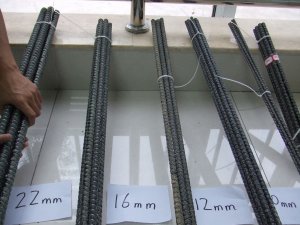
FRP rebar is a composite reinforcement manufactured from continuous glass fibers and thermoset resin. The fibers carry tensile load, while the resin protects the fibers and transfers stress between them. By design, FRP rebar is:
- Non-corrosive – it does not rust in the presence of chlorides or moisture.
- Non-conductive – electrically and thermally insulating.
- Lightweight – typically one quarter the weight of steel rebar.
FRP bars are produced in standard diameters and usually have a sand-coated or ribbed surface to enhance bond with concrete. Unicomposite supplies FRP rebar in a range of diameters and surface finishes to suit different projects.
Key Performance Properties in Concrete
Tensile Strength and Modulus
FRP rebar provides very high tensile strength compared with conventional steel rebar. However, its elastic modulus is lower than that of steel. In practice this means:
- FRP bars can carry high tensile forces without yielding.
- Serviceability (deflection and crack width) must be checked carefully because the lower modulus leads to larger strains at the same load.
When FRP rebar is used according to current design guidelines, concrete members can achieve both adequate strength and acceptable serviceability performance.
Bond Behaviour with Concrete
Bond between the rebar and concrete is critical for composite action. Modern FRP rebars use specially designed surface treatments such as sand coating, ribs or deformations to develop reliable bond strength. Tests show that FRP rebar can achieve bond performance comparable to, and sometimes better than, deformed steel rebar when proper development length is provided.
Thermal Expansion and Compatibility
The coefficient of thermal expansion of FRP rebar in the longitudinal direction is usually similar to that of concrete, which helps minimize internal stresses due to temperature changes. Transverse expansion is different, but has limited effect because the fibers primarily carry load along the bar length.
Durability in Aggressive Environments
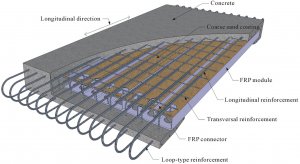
One of the main reasons to choose FRP rebar is its excellent durability where steel corrodes quickly. Typical examples include:
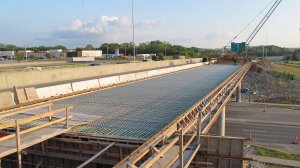
- Bridge decks and parapets exposed to de-icing salts.
- Marine structures and coastal foundations in chloride-rich environments.
- Chemical plants, cooling towers and wastewater facilities.
In these environments, FRP rebar is resistant to chloride ions and moisture, and does not suffer from electrochemical corrosion like steel. This significantly extends the service life of the concrete structure and reduces maintenance costs.
Long-Term Behaviour: Creep, Fatigue and Stress Relaxation
Because FRP rebar is a polymer composite, its long-term behaviour must be evaluated carefully. Key aspects include:
Creep Under Sustained Load
When FRP rebar is subjected to constant tensile stress over a long period, creep can occur and increase the strain in the bar. Design guidelines therefore limit the sustained stress level to a fraction of the short-term ultimate tensile strength. Tests in air and various solutions have shown that, when stresses are kept below the recommended limits, creep strains remain within acceptable ranges for typical design lives.
Fatigue Under Cyclic Loading
Concrete members in bridges, industrial floors and dynamic structures often experience repeated loading. Laboratory studies indicate that FRP rebar exhibits good fatigue resistance when the stress range and minimum stress are kept below specified percentages of its ultimate strength. As the stress range and minimum stress increase, the fatigue life decreases, so proper design is essential.
Stress Relaxation
Stress relaxation refers to the gradual reduction of stress under constant strain. For FRP rebar, relaxation is influenced by temperature, environment and the initial stress level. In general:
- Higher temperatures lead to higher stress relaxation.
- Bars exposed to aggressive solutions show more relaxation than those in air.
- Higher initial stresses result in greater relaxation over time.
By controlling service stress levels and considering environmental exposure, engineers can limit stress relaxation to safe values in FRP-reinforced members.
FRP Rebar vs Steel Rebar in Concrete Structures
The table below summarizes the main performance differences between FRP and steel rebar in concrete:
- Corrosion: FRP is non-corrosive, while steel requires coatings, cathodic protection or high cover in harsh environments.
- Weight: FRP is much lighter, improving handling, transport and installation.
- Conductivity: FRP is electrically non-conductive and non-magnetic, ideal near power equipment, MRI facilities and sensitive instruments.
- Fatigue and creep: FRP requires stress limits, but performs well when designed within those limits.
- Cost: Material cost per meter is higher for FRP, but total life-cycle cost is often lower thanks to reduced maintenance and longer service life.
Best Applications for FRP-Reinforced Concrete
Based on its performance characteristics, FRP rebar is especially suitable for:
- Bridge decks, barriers and sidewalks exposed to de-icing salts.
- Wharfs, piers, jetties and other marine structures.
- Parking garages and podium slabs where corrosion risk is high.
- Water and wastewater treatment plants, tanks and channels.
- Industrial floors and foundations in chemical processing facilities.
Design and Installation Tips
- Follow current design guidelines for FRP-reinforced concrete and respect allowable stress limits for service and ultimate states.
- Pay attention to deflection and crack control because of the lower modulus of FRP compared with steel.
- Use appropriate development and lap lengths to ensure adequate bond.
- Handle FRP bars carefully to avoid damage to the surface coating and fibers, and use suitable chairs and spacers that do not cut into the bars.
FRP Rebar Solutions from Unicomposite
Unicomposite has been supplying fiberglass reinforced profiles and FRP rebar for demanding infrastructure, marine, industrial and transportation projects. Our FRP rebars are produced with high-quality glass fibers and resin systems, with surface treatments designed for strong bond to concrete and long-term durability.
We can support your project with customized diameters, bar lengths and packaging, as well as other FRP components such as grating, handrails and structural profiles.
Need technical data or a quotation for FRP rebar in your next concrete structure? Please contact our team and we will be glad to help with selection and design support.


