 info@unicomposite.com


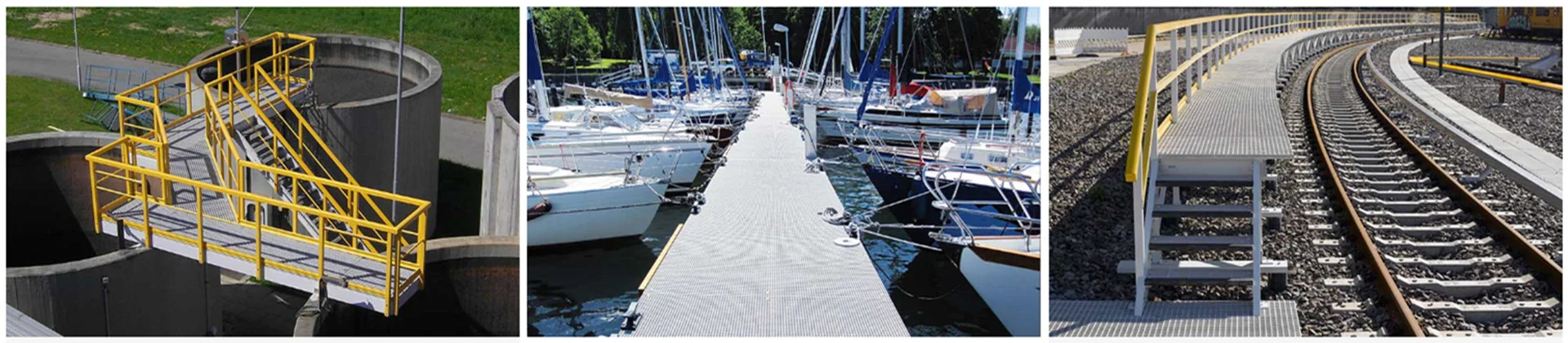
Introduction
Engineers and procurement managers encounter FRP in chemical plant grating, power line cross arms, wastewater pipe systems, and offshore platform walkways — yet the majority of first-time FRP specifiers treat it as a single material category rather than a family of composites whose performance varies dramatically based on three specification decisions. Fiber type, resin system, and manufacturing process each independently determine a different dimension of the finished product’s performance. Getting any one of these wrong produces a part that passes dimensional inspection but fails in service.
This guide explains what fiberglass reinforced plastic is at the material level, how the four major manufacturing processes produce fundamentally different products, which resin and fiber combinations match which service environments, and how to navigate from “we need FRP” to a purchase specification that binds the supplier to a defined performance level.
Unicomposite Technology Co., Ltd operates pultrusion, hand layup, filament winding, and SMC/BMC compression molding lines across an 18,000 m² ISO 9001-certified manufacturing facility in Nanjing, China. The material overview and process comparisons in this guide reflect direct production experience across all four processes. When this article distinguishes between what polyester can handle and where vinyl ester is required, or where pultrusion is the correct process and where hand layup is the only viable option, those distinctions come from manufacturing and supplying FRP products across chemical processing, power utility, wastewater, and offshore infrastructure applications — not from composite material theory.

fiberglass reinforced plastic
1. What Is Fiberglass Reinforced Plastic?
1.1 Material Composition: Fiber + Resin = Composite
Fiberglass reinforced plastic is a composite material consisting of two components that perform entirely different functions. Glass fiber reinforcement provides the tensile strength and stiffness — the structural backbone of the composite. A thermoset resin matrix provides the shape, transfers load between fibers, and delivers the chemical resistance and environmental durability that define FRP’s industrial value.
Neither component performs adequately alone. Glass fiber without resin is a flexible textile with no structural form — it drapes, it bends, and it carries no compressive load. Resin without fiber is a brittle plastic that fractures under modest impact and carries a fraction of the composite’s tensile strength. The combination exceeds both: the resin holds the fibers in position and distributes load across millions of individual filaments simultaneously, while the fibers prevent the resin from cracking under stress.
The terminology varies by region but describes the same material family. FRP (Fiberglass Reinforced Plastic) is the standard North American designation. GRP (Glass Reinforced Plastic) is the equivalent European and UK term. Carbon fiber reinforced plastic (CFRP) follows the same composite principle but substitutes carbon fiber for glass, achieving higher stiffness and lower weight at significantly higher cost.
1.2 The Five Properties That Define FRP’s Industrial Value
FRP’s adoption across chemical processing, power utilities, water infrastructure, and offshore construction is driven by five properties that no single conventional material replicates simultaneously.
High specific strength. Pultruded FRP profiles in E-glass and polyester resin achieve longitudinal tensile strength of 300–550 MPa per ASTM D638 at a density of 1.7–2.0 g/cm³. Carbon steel achieves comparable tensile strength — but at a density of 7.85 g/cm³. FRP structural members carry equivalent loads at approximately 25% of the weight, reducing foundation loads, simplifying installation logistics, and eliminating lifting equipment requirements.
Corrosion resistance. FRP does not corrode through electrochemical mechanisms. It carries no galvanic potential, does not release ions into electrolyte solutions, and requires no coating, painting, or cathodic protection system to maintain its structural properties in corrosive environments. The corrosion resistance is inherent to the resin-fiber composite — not applied to a surface.
Electrical insulation. FRP is a dielectric material — non-conductive, non-magnetic, and incapable of generating sparks. These properties make it the specified material for power utility infrastructure, electrically classified hazardous areas, and any application where electrical isolation is a design requirement.
Design flexibility. Unlike metals, where mechanical properties are fixed by alloy composition, FRP’s properties are determined by the designer’s choices: fiber direction, fiber volume fraction, resin chemistry, and cross-section geometry are all independently specifiable.
Long service life. FRP structural components in correctly specified environments deliver service lives of 25–50+ years with zero or near-zero maintenance — a performance characteristic that drives the total cost of ownership advantage over coated carbon steel in most corrosive industrial applications.
The table below compares FRP against the conventional structural materials it most commonly replaces, with tensile strength values referenced to ASTM D638 test conditions:
| Property | FRP (E-glass/Polyester) | FRP (E-glass/Vinyl Ester) | Carbon Steel | 316 Stainless Steel | Aluminum 6061 |
|---|---|---|---|---|---|
| Tensile strength (MPa, ASTM D638) | 300–550 | 310–550 | 400–550 | 480–620 | 240–310 |
| Density (g/cm³) | 1.7–2.0 | 1.8–2.0 | 7.85 | 8.0 | 2.7 |
| Specific strength (MPa·cm³/g) | 165–305 | 165–280 | 51–70 | 60–78 | 89–115 |
| Corrosion resistance | Good | Excellent | Poor (uncoated) | Good (Cl⁻ limits) | Moderate |
| Electrical conductivity | Insulator | Insulator | Conductor | Conductor | Conductor |
| Maintenance requirement | None–Minimal | None | High | Moderate | Low–Moderate |
| Service life (corrosive env.) | 20–30 years | 25–50+ years | 5–10 years (coated) | 10–20 years | 10–15 years |
| Relative material cost | 1.0× | 1.3–1.7× | 0.7–1.0× | 2.5–4.0× | 1.5–2.0× |
2. Resin Systems: The Variable That Determines Chemical Performance
Understanding what FRP is made of leads directly to the specification decision that most significantly affects its performance in service. The resin system determines the chemical resistance envelope, the thermal performance ceiling, and the long-term durability of the finished composite. Selecting the wrong resin system is not recoverable after the product is manufactured.
2.1 Polyester Resin — The Cost-Effective Baseline
Unsaturated polyester is the most widely used resin system in FRP manufacturing globally. It processes easily, cures reliably at room temperature, and delivers adequate mechanical and chemical performance for applications where the service environment does not include aggressive chemistry or sustained elevated temperature.
Polyester’s limitations define its specification boundary: moderate acid resistance, heat deflection temperature (HDT) of 70–100°C, and hydrolytic stability lower than vinyl ester. For indoor structural applications, agricultural components, general industrial grating, and atmospheric outdoor exposure, polyester is the correct and cost-efficient specification. For chemical processing, marine immersion, or chlorinated media service, specify upward.
2.2 Vinyl Ester Resin — The Chemical Resistance Standard
Vinyl ester is the correct resin specification for any FRP application involving acids, alkalis, chlorinated media, or industrial effluent. Its epoxy-derived backbone provides significantly better hydrolytic stability and chemical resistance than polyester — the performance difference that makes vinyl ester the standard resin for FRP cable trays, corrosion-resistant grating, and chemical plant structural profiles.
Vinyl ester handles the chemical environments that most commonly exceed standard metallic material capabilities: hydrochloric acid, dilute sulfuric acid, sodium hypochlorite, chlorine gas, and a broad range of organic process fluids. In sewage infrastructure, vinyl ester’s resistance to microbially induced corrosion from hydrogen sulfide gives it a decisive service life advantage over both polyester FRP and metallic alternatives.
2.3 Epoxy Resin — Maximum Structural and Thermal Performance
Epoxy delivers the highest fiber-matrix bond strength, best dimensional stability, and highest heat deflection temperature (120–150°C) of the three standard thermoset resin systems. Specify epoxy where the application requires a combination of high structural load, elevated temperature resistance, and tight dimensional tolerances.
Electrical insulation components for power utility infrastructure, high-load structural profiles for offshore platforms, and precision composite members for industrial automation represent epoxy’s primary specification territory. The cost premium over polyester — typically 1.8–2.5× on material — is justified by performance that the lower-cost resins cannot deliver in these conditions.
2.4 Phenolic and Specialty Resins
Phenolic resin is specified where fire resistance and low smoke toxicity are primary requirements — rail transit vehicles, enclosed industrial spaces, and offshore platform applications where fire performance standards govern material selection. Phenolic’s mechanical performance is lower than epoxy, but the fire behavior advantage is frequently non-negotiable in regulated environments.
Furan resin occupies an extreme niche: concentrated acid service and sustained elevated temperatures beyond vinyl ester’s capability. Its processing is more complex and its cost is higher, but for the most chemically aggressive industrial environments, furan is the only thermoset option that maintains structural integrity where vinyl ester reaches its chemical resistance limit.
The table below summarizes resin system selection criteria for the most common FRP specification scenarios:
| Resin Type | Acid Resistance | Alkali Resistance | Max Service Temp | Fire Behavior | Relative Cost | Primary Application |
|---|---|---|---|---|---|---|
| Polyester | Moderate | Moderate | 70–100°C | Standard | 1.0× | General structural, agricultural, atmospheric |
| Vinyl Ester | Excellent | Good | 100–120°C | Standard | 1.3–1.7× | Chemical processing, wastewater, marine |
| Epoxy | Good | Excellent | 120–150°C | Standard | 1.8–2.5× | Electrical, offshore, high-load structural |
| Phenolic | Moderate | Moderate | 150–200°C | Excellent (low smoke) | 2.0–3.0× | Rail transit, offshore fire-rated areas |
| Furan | Excellent | Good | 150°C+ | Good | 2.5–4.0× | Concentrated acid, high-temp solvent service |
3. How FRP Is Manufactured: Four Processes, Four Product Types
The resin system determines chemical performance; the manufacturing process determines the product geometry, mechanical consistency, and volume economics. Four processes account for the vast majority of commercial FRP production — each optimized for a fundamentally different product type.
In Unicomposite’s cross-process manufacturing experience, the most common process misspecification is pultrusion specified for a part that requires hand layup geometry — buyers familiar with pultruded structural profiles attempt to apply the same process to enclosures or curved components that the die geometry cannot accommodate. The reverse error also appears: hand layup specified for a part that should be pultruded, typically in prototype quantities that are later needed at production volumes where hand-laid unit cost becomes economically unworkable. Identifying the geometry constraint and the volume requirement at the inquiry stage prevents both errors.
3.1 Pultrusion — High-Volume Constant Cross-Section Profiles
Pultrusion pulls continuous fiber and resin through a heated steel die to produce profiles of constant cross-section. The process achieves fiber volume fractions of 50–60% in the longitudinal fiber direction — the primary load-carrying direction — giving pultruded profiles the highest and most consistent mechanical properties of any open-mold FRP manufacturing method. Transverse fiber content is significantly lower in standard pultruded profiles, which is why connection design and off-axis loading require separate engineering consideration rather than applying the longitudinal property values in all directions.
Standard pultruded profiles include I-beams, channels, angles, square and round tubes, solid rods, flat bars, cable trays, and power utility cross arms. The geometric constraint is absolute: the cross-section must remain constant along the full profile length. Any geometry that tapers, varies in wall thickness, or includes non-prismatic features requires a different manufacturing process.
3.2 Hand Layup — Complex Geometry at Low Volume
Hand layup places glass fiber reinforcement manually into or over an open mold, saturates it with catalyzed resin, and consolidates by hand roller to remove trapped air. The process imposes no geometric constraint — the mold defines the shape, and the mold can take virtually any form. Fiber volume fractions of 25–40% are typical, reflecting the lower fiber consolidation achievable without the tension and die pressure that pultrusion provides.
Tooling cost is the lowest of any FRP process: open molds fabricable in fiberglass, wood, or foam, with prototype tooling producible in days. Single-piece production is economically viable. Hand layup produces storage tanks, vessel linings, custom enclosures, boat hulls, and any application where the part geometry is too complex for pultrusion and the volume is too low for compression molding.
3.3 Filament Winding — Pressure-Rated Cylindrical Components
Filament winding wraps resin-impregnated fiber tows onto a rotating mandrel at controlled angles, achieving fiber volume fractions of 55–65% and producing seamless cylindrical components with excellent hoop and axial strength. The winding angle determines the mechanical character: helical winding at ±55° optimizes combined pressure resistance; hoop winding maximizes circumferential strength for external load applications.
FRP filament wound pipe serves municipal water, wastewater, chemical transfer, and oil and gas applications at diameters up to DN3000. In correctly specified chemical environments — resin system matched to the fluid chemistry, winding angle matched to the pressure rating — service lives exceeding 50 years are consistently achieved.
3.4 SMC/BMC Compression Molding — High-Volume Complex Parts
SMC (Sheet Molding Compound) and BMC (Bulk Molding Compound) compression molding uses matched steel dies and hydraulic presses to produce complex three-dimensional FRP parts at high volume with excellent surface quality and dimensional repeatability on both faces. Fiber volume fractions of 20–35% are typical — lower than other processes because the chopped fiber in SMC/BMC compound cannot be oriented as efficiently as continuous or woven fiber.
Tooling cost is substantial — making this process economical only at production volumes typically exceeding 5,000 units per year. Electrical enclosures, automotive structural components, and complex industrial housings represent SMC/BMC’s primary product territory.
The table below provides a direct process comparison across the parameters most relevant to B2B procurement decisions:
| Parameter | Pultrusion | Hand Layup | Filament Winding | SMC/BMC Molding |
|---|---|---|---|---|
| Cross-section flexibility | Constant only | Any geometry | Cylindrical/conical | Complex 3D shapes |
| Min. viable batch size | 300–800 units | 1 piece | 50–200 units | 5,000+ units |
| Tooling cost | High (steel die) | Low (open mold) | Medium (mandrel) | Very high (matched dies) |
| Fiber volume fraction | 50–60% (longitudinal) | 25–40% | 55–65% | 20–35% |
| Surface quality | Excellent | Good (one face) | Good | Excellent (both faces) |
| Typical lead time (first article) | 4–8 weeks | 1–3 weeks | 2–4 weeks | 8–16 weeks |
| Best-fit application | Standard structural profiles | Custom/low-volume parts | Pressure-rated pipe/vessels | High-volume complex parts |
4. FRP Product Categories and Their Applications

introduction to fiberglass reinforced plastic
The manufacturing processes above produce five distinct product categories. If you are evaluating FRP for a specific product type, locate your category in the quick-reference table below and read the corresponding sub-section. If you are starting from an application requirement rather than a product type, the application suitability matrix at the end of Section 4 maps industry to product type directly.
| Product Category | Sub-Section | Primary Application | Key Process |
|---|---|---|---|
| Structural profiles | 4.1 | Industrial framing, platforms, walkways | Pultrusion |
| Grating and flooring | 4.2 | Chemical plant floors, offshore decks | Pultrusion / Molding |
| Pipe and tank systems | 4.3 | Municipal water, chemical transfer | Filament winding |
| Electrical and utility | 4.4 | Power distribution, cable management | Pultrusion |
| Rods, tubes, custom OEM | 4.5 | Agriculture, OEM, consumer products | Pultrusion / Hand layup |
4.1 Structural Profiles (Pultruded)
Pultruded FRP profiles are the structural framing system for corrosive environments. I-beams, channels, angles, tubes, rods, and flat bars replace carbon steel sections in chemical plants, wastewater facilities, cooling towers, and offshore platforms — delivering equivalent structural performance without the coating maintenance cycle that steel requires.
In a simplified 20-year life-cycle model comparing FRP structural framing against coated carbon steel — accounting for 5-year recoating cycles, cathodic protection maintenance, and structural replacement at year 15 for steel versus near-zero maintenance for FRP — the total cost of ownership advantage for FRP in moderately corrosive environments consistently falls in the 30–50% range. The exact figure depends on labor rates, chemical severity, and profile geometry, but the directional conclusion holds across most industrial corrosion scenarios.
4.2 Grating and Flooring Systems
FRP grating is produced in three primary configurations: molded grating (isotropic, equal strength in both directions), pultruded grating (higher strength in the bearing bar direction), and covered grating (solid top surface for foot and cart traffic, approximately 30% stiffer than open mesh at equivalent thickness). Decking and planking extend the flooring range to continuous solid surfaces for platform and walkway systems.
Chemical plant flooring, wastewater walkways, offshore platform decks, and food processing facility floors represent grating’s core deployment. Anti-slip surface options — concave, coarse sand, and checkerboard patterns — address the pedestrian safety requirement that corrosion-resistant flooring must meet in wet or chemically contaminated environments.
4.3 Pipe and Tank Systems
Filament wound FRP pipe covers diameters from DN25 to DN3000 at pressure ratings from PN6 to PN25+. The product serves municipal water transmission, sewage force mains, chemical transfer lines, oil and gas produced water systems, and agricultural irrigation — any piping application where corrosion resistance and long service life are primary design criteria.
FRP pipe’s inner wall roughness coefficient (Manning’s n = 0.0084) is significantly lower than concrete pipe (0.013) or unlined steel (0.046). At large diameters and high flow volumes, the reduced friction head loss translates directly into pumping energy savings that accumulate over the pipe’s service life.
4.4 Electrical and Utility Components
FRP’s dielectric properties make it the specified material for power distribution and transmission infrastructure. Cross arms, insulator mandrels, hot sticks, cable trays, electrical enclosures, and distribution poles all leverage FRP’s combination of structural strength and electrical insulation — a combination that no metal and no unreinforced polymer can replicate at structural load levels.
Epoxy resin systems are the standard specification for electrical infrastructure FRP components — polyester’s dielectric performance degrades under sustained electrical stress at elevated temperature, a failure mode that epoxy’s higher cross-link density suppresses.
4.5 Rods, Tubes, and Custom OEM Components
Solid rods, round and square tubes, tent poles, tool handles, plant stakes, driveway markers, and custom OEM profiles represent FRP’s broadest product category by application diversity. Agriculture, sports and recreation, landscaping, and consumer product manufacturing all use pultruded FRP rods and tubes where the combination of light weight, rot resistance, UV stability, and custom color availability creates a product advantage over wood, bamboo, aluminum, or steel alternatives.
Unicomposite produces across all five product categories from a single facility — a sourcing structure that simplifies procurement for projects requiring multiple FRP product types and ensures material compatibility across mixed FRP assemblies. Standard pultruded profiles, custom hand-laid enclosures, filament wound pipe, and compression-molded components can be specified and ordered through a single supplier relationship, eliminating the material compatibility uncertainty that arises when different product types are sourced from different manufacturers with different resin formulations.
The table below maps industry application to the recommended FRP product type, key property requirement, and resin system:
| Industry | Primary FRP Product | Key Property Requirement | Recommended Resin |
|---|---|---|---|
| Chemical processing | Structural profiles, grating, pipe | Corrosion resistance + structure | Vinyl ester |
| Power utilities | Cross arms, cable trays, enclosures | Dielectric + thermal stability | Epoxy |
| Municipal water/wastewater | Filament wound pipe, grating | Corrosion + long service life | Vinyl ester / polyester |
| Offshore / marine | Structural profiles, pipe, grating | Weight + corrosion + fire rating | Epoxy / phenolic |
| Agriculture | Rods, stakes, tubes | UV resistance + rot-free | Polyester |
| Construction / infrastructure | Rebar, bridge panels, profiles | Corrosion immunity + modulus | Vinyl ester / epoxy |
| Transportation / OEM | Custom profiles, tubes, panels | Fatigue + weight + stiffness | Epoxy |
5. How to Specify FRP: From “We Need FRP” to a Purchase Order
Specifying resin system, process, and fiber type in the purchase order is the first layer of specification protection. Referencing the applicable standard is the second — it defines the test basis, quality control requirement, and acceptance criteria the supplier must meet and that the buyer can enforce at incoming inspection. The two layers together produce a specification document that binds the supplier to a defined performance level at a defined cost point.
5.1 The Three Specification Decisions
Every FRP procurement begins with three decisions that collectively determine the product’s performance in service. Omitting any one of them leaves the supplier free to substitute — and the substitution may not be detectable at incoming dimensional inspection.
Decision 1 — Resin system. This determines the chemical and thermal performance envelope. Polyester for general structural. Vinyl ester for chemical and wastewater service. Epoxy for electrical, high-load structural, and elevated temperature applications. State the resin system explicitly in the purchase order — “FRP” without a resin designation is not a specification.
Decision 2 — Manufacturing process. This determines the product geometry, volume economics, and mechanical consistency. Constant cross-section at volume → pultrusion. Complex shape at low quantity → hand layup. Pressure-rated cylinder → filament winding. High-volume complex part → SMC/BMC. Selecting the wrong process produces either a product that cannot be manufactured or one that costs more than necessary.
Decision 3 — Fiber type and architecture. E-glass is the standard reinforcement for most FRP applications. ECR (corrosion-resistant) glass is specified for aggressive chemical environments where additional fiber-level protection is required. Carbon fiber is specified where stiffness-to-weight ratio is the primary design driver. Fiber volume fraction — typically 50–60% longitudinal for pultruded profiles, 25–40% for hand layup — determines the mechanical performance level within each process category. State the minimum fiber volume fraction in the specification where mechanical properties are load-critical.
5.2 Common FRP Specification Mistakes
Five specification errors account for the majority of FRP procurement failures that Unicomposite’s project teams encounter in replacement and re-specification inquiries. First, specifying “FRP” without a resin system — allows the supplier to provide polyester where vinyl ester service conditions exist. Second, specifying resin without fiber volume fraction — profiles at 40% and 60% fiber content are both correctly described as “FRP” but differ significantly in mechanical performance. Third, applying metal design assumptions to a composite material — FRP is anisotropic, and transverse properties are always lower than longitudinal; designing a bolted connection as if bearing strength is equal in all directions produces a joint that underperforms its design assumption. Fourth, not requesting test documentation — ASTM D638 (tensile), D790 (flexural), D149 (dielectric), and D2583 (Barcol hardness for cure verification) are the standard methods that confirm the delivered product meets its specification.
Fifth, specifying a resin system without stating the manufacturing process — a vinyl ester formulation optimized for pultrusion cure temperature profiles may require reformulation for room-temperature hand layup cure. Buyers who successfully specify pultruded vinyl ester profiles and then order a hand-laid enclosure in “the same vinyl ester” without flagging the process change can receive a product with different cure chemistry and different performance characteristics than the pultruded reference. State the manufacturing process alongside the resin system in every specification.
5.3 Standards and Testing References
Six standards cover the majority of FRP specification requirements in North American projects. ASTM D4385 provides the classification system for pultruded FRP profiles, defining resin type and reinforcement architecture designations. ASTM D3917 governs dimensional tolerances for pultruded profiles. ASTM D2996 establishes mechanical requirements for filament wound pipe. AWWA C950 defines quality requirements for fiberglass pressure pipe in municipal water applications. ISO 14692 covers FRP piping qualification for petroleum and natural gas. ACI 440 governs the design and construction of concrete structures reinforced with FRP bars in North American civil engineering projects.
Reference the applicable standard in every FRP specification — it defines the test basis, quality control requirements, and acceptance criteria the supplier must meet, and gives the buyer contractual grounds to reject non-conforming product at incoming inspection.
Conclusion
FRP is not a single material — it is a family of composites whose performance depends on three specification decisions that the buyer controls. Four takeaways:
- Resin, process, and fiber type are the three decisions that determine everything. Resin selection sets the chemical and thermal performance envelope. Process selection sets the geometry and volume economics. Fiber selection sets the mechanical performance level. Omitting any one from the purchase specification allows substitution that may not be detectable at inspection but will be detectable in service.
- Match the resin to the chemistry, not the budget. Polyester for general structural. Vinyl ester for chemical and wastewater. Epoxy for electrical and high-load structural. The resin cost premium is always less than the replacement cost when the wrong resin fails in service.
- Match the process to the geometry and volume. Pultrusion for constant cross-sections at volume. Hand layup for complex shapes at low quantity. Filament winding for pressure-rated cylinders. SMC for high-volume complex parts. Selecting the wrong process either makes the product impossible to manufacture or unnecessarily expensive.
- Request ASTM test documentation with every delivery. Mechanical, thermal, and cure verification data confirm the delivered material performs to its specified properties — and provide the contractual basis for rejection when it does not.
As FRP adoption expands across chemical processing, power infrastructure, water and wastewater, offshore, and civil construction, the ability to specify correctly at the material level — not just the product level — becomes the procurement competency that determines whether FRP delivers its promised performance and cost advantage in the field.
[Contact Unicomposite to discuss your FRP product requirements — pultrusion, hand layup, filament winding, or compression molding →]
Frequently Asked Questions
FRP (Fiberglass Reinforced Plastic) and GRP (Glass Reinforced Plastic) are the same material described by different regional conventions — FRP is standard in North America, GRP in Europe and the UK. “Fiberglass” is technically the glass fiber reinforcement component alone, not the finished composite, but in commercial usage the terms are frequently used interchangeably to describe the cured fiber-resin composite. All three terms refer to the same family of materials; the performance differences within the family depend on resin system, fiber type, and manufacturing process — not on which abbreviation is used.
The correct default for chemical plant flooring is vinyl ester resin — it provides the hydrolytic stability and chemical resistance that polyester cannot sustain under continuous exposure to industrial process chemistry, cleaning agents, and splash contamination. Specify epoxy only if the installation involves sustained elevated temperature above 120°C or specific electrical insulation requirements; epoxy’s higher cost is not justified by chemical resistance alone in most plant flooring scenarios. Provide the specific chemical exposure list at the inquiry stage — resin selection for unusual process fluids should be confirmed against the resin supplier’s chemical resistance data before the order is placed.
Custom cross-section pultruded profiles require steel die tooling, which is typically amortized across a minimum production run of 300–800 linear meters depending on profile complexity and wall thickness. Standard cross-section profiles — I-beams, channels, angles, tubes in catalog dimensions — can be ordered in smaller quantities from stock inventory. For prototype quantities of custom cross-sections, discuss tooling cost recovery options with the manufacturer at the inquiry stage; some manufacturers offer tooling cost buyback arrangements for buyers who commit to repeat production volume.
Request the following test documentation with each delivery: ASTM D638 tensile strength and modulus, ASTM D790 flexural strength and modulus, and ASTM D2583 Barcol hardness as a cure verification check. Barcol hardness is the most practical incoming inspection tool — a fully cured epoxy FRP profile typically reads 50–60 Barcol, and below-specification readings indicate incomplete cure that will degrade all mechanical and thermal properties. For electrical infrastructure components, also request ASTM D149 dielectric strength data. Specify these test requirements in the purchase order before manufacture; retrofitting a test documentation requirement after delivery gives the supplier grounds to decline.
FRP structural profiles can replace steel in most industrial structural applications — platforms, walkways, handrail systems, support framing — subject to connection design review. The critical difference from steel is anisotropy: FRP longitudinal properties (along the fiber direction) are significantly higher than transverse properties (perpendicular to fiber direction), which means bolted connections must be designed using FRP-specific bearing strength values rather than metal connection design assumptions. ASTM D953 provides the test method for bearing strength. Minimum hole-to-edge distance of 1.5× hole diameter is the standard connection design minimum; for high-load connections, 2× hole diameter provides more reliable bearing performance. Engage the profile manufacturer’s technical team at the connection design stage — not after structural drawings are complete.


