 info@unicomposite.com


Introduction
A low rebar quote can look attractive until the project team discovers missing bar details, unclear documents, or packaging that does not match the jobsite workflow. For bridges, seawalls, parking garages, precast concrete, roadways, and utility projects, those gaps can delay approvals and create avoidable installation risk.
For B2B buyers, buying fiberglass rebar requires more than finding a product listing. Procurement managers, engineers, contractors, and distributors need to match material performance, project requirements, supplier capability, quality documents, packaging, and delivery timing before placing a bulk order.
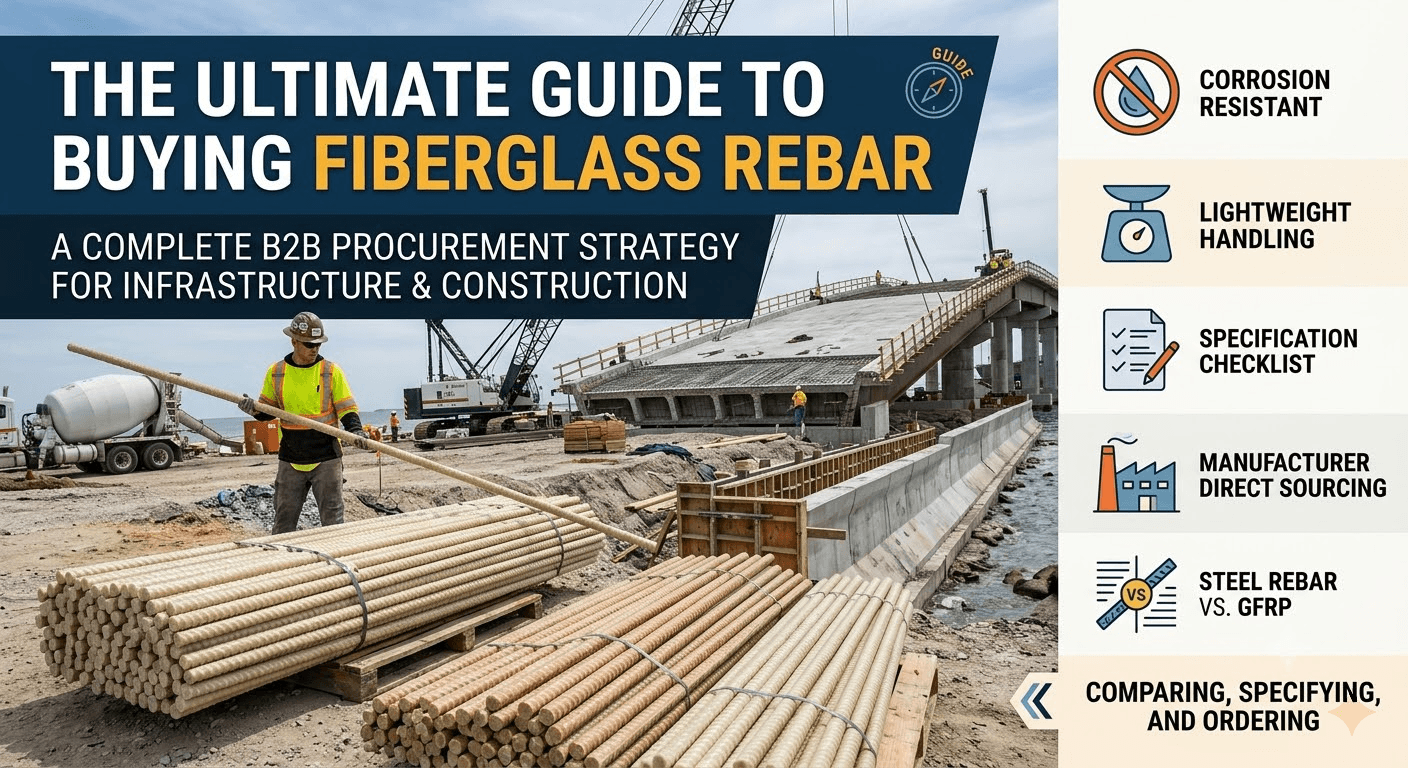
Fiberglass rebar, also called FRP rebar or GFRP rebar, can help reduce corrosion related maintenance and simplify handling when the project is properly specified. This guide explains what buyers should check before purchasing fiberglass rebar, how it compares with steel rebar, when direct manufacturers may fit bulk orders better, and what information should be sent before requesting a quote.
buy fiberglass rebar
What Is Fiberglass Rebar?
Before buyers compare prices, they need to understand how fiberglass rebar behaves in concrete. Fiberglass rebar is a composite reinforcing bar made with glass fiber reinforcement and a resin matrix. It is non metallic, corrosion resistant, lightweight, and non conductive.
Steel rebar remains familiar in many concrete designs. Fiberglass rebar fits projects where rust, chloride exposure, chemical attack, electrical conductivity, or heavy handling creates long term risk. Material approval still depends on engineering design, exposure conditions, bar size, applicable project requirements, and documentation review.
Common B2B applications include bridges, seawalls, marine structures, parking garages, roadways, precast concrete, tunnels, utility projects, and concrete structures exposed to moisture or deicing salts.
What is fiberglass rebar used for?
Fiberglass rebar is used to reinforce concrete in projects where corrosion resistance, lightweight handling, and non conductive performance are valuable. Common applications include bridges, parking garages, seawalls, marine structures, tunnels, roadways, precast concrete, and infrastructure exposed to salt, moisture, or chemicals.
In field procurement, engineers often evaluate fiberglass rebar when steel corrosion could shorten service life or increase repair frequency. The final decision should consider structural design, bar schedule compatibility, installation method, exposure, and project standards.
Takeaway: fiberglass rebar should be evaluated as a project specific reinforcement material with defined engineering and purchasing requirements.
Why Buyers Choose Fiberglass Rebar Over Steel
After defining the material, buyers usually compare fiberglass rebar with steel rebar by exposure, handling, maintenance, and project risk. The main advantages of fiberglass rebar are corrosion resistance, lower weight, non conductive behavior, and reduced rust related repair potential in harsh environments.
Steel rebar can rust when moisture, salt, or certain chemicals reach the reinforcement. Rust expansion can contribute to cracking, spalling, and repair work. Fiberglass rebar avoids steel rust, which makes it useful for coastal structures, bridge decks, parking garages, and concrete exposed to deicing salts.
Fiberglass rebar is also much lighter than steel rebar. The previous page states that fiberglass rebar can be up to 75 percent lighter than steel, which can improve handling, transportation, and jobsite movement. Buyers should still confirm bar diameter, length, packaging, and project requirements before calculating logistics savings.
The table below compares key purchasing factors for fiberglass rebar and steel rebar:
| Factor | Fiberglass Rebar | Steel Rebar | Buyer Consideration |
|---|---|---|---|
| Corrosion resistance | Strong in wet, salt, and chemical exposure when specified correctly | Can rust when protection fails | Critical for marine, bridge, and parking projects |
| Weight | Much lighter than steel | Heavier | Affects handling, freight, and installation labor |
| Electrical behavior | Non conductive | Conductive | Useful near electrical or utility applications |
| Maintenance | Can reduce rust related repair needs | May require corrosion management | Affects lifecycle cost |
| Familiarity | Requires project review | Widely familiar | Engineers should confirm design suitability |
| Availability | Depends on supplier and specifications | Broadly available | Lead time should be confirmed early |
Is fiberglass rebar better than steel rebar?
Fiberglass rebar can be better than steel rebar for corrosion prone, wet, salt exposed, chemical, or electrically sensitive applications. Steel rebar may fit projects where design familiarity, local availability, fire related requirements, or specific structural conditions make steel the preferred option.
For example, a seawall or bridge deck exposed to chloride conditions may benefit from fiberglass rebar because corrosion resistance affects long term value. A project with established steel based design assumptions may require additional engineering review before changing reinforcement material.
Takeaway: fiberglass rebar and steel rebar should be compared by exposure, design requirements, lifecycle cost, and installation conditions.
What to Check Before Buying Fiberglass Rebar
Once buyers decide to consider fiberglass rebar, the purchasing process should become technical. A vague request such as “quote FRP rebar” can lead to slow communication, incomplete pricing, and unsuitable offers.
Buyers should confirm diameter, length, quantity, surface profile, tensile performance, modulus, resin system, bond related requirements, storage guidance, cutting limitations, bar schedule compatibility, required documents, packaging, and lead time. For infrastructure or engineered structures, buyers should also confirm project standards and approval documents before purchase.
In an anonymized bridge project, a buyer received a low initial quote but later found that the supplier had not confirmed custom cut lengths, bundle labels, or document requirements. The issue delayed engineering review and unloading because the jobsite team could not match bundles to the bar schedule quickly.
The table below outlines key items buyers should prepare:
| Buying Check | What to Confirm | Why It Matters |
|---|---|---|
| Diameter | Required bar size or acceptable range | Affects structural design and pricing |
| Length | Standard or custom cut length | Affects packaging, freight, and installation |
| Surface profile | Sand coated, ribbed, or other surface option | Affects bond related requirements |
| Technical data | Tensile performance, modulus, available test data | Supports engineering review |
| Bar schedule | Lengths, quantities, bundle grouping | Helps installation and unloading |
| Documents | Specification sheet, test report, QC information | Supports buyer and engineering review |
| Packaging | Bundles, labels, pallets, export packing | Protects bars during shipment |
What should buyers check before ordering FRP rebar?
Before ordering FRP rebar, buyers should check bar diameter, length, surface type, technical data, quantity, project exposure, required documents, supplier capability, packaging, lead time, and technical communication. Buyers should also confirm whether the project requires specific standards, drawings, test reports, samples, or engineering approval.
Many purchasing issues start with incomplete specifications. A buyer may receive a low price, then discover that bar length, surface type, document availability, or packaging does not match the project’s approval and installation needs.
Takeaway: accurate specifications reduce quote errors, approval delays, and supplier comparison problems.
Local Supplier vs Direct Manufacturer
After preparing technical requirements, buyers need to decide where to source the material. Local suppliers, distributors, and direct manufacturers can all support fiberglass rebar purchases, yet each option fits a different buying situation.
A local supplier may help with urgent small orders or regional stock. A direct manufacturer may fit bulk orders, custom lengths, export packing, repeat shipments, and direct technical communication.
For buyers purchasing container quantities or project based orders, total delivered value matters more than local convenience. This includes unit price, bar consistency, documentation, packing quality, lead time, sample approval, and supplier response speed.
The table below compares common sourcing options:
| Buying Situation | Local Supplier or Distributor | Direct Manufacturer |
|---|---|---|
| Urgent small quantity | Often suitable | May be less efficient |
| Bulk project order | Depends on stock | Usually stronger |
| Custom length request | Limited flexibility | Better fit |
| Repeat supply | Depends on distributor inventory | Better production control |
| Technical questions | May need to relay answers | Direct communication possible |
| Export packing | Variable | Easier to plan and customize |
Should buyers choose a local supplier or a direct manufacturer?
Buyers should choose a local supplier for urgent small orders and a direct manufacturer for bulk orders, custom sizes, repeat supply, and project based technical support. Direct manufacturers usually provide stronger control over production, packaging, specification communication, and repeat shipment consistency.
A contractor needing a small replacement quantity may prioritize local availability. A precast producer, infrastructure buyer, or distributor planning regular orders may benefit from direct manufacturer communication, sample approval, and matched repeat shipments.
Takeaway: the sourcing route should match order size, customization needs, timeline, and project risk.

buy fiberglass rebar
How to Request a Fiberglass Rebar Quote
After buyers choose a sourcing route, the RFQ should be complete and easy to evaluate. A clear quote request helps suppliers respond faster and makes supplier comparison more accurate.
Buyers should send diameter, length, quantity, project type, destination, delivery schedule, required documents, packaging needs, drawings, bar schedules, and applicable standards. If the order requires samples, special labels, container planning, or repeat shipment consistency, those requirements should appear in the first request.
The table below can be copied into a procurement email:
| RFQ Item | Example Detail |
|---|---|
| Product | Fiberglass rebar or GFRP rebar |
| Diameter | Required size or acceptable range |
| Length | Standard length or custom cut length |
| Quantity | Pieces, bundles, pallets, or container order |
| Project type | Bridge, seawall, roadway, parking structure, precast |
| Documents | Specification sheet, test report, packing list |
| Destination | Port, warehouse, or jobsite |
| Quote request | Unit price, lead time, packing, freight terms |
What information is needed to buy fiberglass rebar?
To buy fiberglass rebar, buyers should send diameter, length, quantity, project type, destination, required documents, packaging needs, and delivery schedule. Drawings, bar schedules, standards, sample requests, storage requirements, and repeat order plans should also be included when relevant.
Common RFQ mistakes include asking only for unit price, skipping delivery destination, omitting required documents, and failing to describe the project environment. These gaps can make a quote look cheaper than the real delivered project cost.
Takeaway: a complete RFQ helps buyers compare suppliers by real project value, not headline price alone.
Why Buy FRP Rebar from Unicomposite?
Once buyers know what to request, supplier capability becomes easier to evaluate. For buyers who need manufacturer level support, Unicomposite can support standard and custom FRP rebar as part of its broader FRP and GRP manufacturing capability.
Unicomposite Technology Co., Ltd is based in Nanjing, China, has ISO 9001 certification, and operates an 18,000 square meter factory. Its manufacturing capabilities include pultrusion, pulwinding, SMC and BMC molding, hand lay up, and vacuum infusion.
For fiberglass rebar buyers, this manufacturing background can support sample approval, custom cutting discussions, diameter tolerance communication, batch traceability, project based quotes, bulk packaging, export packing, and repeat shipment consistency. Unicomposite also supplies related composite products, including FRP profiles, grating, handrail systems, cable trays, ladders, bridge panels, plant stakes, marker rods, and other custom composite parts.
Takeaway: a capable FRP manufacturer should support both the product specification and the purchasing process behind the order.
Conclusion
Buying fiberglass rebar requires a clear link between material performance, project design, supplier capability, documentation, packaging, and delivery planning.
Four procurement takeaways matter most. Confirm whether fiberglass rebar fits the exposure conditions and engineering requirements. Compare fiberglass and steel by lifecycle value and project risk. Send complete RFQ details before requesting pricing. Choose a supplier that can support specifications, documents, bulk supply, export packing, and repeat orders.
For bridges, marine structures, parking garages, precast concrete, roadways, and corrosion prone infrastructure, fiberglass rebar can provide strong value when the project is properly specified and reviewed.
[Contact Unicomposite for a custom fiberglass rebar quote →]


