 info@unicomposite.com


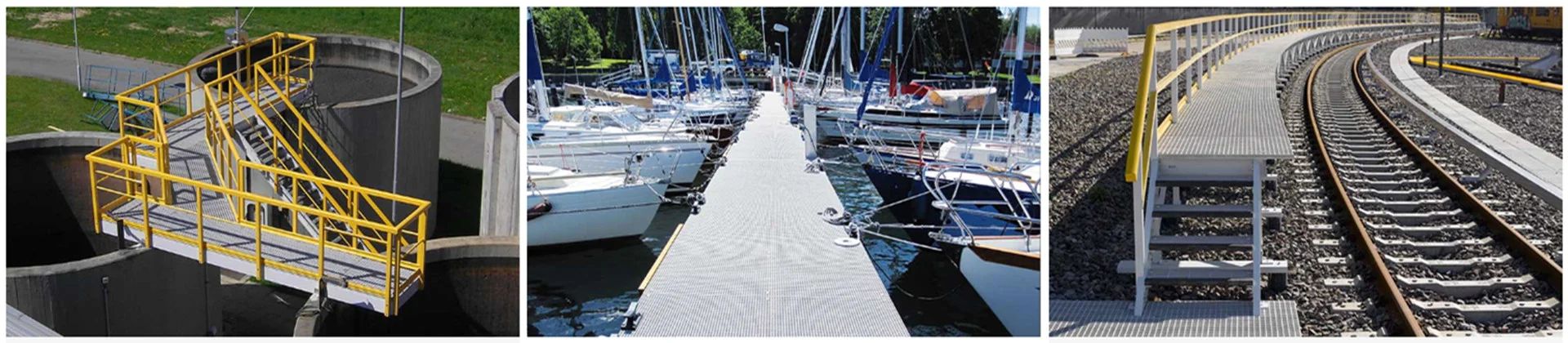
Outdoor grating rarely fails all at once. A steel panel begins rusting at the edge. A walkway becomes slick after repeated rain. A coastal platform needs more coating work every season. By the time the issue becomes visible, the site may already face higher maintenance cost, safety concerns, and replacement downtime.
That is why engineers, facility managers, and procurement teams often evaluate fiberglass grating for outdoor environments where moisture, corrosion, UV exposure, electrical hazards, and maintenance access all matter. FRP grating can provide corrosion resistance, slip resistant surface options, manageable handling weight, and long service value when specified correctly.
This guide explains why fiberglass grating works well outdoors, where it is commonly used, how it compares with steel, aluminum, and wood, and what B2B buyers should confirm before placing a bulk or custom order.

outdoor grating
Why Fiberglass Grating Works Well Outdoors
Outdoor grating must handle more than foot traffic. It may face rain, standing water, chemicals, salt air, sunlight, temperature changes, and repeated cleaning. In many industrial settings, these conditions affect material life as much as load capacity.
Fiberglass grating, also known as FRP grating or GRP grating in some markets, combines glass fiber reinforcement with a resin system. The fiber supports strength, while the resin helps protect the panel from moisture, corrosion, and environmental exposure.
What makes fiberglass grating suitable for outdoor environments?
Fiberglass grating suits outdoor environments because it resists corrosion, handles moisture exposure, supports slip resistant walking surfaces, and can reduce maintenance needs compared with many metal options. Buyers should match the resin system, surface type, load rating, clear span, support spacing, and UV exposure requirements to the actual site.
This material profile makes FRP grating useful for wet walkways, drainage areas, industrial platforms, cooling towers, chemical plants, wastewater facilities, and outdoor utility access zones. A standard outdoor specification should review resin type, panel thickness, mesh size, surface finish, load requirement, clear span, and installation method.
Outdoor use should guide the grating specification from the beginning.
Key Advantages of Outdoor Fiberglass Grating
Once site conditions are clear, the advantages become easier to evaluate. FRP grating offers value outdoors because it addresses several common failure points at the same time.
Corrosion resistance is often the first reason buyers consider fiberglass grating. Steel can rust in wet, coastal, chemical, or washdown areas unless coatings are maintained. FRP does not rust, which can reduce replacement frequency and ongoing maintenance work in many outdoor applications.
Slip resistance is another major factor. Many fiberglass grating panels can be supplied with molded or gritted surfaces, giving workers better footing in wet or oily areas. That matters for platforms, drainage covers, access walkways, stair treads, and maintenance zones.
FRP grating is also easier to handle than many steel grating panels of similar size. Lower handling weight can help with installation, removal, inspection access, and field modification. In utility areas, the non conductive nature of fiberglass reinforced plastic can also support safer material selection around electrical assets under normal use conditions.
The table below summarizes the main outdoor benefits from a buyer’s perspective:
| Advantage | Outdoor Value | Buyer Checkpoint |
|---|---|---|
| Corrosion resistance | Reduces rust related maintenance | Confirm resin system and exposure conditions |
| Slip resistant surface | Improves footing in wet areas | Choose molded or gritted top surface |
| Lower handling weight | Easier installation and access | Confirm panel size and lifting requirements |
| Non conductive material | Useful around electrical assets | Confirm dielectric expectations and site rules |
| Custom fabrication | Supports fit to site layout | Provide panel size, cutouts, and quantity |
The strongest results come when buyers connect these advantages to real site conditions.
Fiberglass Grating Sustainability and Lifecycle Value
Sustainability in industrial materials should be discussed carefully. Fiberglass grating is not automatically the best environmental choice for every project, but it can support sustainability goals when longer service life, lower maintenance, and fewer replacements reduce lifecycle burden.
For outdoor grating, corrosion resistance is a major lifecycle factor. A panel that lasts longer in wet or chemical exposure can reduce frequent replacement, recoating, disposal, and reinstallation work. That can matter for facilities that operate continuously, such as wastewater plants, cooling towers, and chemical processing sites.
Is fiberglass grating sustainable?
Fiberglass grating can support sustainability goals through long service life, corrosion resistance, low maintenance, and reduced replacement frequency in suitable environments. Buyers should evaluate sustainability through the full lifecycle, including application conditions, expected service life, maintenance requirements, transportation, replacement frequency, and end of use planning.
The key is to avoid shallow claims. A buyer should ask why the grating lasts longer in a specific environment, how often alternative materials may need maintenance, and whether the resin system fits the chemical and outdoor exposure profile.
Lifecycle value becomes clearer when buyers compare materials under the same outdoor conditions.
Fiberglass Grating vs Steel, Aluminum and Wood
Material selection should follow the outdoor environment. Steel, aluminum, wood, and fiberglass grating all have valid uses, but they perform differently in moisture, corrosion, weight, electrical exposure, and maintenance.
Steel grating may suit high impact or heavy duty industrial applications when corrosion protection and coating maintenance are planned. Aluminum grating offers light weight and good handling, but it conducts electricity and may not fit some corrosive environments. Wood decking may suit certain low cost or temporary applications, though it can absorb moisture, rot, or require treatment.
Fiberglass grating becomes attractive when corrosion resistance, slip resistance, non conductive performance, and outdoor durability need to work together.
The table below compares common outdoor grating materials:
| Property | Fiberglass Grating | Steel Grating | Aluminum Grating | Wood Decking |
|---|---|---|---|---|
| Corrosion resistance | Strong in many wet and corrosive areas | Low unless coated | Moderate, depends on exposure | Can rot or decay |
| Weight | Light to moderate | Heavy | Light | Moderate |
| Electrical conductivity | Generally non conductive | Conductive | Conductive | Varies with moisture |
| Maintenance | Low to moderate | Moderate to high | Low to moderate | Moderate |
| Outdoor durability | Strong when properly specified | Depends on coating | Good in mild conditions | Depends on treatment |
| Typical use case | Wet, chemical, utility, outdoor platforms | Heavy duty industrial areas | General lightweight access | Temporary or low exposure areas |
Is fiberglass grating better than steel outdoors?
Fiberglass grating is often better than steel outdoors in wet, corrosive, chemical, or electrically sensitive environments because it does not rust, can provide slip resistant surfaces, and is easier to handle. Steel may still fit very heavy impact applications or projects where coating maintenance is acceptable.
The right choice depends on site risk. If corrosion and maintenance create the main problem, FRP deserves serious consideration. If impact loading or a specific structural requirement dominates the design, buyers should review engineering requirements before choosing any grating material.
A strong specification compares full service conditions, not only initial cost.
Common Outdoor Applications
Outdoor fiberglass grating is commonly used where water, chemicals, weather, and maintenance access affect material selection. The strongest applications include chemical plants, wastewater facilities, cooling towers, offshore platforms, industrial walkways, drainage zones, and utility areas.
Chemical plants use FRP grating for platforms, trench covers, stair treads, and operating walkways where corrosion resistance matters. Wastewater facilities use it around treatment tanks, wet walkways, drainage channels, and maintenance platforms. Cooling towers and marine areas often require materials that can tolerate moisture, humidity, and corrosion risk.
In one anonymized cooling tower walkway project, the buyer replaced aging metal grating near wet service zones with FRP grating. Crews needed a gritted walking surface for better footing, removable panels for inspection access, corrosion resistance around constant moisture, and lower maintenance over repeated outdoor exposure. The final specification included resin compatibility review, clear span confirmation, panel layout planning, and fastening details.
The table below links application areas with typical specification priorities:
| Application Area | Common Use | Key Priority |
|---|---|---|
| Chemical plant | Platforms and access walkways | Resin system and corrosion resistance |
| Wastewater facility | Wet floors and drainage areas | Moisture resistance and slip surface |
| Cooling tower | Service walkways and platforms | Wet service durability |
| Offshore or marine site | Outdoor access areas | Salt and humidity resistance |
| Utility area | Access platforms and covers | Non conductive material and fit |
| Industrial drainage | Trench covers and open grating | Load, span, and surface type |
A good outdoor grating choice starts with the application, then moves into specification.
How to Choose Fiberglass Grating for Outdoor Use
Outdoor grating selection should begin with the site environment. Buyers should identify moisture exposure, chemical exposure, UV exposure, foot traffic, equipment traffic, load requirement, clear span, support spacing, expected deflection, and maintenance access needs before confirming the product.
The resin system is one of the most important decisions. General purpose resin may fit less aggressive outdoor areas. Stronger resin compatibility may be needed for chemical plants, wastewater facilities, coastal sites, or industrial zones with regular washdown.
Load rating and span also matter. A panel used for pedestrian traffic across a short span may need a different thickness or mesh pattern than a panel used for maintenance carts or equipment access. Buyers should provide traffic type, clear span, support spacing, expected load, acceptable deflection expectations, and installation support details.
Surface type should match the safety need. Wet walkways, stair treads, and platforms often need a gritted or molded slip resistant surface. Color, UV exposure, panel thickness, mesh size, cutouts, edge treatment, fastening method, and documentation needs should also appear in the RFQ.

fiberglass grating for outdoor environments
What should buyers check before ordering outdoor fiberglass grating?
Buyers should check resin system, load rating, clear span, support spacing, panel thickness, mesh size, surface type, UV exposure, chemical exposure, panel size, cutouts, installation method, quantity, packaging, and documentation needs. These details help suppliers recommend grating that fits the actual outdoor service environment.
Final selection should be confirmed using project load requirements, site safety practices, chemical exposure details, installation method, and supplier provided product specifications before approval.
Unicomposite Technology Co., Ltd, based in Nanjing, China, manufactures FRP and GRP composite products and supplies standard and customized composite profile and system solutions. Its capabilities support outdoor grating needs such as molded FRP grating, cut to size panels, gritted surfaces, custom colors, panel layout support, bulk packaging, and repeat project supply.
For B2B buyers, this matters because outdoor grating projects often need consistent sizes, surface options, cutting support, packaging plans, and reliable repeat orders.
Buying Checklist for B2B Projects
A clear RFQ helps suppliers quote the correct outdoor grating from the start. A vague request such as “need outdoor grating” can lead to missing details about load, span, resin system, surface, and cutting requirements.
Use the table below when preparing a fiberglass grating inquiry:
| Requirement | What to Provide | Why It Matters |
|---|---|---|
| Application area | Walkway, platform, drainage, trench, utility area | Defines use case |
| Load requirement | Pedestrian, cart, maintenance, or equipment load | Guides panel selection |
| Clear span | Unsupported distance between supports | Affects thickness and deflection |
| Support spacing | Frame or support layout | Helps confirm panel suitability |
| Resin system | General purpose or corrosion resistant need | Matches chemical exposure |
| Surface type | Molded, gritted, covered, or custom | Affects footing and safety |
| UV exposure | Indoor, shaded outdoor, or direct sunlight | Guides outdoor formulation |
| Panel size | Length, width, thickness, mesh size | Supports fit and installation |
| Custom work | Cutting, notching, fastening, edge treatment | Reduces field rework |
| Documentation | Product data, load data, drawings if needed | Supports approval review |
| Quantity | Project order or repeat supply | Supports production planning |
The RFQ should also state whether the grating will be removable, fixed, placed on a frame, or used with clips and fasteners. Installation details affect both panel sizing and long term usability.
Better inputs create better quotes.
Common Mistakes When Buying Outdoor Grating
The first mistake is choosing by price only. Low purchase cost can become expensive if the resin system, surface type, or load rating does not fit the outdoor environment.
The second mistake is ignoring chemical and UV exposure. Outdoor does not always mean the same thing. A shaded walkway, a cooling tower, a chemical platform, and a coastal drainage area can require different specifications.
The third mistake is failing to confirm load, span, and support spacing. A panel may look strong but still deflect too much if the unsupported span is too wide or the traffic load is higher than expected.
The fourth mistake is using the wrong surface. Smooth or poorly matched surfaces can create footing concerns in wet areas. Buyers should confirm molded or gritted surface requirements before ordering.
The fifth mistake is leaving cutting and installation details until the end. Custom openings, edge treatment, clips, fastening, and removable sections should be discussed before production.
Avoiding these mistakes turns outdoor grating from a simple purchase into a better long term asset decision.
Final Recommendation
Fiberglass grating is a strong option for outdoor environments where corrosion resistance, moisture performance, slip resistance, non conductive material properties, and lower maintenance needs matter.
Key takeaways:
- Match outdoor grating to moisture, chemicals, UV exposure, load, span, support spacing, and traffic type.
- Use FRP grating where corrosion, wet service, electrical sensitivity, or maintenance access makes metal difficult to manage.
- Compare fiberglass, steel, aluminum, and wood through lifecycle value under the same outdoor conditions.
- Provide resin system, surface type, panel size, load requirement, cutouts, installation details, quantity, packaging, and documentation needs in the RFQ.
[Contact Unicomposite for a custom fiberglass grating quote →]


