 info@unicomposite.com


A car wash floor has to manage water, foam, road salt residue, detergents, mud, oil traces, tire movement, and constant foot traffic every day. When the floor system is poorly specified, the problems appear quickly: standing water, slippery work areas, corroded metal covers, difficult drain cleaning, loose panels, and higher maintenance costs.
That is why many car wash operators, facility contractors, equipment suppliers, and OEM buyers evaluate FRP car wash grating for wash bays, drainage trenches, wet walkways, equipment areas, and maintenance zones. Fiberglass reinforced plastic grating can combine drainage, corrosion resistance, slip resistant surface options, lighter handling, and custom panel sizing in one flooring system when the product is matched to the site conditions.
This guide explains what FRP car wash grating is, why it is used, how it compares with traditional materials, and what buyers should confirm before ordering custom or bulk panels.
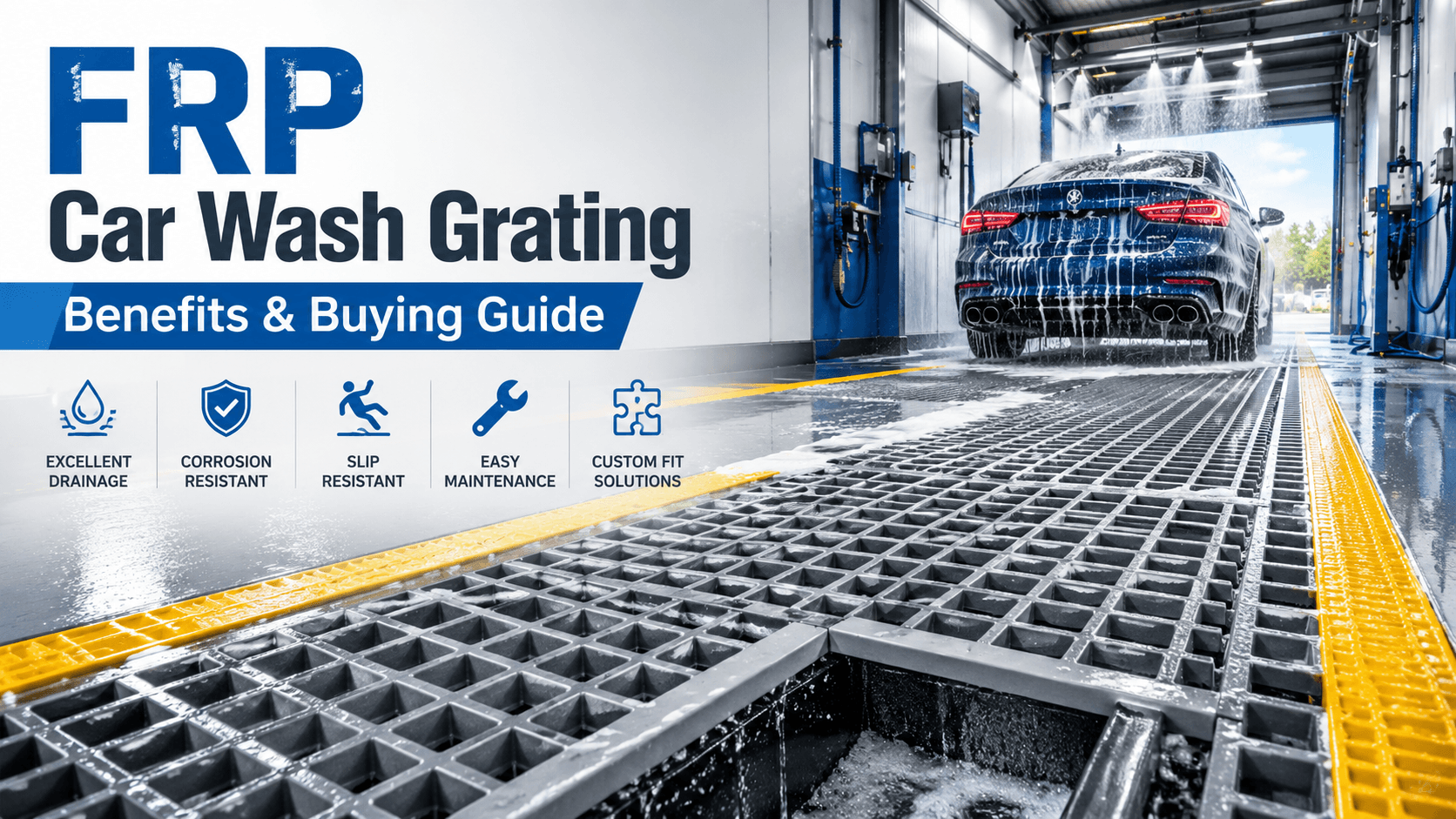
frp car wash grating
What Is FRP Car Wash Grating?
FRP car wash grating is a fiberglass reinforced plastic grating panel used in car wash bays, drainage channels, wet floors, maintenance walkways, equipment areas, and water treatment zones. It is made from glass fiber reinforcement and resin, creating an open grid structure that allows water, dirt, foam, and cleaning residue to drain through the surface.
In car wash environments, grating selection affects safety and workflow. A panel must handle water exposure, cleaning chemicals, foot traffic, occasional vehicle contact, support span, and frequent washdown. Buyers should treat it as a site specific flooring component, not just a generic FRP panel.
How is FRP car wash grating different from general FRP grating?
FRP car wash grating is selected specifically for wet floor drainage, slip resistance, cleaning chemical exposure, vehicle access, and drain maintenance in car wash facilities. General FRP grating may use similar materials, but car wash applications require closer review of load rating, panel thickness, mesh size, resin system, support frame, and surface type.
This distinction matters during procurement. A standard panel may look suitable from a product photo, but final performance depends on bay dimensions, trench width, vehicle movement, worker access, support spacing, and the cleaning chemicals used on site.
A strong RFQ should describe the wash bay layout before asking for price.
Why Use FRP Grating in Car Wash Shops?
After defining the product, the next question is practical: why choose FRP instead of steel, concrete, or plastic panels? The strongest reasons are drainage, corrosion resistance, wet traction, easier handling, and lower maintenance in wet service areas.
Car wash floors face water, detergents, road salt residue, mud, oil traces, degreasers, and repeated cleaning. Steel grating can rust if protective coatings fail. Concrete trench covers can be heavy and harder to remove for drain access. Some plastic floor panels may work in light duty zones, but buyers still need to confirm stiffness, long term deformation, and chemical compatibility.
FRP grating gives buyers a non metallic option for wet environments. Molded or gritted surfaces can improve footing, while the open grid structure helps water move into the drainage system.
The table below summarizes the main benefits from a car wash buyer’s perspective:
| Benefit | Why It Matters in Car Wash Facilities | Buyer Checkpoint |
|---|---|---|
| Drainage | Moves water, foam, and debris away from walking areas | Confirm mesh size and trench layout |
| Corrosion resistance | Helps resist water, detergents, salts, and washdown exposure | Confirm resin system and chemical exposure |
| Slip resistant surface | Improves footing in wet service zones | Choose molded or gritted surface |
| Lightweight handling | Supports easier removal for drain cleaning | Confirm panel size and lifting needs |
| Custom cutting | Fits wash bays, trenches, pits, and equipment areas | Provide dimensions and cutout needs |
In field installations, operators often find that drainage performance depends on more than the panel. The trench slope, frame design, removable panel layout, cleaning access, and debris collection system all affect the result.
A good car wash grating system starts with the floor layout, then moves into material selection.
FRP Car Wash Grating vs Traditional Materials
With the core benefits clear, buyers should compare materials under real car wash conditions. The right choice should be judged by drainage, wet traction, corrosion exposure, maintenance access, panel weight, and load conditions.
Steel grating can offer high load capacity, but corrosion becomes a concern in wet or chemical exposure if the surface protection breaks down. Concrete covers can handle heavy loads, yet they are difficult to move and may slow drain maintenance. Plastic panels may provide light weight, but buyers should confirm stiffness, long term deformation, and chemical compatibility.
FRP grating becomes attractive when drainage, corrosion resistance, slip resistance, handling weight, and custom sizing matter together.
The table below compares common materials used in car wash drainage and floor access areas:
| Material | Corrosion Resistance | Drainage | Slip Resistance | Maintenance | Typical Use |
|---|---|---|---|---|---|
| FRP grating | Strong when resin matches exposure | Open grid supports water flow | Molded or gritted options | Low to moderate | Wash bays, trench covers, wet walkways |
| Steel grating | Can rust without protection | Good open drainage | Depends on surface treatment | Moderate to high | Heavy duty industrial drains |
| Concrete trench cover | Moisture tolerant | Limited unless designed with openings | Depends on finish | Harder to remove | Heavy fixed drainage covers |
| Plastic floor panel | Good moisture resistance | Depends on panel design | Depends on texture | Low to moderate | Light duty wet areas |
Is FRP grating better than steel for car wash floors?
FRP grating is often better than steel for car wash floors when corrosion resistance, wet footing, low maintenance, and easier panel handling matter. Steel may still suit heavy load areas, but buyers should account for coating maintenance, rust risk, lifting weight, and long term exposure to water, detergents, and road salt residue.
Material choice should follow the exact service environment. If the area receives constant washdown, detergent exposure, road salt residue, and frequent drain cleaning, FRP usually deserves strong consideration. If the site expects heavy vehicle loads, tire contact, or unusual impact conditions, buyers should request load data before approval.
The best flooring choice balances safety, drainage, maintenance, and structural support.
Common Applications in Car Wash Facilities
After comparing materials, buyers should map the application. FRP grating can support several areas in a car wash, but each zone has different performance priorities.
Wash bay floors need water movement, slip control, and load review. Drainage trench covers need correct span, mesh size, and removable access. Maintenance walkways require safe footing and panel stability. Equipment service areas may need cutouts, custom shapes, or panels that crews can lift during inspection.
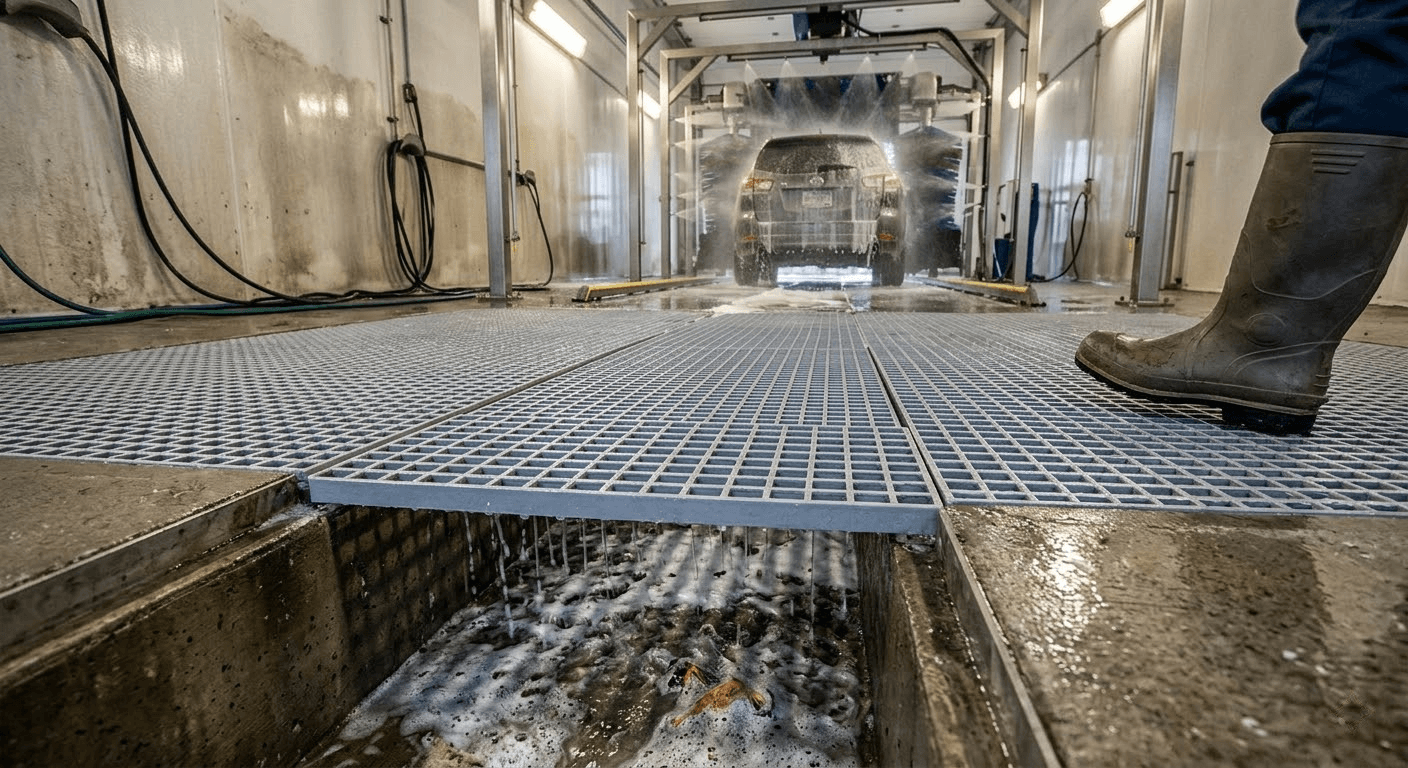
FRP Car Wash Grating 2
Where is FRP car wash grating commonly used?
FRP car wash grating is commonly used in wash bay floors, drainage trench covers, wet walkways, equipment service zones, water treatment areas, and maintenance access platforms. Buyers choose it when they need drainage, corrosion resistance, slip resistant surface options, custom panel sizes, and easier removal for cleaning.
In one anonymized tunnel car wash drainage bay project, the buyer first requested standard panels for a long floor trench. After reviewing daily washdown, road salt residue, standing water near the exit lane, drain cleaning frequency, support frame spacing, and occasional tire contact, the specification changed. The final request included gritted removable FRP panels, thicker molded sections over wider spans, and panel sizes that maintenance crews could lift without special equipment.
The table below connects car wash areas with specification priorities:
| Application Area | Main Need | Key Specification Priority |
|---|---|---|
| Wash bay floor | Drainage and wet traction | Surface type, load rating, mesh size |
| Drainage trench cover | Water flow and removable access | Clear span, panel thickness, support frame |
| Maintenance walkway | Worker safety and cleaning access | Slip resistance and panel stability |
| Equipment service area | Custom fit around equipment | Cutouts, panel shape, resin system |
| Water treatment zone | Moisture and chemical exposure | Resin compatibility and easy cleaning |
A car wash facility may use the same material family across multiple zones, but each zone still needs its own specification.
How to Choose FRP Grating for Car Wash Use
After identifying the application, buyers should define the technical details. The most important factors are load rating, tire contact, vehicle load assumptions, clear span, bearing support width, support frame, mesh size, panel thickness, surface type, resin system, chemical exposure, and installation method.
Load rating should match the actual use. A pedestrian wet walkway does not require the same review as a bay where tires may contact the grating. Buyers should clarify whether the panel will support workers only, light carts, maintenance equipment, tire contact, or regular vehicle access.
Clear span and bearing support design also matter. A panel that performs well over a short trench opening may deflect too much across a wider unsupported span. Buyers should provide trench width, bearing support width, frame material, acceptable deflection expectations, and whether panels need to be removable.
Surface type should follow the safety risk. Wet service areas often need molded concave surfaces or gritted top surfaces. Buyers should also confirm cleaning routines, detergents, degreasers, road salt exposure, and wastewater conditions so the supplier can review resin compatibility.
Use the table below to prepare a car wash grating inquiry:
| Requirement | What to Provide | Why It Matters |
|---|---|---|
| Application area | Wash bay, trench, walkway, equipment area | Defines use case |
| Load type | Pedestrian, cart, tire contact, maintenance load | Guides panel selection |
| Clear span | Unsupported distance between supports | Affects thickness and deflection |
| Bearing support width | Frame or ledge width supporting the panel | Helps confirm stability |
| Panel size | Length, width, thickness | Supports fit and layout |
| Mesh size | Opening pattern and open area | Affects drainage and debris flow |
| Surface type | Molded, gritted, covered, or custom | Affects wet footing |
| Resin system | Water, detergent, salt, chemical exposure | Supports corrosion resistance |
| Installation method | Fixed, removable, framed, clipped | Affects maintenance access |
| Documentation | Load data, drawings, product specs if required | Supports approval review |
| Quantity and packaging | Project order or repeat supply | Supports production and logistics |
What should buyers check before ordering FRP car wash grating?
Buyers should check bay layout, trench width, load type, tire contact, vehicle access, clear span, bearing support width, panel thickness, mesh size, surface type, resin system, cleaning chemicals, installation method, quantity, packaging, and required load data. These details help suppliers recommend panels that fit drainage, safety, and maintenance needs.
Final FRP car wash grating specifications should be verified against actual bay layout, vehicle access, cleaning chemicals, support frame design, local safety practices, installation method, and supplier provided product data before approval.
Unicomposite Technology Co., Ltd, based in Nanjing, China, manufactures FRP and GRP composite products and supplies standard and customized composite profile and system solutions. Its manufacturing capabilities support car wash grating needs such as molded FRP grating, cut to size production, repeat panel layouts, gritted surface options, color consistency, resin selection, cutouts, export packaging, and bulk reorder support.
For car wash chains, equipment suppliers, and OEM programs, that flexibility helps standardize panel layouts across multiple sites while still adapting to local trench dimensions and project packaging needs.
Common Mistakes When Buying Car Wash Grating
The first mistake is choosing by price only. A low cost panel may create higher long term cost if the resin system, thickness, surface type, or support layout does not match wet service conditions.
The second mistake is ignoring cleaning chemicals. Car wash facilities may expose grating to detergents, degreasers, road salt residue, oils, and wastewater. Buyers should describe these conditions before selecting a resin system.
The third mistake is failing to confirm load and span. A panel may fit the opening but deflect too much if the unsupported span is wide or the load type changes.
The fourth mistake is using the wrong surface. Smooth surfaces can create footing concerns in wet zones. Buyers should confirm molded or gritted surface requirements before production.
The fifth mistake is missing maintenance access. Drainage trenches need cleaning. Removable panel layout, lifting size, edge treatment, and fastening details should be discussed before ordering.
Avoiding these mistakes turns FRP grating from a simple panel purchase into a better car wash floor system.
Final Recommendation
FRP car wash grating can be a strong option for wash bays, drainage trench covers, wet walkways, maintenance areas, and equipment service zones where drainage, slip resistance, corrosion resistance, and lower maintenance matter.
Key takeaways:
- Match the panel to the wash bay layout, trench width, load type, tire contact, support span, and cleaning routine.
- Confirm mesh size, panel thickness, surface texture, resin system, bearing support width, installation method, and removable access before ordering.
- Compare FRP with steel, concrete, and plastic based on wet service life, maintenance access, drainage, safety, and actual load conditions.
- Request load data or sample panels when vehicle access, wide spans, unusual support layouts, or custom panel sizes create uncertainty.
[Contact Unicomposite for a custom FRP car wash grating quote →]


