 info@unicomposite.com


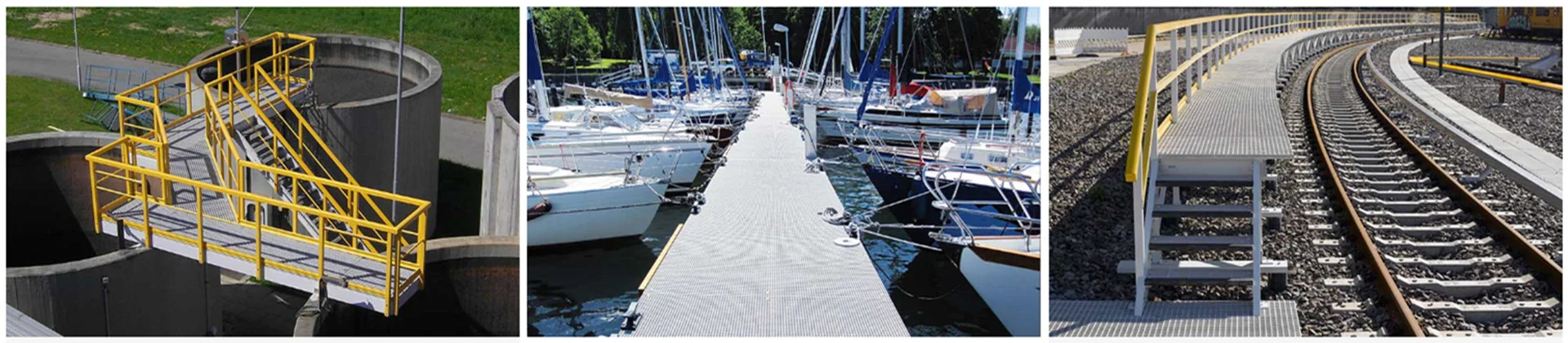
Introduction
“Grating performance” sounds like a simple strength question—until someone steps onto a platform and says, “Why does this feel springy?” That moment is when Fiberglass Gratings Performance becomes real: not just whether it holds weight, but whether it stays stable, safe, and low-maintenance after months of humidity, chemicals, UV, and daily foot traffic.
This guide is for B2B buyers sourcing in bulk for industrial sites (power, wastewater, cooling towers, marine, agriculture, OEM platforms). You’ll get a practical performance checklist, a clear RFQ template, and a verification plan so you can spec the right solution the first time—without paying later in rework, safety complaints, or downtime.
A quick “from the field” story (anonymized): we once supported a walkway project where the buyer specified a load requirement but didn’t define span direction or deflection expectations. After installation, operators reported “bounce” even though nothing was “failing.” The fix wasn’t exotic—clarifying bearing-bar direction, tightening support spacing, and aligning thickness with a deflection target solved the feel and long-term stability concerns. That’s the difference between “it meets a number” and performance that works for people.
(For context: Unicomposite is an ISO-certificated pultrusion manufacturer with its own factory producing FRP pultruded profiles and custom composite parts in China, serving sectors like electricity, wastewater treatment, cooling towers, marine, agriculture, aquaculture, and OEM manufacturing. We see recurring specification gaps across industries, which is why this guide focuses on prevention.)

fiberglass gratings performance
How to Evaluate Fiberglass Gratings Performance (What Matters Most)
Load Capacity & Deflection (Strength That “Feels Solid”)
Most RFQs talk about “load,” but day-to-day usability is driven by deflection. Two panels can both survive a load test, yet one feels solid and the other feels like a trampoline—because support conditions, span, and stiffness weren’t defined.
Performance reality:
- Load capacity answers: “Will it break?”
- Deflection answers: “Will it feel stable and remain serviceable over time?”
To avoid the most common mismatch, define these items clearly:
- Clear span (distance between supports)
- Support condition (2-side / 4-side / continuous support)
- Traffic type (pedestrian only vs carts/equipment)
- Deflection expectation (numeric limit if you use one; otherwise describe “low-bounce walkway”)
Buyer tip: If the platform is accessed frequently, comfort and perceived safety matter. When operators distrust a surface, they avoid it, report it, or demand changes—regardless of whether it “technically holds.”
RFQ must-have (copy-ready):
- Clear span (mm/in)
- Support type and spacing
- Panel size and thickness
- Bearing bar direction on the drawing
- Live load type (uniform and/or point load)
- Deflection expectation (numeric or descriptive)
Resin System & Corrosion Resistance (Performance in Real Chemicals)
In corrosive sites, the resin system often determines service life more than anything else. Think of resin as the chemical barrier and fiberglass as the structural backbone. If the barrier is wrong, degradation starts at the surface and works inward.
What to specify (minimum viable corrosion info):
- chemical name(s) (even partial list)
- concentration (approximate is fine)
- temperature range
- exposure style: splash, immersion, vapor, intermittent washdown
- cleaning chemicals (often the hidden culprit)
Environment → what to prioritize (decision table)
- Wastewater / sewage / humid H₂S areas: moisture + chemical resistance; long-term surface integrity
- Cooling towers: constant humidity + water chemistry + UV exposure (often overlooked)
- Marine/coastal: salt mist + UV + abrasion; weathering + surface protection matter
- Chemical dosing / splash zones: resin match is critical; “close enough” often isn’t
Common failure pattern (anonymized): a grating near a dosing skid looked normal at first, then developed surface breakdown and fiber exposure after extended splash exposure. Root cause was resin mismatch to the chemical/temperature reality—not that FRP is inherently weak.
Slip Resistance & Surface Options (Safety Performance)
Slip resistance is not an add-on—it’s core performance. The right surface depends on your site conditions.
Surface selection (practical):
- Meniscus / molded texture: general-purpose walkways in normal wet conditions
- Grit surface: best for wet/oily/algae-prone zones, washdown areas, and condensation-heavy environments
- Covered plate / solid top: useful for small-object control or splash shielding (tradeoff: less drainage/airflow)
Maintenance note: harsh scraping, incompatible chemicals, or aggressive pressure-washing can reduce traction over time. If traction is critical, specify maintenance constraints so the surface choice matches how the site is actually cleaned.
Fiberglass Gratings Performance in Harsh Environments
UV, Weathering & Color Stability (Outdoor Reality)
Outdoor performance isn’t just fading. UV exposure can affect surface condition depending on resin and protective layers.
When to call out UV explicitly:
- outdoor platforms and catwalks with full sun exposure
- coastal sites (UV + salt + abrasion combo)
- rooftops, cooling tower decks, open structures
What to request: supplier approach to weathering resistance (formulation/protection method) and what cosmetic change is acceptable vs unacceptable for your application.
Fire Performance & Smoke Considerations (Risk Management)
Fire requirements are site-specific. The safest buyer approach is to be explicit about what you need and what proof you expect—without assuming a generic “FR” label equals compliance.
What to specify as a buyer:
- whether you require a fire-retardant resin option
- where it will be used (enclosed area, egress route, open-air platform, etc.)
- what documentation you expect (test references, limitations)
Safety note: fire behavior is influenced by the full application environment. Validate requirements with your site engineer/EHS policy before purchase decisions.
Dielectric & Non-Sparking Benefits (Electrical & Safety Zones)
Fiberglass gratings can be preferred in electrically sensitive environments because of dielectric characteristics and non-sparking behavior compared to many metal options.
Typical use cases:
- power utilities and substations
- electrically sensitive zones where conductivity is a hazard
- areas where corrosion + grounding maintenance is burdensome
Practical reminder: even if the grating itself is non-conductive, your overall platform and adjacent metal structures may still require grounding practices per site rules.
Specification Template: How to Write a Clear RFQ for Fiberglass Gratings Performance
Use this template to prevent the top three performance failures: wrong resin, unclear span/support, and wrong surface.
Fiberglass Gratings Performance – RFQ Template
- Application: walkway / platform / trench cover / stair tread / cooling tower deck / marine pier, etc.
- Environment: wet/dry, outdoor/indoor, salt mist, UV exposure
- Chemical exposure: list chemicals + approximate concentration + temperature range + splash/immersion/vapor
- Panel details: panel size (L×W), thickness, layout drawing
- Support conditions: 2-side or 4-side support, bearing length, support spacing
- Clear span: (mm/in) and span direction indicated
- Load requirements:
- Uniform live load: ___
- Point load (if applicable): ___
- Traffic type: pedestrian / carts / equipment
- Deflection expectation: numeric limit or “low-bounce walking surface”
- Surface requirement: meniscus / grit / covered plate + wet traction requirement
- Fire-retardant requirement: yes/no + documentation expectations
- UV/weathering requirement: outdoor yes/no, color preference, cosmetic tolerance
- Fabrication: cutouts, edge banding, clips, stair tread details
- Quantity & delivery: quantity, target ship date, packaging requirements
Where supplier capability matters: when you need bulk consistency plus cutouts, edge finishing, clips, or special layouts, a manufacturer that combines pultrusion production with custom fabrication can reduce variability and lead time. Unicomposite supports pultrusion for standard profiles and custom fiberglass fabrication, and can also provide other forming methods (Pulwound, SMC/BMC, hand lay-up) when projects require non-standard composite components—helpful when your order is not “one SKU fits all.”
Quality & Inspection: How to Verify Performance Before You Install
What to Request From Suppliers
To keep performance claims grounded, ask for:
- confirmation of the resin system (and suitability notes for your exposure)
- basic ISO-style QA evidence (dimensional checks, appearance checks, traceability)
- documentation behind special requirements (fire-retardant, UV/weathering approach)
- fabrication drawing approval workflow (cutouts, banding, edge sealing)
If the application is high-risk (chemical splash, marine, elevated work platform), consider a sample panel or a small pilot order before releasing the full bulk PO.
On-Site Acceptance Checks (Simple but Effective)
These checks catch most issues before installation:
- Surface: consistent finish; no excessive exposed fibers
- Edges & cutouts: smooth and properly sealed/banded if required
- Fit-up: correct bearing, correct clip type and spacing
- Transport damage: cracks, impact marks, delamination signs
A lot of “performance failures” are actually install/spec mismatches—and these are avoidable with clear drawings and simple acceptance checks.
Conclusion
The fastest way to get burned on grating is to treat performance as one number. Fiberglass Gratings Performance is a system decision: stiffness (load + deflection), chemical resistance (resin match), safety (slip surface), and durability (UV/weathering and any fire-related requirements).
If you only do three things before buying:
- Define span/support + load and deflection expectations.
- Match resin selection to real exposure (chemicals, temperature, splash vs immersion).
- Choose surface based on your wet/oily reality and cleaning practices.
If you share a simple drawing plus span and exposure notes (even rough), you can get back a clean, performance-oriented spec you can paste into an RFQ and compare suppliers on apples-to-apples terms.
Frequently Asked Questions
Start with what you can control: span/support conditions, load type, deflection expectation, resin system, and surface requirement. If those inputs are identical, then compare QA documentation, fabrication capability, and how clearly the supplier confirms resin suitability for your exposure.
Leaving out support/span direction and deflection expectations. Many projects specify a load but don’t define stiffness needs, which is why “bounce” complaints show up even when the grating technically meets strength requirements.
Yes—intermittent splash and washdown can be worse than you expect, especially near dosing or cleaning areas. Even a partial chemical list plus temperature range is far better than guessing resin selection.
If the area is frequently wet, oily, algae-prone, or washed down, grit surfaces are commonly specified for traction. The right choice also depends on cleaning methods and how much abrasion the surface will see over time.
Yes, but customization should be planned into the RFQ (cutouts, edge banding, clips, tolerances, drawing approvals). Suppliers with both production and fabrication capability can often deliver better consistency across bulk orders.


