 info@unicomposite.com


Fiberglass cucumber stakes can be one component of a cucumber support system, but choosing the rod material is not the first decision. Start with the cucumber’s growth habit, then choose the climbing surface and the frame that will carry it. Vining cucumbers can use a trellis; compact bush varieties do not automatically need the same tall support. [1]
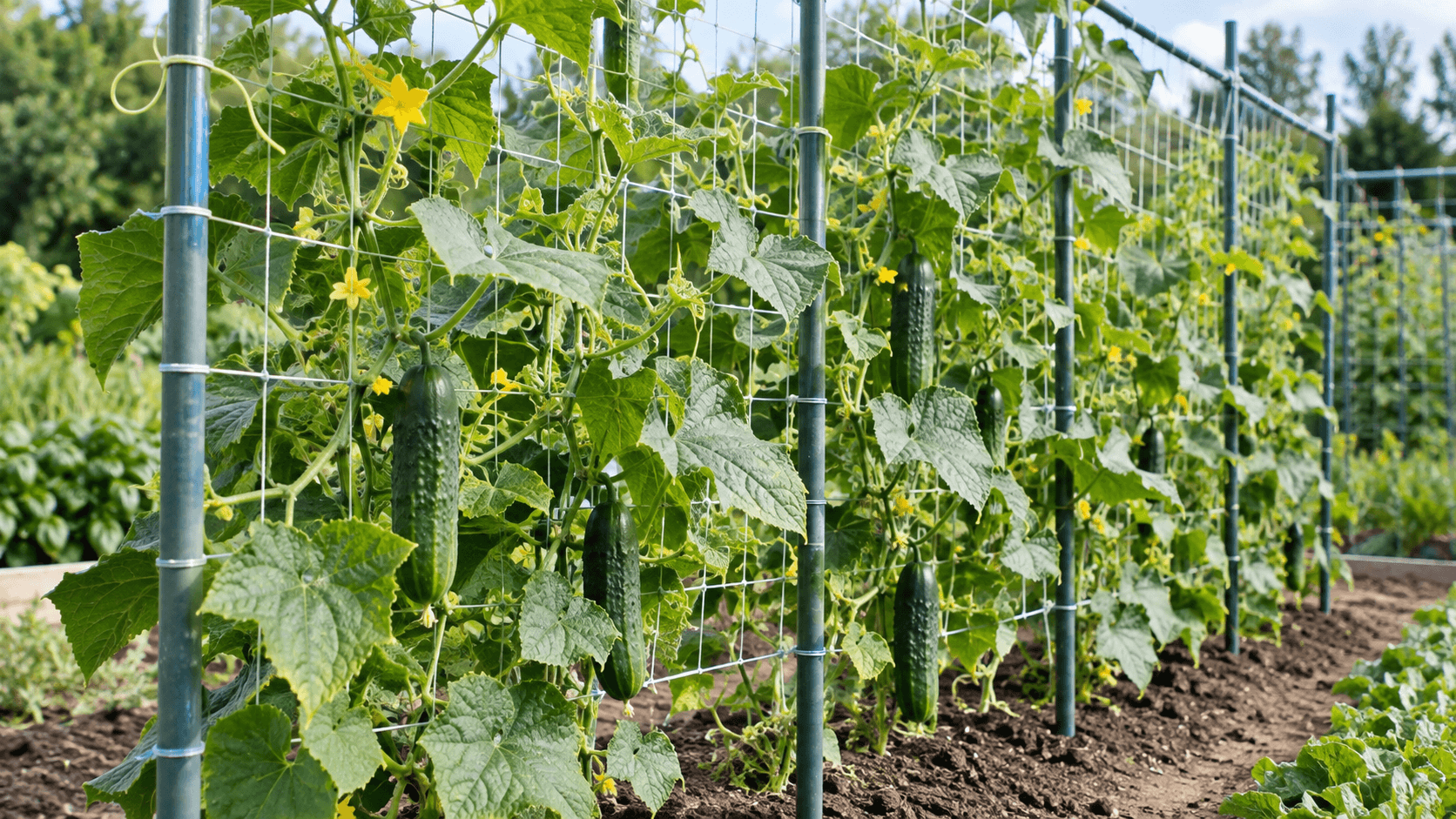
fiberglass cucumber stakes
What are fiberglass cucumber stakes?
Fiberglass cucumber stakes are support components made from glass fibers in a polymer matrix, a type of fiber-reinforced polymer (FRP). [7] In a cucumber planting, they may serve as individual supports or as components of a larger frame. A stake, however, is not the whole system: netting or twine provides a climbing route, while posts, connections and anchorage support that route.
Identify whether the fiberglass component will guide a vine, carry mesh or form part of a frame. A rod suitable for guiding a young plant is not automatically suitable as a tensioned row-end post.
Do your cucumbers need a trellis?
Check the seed packet or cultivar description before buying supports. University of Minnesota Extension distinguishes long-vining cucumbers from compact bush types. A support layout for a spreading vine should not simply be applied to a bush cultivar. [1]
For vining cucumbers, plan the climbing route and access for training and harvest. For bush cucumbers, follow the cultivar’s growing recommendations rather than adding a tall trellis by default.
Growing vertically can save space and make fruit easier to find and harvest. These are benefits of a workable trellis arrangement—not proof that fiberglass itself increases yield. Iowa State University Extension describes trellising as a way to save garden space and simplify harvesting. [4]
Stakes, netting or twine: what does each part do?
Cucumbers climb using tendrils, while clips or ties can help guide growth in some training systems. Decide what the vine will actually attach to—such as mesh or supported twine—as well as which components hold that climbing route in place. [3]
| Component | Main role | What to check before selecting it |
|---|---|---|
| Stake or post | Carries or locates part of the support arrangement | Whether it is an individual plant support, an intermediate support or a row-end component; how it is connected and secured |
| Mesh or netting | Provides multiple climbing contacts across a supported panel | Crop compatibility, attachment to the frame and access for training and harvesting |
| Twine or string | Provides a climbing route within a supported arrangement | Upper support, any lower attachment required by the layout, and the method used to guide or clip the vine |
This table describes functions, not a load rating or an installation specification. Material choice alone does not establish the strength of the assembled system.
Minnesota Extension describes vegetable trellises using mesh between vertical supports. Maryland Extension also demonstrates cucumber training on strings and a simpler zigzag-twine arrangement between posts. Both approaches require a supporting frame and attention to vine training. [2][3]
For a new row, settle the frame and attachment arrangement before ordering rods. Do not substitute a fiberglass rod for an existing post solely because the lengths appear similar.
How to set up and use the supports
Plan the layout before the vines spread
Mark the support locations, climbing area and harvest access before growth makes the bed difficult to reach. Keep installation and later cultivation away from established roots. Cucumber roots can be damaged by deep cultivation close to plants. [1][4]
Plant spacing and support-post spacing are different measurements. Follow cultivar and growing-system guidance for the plants; determine post spacing from the selected frame, climbing surface, connections and site conditions. There is no single post spacing or embedment depth suitable for every layout. A garden example using steel posts is not an installation specification for FRP rods.
For the broader relationship between overall stake length, exposed support height and diameter, see our fiberglass plant stake selection guide.
Guide the vines onto the climbing surface
Position the climbing route where developing vines can reach it. Guide young vine tips gently toward the mesh rather than pulling established growth into place. Minnesota Extension recommends regular training through the mesh; Maryland’s string-supported example uses clips and repeated redirection as the vines grow. [2][3]
Use plant-training ties or clips where needed, follow their instructions and check contact points as stems develop.
What should you check during the season?
Keep routine checks focused on the plants and the assembled support:
- Check whether new growth is reaching the intended mesh or strings, and redirect it gently where necessary.
- Look for fruit caught in mesh openings before it becomes difficult to remove. Minnesota Extension specifically highlights this cucumber-trellis check. [2]
- Inspect posts, attachments and climbing surfaces for movement, loosening or visible damage, particularly after adverse weather. Resolve a support problem before adding more plant weight or increasing tension.
- Avoid working among wet cucumber vines where practical; Maryland Extension advises this to reduce disease spread. [5]
These checks help maintain a usable support arrangement. They do not replace cultivar-specific watering, pollination, pest or disease management, and they should not be read as a yield guarantee.
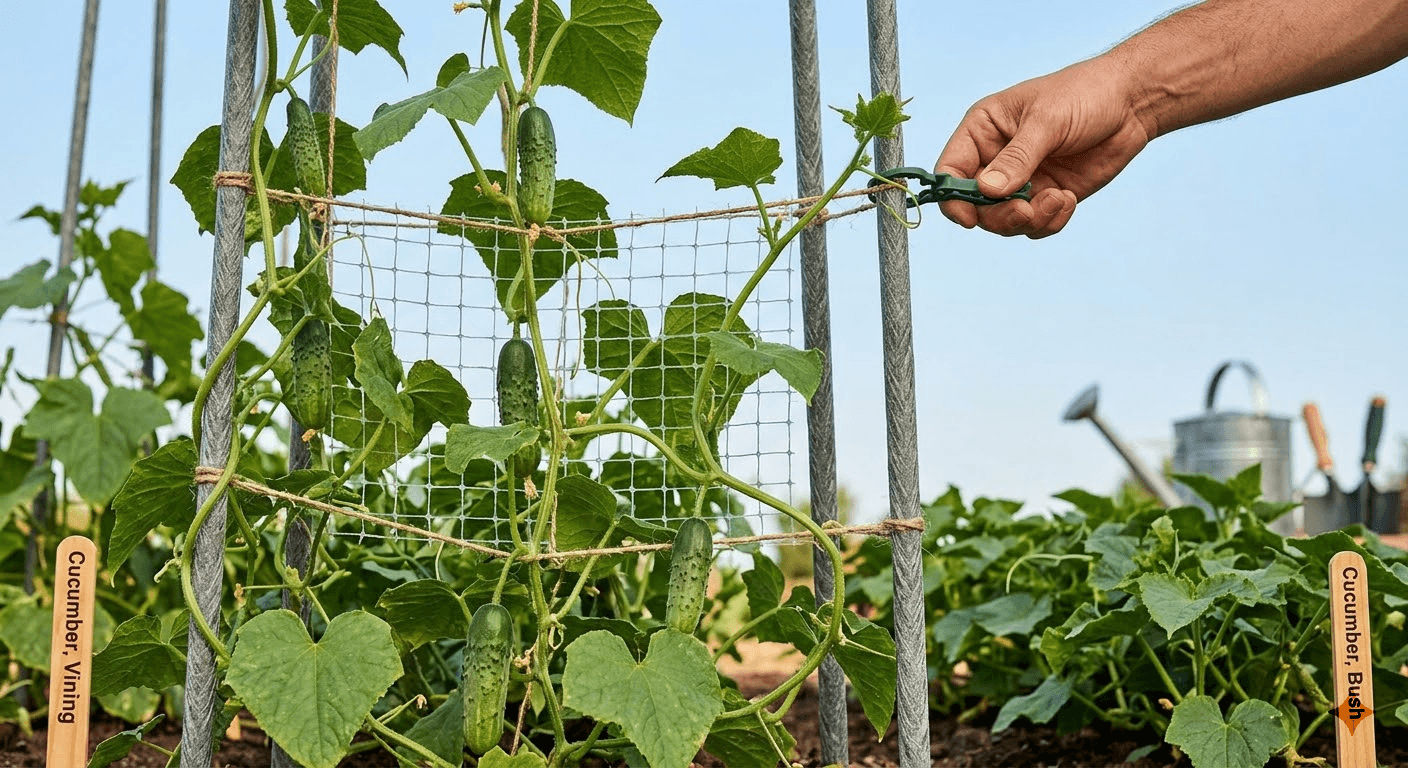
fiberglass cucumber stakes 2
Can fiberglass cucumber stakes be reused?
Plan reuse around the condition of the components, not a promised number of seasons. Before reinstalling a stake, inspect its surface, ends and attachment areas and follow the supplier’s handling and reuse instructions. Keep visibly damaged components out of service until their suitability has been assessed.
Inspect the frame, twine and netting as well. Before reuse, remove soil and plant residues using methods suitable for the components. Where disease is a concern, follow appropriate horticultural sanitation guidance and check that any cleaning or disinfection method is compatible with the stakes and accessories. Soil and plant debris can carry pathogens; a visually clean surface is not necessarily free of them. [6]
Selecting FRP components for your cucumber planting
Prepare a sketch showing the cucumber type, climbing surface, support positions and attachments. Record the required rod dimensions, quantity, growing environment and destination.
Our FRP plant stakes include solid rods, hollow tubes and assembled trellis forms. If you are considering FRP components for a cucumber planting, use the product page to submit your proposed arrangement, dimensions and quantity. Do not assume that a stake order includes netting, strings, clips or a complete trellis system.
References
- University of Minnesota Extension, Growing cucumbers in home gardens.
- University of Minnesota Extension, Trellises and cages to support garden vegetables.
- Luke Gustafson, University of Maryland Extension, Maryland Grows, Climbing Cucumbers, June 10, 2020.
- Iowa State University Extension and Outreach, Growing Cucumbers in the Home Garden.
- University of Maryland Extension, Growing Cucumbers in a Home Garden.
- University of Minnesota Extension, Clean and disinfect gardening tools and containers.
- TWI, What are Glass Reinforced Plastic (GRP) Composites?.


