Fiberglass Cable Tray Types & Guide

time:2025-12-5

What Is a Fiberglass Cable Tray?

A fiberglass cable tray, also called an FRP cable tray or cable bridge in some regions, is a structural support system used to route and protect electrical and instrumentation cables. It is manufactured from fiber reinforced polyester or vinyl ester resin so it has high corrosion resistance, long service life and low maintenance compared with traditional steel cable trays.

Unicomposite designs and produces pultruded FRP profiles and molded parts that can be assembled into complete cable tray systems including straight sections, bends, tees, reducers, covers and supporting hardware.

Fiberglass Cable Tray Types & Guide

fiberglass cable tray types

Main Types of Fiberglass Cable Tray

Different projects require different cable tray structures. Below are the most common fiberglass cable tray types and their typical features and applications.

Ladder Type Cable Tray

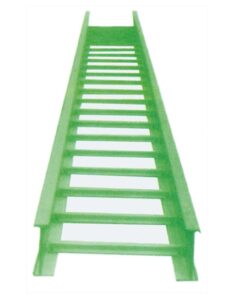
Ladder type fiberglass cable tray consists of two side rails connected by transverse rungs at regular spacing. The open design allows excellent ventilation and easy heat dissipation, making it suitable for power cables and large diameter control cables.

  • Recommended for power distribution, substations and industrial plants.
  • Easy to install and modify when adding or removing cables.
  • Available with different rung spacing and loading classes for light, medium and heavy duty applications.

Trough or Channel Cable Tray

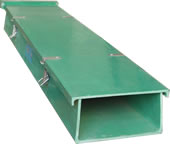
Trough or channel cable tray has a bottom plate with side rails to provide more protection for cables while still allowing some ventilation. It is often used for control cables, communication cables and instrumentation circuits that require better shielding from dust and falling objects.

  • Suitable for computer cables, communication lines and sensitive signal cables.
  • Provides a compromise between protection and ventilation.
  • Can be supplied with optional covers for outdoor or dirty environments.

Solid Bottom or Tray Type Cable Tray

Solid bottom tray type cable tray has a fully closed bottom and continuous side walls. It offers the highest level of protection for cables against dust, dripping liquids and mechanical damage.

  • Recommended where cables must be completely separated from the surrounding environment.
  • Common in commercial buildings, tunnels and transportation projects.
  • Often used together with cover plates to form an almost enclosed cable duct.

Epoxy Resin Composite Cable Tray

Epoxy resin composite cable tray combines an inner metal skeleton with an outer FRP body. The metal core increases mechanical strength and allows long spans and heavy loads, while the FRP shell provides excellent corrosion resistance and electrical insulation.

  • Bridge span can reach long distances while maintaining deflection limits.
  • Very suitable for corrosive environments such as chemical plants, wastewater treatment plants and coastal installations.
  • The outer surface can be formulated with UV resistant and flame retardant resin systems to improve weatherability and fire performance.

Key Components in an FRP Cable Tray System

A complete fiberglass cable tray system is more than just straight sections. It also includes fittings and accessories that make routing flexible and safe.

  • Horizontal and vertical bends: for changing cable direction without exceeding minimum bending radius.
  • Reducers and tees: for branching cables to different lines or equipment.
  • Supports and hangers: wall brackets, cantilever arms and trapeze hangers for mounting trays to structures.
  • Covers and drop out fittings: for mechanical protection, sunlight protection and cable exit points.

Unicomposite can supply standard components or custom FRP profiles according to project requirements.

How to Choose the Right Fiberglass Cable Tray Type

Selecting the correct FRP cable tray type is critical for safety, lifetime and total installed cost. The following factors should be considered during design and procurement.

  • Environment: For highly corrosive areas such as chemical process plants, wastewater treatment facilities or coastal projects, FRP or epoxy composite trays are preferred over galvanized steel.
  • Cable type and heat dissipation: Power cables with higher current require good ventilation, so ladder trays are usually recommended. Sensitive communication and control cables may need trough or solid bottom trays.
  • Span and load: Long span structures such as pipe racks may require heavier duty pultruded profiles or composite trays with metal reinforcement. The selected tray must meet the required working load and safety factor.
  • Indoor or outdoor installation: Outdoor installations should use UV resistant resins and, when necessary, tray covers to protect cables from sunlight and falling objects.
  • Fire and smoke performance: For tunnels, public buildings and offshore platforms, special fire retardant and low smoke FRP formulations are available to meet project specifications.

When you provide basic information such as cable quantity, route length, ambient temperature and design standard, Unicomposite can help recommend suitable tray dimensions, spans and support spacing.

Fiberglass vs Steel Cable Tray

Compared with traditional steel cable trays, fiberglass cable trays offer several important advantages, especially in corrosive or outdoor environments.

  • Corrosion resistance: FRP trays are resistant to moisture, salt spray, many chemicals and industrial fumes, reducing the need for repainting or replacement.
  • Light weight: Fiberglass profiles are much lighter than steel, making transportation, lifting and installation easier and lowering structural loads.
  • Electrical insulation: FRP is non conductive, which improves safety when routing cables in electrical substations and power plants.
  • Low maintenance cost: Because there is no rusting or flaking of coatings, the total life cycle cost of FRP cable trays is often lower than hot dip galvanized or stainless steel alternatives.
  • Design flexibility: Pultrusion and molding processes allow custom shapes and colors to match project needs.

Typical Applications of Fiberglass Cable Tray

Unicomposite fiberglass cable trays and cable protection systems are widely used in many industries where lightweight, corrosion resistant and electrically insulated supports are required.

  • Power plants and substations
  • Chemical and petrochemical facilities
  • Offshore platforms and coastal structures
  • Wastewater treatment plants and pumping stations
  • Telecommunication and data centers
  • Transportation tunnels, bridges and metro projects
  • Food processing and clean environments where corrosion from cleaning agents is a concern

Why Choose Unicomposite for FRP Cable Tray Systems

Unicomposite has focused on fiber reinforced polymer products since 1998 and has rich experience in pultruded profiles, molded gratings and customized FRP components. Based in Nanjing, China, the company supplies FRP structures to customers in electrical power, infrastructure, marine, transportation and many other sectors.

  • Complete FRP product range: standard structural profiles, gratings, handrail and fencing systems, plant stakes, rebar, decking and more.
  • Engineering support: assistance with tray selection, span design and support layout to help meet project load and deflection requirements.
  • Quality assurance: strict raw material control, production process management and inspection to ensure consistent mechanical and corrosion resistant performance.
  • Flexible supply: standard sizes can be supplied quickly, while custom dimensions and colors are available for special projects.

If you are planning a new cable protection system or upgrading existing steel trays in a corrosive environment, Unicomposite can provide reliable fiberglass cable tray solutions and related FRP structures.

For more details about our cable protection products, please visit the application page for electrical power and cable support systems or contact our team directly to discuss your project.

Click here to request a quotation or technical support from Unicomposite.

FAQ About Fiberglass Cable Trays

What span can a fiberglass cable tray reach?

The allowable span depends on tray width, profile thickness and design load. Typical spans for pultruded FRP cable trays range from 1.5 m to 6 m, while specially designed composite trays with reinforced structures can reach longer spans. Our engineers can recommend suitable spans according to your project requirements.

Can FRP cable trays be used outdoors under strong sunlight?

Yes, fiberglass cable trays formulated with UV resistant resin and surface protection can be used outdoors for many years. For harsh climates or direct sunlight exposure, we recommend using trays and covers with additional UV stabilizers and regular inspection intervals.

Are fiberglass cable trays fire retardant?

Fire retardant resin systems are available for FRP cable trays. They can be designed to meet common fire performance standards specified by project owners. When sending your inquiry, please indicate the required fire rating so that we can select a proper formulation.

How do I get a quotation for a fiberglass cable tray system?

You can send us your cable list, route drawings or basic information such as tray width, estimated load, environment and total length. Our sales team will propose a suitable FRP cable tray configuration and provide a detailed quotation including accessories and supports.

Share this article: