 info@unicomposite.com


Introduction
Choosing the right frp beams manufacturer determines safety, lifecycle cost, and compliance in corrosive or high-load environments. This guide gives procurement leads and engineers a decision framework, an example spec snippet, a resin-selection table, and a paste-ready RFQ/QA checklist.

frp beams manufacturer
FRP Beams 101: What They Are & When to Specify
Pultruded fiberglass beams combine continuous glass reinforcement with thermoset resins to deliver high strength with low maintenance. They shine where rust, rot, conductivity, or frequent washdowns make metal and wood expensive to own. “We switched to FRP in splash zones simply to stop repainting every season,” says a municipal maintenance supervisor. Typical FRP I-beams weigh about one-third of comparable steel, easing handling and retrofit work.
FRP vs. Steel/Wood: Performance & Lifecycle
-
Corrosion & moisture: FRP won’t rust and resists many chemicals; wood often needs heavy treatment.
-
Dielectric safety: Non-conductive—useful near substations and rail.
-
Lifecycle cost: Fewer coatings and fewer shutdowns often offset higher unit price.
Typical Profiles & Use Cases
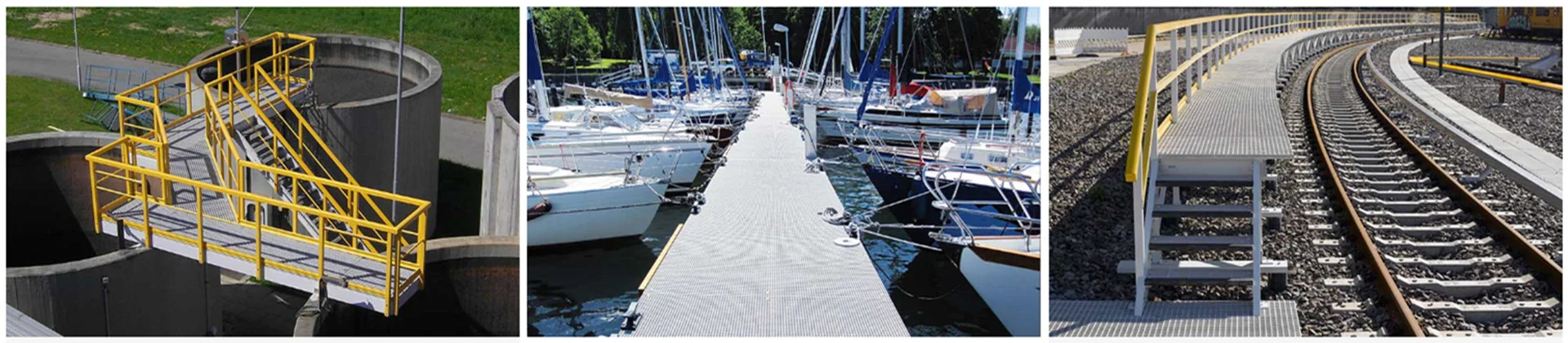
I-beams, H-beams, channels, and angles for cooling towers, clarifier bridges, dock catwalks, fertilizer/battery rooms, greenhouse frames, and OEM assemblies.
Resin–Environment Decision Table (quick reference)
| Environment/Exposure | Typical Resin System | Notes |
|---|---|---|
| General outdoor, mild splash | Orthophthalic/Isophthalic Polyester | Cost-effective, broad use |
| Aggressive chemicals, wastewater | Vinyl Ester | Better chemical resistance |
| Elevated temp, high structural demand | Epoxy | Higher Tg, adhesive compatibility |
| Marine/UV intense | Polyester or Vinyl Ester + UV veil | Add color-through pigment |
Safety & Handling: Cut/drill with carbide tools; control dust (vacuum extraction); use gloves, sleeves, eye/respiratory PPE; seal cut edges where chemical splash is expected.
How to Evaluate an FRP Beams Manufacturer
A credible supplier proves repeatability, not just capability. Ask for current test data and documented controls. “If it isn’t traced, it isn’t controlled,” notes a quality manager. As a receiving metric, many buyers flag any Barcol hardness that deviates ±3 from the golden sample.
Certifications & Standards
Look for ISO-managed quality systems and testing to recognized methods (e.g., ASTM for mechanicals; ASTM E84/UL-type methods for fire; accelerated weathering for UV). Require Certificates of Conformance and lot traceability back to resin and glass.
Materials & Process Controls
Probe resin selection, glass content, surfacing veils, cure control, and die maintenance. Strong lines monitor die temperature and Barcol during production; color is specified with ΔE targets to stabilize appearance lot-to-lot.
Mechanical, Fire, UV & Electrical Performance
Define minimum flexural/tensile/compressive values, creep behavior, flame-spread/smoke development, UV stability, and dielectric strength where relevant. Require third-party reports not older than 24 months for the nominated resin system.
QA/QC Program & Documentation
Expect incoming checks, in-process controls (dimensions, ΔE, hardness), and final tests per lot. First-article approval should capture drawings, tolerances, and critical-to-quality features. Require CAPA procedures and serialized lot coding.
Engineering Support & Customization
Best-in-class partners publish load tables, provide stamped calcs when needed, and collaborate on FEA, custom dies, predrilled holes, bonded joints, and coatings—reducing field risk and install time.
Commercials: Pricing, MOQ & Lead Times
Commercial clarity keeps approvals moving. “Tooling usually pays back within the first two or three orders when volume is steady,” says a sourcing lead.
What Drives Price
Resin choice, glass content, profile complexity, and secondary ops (drilling, slotting, bonding, coatings) dominate cost. Freight and packaging for long lengths add materially to landed price.
MOQ, Stocking Programs & Pilot Runs
Pultrusion favors longer runs, so MOQs are common. Negotiate a 50–100-piece pilot to validate fit/holes before committing to volume; many teams report that small pilots eliminate most drawing mismatches.
Tooling & NRE
Custom dies require lead time and non-recurring engineering. Clarify die ownership, change control, and maintenance—plus how revisions are versioned.
Logistics & Packaging
For export, specify moisture-resistant wrap, straightness/edge guards, and banding that won’t bruise surfaces. Define INCOTERMS and acceptance criteria on receipt.
RFP/Spec & Supplier Checklist (Copy-Paste)
“Write what you will measure—or you can’t enforce it.” Use this structure in your RFQ.
Example Spec Snippet (illustrative)
-
Profile: I-Beam 152×76 mm, length 6.0 m, color RAL xxxx, color-through pigment
-
Resin: Vinyl ester; UV veil required
-
Mechanical minimums: Flexural strength ≥ 240 MPa; Flexural modulus ≥ 24 GPa; Tensile ≥ 100 MPa
-
Deflection limit: Service L/240 at stated span & load
-
Fire/Smoke: Flame-spread per stated method; smoke development limit as required by code
-
Electrical: Dielectric strength data required if used in energized areas
-
Tolerances: Dimensional per drawing; straightness ≤ 2 mm/m; color ΔE ≤ 2.0 vs. golden sample
-
Documentation: CoC with lot traceability; third-party test reports ≤ 24 months old
QC & Test Plan Requirements
-
Lot sampling and test frequencies (dimensions, Barcol, coupon tests)
-
Retain samples for 12–24 months; report by lot code
-
Third-party verification on first articles and at defined intervals
Samples & Approvals
-
Golden samples retained by buyer and supplier
-
First-article dimensional report + property verification before production release
Contract Terms to Clarify
Warranty scope, traceability period, corrective-action timelines, and IP/tooling clauses. Include change-notification triggers.
Risk Management & Supplier Audits
Treat audits as leading indicators of future quality. Target 0 major findings and ≤ 3 minor per audit; close minors on a dated plan.
On-Site/Remote Audit Rubric
Evaluate People (training/roles), Equipment (lines, ovens, gauges), Process (SOPs, control plans), and Records (lot coding, calibration). Score 1–5 with actions for anything below 3.
Destructive & Non-Destructive Testing
Measure dimensions and hardness on arrival; pull periodic coupons for flexural and creep checks. For strategic suppliers, schedule one external lab verification per year.
Receiving Acceptance Checklist
-
Packaging intact; no wetness or abrasion marks
-
Straightness within spec; ends protected; caps intact
-
Random Barcol set vs. golden sample (flag ±3 deviation)
-
Color ΔE within target; labels match PO and drawings
-
Photograph pallet as received; record lot codes in ERP
Code note: Always verify local building/fire/electrical code requirements for your jurisdiction.
Case Study (Anonymized): Wastewater Walkway Retrofit
Starting point: Corroding steel stringers and frequent shutdowns for coating repairs.
Solution: FRP I-beams in vinyl ester with UV veil and color-through pigment; predrilled to reuse existing hole locations.
Results: Field drilling eliminated on ≈80% of holes; install labor down ~25%; structure weight cut ~60% vs. steel; maintenance work orders over 12 months declined with zero coating touch-ups.
Buyer lesson: Specify environment-driven resin, define QC gates in the PO, and pilot one bay before sitewide rollout.
Company Capability Spotlight
Unicomposite is an ISO-certificated pultrusion manufacturer in China with in-house tooling and experienced lines. The team supplies standard fiberglass profiles and custom composite parts via pultrusion, pulwound, SMC/BMC, and hand lay-up, serving electricity, landscaping, wastewater, cooling towers, agriculture, aquaculture, and marine sectors. “Owning the die shop lets us iterate faster and hold tighter repeatability across runs,” notes a manufacturing director. For buyers, that means a single source can align beams, grating, handrail, and ladders under one QA system.
Expert Insights & Quick Answers
“Select the resin for the fluid you fear most, not the one you see every day; chemistry drives longevity more than any single mechanical property.” — Senior Composites Engineer, Pultrusion
Fast answers to buyer FAQs
-
Fire behavior: Define flame-spread/smoke limits and verify with current reports; consider fire-retardant resins or intumescent topcoats where codes demand.
-
On-site machining: Yes—use carbide tooling, dust controls, and edge sealing for chemical or immersion service.
-
Color stability: UV stabilizers and veils slow fading; set an acceptable ΔE change in your spec.
-
Electrical safety: Solid FRP is dielectric; confirm dielectric strength and creepage distances for energized areas.
Conclusion
Shortlist partners that demonstrate controlled processes, current test data, responsive engineering, and clean audits. Use the spec snippet and checklists above, run a pilot lot to de-risk holes and fits, and schedule third-party verification on first articles. If you’d like a no-obligation spec review or sample pack, share your environment, spans, and target profiles so we can respond with the right data.
Frequently Asked Questions
How do I choose the right resin for my application?
Match resin to the harshest credible exposure: polyester for general outdoor, vinyl ester for aggressive chemistry, and epoxy for elevated temperature or demanding structures. Add a UV veil and color-through pigment for marine or intense sun.
What MOQs and lead times should I expect?
Pultrusion favors longer runs, so MOQs are typical. New tooling may add weeks; after first-article approval, standard profiles can ship quickly while custom runs depend on slotting and secondary operations.
Can FRP beams meet fire code requirements?
Yes—define the flame-spread/smoke performance you need and require recent test reports for the exact resin system. Where needed, specify fire-retardant resin or topcoats and confirm code alignment with your authority having jurisdiction.
What should I check when the shipment arrives?
Verify straightness, surface condition, labeling, and Barcol vs. the golden sample (flag ±3 deviation). Photograph pallets as received and record lot codes; reject damaged packaging or out-of-spec readings.
Do I need third-party testing?
It’s smart for first articles and annually for strategic suppliers. Independent verification de-risks creep, flexural strength, and fire/UV performance and strengthens your QA file.


