 info@unicomposite.com


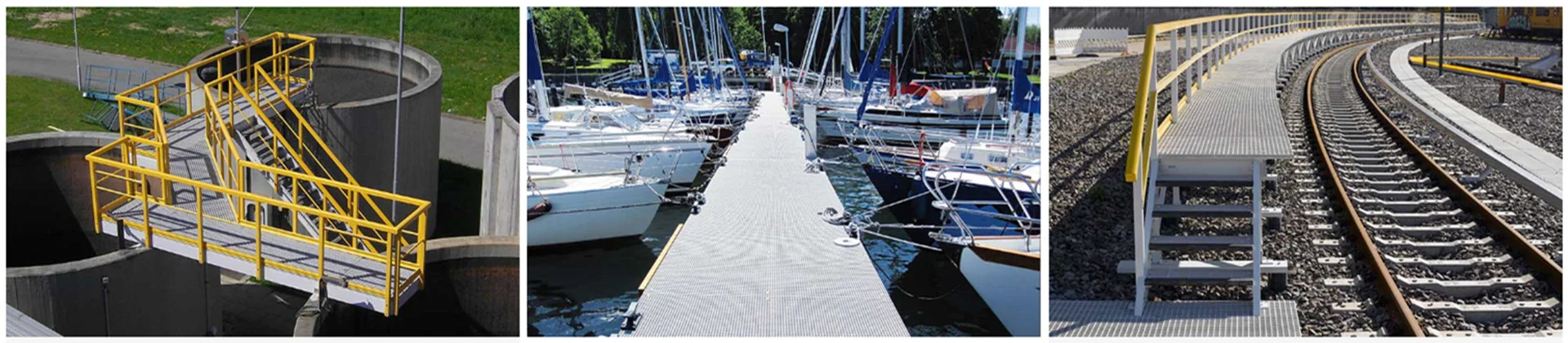
Introduction
An FRP joist (fiberglass-reinforced plastic joist) is a structural member used to support walkways, platforms, pipe racks, and access structures—especially where corrosion, moisture, or electrical risk make coated steel a recurring maintenance project. For most industrial buyers, the real objective isn’t just “meeting load” on paper. It’s staying safe, staying compliant, and cutting the hidden costs of recoating, repairs, and downtime.
Here’s the practical reality: FRP is a composite, so performance depends on how it’s manufactured (fiber architecture, resin chemistry, curing control) and how it’s specified (deflection targets, connection details, and environmental compatibility). That’s why many projects benefit from supplier engineering support, not only catalog selection. Unicomposite, for instance, is an ISO-certified pultrusion manufacturer with its own factory producing standard pultruded fiberglass profiles and custom composite parts used across electricity, wastewater treatment, cooling tower construction, marine, agriculture, and OEM applications—useful context because most FRP problems originate in vague specs or mismatched resin/environment, not the concept of FRP itself.

frp railing
How FRP Joists Work
What an FRP joist is made of
Most FRP joists combine:
- Fiberglass reinforcement (continuous rovings plus mats or stitched fabrics)
- Thermoset resin (commonly vinyl ester, polyester, or phenolic)
- Optional UV veil/topcoat for outdoor exposure
Unlike steel, FRP is directional: strength and stiffness vary based on fiber orientation. Pultrusion (a continuous manufacturing method) aligns a large portion of fibers along the length of the profile, which helps deliver consistent axial performance from part to part. The tradeoff is that off-axis behavior is largely driven by laminate design and resin quality—exactly why resin selection and QC documentation are not “nice-to-haves.”
One quantifiable reality that affects installation planning: typical pultruded FRP density is around 1.8–2.0 g/cm³ versus ~7.85 g/cm³ for carbon steel, so FRP members are often far lighter at similar overall dimensions. That can reduce handling effort and simplify retrofit logistics.
Typical profiles and system components
A complete joist-and-deck system usually includes:
- Primary joists (I-shapes, channels, wide-flange variants, or custom sections)
- Bearing details (pads/shims, seats, or clips)
- Interfaces to FRP grating (hold-down clips, edge angles, fasteners)
- Fastener materials suited to exposure (often stainless steel in corrosive zones)
Important buyer nuance: walkways rarely behave like a neat “uniform load only” problem. Clips, wheel loads, equipment feet, and concentrated maintenance loads can govern local stresses and connection detailing.
Where FRP Joists Beat Steel
Corrosion and chemical exposure
Steel in wet, salty, or chemical service typically needs coatings, galvanizing, or protection systems—and those protections age at exactly the pace your facility can least afford. FRP’s advantage is that corrosion resistance is primarily engineered into the resin system, so the structure isn’t relying on a paint film to survive.
What to do in procurement terms:
- Specify the resin family (vinyl ester is commonly selected for harsher chemical environments)
- Provide an exposure list (chemicals, concentrations if known, temperature, cleaning agents)
- Require written confirmation of chemical compatibility and the surface protection approach (veil/topcoat)
A key trust point: FRP doesn’t “rust away” like steel, but it can degrade via resin attack, UV surface erosion, wicking, or temperature-driven property loss. That’s why your spec should request compatibility data and laminate details, not steel-style corrosion-rate language.
Electrical and safety advantages
FRP’s dielectric nature can reduce electrical hazard pathways in power utilities, substations, and electrified industrial zones. Pairing FRP joists with slip-resistant FRP grating is a common way to improve footing in wet or chemical splash areas.
Boundary condition to state clearly: “non-conductive” doesn’t remove the need to coordinate grounding and bonding for adjacent equipment, metal handrails, or instruments. Treat it as a system design topic, not a marketing bullet.
Lifecycle cost and maintenance
FRP joists often win when the cost model includes:
- Recoating/rework cycles for steel
- Access restrictions and shutdown windows
- Long-term reliability in aggressive exposure
First-hand style vignette (anonymized): On a cooling-tower retrofit we supported, the original concept used an FRP section that met ultimate strength but didn’t define a strict serviceability limit. During review, the platform “bounce” risk became the deciding factor—not failure. The fix wasn’t complicated: the team tightened the deflection target, adjusted joist depth/spacing, and clarified clip and bearing details. The result was a walkway that felt solid underfoot and avoided the post-installation argument nobody budgets for.
How to Specify an FRP Joist Correctly
Load, span, and deflection criteria buyers should ask for
For FRP, serviceability can be the design driver. Ask for:
- Load cases: uniform live load, concentrated loads (equipment feet, maintenance loads), and any impact allowances
- Span/support conditions: simple span vs continuous; bearing details and seat geometry
- Deflection limits: define a serviceability target appropriate for access structures
- Vibration/comfort: particularly for long spans and frequent foot traffic
Also request the design basis for:
- Short-term stiffness (initial deflection)
- Long-term behavior (creep assumptions under sustained loads)
A practical expert framing you can use internally: when specs don’t lock deflection targets early, teams often end up “value engineering” stiffness out—then paying it back with uncomfortable platforms, clip loosening, or rework.
Resin system, UV protection, and fire performance
Resin choice is your durability and compliance lever:
- Vinyl ester: commonly selected for aggressive chemical exposure
- Polyester: often suitable for moderate environments or cost-sensitive projects
- Phenolic: sometimes used where improved fire/smoke performance is required by specific standards
For outdoor use, require:
- UV veil and/or a protective topcoat
- Defined surface finish expectations (especially if glare, aesthetics, or contamination visibility matters)
For fire performance, don’t rely on assumptions. Make it a submittal item:
- Relevant fire test documentation for your application
- Clear confirmation of what the test result applies to (resin system, laminate, thickness, surface protection)
Temperature, creep, and long-term performance
For continuous loading or higher temperatures, confirm:
- Operating temperature range and any property knockdowns used
- Long-term stiffness/creep assumptions in serviceability calculations
- Whether the structure supports constant equipment loads versus intermittent foot traffic
If the joist supports a constant load, treat “initial deflection only” as incomplete. Ask specifically for long-term guidance and the assumptions behind it.
Connection Design and Installation Tips
Bearing details and thermal movement
Many FRP joist issues begin at interfaces:
- Provide adequate end bearing length
- Use pads/shims where needed to distribute load and avoid point crushing
- Detail isolation and interface protection in aggressive environments, especially where dissimilar materials meet
Avoid forced-fit installation. Composites don’t “forgive” stress concentrations the way steel sometimes can.
Fasteners, drilling, and field handling
Best practices that prevent rework:
- Choose fastener materials appropriate to the environment (stainless is common in corrosive zones)
- Drill clean holes, maintain conservative edge distances, and avoid over-torque
- Protect edges and flanges from impact bruising during staging and lift
Because FRP members can be lighter, crews sometimes under-support them during storage. Treat long joists like precision structural components: support them evenly to prevent twist and flange damage.
How manufacturers ensure consistency
Buyer confidence improves when a supplier can explain how they control variability. In-house pultrusion manufacturing with ISO-aligned processes typically supports:
- Batch traceability of resin and reinforcement
- Routine dimensional checks for fit-up consistency
- Repeatable cure control and surface protection processes
Unicomposite’s model—ISO-certified, in-house pultrusion for standard profiles and custom composite parts, plus additional forming routes such as Pulwound, SMC/BMC, and hand lay-up for custom requests—matters most when your project needs more than a catalog match: special hole patterns, unique interfaces, or constrained retrofit geometry where tolerances and documentation reduce installation risk.
Quality control checklist for procurement
Request these items up front:
- Section drawings and dimensional tolerances
- Resin system identification and traceability
- Mechanical property typicals and test report categories
- Surface protection details (veil/topcoat) and UV expectations
- Connection detailing (clip patterns, hole guidance, bearing requirements)
Common Pitfalls (and How to Avoid Them)
Underestimating deflection or vibration
- Symptom: “springy” feel, clip loosening, misaligned grating
- Avoid: lock serviceability targets early; adjust depth/spacing and connection details accordingly
Wrong resin for the chemical or UV environment
- Symptom: crazing, discoloration, resin softening or surface attack
- Avoid: specify resin family explicitly; require compatibility confirmation and UV protection
Ignoring fire/smoke or regulatory requirements
- Symptom: late-stage approval issues or redesign
- Avoid: make relevant documentation a procurement requirement, not a post-order request
When FRP Joists May NOT Be the Best Choice
FRP isn’t universal. Consider alternatives or extra engineering review if you have:
- Very high temperatures beyond the resin system’s comfortable range
- Exceptional stiffness requirements where extremely low deflection is mandatory
- Abrasion/impact conditions that will repeatedly damage exposed edges
- Applications requiring specific fire/smoke performance that a given FRP system can’t document
FRP can still work in some of these cases, but it may require different resin systems, protective detailing, or hybrid designs.
Short Case Example (Anonymized)
A wastewater facility needed an access platform replacement near a chemically aggressive zone. Steel members had repeated coating failures concentrated at connections and bearings. The team specified FRP joists with a chemical-appropriate resin family, added a conservative deflection target to avoid “bounce,” and required documented tolerances and connection details for grating clips. The operational win was not just durability; it reduced recurring coating work in a high-risk maintenance area and simplified installation logistics due to lower member weight.
Conclusion
A strong FRP joist outcome follows a simple buyer framework:
- Start with the environment (chemicals, moisture, UV, temperature)
- Define loads plus serviceability (deflection/vibration, not only strength)
- Lock the resin and compliance requirements (chemical compatibility, fire/smoke documentation)
- Treat connections and QC as primary design topics (bearing, holes, fasteners, documentation)
If you share your environment, span, load cases, and compliance constraints, you can usually get a submittal-ready FRP joist recommendation that prevents the common pitfalls—especially around deflection, resin selection, and connection detailing.
Frequently Asked Questions
Start with the exposure list: chemicals, temperature, UV, and cleaning agents. Many industrial specs lean toward vinyl ester for harsher chemical environments, but the best choice should be confirmed with compatibility data for your actual service conditions.
It can if deflection targets and vibration comfort aren’t defined early. Setting a clear serviceability limit and adjusting joist depth/spacing usually resolves the issue before fabrication and avoids post-install disputes.
They reduce corrosion-related maintenance significantly, but they aren’t “no care ever.” You still need routine inspections of connections, clips, and any exposed edges, especially in high-impact or abrasive areas.
Ask for section drawings/tolerances, resin identification and traceability, mechanical property typicals or test categories, surface protection details (UV veil/topcoat), and connection guidance (bearing, holes, fasteners).
Yes—custom hole patterns, interfaces, and section geometry are common needs. Suppliers with in-house manufacturing and multiple forming capabilities can typically support retrofit-specific detailing and documentation.


