 info@unicomposite.com


Introduction
A solid fiberglass rod can look easy to cut, yet a poor setup may produce splintered fibers, an angled end, heat damage, or hidden cracks. These defects can affect fit, coating adhesion, electrical performance, and operator safety.
This guide explains how to cut solid fiberglass rod with cleaner edges and consistent dimensions. It covers tooling, workholding, dust control, end finishing, and production inspection.
Pultruded rods contain continuous glass fibers held in a cured resin matrix. Because the fibers run mainly along the rod length, the blade must shear abrasive reinforcement while controlling vibration and heat. Exel Composites advises supporting pultruded material and avoiding excessive heat, which can damage the resin and create ragged edges.
how to cut solid fiberglass rod
Understand How Solid Fiberglass Rod Behaves During Cutting
Cut quality depends on rod diameter, resin system, fillers, cure condition, blade geometry, machine rigidity, and tolerance requirements.
Why Fiberglass Rods Splinter and Fray
A dull blade rubs and pushes fibers before separating them. An unsupported offcut may bend as the blade exits, causing breakout. Excessive clamp pressure can also crush the composite locally.
White fiber fuzz usually indicates blade wear or vibration. Dark resin smearing or a burnt odor points to excessive heat.
How Do Diameter and Resin Type Affect Cutting?
Larger rods generally need stronger support and a slower validated cutting rate because more material contacts the blade. Resin hardness and additives can change heat generation, chip formation, and blade wear. Sample cuts on the actual production grade provide more reliable settings than values copied from another FRP product.
Record the rod grade, diameter, and resin system when qualifying the process.
Choose the Right Cutting Tool and Blade
Standard workshop equipment can cut pultruded FRP, but carbide tooling is commonly recommended because glass reinforcement is abrasive. Strongwell recommends carbide blades and bits to improve tool life when fabricating its pultruded products.
Common Tools for Cutting Solid Fiberglass Rod
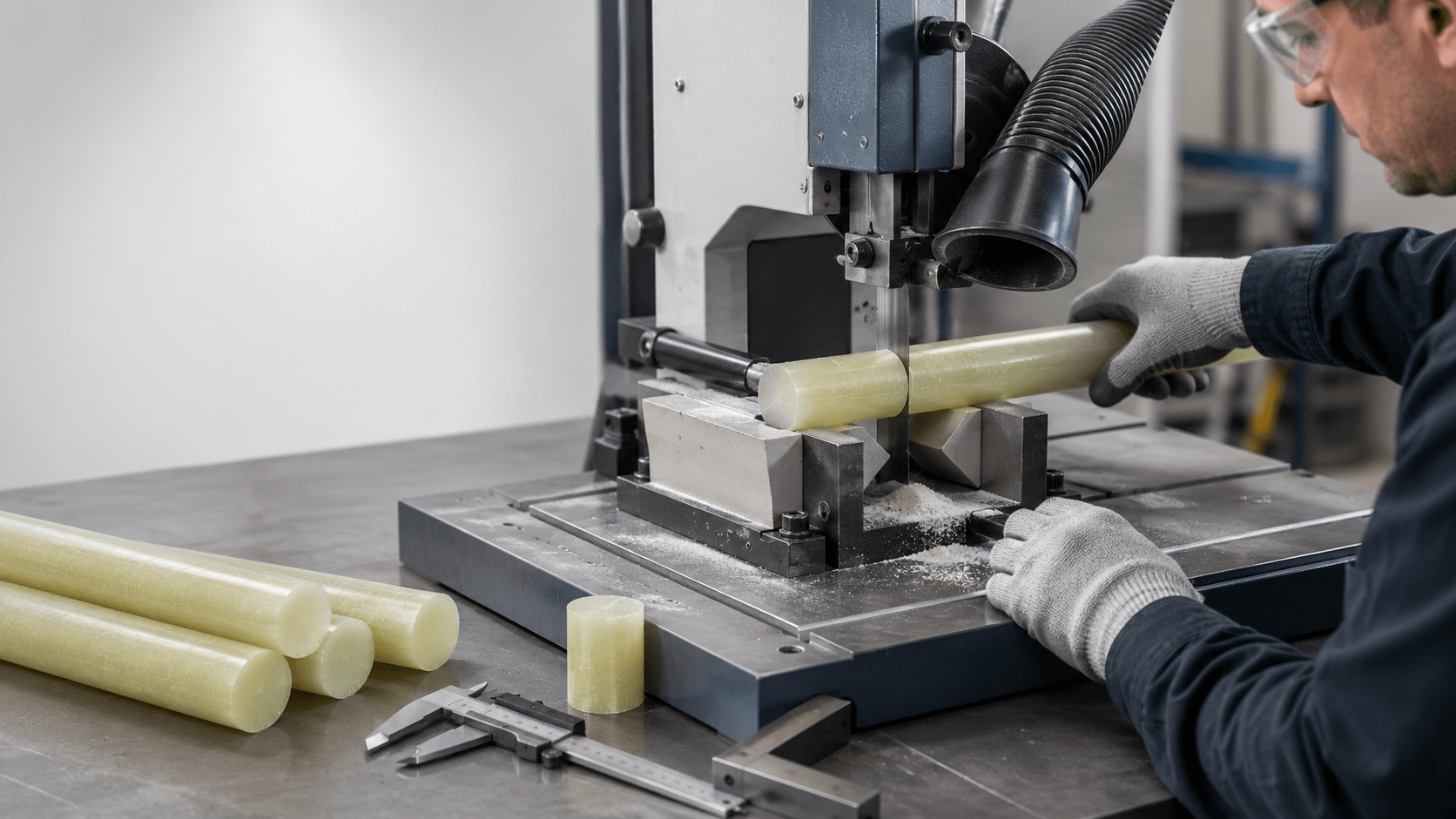
A fine tooth hacksaw suits occasional small rods. A rigid band saw or chop saw supports repeat work, while a diamond grit wheel can offer longer life for larger diameters or higher production volumes. Wet cutting may control heat and dust when the equipment and waste system permit it.
Which Blade Produces the Cleanest Cut?
Diamond grit tooling often provides stable edge quality and long life in repetitive cutting. A sharp fine tooth carbide blade remains a practical choice for many workshop operations. The cleanest result comes from matching the blade, machine, feed, support, and tolerance, then confirming the combination through trial cuts.
| Tool | Typical Use | Edge Risk | Main Validation Check |
|---|---|---|---|
| Fine tooth hacksaw | Repairs and small batches | Angled cuts, fiber fuzz | Check every part |
| Carbide band saw | Small to medium production | Blade drift, breakout | Measure squareness |
| Carbide chop saw | Repetitive lengths | Heat and dust | Track discoloration and blade life |
| Diamond grit wheel | Larger rods and volume work | Heat buildup | Inspect edge and temperature trend |
| Wet industrial saw | Controlled production | Coolant contamination | Verify dimensions and cleanliness |
Prepare the Work Area and Protect Operators
Machining cured composites generates dust. OSHA identifies isolation, enclosures, and local exhaust ventilation as primary engineering controls for advanced composite processes.
Essential Personal Protective Equipment
Use safety glasses or a face shield, suitable gloves, long sleeves, and hearing protection based on the equipment. Respiratory protection must follow a workplace exposure assessment.
NIOSH states that employers must select an approved respirator appropriate for the hazard. Selection may also require fit testing, medical evaluation, training, and verification that engineering controls are effective.
Dust Extraction and Ventilation
Position local extraction close to the kerf. Use an appropriately specified industrial vacuum and avoid dry sweeping.
Facilities should also assess combustible dust hazards. OSHA enforcement records show that accumulated fiberglass resin dust around cutting equipment, ducts, and electrical systems can create serious housekeeping and ignition concerns.
Rod Inspection and Measurement
Check for cracks, crushed areas, contamination, and obvious diameter variation. Mark the cut around the circumference with a square or wraparound guide.
How to Cut Solid Fiberglass Rod Step by Step
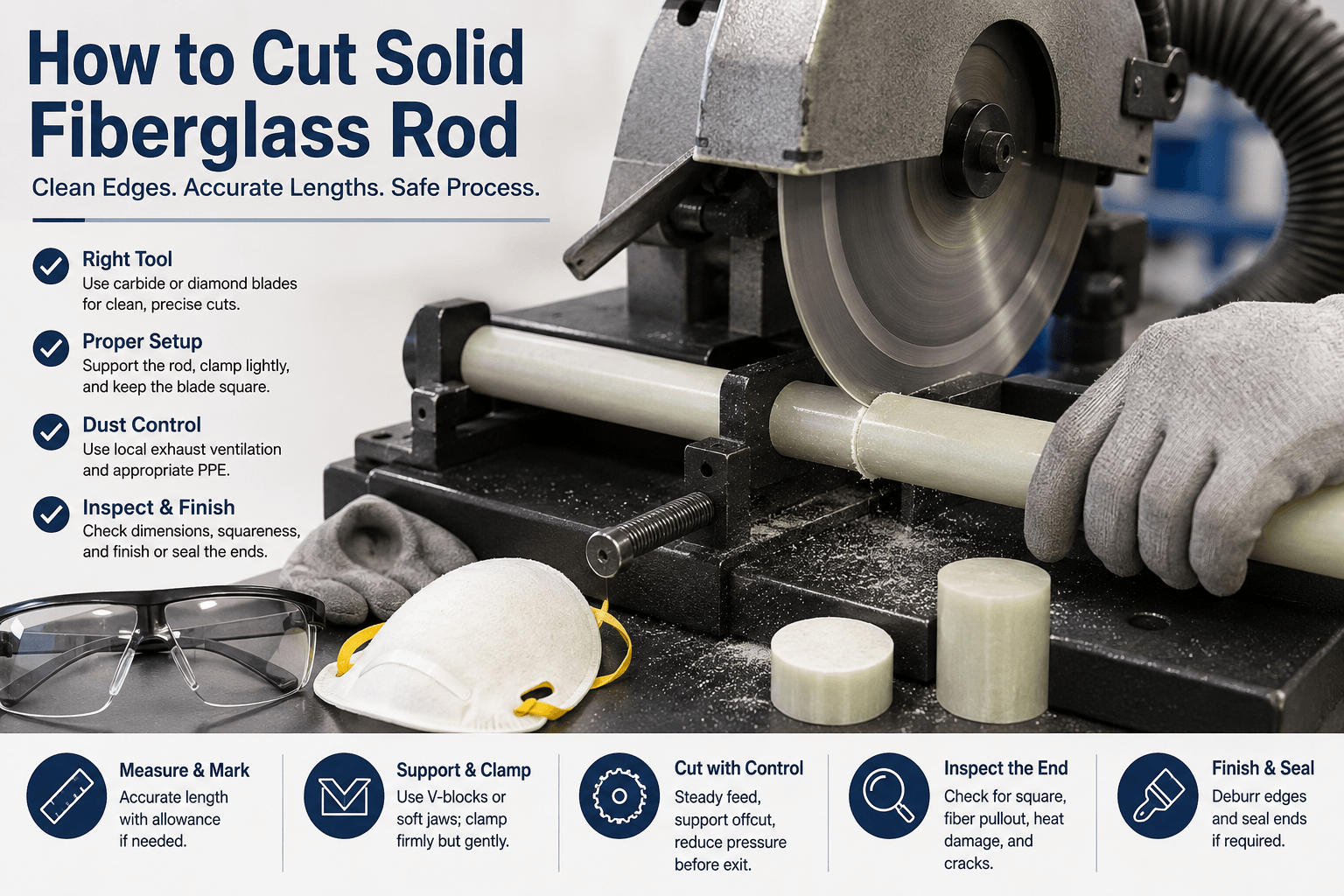
Step 1: Measure and Mark the Rod
Measure from a verified reference end. Add finishing allowance only when the drawing requires later facing, sanding, or sealing.
Step 2: Support and Clamp the Rod
Place the rod in V blocks or soft jaws. Support both sides of the cut and clamp only enough to prevent movement.
Step 3: Set the Machine and Feed
Follow the machine and blade manufacturer’s operating limits. Start conservatively, then adjust through controlled trials. A very light feed can create rubbing, while excessive force may deflect the blade or tear fibers.
Step 4: Complete the Cut
Keep the blade square to the rod axis and support the offcut. Reduce pressure slightly during the final few millimeters to limit exit side breakout.
Step 5: Inspect the Cut End
Check length, squareness, fiber pullout, resin smearing, discoloration, cracks, and delamination. Use magnification for electrical, bonded, or close tolerance assemblies.
Recommended Process Development by Rod Size
These are tool selection starting points. Final machine settings must be validated for the actual material and equipment.
| Rod Diameter | Initial Tool Choice | Main Defect | Validation Focus |
|---|---|---|---|
| Below 6 mm | Fine tooth saw or small abrasive tool | Fraying | Inspect every sample |
| 6 to 12 mm | Carbide band or chop saw | Exit breakout | Compare support methods |
| 12 to 25 mm | Rigid carbide or diamond system | Heat and squareness | Measure kerf angle |
| Above 25 mm | Industrial diamond system | Cracking and heat | Inspect initial samples closely |
How Can You Reduce Heat During Repetitive Cutting?
Use a sharp blade, rigid support, effective extraction, and a feed that removes material without prolonged rubbing. Stop when discoloration or resin smearing begins, then inspect the blade and setup. Wet cutting can reduce heat, but coolant compatibility, electrical safety, cleaning, and waste handling must be reviewed.
Exel Composites notes that thicker profiles generally require slower cutting and warns against excessive heat.
how to cut solid fiberglass rod
Finish and Seal the Cut Ends
Deburring and Edge Finishing
Use light, controlled abrasion. A staged sequence may begin around 120 to 180 grit and progress to a finer abrasive, but the drawing and required surface condition should control the method. Avoid creating an unplanned chamfer.
Should Cut Fiberglass Rod Ends Be Sealed?
End sealing is useful when exposed fibers may contact moisture, chemicals, outdoor weather, or electrically sensitive components. A compatible resin, epoxy, polyurethane, or supplier approved coating can close the surface. Indoor mechanical assemblies may not require sealing.
Dimensional and Visual Quality Checks
| Check | Example Acceptance Criterion | Method |
|---|---|---|
| Length | Drawing tolerance | Caliper or length gauge |
| Squareness | Specified face deviation | Square or fixture gauge |
| Edge fibers | No loose fibers beyond limit | Visual inspection |
| Heat damage | No dark smearing or soft resin | Visual and tactile check |
| Cracking | No crack beyond finishing allowance | Magnified inspection |
| End coating | Continuous coverage if specified | Visual inspection |
Sampling frequency should reflect part criticality, process capability, and batch size.
Avoid Common Cutting Problems
| Problem | Likely Cause | Corrective Action |
|---|---|---|
| Frayed edge | Dull blade or vibration | Replace blade and improve support |
| Exit breakout | Unsupported offcut | Support both sides and ease final pressure |
| Burn marks | Friction or poor dust removal | Check tooling, feed, and extraction |
| Angled end | Blade drift or loose fixture | Verify tracking and use a rigid stop |
| Cracks | Crushing clamps or impact | Reduce clamp force and reject damaged parts |
| Variable length | Stop movement or ignored kerf | Lock the fixture and compensate for kerf |
For batch production, approve a first article before releasing the run. Record rod grade, blade identification, fixture setup, inspection results, and blade replacement point.
Plan for Production Cutting and Supplier Support
Manual cutting suits prototypes, repairs, and low volume work. Automated feeding, fixed stops, enclosed extraction, and integrated finishing become more valuable as volume and tolerance requirements increase.
A supplier quality plan may include first article approval, fixture verification, dimensional sampling, end inspection, blade change criteria, protective packaging, and batch traceability. Buyers should compare cost per accepted part, including labor, rework, tooling, inspection, and dust control.
Unicomposite is an ISO 9001 certified FRP manufacturer in Nanjing with an 18,000 square meter facility and capabilities including pultrusion, pulwinding, and secondary processing. Factory cutting, drilling, coating, and end finishing can help buyers specify consistent lengths, sealed ends, part labels, packaging, and inspection records.
Conclusion
Clean fiberglass rod cutting depends on suitable carbide or diamond tooling, rigid support, steady feed, effective dust extraction, and measurable inspection.
Qualify the process on the actual rod grade before full production. Monitor blade condition, support the exit side, reject cracked parts, and specify end sealing when the service environment requires it.


