 info@unicomposite.com


Introduction
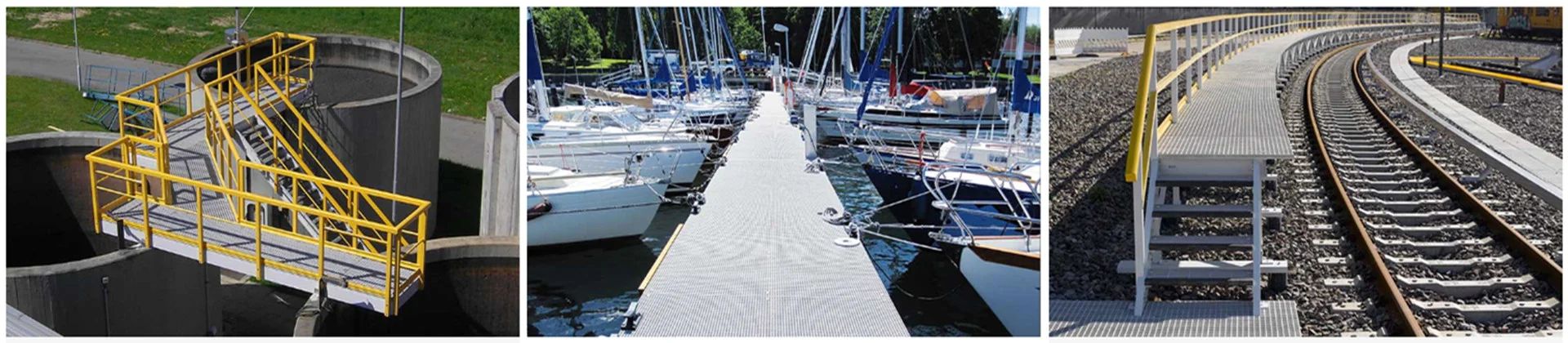
Industrial access systems rarely fail in convenient places. Problems usually appear on wet walkways, chemical platforms, wastewater covers, marine docks, cooling tower routes, and maintenance areas where corrosion, weight, and worker safety all matter at the same time.
Fiberglass pultruded grating is designed for these demanding conditions. It combines continuous fiberglass reinforcement with a resin matrix through the pultrusion process, creating strong bearing bars and lightweight structural panels for industrial flooring, platforms, and access systems.
For engineers and procurement teams, the key question is practical: where does pultruded FRP grating deliver the most value, and how should buyers specify it before ordering? This article explains the main applications of fiberglass pultruded grating, how it compares with molded grating, and what buyers should confirm before requesting a quote.
applications of fiberglass pultruded grating
What Is Fiberglass Pultruded Grating?
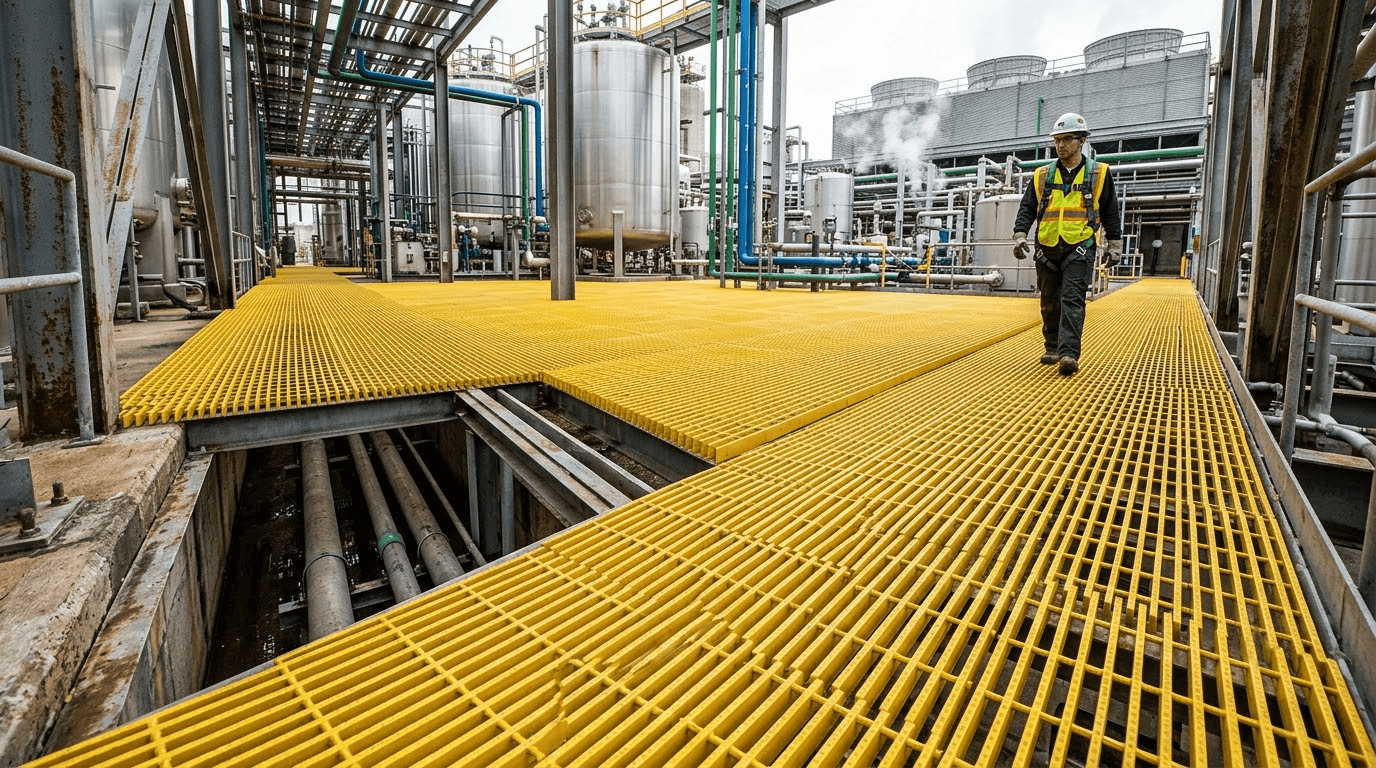
Fiberglass pultruded grating is a type of FRP grating made from continuous fiberglass reinforcements and resin. During pultrusion, reinforced materials are pulled through a heated die to form consistent structural profiles. These profiles are assembled into grating panels with bearing bars and cross rods.
The result is a corrosion resistant, lightweight grating system with strong performance in the bearing bar direction. This makes it suitable for industrial platforms, walkways, stair treads, access routes, and structural flooring where span and directional load are key design factors.
Final performance depends on the full specification. Buyers should match the grating to load, span, bearing bar height, resin system, surface finish, fastening method, UV exposure, chemical exposure, and installation quality.
What makes pultruded FRP grating different from standard fiberglass grating?
Pultruded FRP grating uses continuous fiberglass reinforcement in the bearing direction, which helps improve stiffness and strength for longer spans and directional loads. Standard fiberglass grating may include molded designs, which often suit wet, corrosive, or drainage areas that need more balanced multi directional support.
For procurement teams, this distinction matters because “fiberglass grating” is a broad term. A wastewater trench cover, a marine dock walkway, and a high span industrial platform may all use FRP grating, but they may require different product structures.
Understanding the product type helps buyers avoid over specifying or under specifying the grating for the actual job site.
Main Applications of Fiberglass Pultruded Grating
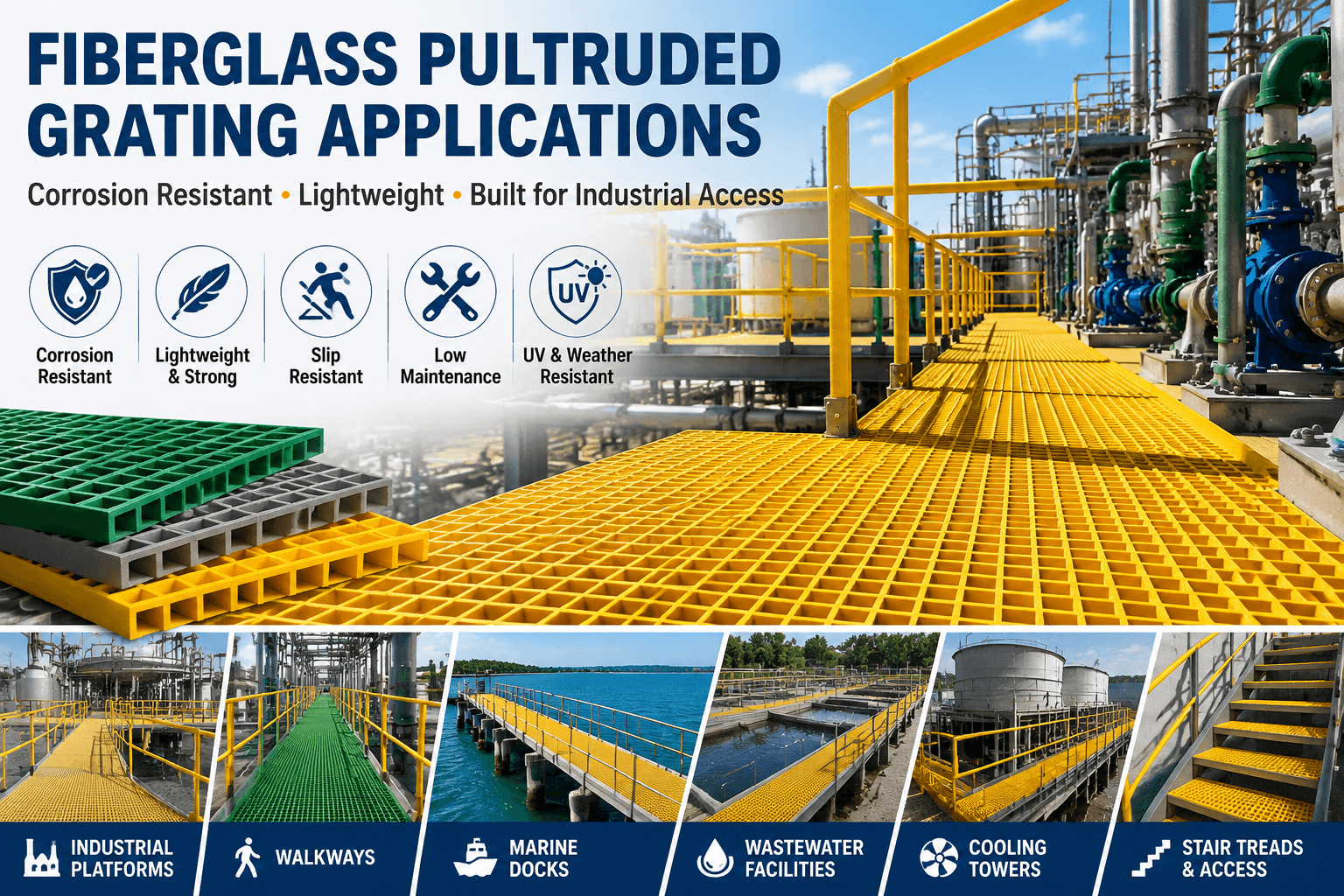
After the material is defined, application fit becomes the main decision point. Pultruded grating performs best when buyers need lightweight strength, corrosion resistance, safe access, and reliable structural support.
The table below summarizes common applications and why pultruded FRP grating is selected for each use case:
| Application | Typical Use Area | Why Pultruded FRP Grating Fits |
|---|---|---|
| Industrial platforms | Equipment access and maintenance platforms | Strong bearing direction, light handling, corrosion resistance |
| Walkways | Chemical plants, utilities, factories | Slip resistant surface options and low maintenance |
| Marine docks | Piers, decks, offshore access areas | Saltwater and humid air resistance |
| Wastewater facilities | Covers, platforms, drainage access | Moisture and chemical resistance |
| Cooling towers | Access platforms and service routes | Lightweight structure and corrosion resistance |
| Utility facilities | Electrical access and maintenance zones | Non conductive compared with metal |
| Stair treads | Industrial stairs and access points | Safety surface options and custom sizing |
Which industries use fiberglass pultruded grating most often?
Fiberglass pultruded grating is commonly used in chemical processing, wastewater treatment, marine infrastructure, cooling towers, power utilities, industrial manufacturing, and transportation facilities. These industries often need corrosion resistance, safer walking surfaces, lighter installation weight, and lower corrosion related maintenance than metal grating.
Chemical plants may use pultruded FRP grating for walkways around tanks, platforms, and process equipment. Wastewater facilities may use it for covers, access routes, and wet service areas. Marine projects may use it for docks, piers, and offshore access structures where saltwater exposure is a constant concern.
In an anonymized wastewater access project, engineers selected pultruded FRP grating for elevated maintenance walkways because the previous metal system required repeated corrosion treatment. The decision focused on reducing maintenance frequency, lowering handling weight during replacement, and improving access safety in wet conditions.
These use cases show why pultruded grating is often specified when corrosion, worker access, and structural weight affect long term operating cost.
Key Benefits for Industrial Projects
Beyond application fit, buyers need to know why pultruded FRP grating performs well in industrial service. Its value is strongest when the operating environment makes metal maintenance difficult or when weight reduction improves installation efficiency.
High Strength to Weight Ratio
Pultruded FRP grating offers strong structural performance with much lower weight than many metal grating systems. This can reduce freight challenges, lifting effort, and installation labor, especially on elevated platforms or remote industrial sites.
The bearing bar design allows engineers to select profiles based on span and load requirements. Bearing bar height, panel width, support spacing, and deflection expectations should be reviewed together before approval.
For retrofit projects, lighter grating can also reduce the load placed on existing support frames. This is useful for aging industrial facilities where replacement work must be done with limited downtime.
Corrosion Resistance in Harsh Environments
Corrosion resistance is one of the main reasons buyers evaluate FRP grating. Steel can work well in dry conditions, but wet, salty, acidic, or chemically exposed areas often require coatings, inspections, and repairs.
Pultruded grating can resist many corrosive environments when the correct resin system is selected. Buyers should describe chemical exposure, saltwater, outdoor UV, wastewater gases, temperature range, and cleaning conditions before choosing a material.
Resin selection matters. General purpose resin may fit some industrial spaces, while stronger chemical exposure may require a more resistant resin system.
Slip Resistance for Safer Access
Industrial walkways and platforms often face rain, oil, mud, washdown water, or process residue. Pultruded FRP grating can use gritted or textured surfaces to improve traction in these conditions.
Safety requirements should be discussed early because surface finish affects worker movement, cleaning, and long term wear. Stair treads and maintenance walkways may need a more aggressive gritted surface than low traffic covers.
Low Maintenance Over Long Term Use
Pultruded fiberglass grating does not rust like steel. This can reduce corrosion related repainting, coating repair, and replacement cycles in suitable environments.
That does not mean zero maintenance. Maintenance teams should still inspect panels, fasteners, support conditions, surface wear, and installation alignment. FRP reduces many corrosion problems, but safe long term use still depends on good specification and installation.
Pultruded Fiberglass Grating vs Molded Fiberglass Grating
Many buyers compare pultruded and molded grating during specification. Both are FRP products, but they solve different project problems.
The table below shows how the two common fiberglass grating types differ:
| Comparison Item | Pultruded Fiberglass Grating | Molded Fiberglass Grating |
|---|---|---|
| Structure | Pultruded bearing bars with cross rods | One piece molded grid structure |
| Strength direction | Stronger in the bearing bar direction | More balanced support in multiple directions |
| Best use | Long spans, platforms, walkways, higher directional loads | Wet floors, drainage areas, chemical zones, general platforms |
| Surface options | Gritted and slip resistant surfaces available | Concave, gritted, or covered surfaces available |
| Design driver | Span, load, stiffness, bearing direction | Mesh size, drainage, corrosion exposure, panel layout |
| Common buyer need | Structural access grating for industrial platforms | Corrosion resistant flooring and drainage grating |
When should buyers choose pultruded grating instead of molded grating?
Buyers should choose pultruded grating when the project needs longer spans, stronger bearing bar stiffness, or higher directional load performance. Molded grating is often better for wet floors, drainage zones, and chemical areas where multi directional support, open mesh, and corrosion resistance are the main priorities.
This comparison helps prevent product mismatch. A long span industrial platform may benefit from pultruded grating. A smaller wet processing floor with drainage needs may be better served by molded grating.
The best choice should follow the application, load, support span, drainage needs, and maintenance strategy.
How to Choose Pultruded FRP Grating
Once buyers confirm that pultruded grating fits the application, the next step is specification. A strong request for quote should give the manufacturer enough information to recommend the right panel, resin, surface, and fabrication method.
In field preparation, engineers often confirm bearing bar direction, support spacing, gritted surface level, cutouts, and fastening points before placing a bulk order. This avoids site cutting errors and helps panels arrive closer to the final installation layout.
The checklist below shows the main details buyers should prepare:
| Specification Item | What Buyers Should Provide | Why It Matters |
|---|---|---|
| Application | Platform, walkway, stair tread, trench cover, dock | Determines product type and surface needs |
| Load and span | Live load, concentrated load, support spacing | Guides bearing bar height and panel design |
| Deflection expectation | Project limit or performance requirement | Helps confirm stiffness suitability |
| Panel details | Length, width, thickness, open area, quantity | Supports production and layout planning |
| Environment | Chemical, marine, wastewater, UV, indoor or outdoor | Guides resin and surface selection |
| Surface finish | Gritted, textured, covered, or other finish | Affects traction and cleaning |
| Fastening method | Clips, supports, frame details, edge conditions | Affects installation security |
| Fabrication | Cutouts, drilling, edge treatment, drawings | Reduces site work and errors |
| Inspection needs | Quality documents, packaging, labeling | Supports procurement approval |
Load Capacity and Span
Load and span should come first. Buyers should provide support spacing, expected live load, concentrated load, deflection expectations, and whether workers or equipment will regularly pass over the grating.
Bearing direction must also be clear. If panels are installed in the wrong orientation, the grating may not perform as intended.
Resin System and Chemical Exposure
Resin selection should match the environment. Chemical plants, marine docks, wastewater areas, and outdoor utility platforms may require different resin systems.
Buyers should provide chemical exposure details when possible. Even a short description of the operating environment can help the supplier avoid recommending a standard material for a more aggressive application.
fiberglass pultruded grating
Panel Size, Cutting, and Installation
Custom cutting can reduce field labor and installation errors. Buyers should provide drawings, panel layouts, cutout requirements, fastening preferences, and packaging needs before production.
Unicomposite Technology Co., Ltd, based in Nanjing, China, manufactures FRP and GRP composite products through pultrusion, pulwinding, SMC/BMC molding, hand lay up, and vacuum infusion. For grating buyers, this manufacturing background supports standard panels, custom profiles, cutting, drilling, and bulk supply planning.
A complete specification reduces back and forth communication and helps the supplier prepare a more accurate quotation.
Source Fiberglass Pultruded Grating from Unicomposite
For B2B buyers, supplier selection affects more than unit price. It affects grating design, resin matching, fabrication accuracy, packaging, repeat supply, and project communication.
Unicomposite supports fiberglass grating projects by connecting manufacturing capability with buyer requirements. Pultrusion helps deliver consistent profiles for repeat orders. Resin selection support helps match grating to corrosive environments. Cutting and drilling services can reduce field adjustments. Bulk production helps procurement teams plan larger industrial orders with more stable specifications.
Buyers can discuss molded grating, pultruded grating, surface finish, panel size, resin system, fabrication needs, and packaging based on actual project conditions. This is especially useful when one facility needs platforms, stair treads, drainage covers, walkways, and related FRP structural products.
A practical inquiry should include application, support span, load requirement, panel dimensions, surface finish, environment, quantity, drawings, and any fabrication needs.
Conclusion
Fiberglass pultruded grating is best suited for industrial platforms, walkways, marine docks, wastewater facilities, cooling towers, utility access areas, and stair treads where corrosion resistance, lightweight handling, and directional strength matter.
The main takeaways are clear. Pultruded grating is strongest in the bearing bar direction. It is often preferred for longer spans and higher directional loads. Resin system and surface finish must match the operating environment. Molded grating may be a better fit for wet drainage areas or multi directional support needs. Buyers should provide load, span, panel size, environment, quantity, fastening method, and fabrication details before requesting a quote.
For industrial projects where safety, corrosion resistance, and long term maintenance costs matter, pultruded FRP grating can be a practical alternative to traditional metal grating.
[Contact Unicomposite for a custom fiberglass grating quote →]


