 info@unicomposite.com


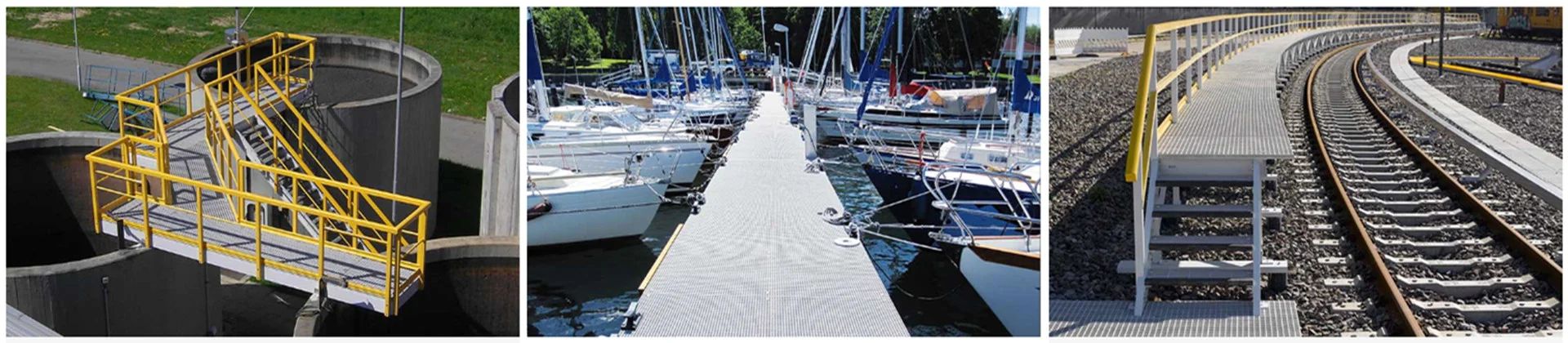
Introduction
Are fiberglass deck systems worth it for industrial walkways, platforms, mezzanines, and trench covers? For sites fighting corrosion, slip risk, and tight outage windows, composites can deliver outsized value over a 5–15-year horizon. This guide evaluates worth through three lenses—total cost of ownership (TCO), risk/compliance, and uptime—while offering engineering and procurement tactics you can use immediately.
Context: Unicomposite is an ISO-certified pultrusion manufacturer with in-house production of standard FRP profiles and custom parts; their engineering support can help with panelization, resin selection, and accessory integration without a hard sell.

fiberglass deck systems
What “Worth It” Means for Industrial Teams
Value is more than purchase price; it’s lifecycle spend, risk avoided, and performance delivered.
TCO Lens: 5–15 Year Horizon
Account for coatings cycles, corrosion repair, outage labor, crane time, and disposal fees. Light weight often reduces install hours and equipment size, trimming indirect costs.
Risk & Compliance Lens
Frame decisions against slip resistance, flame/smoke, dielectric needs, and environmental exposure. Score each option to your spec and Authority Having Jurisdiction (AHJ) requirements.
Performance & Uptime Lens
Tie material choice to mean time between maintenance and unplanned shutdowns. Modular FRP sections frequently cut outage windows on retrofits because they’re lighter and pre-panelized.
What Is a Fiberglass Deck System?
An FRP deck combines structural profiles with grating or solid cover plates to create safe walking/working surfaces.
Core Components & Configurations
Pultruded grating or solid cover plates, stringers, stair treads, handrail, toe-boards, and hold-down clips. Use solid covers over process areas; use open grating where drainage is critical and slip risk is controlled.
How Pultrusion Works (Engineer’s View)
Continuous fibers pulled through a resin bath and heated die yield constant-section profiles with predictable mechanicals and corrosion resistance. Composites Engineer (10 yrs): “Pultrusion delivers steel-like repeatability with polymer durability in corrosive air.”
Resin & Surface Options
Isophthalic polyester for general duty; vinyl ester for aggressive chemicals; specialty systems for fire/smoke or static control. Request current product test summaries (e.g., ASTM E84, D635) for the exact resin system.
Where FRP Outperforms Metal or Wood
Corrosion & Chemical Resistance
FRP won’t rust and resists many acids, bases, and salts. Ask for media compatibility by concentration and temperature.
Electrical & Safety Advantages
Non-conductive and non-sparking with low thermal conductivity—useful around energized equipment. Reliability Lead (14 yrs): “Our dielectric walkways removed a variable in LO/TO zones.”
Weight & Installation Speed
At roughly a quarter the weight of steel, many panels are team-liftable with proper practices; prefabricated modules can reduce rigging complexity and crane time.
Slip & Fire Performance
Specify documented slip resistance using your site’s adopted method (e.g., ANSI A326.3 or NFSI testing) and target values for wet conditions. For flame spread, request ASTM E84 reports and, where required, D635 flammability data and smoke development indices.
When FRP May Not Be Ideal
Temperature & Point Load Limits
Sustained temperatures above ~120–150 °C and concentrated or heavy rolling loads may favor steel or hybrid designs. Structural Engineer (20 yrs): “FRP dislikes hot, concentrated loads—spread them or change materials.”
UV/Appearance Expectations
Expect gradual color shift outdoors; specify UV inhibitors and plan topcoat touch-ups if appearance is critical. Grit remains functional when maintained.
Code/Insurance Constraints
Some occupancies require specific smoke/tox thresholds; involve the AHJ early and align on test methods and target classes before procurement.
Engineering & Spec Guidance
Loads, Spans, and Deflection
Set deflection criteria (often L/200–L/240) and check upward and downward loading, plus impact/point loads and any rolling loads.
Span/Deflection Quick-Reference (example; verify with supplier tables)
| Panel Type & Depth | Typical Live Load (psf) | Illustrative Max Span at L/240* |
|---|---|---|
| Pultruded grating ~38 mm (1.5″) | 60–100 | 30–42 in |
| Pultruded grating ~50 mm (2.0″) | 75–125 | 36–54 in |
| Solid cover plate on supports | By calc | By calc |
*For illustration only. Use supplier’s certified span tables for your panel geometry, resin, and grit.
Connections & Fasteners
Use stainless clips matched to panel geometry; include edge banding, 3–6 mm thermal gaps, and clear torque specs. Field Supervisor (11 yrs): “Most failures were over-torqued clips—use a calibrated wrench.”
Chemical Compatibility & Resin Selection
If media are uncertain, run coupon tests or request immersion histories. Vinyl ester is often cheap insurance in aggressive service.
Safety & Compliance Notes
-
Cutting & Drilling: Control dust; use respirators, eye/skin protection, and local extraction.
-
Electrical: Treat FRP as non-conductive unless a conductive system is specified; verify grounding/ESD requirements.
-
Fire/Smoke: Align with AHJ on E84 class and any smoke/ toxicity criteria before submittals.
-
Torque & Fall Protection: Follow supplier clip torque ranges; maintain guardrails and anchor points per OSHA 1910.
Installation & Maintenance
Pre-Fab & On-Site Workflows
Panelize in the shop with labeled bays, pre-mounted toe-boards/handrails, and shipping frames sized to your crane limits. Plan night-shift work with color-coded tags for fast placement.
Routine Care
Quarterly washdowns keep grit effective; include a re-broadcast kit in spares. Inspect clips, edges, and high-traffic zones; log COF checks if your site program requires it.
ROI Snapshot: 10-Year Example
Scope: 100 m² platform in a corrosive area. Coated steel vs. FRP deck with gritted covers.
Assumptions (transparent):
| Item | Steel | FRP |
|---|---|---|
| Material/initial install | $45,000 | $62,000 |
| Coatings cycle (every 4 yrs) | $15,000 | $0 |
| Labor & crane per cycle | $12,000 | $0 |
| Downtime per cycle | $8,000 | $0 |
| Install savings (lighter system) | — | −$7,000 (crane + downtime) |
Modeled Result (10 yrs):
Steel TCO ≈ $45k + 2×($15k + $12k + $8k) = $98k
FRP TCO ≈ $62k − $7k = $55k → ~44% lower lifecycle cost in this scenario.
Sensitivity: If labor inflation or corrosion rate rises, FRP’s advantage grows; if your site forbids FRP by fire/smoke class, steel wins on compliance regardless of cost.
Case Study (Anonymized, Municipal Wastewater)
Problem: Steel walkways over aeration basins corroded within coating cycles, forcing quarterly patching and frequent access restrictions.
Solution: Vinyl-ester pultruded grating with gritted covers. Modular panels labeled by bay; clips torqued with calibrated tools. Installed across two weekend outages.
Outcomes:
-
Crew hours for patching fell ~35% in year one.
-
Slip incidents on basins went from 3/year to 0 in 12 months.
-
Crane size reduced one class; outage duration shortened by one shift per basin.
What changed on day one?
-
Time-on-tools up as rigging simplified.
-
No immediate repainting tasks on walkways.
-
Safer footing in wet zones due to fresh grit.
Before/After Snapshot
| Metric | Before (Steel) | After (FRP) |
|---|---|---|
| Quarterly patch hours | 48–56 hrs | 0–8 hrs |
| Slip incidents (12 mo) | 3 | 0 |
| Outage per basin | 2 shifts | 1 shift |
Maintenance Lead (12 yrs wastewater): “We stopped painting walkways and started planning production.”
Buyer’s Checklist & RFQ Template
Include with your inquiry:
-
Spans, live/point/rolling loads, and deflection criteria.
-
Media list with concentrations/temperatures (normal & upset).
-
Fire/smoke class targets; grounding/ESD needs.
-
Panel sizes, access constraints, install windows, color/UV needs.
Ask suppliers:
-
Latest ASTM reports (D790 flexural, D635 flammability, E84 flame spread) for the exact product/resin.
-
Panel flatness tolerances, clip torque ranges, grit specification & re-broadcast method.
-
QA traceability, warranty terms, and lead times/spares.
Supplier Spotlight (Soft Integration)
Unicomposite Capabilities: ISO-certified pultrusion with in-house profiles and custom parts, plus Pulwound, SMC/BMC, and hand lay-up for accessories (handrail, toe-boards, cover plates). Typical QA steps include batch resin checks and bar-code traceability.
How to engage engineering: Share spans/loads, media list, and drawings for rapid DFM, panelization advice, and compatibility review.
Verification Checklist (Quick)
-
Current test summaries for the specific product/resin (E84, D635, D790).
-
Chemical compatibility at operating temperatures.
-
Written warranty and maintenance plan (including grit upkeep).
-
AHJ alignment on fire/smoke and any site slip-test protocols (e.g., ANSI A326.3/NFSI).
Conclusion
Fiberglass deck systems are typically worth it where corrosion, electrical safety, and outage limits dominate decisions. They shine in modular retrofits, reduce coating cycles, and maintain slip resistance with simple care. They are less suitable for very hot, high point-load, or code-restricted occupancies. Price both options over ten years, verify standards with your AHJ, and share your spans, loads, and media with a qualified supplier—Unicomposite included—to receive an engineered recommendation and reliable pricing.
Frequently Asked Questions
1) How long do fiberglass deck systems last in corrosive service?
Service life varies by media and temperature, but many industrial users plan for multi-cycle (10+ year) performance when resin and grit are specified correctly and basic cleaning is followed.
2) Can FRP handle rolling loads like carts or pallet jacks?
Yes—if the deck is engineered for rolling/point loads with appropriate panel thickness, supports, and load-spreading plates. Provide wheel loads and contact patch sizes in your RFQ.
3) What slip resistance should we specify?
Use the slip-test method your site adopts (e.g., ANSI A326.3 or NFSI) and target wet-condition performance verified on the selected grit/resin. Include maintenance instructions for re-broadcasting grit.
4) How do we address fire/smoke requirements?
Request ASTM E84 class data and any required smoke/tox indices for the exact product/resin. Coordinate early with the AHJ if your occupancy has strict limits.
5) Can we color-match or brand our decks?
Yes. FRP allows color options and UV-resistant topcoats. Expect some fade outdoors; plan periodic topcoat touch-ups where appearance matters.


