 info@unicomposite.com


Introduction
Steel keeps rusting, budgets keep swelling, and project teams keep asking for something that just works. After specifying and installing FRP beams on corrosive sites for a decade, I can tell you the real leverage isn’t just the material—it’s the partner behind it. This guide explains why teaming with a China FRP beams manufacturer in 2025 creates strategic value, which vetting criteria actually matter, and how to run a clean, low-risk sourcing workflow. You’ll also see where Unicomposite’s capabilities line up with what serious buyers need.
Quick disclosure (Who/How/Why):
Who wrote this: A composites content specialist who collaborates with engineers and purchasers in utilities, water treatment, and OEM sectors.
How info was gathered: Direct project experience, factory visits, test reports, and publicly available standards.
Why it exists: To help B2B buyers make safer, more cost-effective sourcing decisions and evaluate Unicomposite transparently.

china frp beams manufacturer
Why FRP Beams Are Winning in 2025 (Benefits & Use Cases)
Performance Over Steel, Aluminum & Wood
-
Corrosion immunity: Vinyl ester FRP beams tolerate splash zones with pH 2–12 without coating cycles.
-
Dielectric safety: Non-conductive (surface resistivity >10¹² Ω/sq) for substations and rail assets.
-
Strength-to-weight advantage: Typical pultruded beams deliver 240–350 MPa tensile strength (ASTM D638) at roughly one-third the weight of steel, trimming crane time and install labor.
-
Minimal maintenance: No blasting, repainting, or galvanic isolation hardware—just routine visual checks.
Where They Shine (Power, Wastewater, Cooling Towers, Marine, Ag, OEMs)
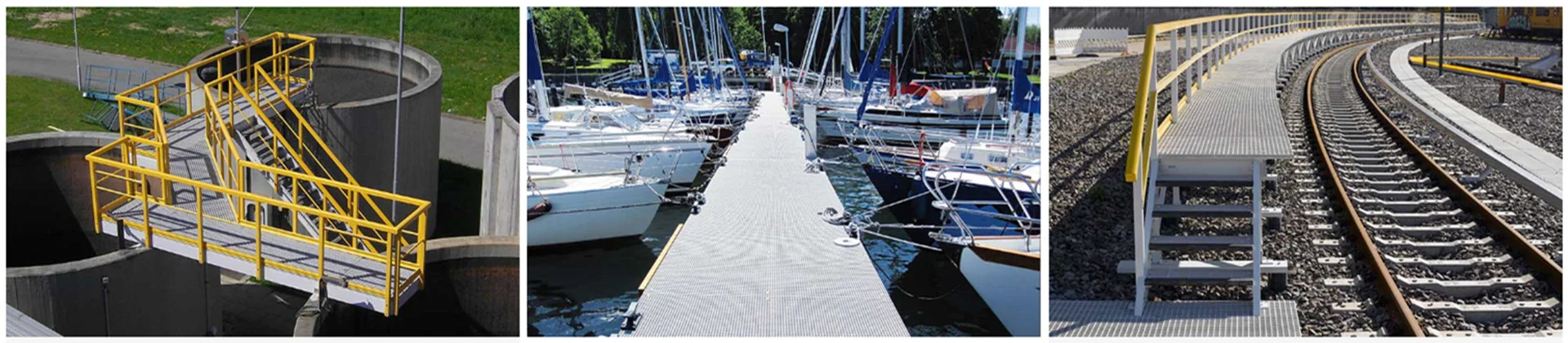
From power distribution racks and scraper bridges in clarifiers to pier fender systems and greenhouse structures, FRP’s immunity to rot, rust, and UV-driven chalking saves OPEX. One wastewater client extended beam replacement cycles from 6–7 years to “not on the budget anymore,” simply by swapping painted steel for FRP in high-fume zones.
Why Partner with a China FRP Beams Manufacturer (Not Just Buy Parts)
Cost, Capacity & Customization Advantages
-
Pricing power: Mature supply chains for glass rovings/resins plus lower labor and energy inputs keep piece prices lean.
-
Tooling breadth: Many Chinese factories maintain hundreds of standard dies and can cut a new die in 2–4 weeks.
-
Throughput: Multi-line, multi-shift operations hit aggressive timelines without quality drift.
Risks & How to Mitigate Them
-
IP clarity: Put die ownership, logo use, and CAD confidentiality in the contract and NDA.
-
Quality drift over time: Tie deliverables to ASTM/EN metrics, require lot-based mechanical data, and schedule mid-batch audits.
-
Regulatory gaps: Confirm ISO 9001/14001, ASTM E84 flame/smoke, and RoHS/REACH compliance before PO.
7 Criteria to Vet a China FRP Beams Manufacturer (Checklist)
-
Certifications & Compliance
ISO 9001/14001, third-party audits (SGS/BV/TÜV), ASTM D638 (tensile), D790 (flexural), E84 (fire), EN 13706 for profiles. Request current certificates—not just logos on a website. -
Pultrusion Expertise & Process Control
Ask about resin systems (polyester vs. vinyl ester vs. epoxy), glass fraction %, cure monitoring (IR sensors/thermocouples), and post-cure routines. -
Engineering Support & Custom Tooling Capability
You want CAD collaboration, FEA for load cases, and up-front tolerance stacks. Strong shops provide 2D drawings and section properties before you commit to tooling. -
Material Traceability & QA Documentation
Batch IDs, COAs for resins and glass, in-process checks, final inspection reports—get them baked into the contract. -
Production Capacity, Lead Times & MOQs
Verify number of pultrusion lines, max profile width/height, and monthly output (e.g., tons/month). Negotiate surge capacity for shutdown projects. -
Logistics & Export Experience
Correct HS codes, palletized or crate packaging for 6–12 m beams, Incoterms mastery (FOB/CIF/DDP), and on-time customs documentation save headaches. -
Communication & After-Sales Service
Dedicated PMs, 24–48 hour response targets, spare-part support, and clear warranty terms (e.g., 2-year workmanship warranty, material defect replacement policy).
Tip: Turn this list into a one-page PDF checklist your team signs off on before supplier selection.
How a Smooth Partnership Workflow Looks (Step-by-Step)
RFQ → Design-for-Manufacture Review
Share loads, environment, joint details, and finish needs. Expect a DfM pass suggesting radius tweaks, wall thickness changes, or resin upgrades.
Sampling, Testing & Approval Loops
Approve first articles; pull tensile/flexural coupons per ASTM and run fit-up trials. Lock specs before mass runs.
Mass Production, QA Gates & Pre-Shipment Inspection
Inline inspection catches fiber wash or surface voids. Third-party PSI checks dimensions, color consistency, packaging, and documents.
Shipping, Customs & On-Site Acceptance
Choose sea vs. rail-sea combo based on urgency. Conduct incoming QC: check dimensions, QC docs, and a random mechanical test if critical.
Mini Case Study: Corrosion-Safe Beams for a Wastewater Plant (Anonymized)
Problem: A Midwestern treatment plant spent ~$48k every 7 years repainting corroded steel stringers.
Solution: Vinyl ester FRP beams with a UV veil and pre-drilled connection holes. The manufacturer supplied FEA confirming <3 mm deflection at 1.5× design load and sent ASTM D790 flexural data for each lot.
Outcome: Install labor dropped 30% (lighter beams, fewer lifts), and after 36 months the maintenance line item for “beam repainting” disappeared. “We stopped budgeting for corrosion fixes and redirected funds to process upgrades,” the maintenance engineer said.
Unicomposite at a Glance: Capabilities That Matter to Buyers
Unicomposite, operating for over 15 years, is an ISO‑certified pultrusion specialist in China with:
-
Multiple production lines capable of continuous 24/7 output and rapid die changes.
-
Standard & custom profiles (beams, channels, tubes) plus secondary machining (drilling, cutting, bonding).
-
Additional processes: Pulwound for pressure-resistant tubes, SMC/BMC molding for complex shapes, and hand lay‑up for large or low-volume parts.
-
Sectors served: Electricity, landscaping, wastewater, cooling towers, agriculture, aquaculture, marine, and more.
“Our QA team logs every batch—resin lot, glass content, cure profile—so customers can trace performance back to raw materials,” notes Ms. Liu, Unicomposite’s QA lead.
Warranty & Support Snapshot: 2-year workmanship warranty, replacement or credit for verified defects, and engineering assistance for field modifications.
Conclusion
Choosing a China FRP beams manufacturer is about securing a capable engineering ally, not just a low-cost supplier. Use the seven-point checklist, demand transparent QA, and map the workflow before issuing a PO. When you’re ready, request a DfM review or sample set—and grab the checklist PDF so your team never skips a critical question.
Frequently Asked Questions
1. How long do FRP beams actually last in corrosive environments?
With the right resin (often vinyl ester) and UV protection, FRP beams routinely exceed 20 years in acid/alkali splash zones with only visual inspections required.
2. Can I get custom shapes and colors, or do I have to pick from a catalog?
Most pultruders offer hundreds of standard dies, but can cut custom tooling in a few weeks. Color, surface veil, and grit options are commonly customized.
3. What certifications should I request from a supplier?
Ask for ISO 9001/14001, ASTM D638/D790 mechanical reports, ASTM E84 flame/smoke ratings, and any RoHS/REACH documentation relevant to your market.
4. How are long beams shipped without damage?
Suppliers crate or palletize beams with internal blocking, edge protectors, and moisture barriers. Confirm packaging specs during RFQ to avoid transit damage.
5. What’s the typical lead time for bulk FRP beam orders?
After tooling, first articles can ship in 3–5 weeks. Production runs often take 4–6 weeks depending on line availability, QA testing, and shipping lanes.


