 info@unicomposite.com


Introduction
When you design or upgrade an industrial floor, the grating you choose will directly affect safety, maintenance costs and downtime risk. For environments exposed to chemicals, moisture or heavy traffic, fiberglass industrial floor grating has become a proven alternative to traditional steel or aluminum grating.
This updated guide walks you through what fiberglass industrial floor grating is, how it compares to metal options, the main product types and – most importantly – how to choose the right grating specification for your project in 2026.
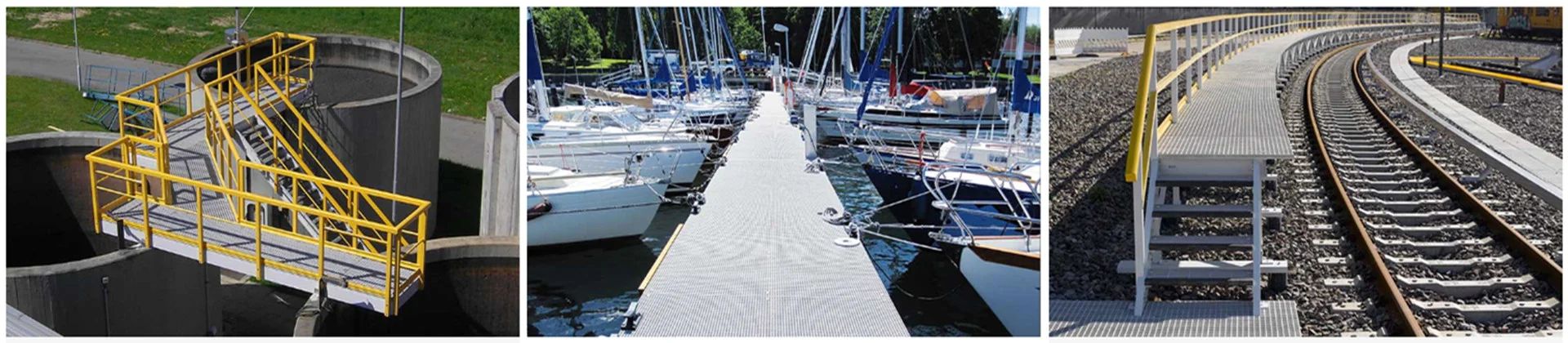
Fiberglass industrial floor grating for platforms and walkways
What Is Fiberglass Industrial Floor Grating?
Fiberglass industrial floor grating is a high-strength, corrosion-resistant flooring panel made from fiberglass reinforcements embedded in a thermoset resin matrix. It is commonly referred to as FRP (fiber reinforced plastic) grating.
Compared with traditional metal grating, fiberglass offers several advantages:
- Corrosion resistance – performs well in chemical plants, coastal areas, wastewater treatment and other harsh environments.
- Non-conductive and non-magnetic – safer for electrical power, telecommunication and test facilities.
- Light weight – easier to handle on site and often installed without heavy lifting equipment.
- Low maintenance – no painting or galvanizing, lower life-cycle cost.
Fiberglass vs. Steel and Aluminum Grating
- Compared to steel: steel gratings are strong but prone to rust, especially in wet or chemical-laden environments. Coating systems require regular maintenance. Fiberglass grating is inherently corrosion-resistant and keeps its appearance for many years.
- Compared to aluminum: aluminum is lighter than steel but still conductive and less resistant to aggressive chemicals. Fiberglass grating combines light weight with excellent chemical resistance and electrical insulation.
For these reasons, FRP industrial grating is widely used in chemical processing, wastewater treatment, marine platforms, cooling towers, power plants and many other applications.
Key Benefits of Fiberglass Industrial Floor Grating
1. Durability and Long Service Life
Fiberglass grating is engineered to withstand continuous exposure to chemicals, salt water, moisture and UV. With the proper resin system, it delivers a long service life with very limited degradation, even in aggressive conditions where coated steel fails quickly.
2. Enhanced Safety Features
Safety is often the top priority in industrial environments. Fiberglass industrial floor grating supports safer operations through:
- Slip-resistant surface – grit-top or meniscus surfaces provide good traction in wet, oily or icy areas.
- Fire retardancy – fire-retardant formulations can meet common industrial standards when specified correctly.
- Non-conductive performance – ideal for electrical substations, live-line maintenance platforms and battery rooms.
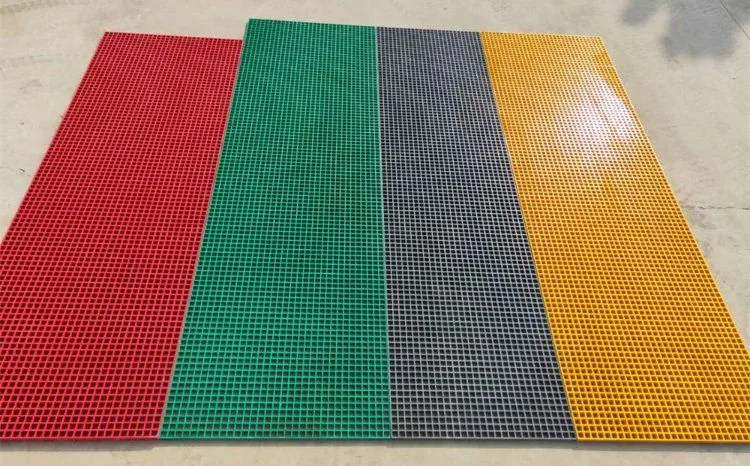
- Superior visibility – colors such as yellow or green make edges, walkways and restricted zones clearly visible.
3. Lightweight, Easy to Fabricate and Install
Compared with steel, fiberglass grating can be up to 70% lighter at the same panel size. Panels are easy to cut, drill and fit on site using standard hand tools, which helps:
- Reduce installation time and labor cost
- Minimize the need for cranes or other heavy lifting equipment
- Make retrofits and maintenance platform upgrades simpler
4. Lower Total Cost of Ownership
While the initial material cost of FRP grating can be higher than carbon steel, the saving on painting, coating, corrosion repairs and downtime often leads to a better life-cycle ROI – especially in corrosive or remote sites.
Types of Fiberglass Industrial Floor Grating
Molded Fiberglass Grating
Molded fiberglass grating is manufactured in one-piece panels with a bidirectional load-bearing pattern.
- Typical applications: walkways around tanks, trench covers, catwalks, offshore platforms, chemical handling areas and wastewater plants.
- Main advantages: excellent corrosion resistance, good impact performance, cost-effective for most standard industrial floors.
Pultruded Fiberglass Grating
Pultruded grating is produced from pultruded load bars mechanically assembled with cross rods. Fibers are aligned in one direction, resulting in very high strength in the main span direction.
- Typical applications: heavy-duty platforms, mezzanines, loading areas, long-span walkways and places where rolling loads or higher concentrated loads are expected.
- Main advantages: higher load-bearing capacity and stiffness than molded grating in the span direction, suitable for longer spans or heavier designs.
Custom FRP Grating Options
For special projects, fiberglass industrial floor grating can be customized in:
- Panel thickness, mesh size and span
- Resin systems (orthophthalic, isophthalic, vinyl ester etc.)
- Surface finish (smooth, grit-top, covered grating)
- Colors and edge treatments
If your project requires non-standard sizes or integrated stair treads, contact Unicomposite for engineering support.
How to Choose the Right Fiberglass Grating for Your Project
The following checklist will help you select the right fiberglass industrial floor grating specification instead of relying only on panel thickness.
1. Define Load-Bearing Requirements
- Determine the type of load: pedestrian only, maintenance carts, forklifts or other equipment.
- Check the required span length between supports.
- Ask for load tables or engineering calculations for the selected molded or pultruded grating series.
As a general rule, molded grating is ideal for pedestrian and light industrial loads, while pultruded grating is preferred for heavy duty and long-span designs.
2. Consider the Environment and Resin Type
To maximise service life, match the resin system to the exposure conditions:
- General industrial & outdoor – standard polyester resin.
- Strong chemicals / high temperature – vinyl ester resin for superior chemical resistance.
- Food & beverage / hygiene sensitive areas – resins designed for easy cleaning and suitable colors.
3. Choose Surface and Anti-Slip Requirements
- For wet or oily floors, specify a gritted surface for high slip resistance.
- For areas with wheeled equipment, consider covered grating or a smoother top layer.
- Use contrasting colors on stair treads and platform edges to improve visibility.
4. Check Fire, Smoke and Regulatory Standards
Confirm that the proposed fiberglass industrial floor grating system can meet your local fire and safety requirements, such as:
- Fire retardant rating or test method required by your project
- Design loads and deflection limits from your engineering standard or owner specification
- Any additional industry guidelines for offshore, marine or power generation facilities
5. Plan for Installation and Maintenance
- Review how panels will be fixed to the supporting structure (clips, bolts, stainless hardware, etc.).
- Make sure there is safe access for lifting and placing panels.
- Consider future inspections: choose layouts that make removal and replacement of single panels simple.
Typical Applications of Fiberglass Industrial Floor Grating
Because of its corrosion resistance and safety performance, FRP industrial grating is commonly used in:
- Chemical process plants and acid/alkali handling areas
- Wastewater treatment plants and pump stations
- Dock and marine structures, offshore platforms and shipyards
- Cooling towers, power plants and substations
- Agriculture, aquaculture and fertilizer storage facilities
- Industrial platforms, mezzanines, stair treads and trench covers
To see how FRP gratings perform in real projects, you can also check the case studies section on our website.
Maintenance Tips for Fiberglass Industrial Floor Grating
Although fiberglass grating is low-maintenance, a simple routine will help you achieve the longest possible service life:
- Clean regularly – remove dirt, grease and chemical spills using non-abrasive cleaners and fresh water.
- Inspect fasteners – check clips and bolts periodically to ensure panels remain securely fixed.
- Repair damage promptly – replace panels that show cracks, severe impact damage or burned areas.
- Avoid excessive point loads – use load-spreading plates if heavy equipment must be placed temporarily.
Why Work With a Specialized Fiberglass Grating Manufacturer?
Selecting the right fiberglass industrial floor grating is not only about choosing a panel from a catalogue. A qualified manufacturer can help you:
- Evaluate design loads, span and deflection requirements
- Choose the most suitable resin system and surface finish
- Optimize panel sizes to reduce waste and simplify installation
- Provide matching handrails, stair treads and other FRP structural profiles
Unicomposite has been supplying composite products since 1998 and offers molded and pultruded grating, handrail systems and custom FRP profiles for global industrial customers. If you are planning a new project or upgrading existing steel platforms, our team can recommend a complete FRP solution.
Conclusion
Fiberglass industrial floor grating combines corrosion resistance, safety and low maintenance, making it a strong alternative to steel and aluminum in harsh industrial environments. By carefully evaluating loads, spans, chemical exposure, fire requirements and slip resistance, you can choose a grating system that will protect your workers and lower life-cycle costs.
If you would like engineering support or a quotation for molded or pultruded fiberglass grating, contact Unicomposite’s team and we will help you select the most suitable solution for your plant or facility.
Fiberglass Industrial Floor Grating – FAQ
Service life depends on the resin system and environment, but in many chemical, wastewater and marine applications, fiberglass grating can operate for decades with only basic cleaning and inspections – often much longer than painted or galvanized steel.
For standard walkways and platforms with moderate spans, molded grating usually offers the best balance of corrosion resistance and cost. For longer spans, higher loads or rolling equipment, pultruded grating with higher directional strength is often the better choice.
In many projects, FRP grating can directly replace steel panels, but the support spacing and fixing method may need adjustment based on load tables. Always check span and deflection recommendations from your grating supplier or structural engineer.
Yes, with the correct resin and surface finish, fiberglass grating can be used in food, beverage and hygiene-sensitive applications. Smooth-top or covered grating is often preferred for easier cleaning.


