 info@unicomposite.com


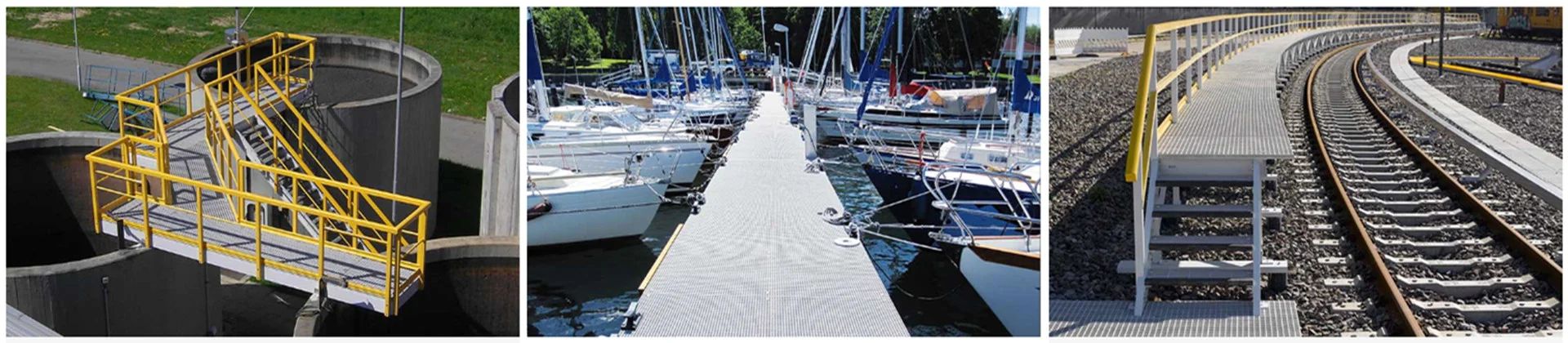
Fiberglass Floor Grating Suppliers: How to Choose & Boost ROI
In corrosive and high-traffic environments, floor grating is not just another line item on a purchase order.
It directly affects safety, downtime, and the total lifecycle cost of your platforms and walkways.
That’s why choosing the right fiberglass floor grating suppliers is far more important than simply choosing the lowest price on a quote sheet.
This guide walks you through how to evaluate FRP grating partners, what technical data to ask for, and how to connect
supplier performance with your long-term ROI. Whether you manage a wastewater plant, chemical facility, cooling tower,
or marine structure, the principles below will help you build a reliable supplier shortlist with confidence.

fiberglass floor grating suppliers
Quick Checklist for Choosing Fiberglass Floor Grating Suppliers
If you only have a few minutes, use this checklist as a quick filter:
- Certifications: At least ISO 9001 plus relevant ASTM / EN testing for load, fire, and slip resistance.
- Clear engineering data: Load-span tables, deflection limits, and safety factors for your exact application.
- Application experience: Proven projects in similar industries (wastewater, marine, chemical, power, etc.).
- Resin & surface options: Correct resin system, UV protection, anti-slip surface, and fire performance for your environment.
- Stock & lead time: Realistic delivery times and stock levels for your standard panel sizes and colors.
- Warranty & after-sales: Written warranty plus technical support before, during, and after installation.
The suppliers who can clearly demonstrate these points are usually the ones who will protect your project schedule and
reduce total ownership cost over the next 10–20 years.
Why Supplier Choice Matters More Than Panel Price
On paper, fiberglass grating often costs more than painted carbon steel. But in corrosive or wet environments, the real
question is not “How cheap can I buy it?” but “How many times will I have to repair or replace it over the next decade?”
Reliable fiberglass floor grating suppliers understand this and design their products for long-term performance.
When evaluating suppliers, look beyond the price per square meter and consider:
- Service life in your environment: Will the grating survive chemicals, salt spray, UV, and mechanical impact?
- Maintenance cost: No repainting, no rust removal, fewer shutdowns for inspection and repair.
- Safety performance: High slip resistance, fire performance, and stiffness to minimize deflection.
- Downtime risk: The cost of shutting down a line or platform can easily exceed the initial material savings.
A supplier who can provide documented case studies, testing data, and engineering support helps you control all of these factors
and improve your lifecycle ROI, not just your first purchase.
Step-by-Step Supplier Evaluation Workflow
Instead of evaluating vendors only by their quotes, use a structured workflow like the one below.
This approach helps you compare fiberglass floor grating suppliers on consistent, engineering-based criteria.
Step 1: Define Your Application and Design Requirements
Before contacting suppliers, summarize the basic design brief. For example:
- Industry and area type (wastewater plant, cooling tower, marine jetty, chemical plant, etc.).
- Platform dimensions, support spacing, and required clear spans.
- Expected loads (foot traffic, occasional trolleys, equipment, vehicle traffic if any).
- Environment (indoor/outdoor, chemical exposure, salt spray, UV, temperature range).
- Safety requirements (fire rating, electrical insulation, anti-slip performance).
Having this information ready allows FRP suppliers to recommend the right panel thickness, mesh pattern, resin type,
and surface finish from the start, instead of guessing based only on price.
Step 2: Shortlist Qualified Fiberglass Floor Grating Suppliers
Next, build a shortlist of suppliers who can clearly meet your quality and compliance requirements. Look for:
- Certifications: ISO 9001 quality system, and proof of compliance with relevant ASTM / EN / ISO standards.
- Manufacturing capability: In-house pultrusion and molding, cutting and finishing, and customization ability.
- Industry experience: References in similar applications or environments to yours.
- Global supply capability: Ability to ship internationally with proper packaging, documentation, and Incoterms.
At this stage, you are not just looking for a one-time seller, but a long-term FRP partner who understands your sector
and can support future projects as well.
Step 3: Compare Technical Data and Engineering Support
The best fiberglass floor grating suppliers are transparent about their engineering data. Ask each shortlisted
supplier to provide:
- Load-span tables for your selected panel thickness and support spacing.
- Allowable deflection values and safety factors.
- Resin system details (polyester, vinyl ester, phenolic) and chemical resistance chart.
- Fire test results, flame spread rating, and smoke development where applicable.
- Surface type (gritted, concave, plain) and slip resistance test data.
Also evaluate how quickly and clearly the supplier’s engineering team responds to your questions.
This responsiveness is a strong indicator of their support level once your project is on site and needs technical clarification.
Step 4: Evaluate Quality Systems and Production Controls
Quality is not only about the resin and glass fiber. It is also about consistency from batch to batch. Ask your potential suppliers:
- How do they control raw material quality (resin, glass fiber, pigments, additives)?
- What in-process inspections are performed during pultrusion or molding?
- Do they keep traceability records for each batch or production lot?
- Can they share their internal inspection reports or typical quality certificates?
If possible, request photos or videos of the production line, or visit the factory for larger, long-term projects.
A clean, well-organized facility with clear procedures is often a reliable sign of consistent quality.
Step 5: Check Project References and Case Studies
Ask each supplier for 2–3 projects similar to your own, ideally in the same industry or environment.
Good reference questions include:
- How long has the grating been in service?
- What is the environment (chemical tank area, offshore platform, cooling tower, etc.)?
- Were there any major issues or repairs required?
- Was the supplier involved in site measurement, design, or installation support?
Real-world performance over 5–10 years tells you much more than a one-page brochure ever can.
Step 6: Analyze Total Cost, Logistics, and Lead Times
Once you are satisfied with the technical and quality aspects, it’s time to look at the commercial side.
Compare suppliers on:
- Panel price: Price per square meter or per panel for your required specification.
- Cutting and fabrication: Pre-cut panels, custom sizes, grating clips, and accessories.
- Logistics and packaging: Palletizing, wrapping, edge protection, and container loading.
- Lead time and flexibility: Standard lead time, rush order options, and stock availability.
A slightly higher material price with shorter lead times, fewer damages in transit, and better after-sales support
often delivers better ROI than the cheapest offer.
Step 7: Confirm Warranty, Documentation, and After-Sales Support
Before placing the order, confirm the “paperwork” part:
- Written warranty terms and what is covered (corrosion, structural performance, surface wear).
- Technical documentation to be supplied (drawings, load tables, installation guide).
- Installation support (remote guidance, video, or on-site assistance where applicable).
- Spare panels or future replacements and how they will be handled.
A reliable fiberglass grating partner will be confident enough in their product to stand behind it with clear, written commitments.
Key Technical Criteria for Reliable Fiberglass Floor Grating
While every project is unique, most engineers look at a common set of technical criteria when specifying FRP floor grating.
Use the list below to structure your discussions with suppliers.
- Panel type: Molded grating vs. pultruded grating, depending on load and span requirements.
- Resin system: Orthophthalic, isophthalic, or vinyl ester resins for different levels of corrosion resistance.
- Mesh pattern and thickness: Standard meshes (e.g. 38×38 mm) and thicknesses (25 mm, 38 mm, etc.) to suit loads and deflection limits.
- Surface finish: Gritted or concave surfaces to provide high slip resistance in wet or oily areas.
- Fire performance: Flame spread rating and fire-retardant options where required by code.
- UV and weathering resistance: UV-stabilized resins and surface veils for outdoor installations.
If you need to understand standard sizes and options in more detail, you can also review a dedicated product page such as
fiberglass grating
for typical specifications and configurations.
Simple ROI Example: Steel vs. Fiberglass Floor Grating
To see how supplier choice and material selection affect ROI, consider a simplified example:
- Platform area: 100 m² in a wastewater treatment plant.
- Environment: Constant moisture, chemical splash, and outdoor UV.
- Option A: Painted carbon steel grating from a low-cost supplier.
- Option B: Fiberglass floor grating from a qualified FRP supplier.
Initially, the steel solution may appear cheaper. However, after 3–5 years, corrosion will likely require:
- Partial replacements of corroded panels.
- Frequent repainting and surface preparation.
- Planned or unplanned shutdowns to safely access and repair grating.
In contrast, properly specified fiberglass grating can often provide 15–20 years of service in the same environment with minimal maintenance.
When you add up material, labor, coating, and downtime costs over the full life of the platform,
Option B frequently delivers a lower total cost, especially when backed by reliable fiberglass floor grating suppliers
who design for long-term performance.
Common Mistakes When Selecting Fiberglass Floor Grating Suppliers
Even experienced teams can fall into traps when purchasing FRP floor grating. Watch out for these common mistakes:
- Choosing only by lowest price: Ignoring testing, certifications, and engineering support creates high risk of premature failure.
- Under-specifying for the environment: Using a basic resin in aggressive chemical or UV-heavy conditions can drastically shorten service life.
- Ignoring lead times and logistics: A great material that arrives late can still delay your project or plant shutdown schedule.
- Not verifying references: A lack of comparable project references is a red flag for critical applications.
By understanding these pitfalls in advance, you make it much easier to identify partners who add value instead of risk.
When to Work with a Global FRP Partner
For small maintenance jobs, a local distributor may be sufficient. But for larger or more complex projects,
working directly with a global FRP manufacturer can bring important advantages:
- Custom designs and OEM support: Tailored panel sizes, colors, profiles, and accessories for your project.
- Consistent quality across sites: The same specifications and properties for multiple plants or regions.
- Engineering collaboration: Co-developing solutions for special load cases, corrosive media, or extreme climates.
- Supply chain reliability: Coordinated shipments, stock strategies, and long-term agreements to reduce risk.
As an ISO-certified FRP manufacturer, Unicomposite provides fiberglass grating and related structural profiles for projects worldwide,
helping engineering teams balance performance, safety, and budget with a long-term view of ROI.
Need Help Selecting a Fiberglass Floor Grating Supplier?
Choosing the right partner for fiberglass floor grating is one of the most effective ways to protect both your people
and your budget over the life of your plant. If you are planning a new platform, retrofit, or multi-site upgrade and
need help evaluating options, our team at Unicomposite is ready to support you with technical data, project references,
and tailored FRP solutions.
Feel free to share your drawings and basic project information, and we can help you compare options and estimate
the ROI of switching to high-quality fiberglass floor grating.
With the right resin system and design, fiberglass floor grating can often provide 15–20 years or more of service
in corrosive environments such as wastewater plants, chemical processing areas, and coastal facilities.
Actual service life depends on the chemicals involved, UV exposure, mechanical impact, and how well the grating is installed and supported.
When you ask fiberglass floor grating suppliers about durability, request both chemical resistance charts
and real project references that match your application, not just generic statements.
Yes, fiberglass grating can be designed for significant loads, but it must be correctly specified.
Pultruded grating is typically used for higher loads and longer spans, while molded grating is often suitable for standard foot traffic and moderate loads.
To ensure safety, always base your decision on load-span tables and deflection limits provided by the supplier,
and confirm that your support structure spacing matches those design assumptions.
Professional FRP grating manufacturers usually offer engineering support, including load calculations,
panel layout drawings, and installation guidance. This support is especially valuable for complex platforms,
non-standard support grids, or projects with strict deflection and vibration limits.
When shortlisting fiberglass floor grating suppliers, ask specifically what kind of engineering services they provide
and whether there is any additional cost for detailed calculations or drawings.
To receive accurate proposals and avoid repeated back-and-forth, prepare the following in advance:
Project type and location.
Layout drawings or sketches of platforms and walkways.
Support spacing and any special load requirements.
Details on chemicals, temperature, and outdoor/indoor conditions.
Any fire, electrical, or safety standards that must be met.
The more complete your information, the more precise and comparable your quotations from different suppliers will be.


