 info@unicomposite.com


Introduction
If you are still using welded steel grating for walkways, platforms or trench covers, you have probably dealt with corrosion, slippery surfaces and frequent repainting.
GRP open mesh grating – also called FRP or fiberglass open mesh grating – offers a lighter, non-corrosive and non-conductive alternative that solves many of these long-term problems.
In this guide, we will explain what GRP open mesh grating is, how it compares with traditional steel grating, and seven key benefits that matter for plant owners, engineers and purchasing teams.
We will also look at typical applications, selection tips, installation recommendations and how to work with a reliable supplier.
Use this page as a practical buying guide when you specify fiberglass grating for wastewater treatment plants, offshore platforms, chemical processing areas, marine decks or industrial floors.

grp open mesh grating
What Is GRP Open Mesh Grating?
GRP (Glass Reinforced Plastic) open mesh grating is a molded or pultruded fiberglass grating with open square or rectangular holes.
The glass fibers are embedded in a thermoset resin matrix (such as isophthalic, orthophthalic, vinyl ester or phenolic resin), creating a strong, lightweight and corrosion-resistant structural panel.
Unlike checker plate or solid flooring, open mesh grating allows liquids and debris to pass through, reducing pooling and improving drainage.
At the same time, a grit top surface or anti-slip pattern provides secure footing even in wet, oily or icy environments.
Common names for this type of product include:
- GRP open mesh grating
- FRP open mesh grating
- Fiberglass grating / fiberglass floor grating
- Fiberglass walkway grating
Regardless of the term used, the goal is the same: provide a safe, durable and low-maintenance alternative to steel or aluminum grating.
GRP Open Mesh Grating vs Steel Grating
When engineers compare GRP open mesh grating with traditional carbon steel or galvanized steel grating, the same questions always come up:
strength, weight, safety, maintenance and total cost.
Here is a quick overview of the most important differences.
- Weight: GRP panels are significantly lighter than steel, so installation is easier and often does not require heavy lifting equipment.
This reduces labor cost and speeds up shutdown work. - Corrosion: Fiberglass grating does not rust.
In chemical plants, wastewater facilities and coastal areas, this dramatically extends the service life compared with painted or galvanized steel grating. - Safety: GRP is non-conductive and can be supplied with a grit top surface for high slip resistance.
This helps reduce electrical hazards and slip-related incidents on walkways and platforms. - Maintenance: Steel grating requires periodic recoating, rust removal and eventual replacement.
GRP open mesh grating typically only needs cleaning, saving time and maintenance budget. - Total Cost of Ownership: The initial material price of steel may be lower, but when you factor in labor, downtime, coating and replacement, GRP often becomes the more economical choice over a 15–20 year period.
For corrosive or safety-critical environments, many facility owners have already switched from steel to GRP open mesh grating to reduce lifecycle costs and improve working conditions.
Top 7 Benefits of GRP Open Mesh Grating
Below are seven practical benefits that explain why GRP open mesh grating has become a go-to solution for industrial flooring and access systems.
1. High Strength-to-Weight Ratio
GRP open mesh grating combines strong continuous glass fibers with a rigid resin system, resulting in a high strength-to-weight ratio.
This means you can achieve the required load capacity with panels that are significantly lighter than steel.
For engineers, this allows more flexibility in design, especially where weight limits are critical – for example on offshore platforms, elevated walkways, rooftops or aging structures where additional dead load must be minimized.
2. Outstanding Corrosion and Chemical Resistance
One of the most important advantages of fiberglass open mesh grating is its resistance to corrosion and chemical attack.
With the right resin selection, GRP grating can withstand exposure to:
- Saltwater and marine atmosphere
- Wastewater and sewage
- Chemical splash zones and fumes
- Cooling tower environments
Instead of rusting and losing section, fiberglass grating maintains its structural integrity over many years.
This reduces inspection frequency and the need for emergency repairs caused by corroded steel.
3. Excellent Slip Resistance and Walking Comfort
Safety on walkways and platforms is a top priority.
GRP open mesh grating is normally supplied with a grit top surface or a specially formed anti-slip pattern that offers a high coefficient of friction, even when surfaces are oily or wet.
Compared with smooth metal or worn steel grating, operators typically notice:
- Improved grip for boots and shoes
- Reduced slip-related incidents
- More comfortable walking and standing due to slight flexing of the fiberglass grating
This improves working conditions and supports safety initiatives in industrial plants.
4. Fire Performance and Non-Conductive Properties
Many GRP grating systems use fire-retardant resin formulations that meet relevant fire performance standards (for example, low flame spread ratings in certain test methods).
This helps limit the spread of fire and smoke in critical areas.
In addition, GRP is electrically non-conductive.
This is a major advantage in electrical substations, switch rooms, rail facilities or any area where metallic grating may pose a shock hazard.
By using fiberglass grating, you can reduce the risk of electrical accidents and improve overall safety.
5. Low Maintenance and Long Service Life
Traditional steel grating requires a continuous cycle of cleaning, blasting, coating and repair – especially in aggressive environments.
Every maintenance shutdown costs time and money.
GRP open mesh grating, by contrast, needs very little maintenance:
- No repainting or recoating
- No rust removal
- Simple cleaning with water or mild detergents
As a result, the grating can remain in service for many years without significant loss of performance.
This long service life is one of the reasons GRP grating is often chosen for wastewater plants, chemical facilities and offshore platforms.
6. Design Flexibility and Easy Fabrication
Fiberglass grating can be cut, drilled and adapted on site using basic tools with the correct blades.
Panels are available in different thicknesses, mesh sizes, colors and surface finishes, making it easier to match your design requirements.
Common customizations include:
- Trimming panels to fit around columns, pipes and equipment
- Creating cut-outs for hatches, valves and manholes
- Adding nosing strips or contrast colors at the edge of stairs and landings
This design flexibility allows engineers to standardize on one grating family while still meeting diverse layouts and site conditions.
7. Lower Lifecycle Cost vs Steel
While the upfront price of GRP grating may be similar to or slightly higher than certain steel options, the overall lifecycle cost is often significantly lower.
Key savings include:
- Reduced installation labor due to lighter weight panels
- No need for regular repainting or galvanizing repair
- Fewer shutdowns for inspection and maintenance
- Longer replacement intervals
When you calculate total cost of ownership over 10–20 years, GRP open mesh grating is frequently the more economical and predictable solution, especially in corrosive or remote environments.
Typical Applications of GRP Open Mesh Grating
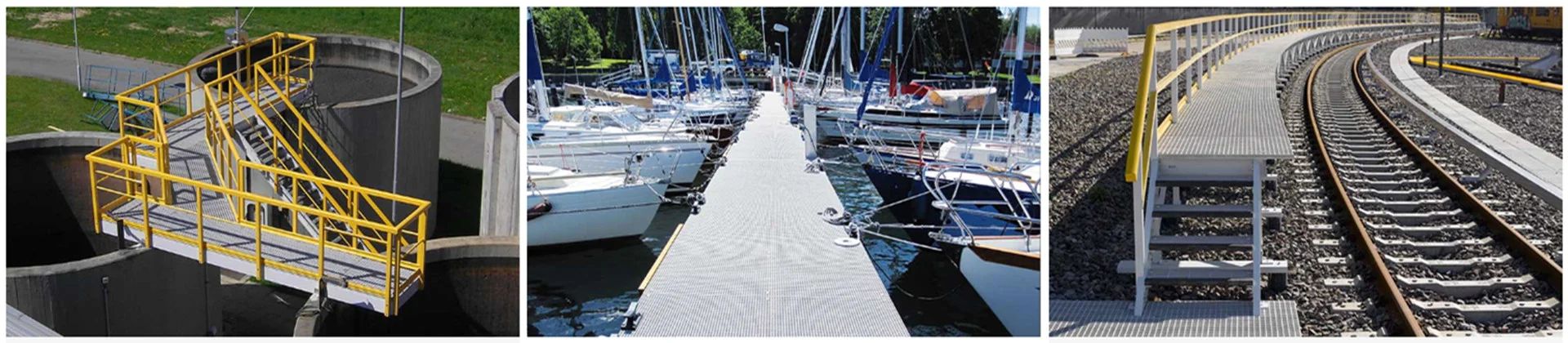
Because of its corrosion resistance, safety features and low maintenance demands, GRP open mesh grating is widely used across many industries, including:
- Wastewater treatment plants – walkways, platforms, trench covers and access ways
- Chemical processing – around tanks, process lines, bunds and loading areas
- Offshore and marine – offshore platforms, jetties, docks and shipboard walkways
- Power generation – cooling towers, pump rooms and access platforms
- Food & beverage – non-corrosive floors in washdown and processing areas
- Mining and minerals – acid plants, conveyors and maintenance platforms
In all of these environments, fiberglass grating helps improve safety while keeping maintenance under control.
Selecting the Right GRP Open Mesh Grating
Choosing the right GRP open mesh grating for your project involves more than just picking a panel thickness.
You should consider load requirements, environment, span, surface finish and budget.
Here are the key factors to evaluate:
- Resin Type: Different resin systems offer different levels of chemical resistance, fire performance and temperature capability.
Common choices include orthophthalic, isophthalic, vinyl ester and phenolic resins.
Discuss your chemical exposure and temperature conditions with your supplier. - Panel Thickness and Mesh Size: Thicker panels and smaller mesh sizes can carry higher loads and offer better impact resistance.
Typical molded grating thicknesses range from 25 mm to 50 mm, with standard mesh configurations such as 38 mm x 38 mm. - Span and Load: Check the recommended span/load tables from the manufacturer to make sure the grating can safely carry your design loads (uniform loads, point loads, equipment loads).
- Surface Finish: For most industrial floors and walkways, a grit top surface is recommended to maximize slip resistance.
In some food or clean applications, a smooth top may be preferred for easier cleaning. - Color and Visibility: GRP grating can be manufactured in different colors such as grey, green or yellow.
High-visibility colors are often used on stair treads, edges and safety-critical areas. - Fixings and Supports: Proper clips and fasteners are essential to secure grating panels to the support structure and prevent movement or uplift in high wind areas.
For detailed panel sizes, resin options and load tables, please visit our
fiberglass / GRP open mesh grating product page.
Installation and Maintenance Best Practices
Correct installation is critical to achieve the expected performance and service life from GRP open mesh grating.
Below are some best practices to follow on site:
- Use the correct tools: Cut fiberglass grating with appropriate blades and equipment to avoid excessive dust and to maintain clean edges.
- Respect recommended spans: Do not exceed the maximum span for the required load class.
Overspanning can lead to excessive deflection or damage. - Install adequate fastening: Use stainless steel clips and hardware suited to the environment and follow the manufacturer’s recommended clip spacing.
- Check support surfaces: Make sure beams and frames are level and properly aligned before installing grating panels.
- Plan for access: Where regular access is required to equipment below, consider using removable panels or hinged sections.
Routine maintenance is straightforward: periodic visual inspections, cleaning to remove dirt, algae or oils, and prompt repair or replacement of any damaged panels.
Why Work With Unicomposite as Your GRP Grating Supplier?
Selecting the right supplier is just as important as selecting the right product.
A reliable GRP grating manufacturer will support you with design advice, documentation and on-time delivery.
Unicomposite focuses on fiberglass / FRP products, including GRP open mesh grating, stair treads and related profiles.
By working with a specialized supplier, you can benefit from:
- Professional support in choosing resin types, panel sizes and surface finishes
- Customized cutting and fabrication according to your drawings
- Consistent quality and reliable performance in demanding environments
- Coordinated delivery and packaging for large projects
If you have a current project, our team can help review your layout, spans and load requirements to recommend a suitable fiberglass grating solution.
Conclusion
GRP open mesh grating has become a proven alternative to steel grating in many industries, especially where corrosion, safety and maintenance are major concerns.
With a high strength-to-weight ratio, excellent corrosion resistance, slip-resistant surface and low maintenance demands, fiberglass grating offers clear advantages over its metallic counterparts.
By understanding the key benefits, typical applications and selection criteria outlined in this guide, you can make more informed decisions for your next project.
For technical support or a quotation, feel free to contact Unicomposite or visit our
fiberglass grating product page.
GRP Open Mesh Grating FAQ
GRP open mesh grating is a molded or pultruded fiberglass grating panel with open holes that allow liquids and debris to pass through.
It is made from glass fibers and resin, providing a strong, lightweight and corrosion-resistant alternative to steel grating for industrial floors and walkways.
Typical applications include wastewater treatment plants, chemical processing facilities, offshore platforms, marine decks, cooling towers, pump stations, power plants and industrial access walkways where corrosion and safety are key concerns.
Yes. Most industrial GRP grating is supplied with a grit top or anti-slip surface, providing high slip resistance in wet, oily or icy conditions.
This makes it suitable for safety-critical access ways, platforms and stairs.
Steel grating may have a lower initial material price, but it usually requires regular maintenance, recoating and eventual replacement, especially in corrosive environments.
GRP open mesh grating has a higher corrosion resistance and lower maintenance requirements, so its total cost of ownership over 10–20 years is often lower than that of steel.


