 info@unicomposite.com


Introduction: What Is a Fiberglass Cooling Tower?
Fiberglass cooling towers, also called fiberglass cooling tower, GRP cooling tower or plastic cooling tower, are circulation equipment used to remove heat from industrial and HVAC systems. The tower shell, structure and many components are made of fiberglass reinforced plastic (FRP), which provides excellent corrosion resistance, low maintenance and long service life compared with traditional concrete, wood or steel cooling towers.
Because fiberglass water cooling towers are light in weight and can be designed in many shapes and sizes, they are widely used in power plants, chemical plants, plastic processing, air-conditioning systems and many other facilities that need stable and efficient heat dissipation.

frp cooling tower
Classification of Fiberglass / Plastic Cooling Towers
1. By Airflow Direction and Structure
- Counterflow fiberglass cooling tower – Air moves vertically upward opposite to the falling water. This design offers compact footprint, good thermal performance and is common in industrial plants.
- Crossflow fiberglass cooling tower – Air flows horizontally through the fill while water falls vertically. Crossflow towers are easy to inspect and maintain, and are widely used in HVAC and commercial buildings.
- Bottle-type (round) plastic cooling towers – Small footprint, light weight and easy installation. Often used for smaller cooling capacities such as injection molding, small chillers and machine cooling.
- Square fiberglass cooling towers – Modular design that can be combined into multi-cell units. Suitable for large industrial circulation systems and power plants.
2. By Cooling Circuit
- Open-circuit fiberglass cooling tower – Process water is directly sprayed inside the tower and contacts air to release heat. Structure is simple and cost is lower, suitable for many general industrial applications.
- Closed-circuit (evaporative) cooling tower – Process fluid flows inside coils and does not contact ambient air. External spray water circulates over the coils and exchanges heat with air. This design keeps the system clean and reduces scaling and contamination.
3. By Material and Performance
- Fiberglass cooling towers (FRP / GRP) – Tower casing, fan stack, louvers and many structural members use corrosion-resistant fiberglass reinforced plastic. They provide long life and stable performance in chemical, coastal and high-humidity environments.
- Plastic cooling towers – Mainly small round towers using high-strength engineering plastic and FRP. They are light, easy to move and install, and popular in general industrial and commercial cooling systems.
- Low-noise fiberglass cooling towers – Specially optimized for noise control, using low-noise fan blades, sound attenuators and vibration isolation design to meet strict noise limits in residential or urban areas.
4. Brief Comparison With Traditional Cooling Towers
- Wooden cooling towers – Low initial cost but poor durability, susceptible to rot, insects and deformation.
- Steel cooling towers – High strength but prone to corrosion, especially in salty or chemical atmospheres, and require frequent painting and maintenance.
- Concrete cooling towers – Very durable but heavy and costly to build, mostly used for special large power plant projects.
- FRP / GRP cooling towers – Light weight, high corrosion resistance, flexible design and easier installation, which is why more users are turning to fiberglass cooling towers.
Main Functions and Working Principle
The basic function of any cooling tower is to cool down circulating water and return it to the system at a lower temperature. Fiberglass water cooling towers complete this process through heat and mass transfer between water and air.
- Hot water from the process enters the distribution system at the top of the tower.
- Water is evenly sprayed over the fill, forming a thin water film and droplets to increase heat exchange area.
- Fans or natural draft draw ambient air through the tower. The air contacts the warm water, and part of the water evaporates, taking away latent heat.
- Cooled water collects in the basin and is pumped back to the equipment or heat exchanger.
Using fiberglass structure for the tower ensures that the casing, fan stack and many supporting members remain strong and corrosion-free even under high humidity, chemical mist and outdoor weather, which reduces downtime and life-cycle cost.
Why Choose Low-Noise Fiberglass Cooling Towers
In many projects, controlling noise is as important as controlling temperature. Low noise fiberglass cooling towers are specially designed for noise-sensitive environments such as residential areas, hospitals, schools and office buildings.
- Low-noise fan and motor – Optimized blade geometry and low-speed motors help reduce mechanical noise and air turbulence.
- Airflow and structure optimization – Improved fan stack and air inlet design decreases air resistance and whistling sound without sacrificing cooling performance.
- Sound attenuation accessories – Sound barriers, silencers and vibration isolators reduce transmission of mechanical noise to the structure.
- Customization options – Projects can choose customized low noise fiberglass tower solutions according to local regulations, noise limits at the property boundary and operating hours.
- Better life-cycle cost – A low price low noise fiberglass tower does not only mean low purchase price; longer service life, lower maintenance and fewer complaints also reduce overall operating cost.
When end users plan to buy low noise fiberglass tower, evaluating both acoustic performance and cooling efficiency helps select the best long-term solution.
Applications and Typical Industries
Fiberglass and plastic cooling towers are widely used in many industries that require reliable and corrosion-resistant cooling systems:
- HVAC and building air-conditioning – Cooling for chillers in office buildings, shopping malls, hotels and hospitals, where low noise and stable operation are essential.
- Chemical and petrochemical plants – Handling corrosive gases and liquids, where FRP shells and components provide long service life.
- Power plants and energy facilities – Used for circulating cooling water of generators, transformers and auxiliary systems.
- Plastic and rubber processing – Supporting injection molding machines, extruders and other equipment that need constant mold and oil cooling.
- Food and beverage factories – Process water cooling with strict hygiene and reliability requirements.
- Metallurgy and steel mills – Cooling of rolling lines, continuous casting machines and furnace systems, often under harsh conditions.
Unicomposite Fiberglass Cooling Tower Components
As a professional manufacturer of fiberglass reinforced plastic profiles, Unicomposite supplies a wide range of FRP components for fiberglass cooling towers and plastic cooling towers. These components are designed for high strength, corrosion resistance and easy installation.
- FRP structural profiles and beams for tower frames and supports.
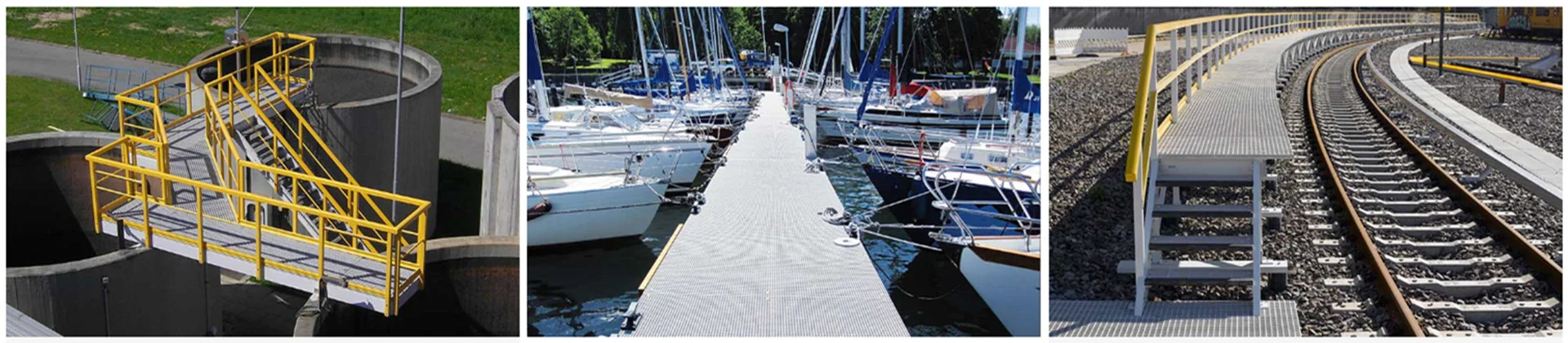
- FRP gratings for maintenance platforms, walkways and access areas.
- FRP handrails and guardrails for safe access around the cooling tower.
- FRP ladders and safety cages for inspection and maintenance.
- Custom FRP casing panels, louvers and fan stacks for new towers or refurbishment projects.
By combining standardized profiles with customized design, Unicomposite helps engineering companies and end users build durable fiberglass cooling tower structures and upgrade existing towers to improve performance, reduce maintenance and extend service life.
FAQ: Fiberglass Cooling Towers
A fiberglass cooling tower is a heat-rejection device whose casing and many structural parts are made from fiberglass reinforced plastic (FRP or GRP). It cools down circulating water by evaporative heat transfer and is especially suitable for corrosive or coastal environments where traditional materials fail quickly.
For most modern projects, a fiberglass cooling tower offers better durability and lower maintenance than a wooden cooling tower. FRP does not rot, warp or attract insects, and it maintains structural strength in high humidity and chemical atmospheres. Although the initial cost can be higher than wood, the total life-cycle cost is usually lower.
Yes, plastic cooling towers and fiberglass water cooling towers are designed for high corrosion resistance. They perform well in environments with salt spray, acidic fumes or industrial pollution, where steel or wood towers would require frequent repair and coating.
The service life of a GRP cooling tower depends on operation conditions, water quality and maintenance, but it is common for fiberglass towers to operate reliably for 15–20 years or more. Proper selection of resin system and UV-resistant gel coat further extends service life.
Yes. Low noise fiberglass cooling towers can be customized for airflow, fan type, motor power, sound attenuation devices and layout according to project cooling capacity and local noise regulations. Unicomposite can provide FRP structural components and engineering support to match the requirements of customized low noise fiberglass tower solutions.
When choosing a fiberglass cooling tower, consider cooling capacity, inlet and outlet water temperature, water flow rate, site layout, environmental conditions, expected noise level and maintenance resources. Working with an experienced FRP supplier and system designer helps ensure that the selected fiberglass cooling tower meets both performance and budget targets.


