Introduction
Pultrusion Die & Mold Tooling is never “just a die.” A complete package typically includes the die block plus preformers/guides, resin delivery hardware (if used), calibration features, wear parts, pull blocks, and clean interfaces to cutoff and handling. For B2B buyers sourcing at scale, tooling is the hidden lever behind tolerance capability, surface finish consistency, line speed stability, and scrap control.
Unicomposite is an ISO certificated pultrusion manufacturer producing standard pultruded fiberglass profiles and custom composite parts in China, with additional forming capabilities (Pulwound, SMC/BMC, hand lay-up). Mentioning this is relevant here because strong tooling decisions usually come from a factory feedback loop—what runs in CAD isn’t proven until it runs on a line with real heat, pull force, and material variability.
Experience (real-world pattern): On many new tools, the first “surprise” isn’t that the profile can’t be made—it’s that CTQ dimensions drift after warm-up. The fix is rarely one knob; it’s usually a short sequence: measure drift → map temperature gradients → verify pull stability → refine land/venting/heating zones until the part holds steady.

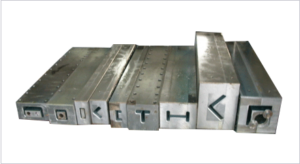
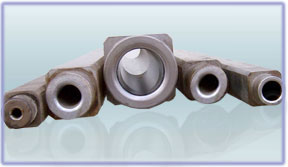
pultrusion die mold tooling
Die Tooling Fundamentals for Pultrusion
Profile definition and CTQ mapping
Start with what the profile must do: load path, dielectric needs, corrosion exposure, UV, and how it mates to other parts. Then map features into two buckets:
- CTQ (Critical-to-Quality): mating faces, datum edges, assembly channels, bolt-hole interfaces, seal surfaces
- Non-CTQ: internal webs, non-mating ribs, cosmetic-irrelevant backsides
That CTQ map drives everything: land strategy, inspection plan, and what the supplier must prove in FAI.
Confirm the full tooling stack
When buyers say “die & mold tooling,” suppliers may interpret scope differently. Confirm whether the quote includes:
- Die + entry/transition geometry
- Preforming guides and fiber control hardware
- Resin injection box or wet-out assistance (when applicable)
- Calibration features / wear inserts
- Pull blocks, alignment features, and cutoff interface considerations
Practical note from production: Scope gaps are a common reason programs feel “late”—the die arrives, but the supporting pieces needed for stable output arrive later.
How tooling affects production KPIs
Tooling influences:
- Start-up time and scrap during stabilization
- Line speed sensitivity (how “narrow” the workable window is)
- Surface quality repeatability
- Dimensional stability across shifts
When a program struggles, the scrap drivers are often a mix of cure imbalance, wet-out inconsistency, wear, and pull stability—not one single cause.
Designing the Die: Flow, Compaction, and Stability
Fiber architecture and compaction strategy
A good die design “respects” fiber architecture:
- Stage compaction: preformers handle most shaping so the entry isn’t doing everything at once.
- Avoid abrupt transitions: sharp geometric jumps can pinch fibers or cause wash/distortion.
- Plan for air escape + resin access: trapped air shows up as voids, pinholes, or dull streaks.
From shop-floor observation, it’s common to see notable start-up scrap until entry geometry and layup are tuned—especially on profiles with thin flanges or deep channels.
Die land length, entry geometry, and sizing philosophy
Think of the die in two roles:
- Entry: a controlled ramp that guides compaction and stabilizes flow
- Land: the final authority that sets dimension and helps stabilize the surface
Land choices influence pull force and repeatability. Too aggressive and you fight sticking/wear; too relaxed and you fight tolerance drift.
Managing resin distribution and venting
Resin-starve corners, resin-rich pools, and trapped air tend to happen in predictable places: corners, thick-to-thin transitions, and regions where fiber bundles change direction.
Design review checklist (before cutting steel):
- Where are the likely resin-starve zones?
- Where will air naturally want to collect?
- Where can we vent without creating surface marks?
- Which faces require the best finish (and how will that be achieved)?
Tooling Materials, Heat Treatment, and Coatings
Tooling materials should match the reality of pultrusion: glass is abrasive, resin chemistry can be sticky, and temperature cycling is constant.
Material selection and stability controls
Specify:
- Tool steel suitable for wear and thermal stability
- A heat treatment plan that includes distortion control steps (stress relief, stabilization, controlled finishing sequence)
Practical range framing: Post-heat treat movement isn’t rare on complex tools. If stability checks aren’t built in, rework can easily consume meaningful schedule time.
Surface finish and coatings
Surface finish should be tied to a clear surface class:
- Industrial functional surfaces
- Architectural/high-gloss visible faces
Coatings can reduce sticking and wear, but they must match resin chemistry and operating temperature range. A buyer-friendly approach is to request explicit acceptance criteria (see below).
Acceptance criteria example (buyer language):
- “Visible face finish consistent with agreed surface class”
- “No periodic drag marks after stabilization at steady-state settings”
- “Documented polishing/coating approach and maintenance guidance”
Thermal Management and Cure Control Inside the Die
Tooling is a thermal system. The goal is a repeatable cure profile—not a high number on one sensor.
Heating zones and temperature gradients
Better control comes from:
- Heating zones aligned to thick/thin sections
- Validating gradients across the land, not a single point
- A documented start-up ramp (how fast you heat and stabilize matters)
Practical range framing: Even small zone imbalances can show up as gloss variation or mild warp on thin features, depending on resin system and profile geometry.
Preventing common thermal defects
Common thermal-driven issues include undercure, surface haze, gloss variation, microcracks, and post-cure warp. Good tooling packages include a recommended process window (zone settings + pull speed range) that was validated during trials.
Critical Dimensions, Tolerances, and Metrology Plan
Tolerance strategy by feature type
Not every dimension deserves the same fight. Allocate tolerances based on function:
- CTQ interfaces get tight control + structured sampling
- Non-CTQ features can be looser if they don’t affect assembly or performance
GD&T and drawing package essentials
Your drawing package is effectively the contract. Include:
- A datum scheme aligned to real-world assembly
- GD&T on CTQ features
- Surface class notes (which face is “cosmetic/visible”)
- Measurement method expectations where needed
First Article Inspection packet (what to request)
Ask for an FAI packet that includes:
- CTQ table with measured results
- Setup photos and measurement method
- Sampling notes (how many, where measured along length)
- Any deviations and corrective actions from trial
This is one of the fastest ways to reduce approval back-and-forth.
Manufacturability: Machining, EDM, Polishing, and Assembly
Machining route selection
Tool complexity dictates the build route:
- CNC for stable references
- EDM for tight corners/slots (often unavoidable)
- Controlled hand-finishing for visible faces
Alignment, parting lines, and assembly repeatability
Repeatability depends on how the tool is assembled and aligned. Buyers should expect:
- Clear alignment strategy (keys/pins)
- Consideration for thermal expansion and reassembly repeatability
Experience: fixing stick-slip surface scuffs
We’ve seen “random” scuffs traced to a stick-slip behavior that appeared only after warm-up. The fix was not a single tweak: we adjusted polishing sequence, confirmed land smoothness on the CTQ face, and tightened process documentation. Once stabilized, surface defects dropped noticeably over the following production week.
Tooling Validation Workflow
This section is what often separates “a tool that ran once” from “a tool that supplies for years.”
Stage-gate workflow (what a good supplier should document)
- DFM / design review: CTQ list confirmed, resin/fiber assumptions stated
- Build plan: machining + heat treat + finish approach defined
- Stability checks: post-heat treat verification before final finishing
- Trial run: documented settings, observations, defect log
- FAI: CTQ measurement packet and capability discussion
- Handover: recommended process window + maintenance plan + spares list
A supplier that can walk you through this workflow tends to reduce program surprises dramatically.
Tooling Durability and Maintenance Planning
Wear mechanisms to plan for
Common wear mechanisms include abrasive wear from glass, resin build-up, corrosion, and galling/sticking.
Preventive maintenance plan
Request a basic schedule covering:
- Cleaning method and frequency
- Inspection checkpoints
- Pull-force monitoring guidance (as an early-warning signal)
- Refurbishment options (re-polish, inserts, re-cut land features)
Practical range framing: A simple preventive routine frequently extends usable tool life materially before a major refurbishment is needed—exact results vary by resin, fiber content, and duty cycle.
Tooling Supply: Sourcing Models and What to Specify
Design-only vs build-only vs turnkey
- Design-only: you own integration risk
- Build-only: you own design risk
- Turnkey (design+build): clearer accountability and fewer handoff gaps
Lead times and cost drivers
Cost and lead time are most impacted by complexity, finish class, coatings, and validation depth (trial + FAI + documentation).
Risk management for overseas tooling programs
If tooling is sourced overseas, reduce risk with:
- Clear documentation requirements
- Change control rules
- Acceptance gates tied to trial and FAI deliverables
- Packaging and shipping protection for die faces
RFQ Checklist: What Buyers Should Include (and Why)
Copy-paste structure you can drop into an RFQ:
Must-have technical inputs
- 2D drawing + 3D model
- CTQ table (features + tolerance + datum)
- Material/resin system assumptions (or request supplier recommendation)
- Target pull speed range and service environment
- Surface class notes for visible faces
Validation and deliverables
- Trial run report (settings, observations, defect list)
- FAI packet with CTQ measurements
- Recommended process window (zone temps + pull speed range)
- Spare parts list (wear inserts, guides, etc.)
- Maintenance guidance
Commercial and quality terms
- Warranty scope tied to agreed acceptance criteria
- Rework and change-order rules
- Packaging/shipping requirements
Integrating Tooling with Production: From Trial Run to Stable Output
What “success” looks like
A meaningful trial run proves:
- CTQ stability after warm-up
- Surface consistency along length
- Pull-force trend stability
- A documented process window that operators can repeat
Why broader composite experience helps (context, not a pitch)
Unicomposite’s broader forming capabilities (pultrusion plus Pulwound, SMC/BMC, hand lay-up) are useful context because mature manufacturers tend to emphasize SOPs, batch tracking habits, and documentation discipline—all of which directly improve tooling programs and approvals.
Case Study: Anonymized Example of Tooling Optimization
Problem
A profile required a tight CTQ interface and a high-gloss visible face while targeting a higher line speed. Early trials showed pinholes and CTQ drift after warm-up.
What changed in tooling (not just process)
- Added targeted venting near likely air-trap corners
- Refined land strategy on the CTQ face for stability
- Adjusted heating zoning to reduce local gradients
Outcome (range-based, practical framing)
In a scenario like this, it’s common to see start-up scrap fall meaningfully once venting/thermal balance and land behavior are corrected. Here, scrap dropped from roughly mid-teens to single digits, and CTQ rejects became uncommon after the process window was documented and used consistently.
Conclusion
A reliable Pultrusion Die & Mold Tooling program comes down to clarity + proof:
- Clarity: CTQ features, datums, surface class, acceptance criteria
- Proof: trial report, FAI packet, documented process window, and a maintenance plan
If you’re preparing a tooling RFQ, use the checklist above and require a stage-gate validation package—because the fastest approvals happen when requirements are unambiguous and results are documented.
Frequently Asked Questions
Most programs include the die plus preforming guides, alignment features, wear parts, and documentation outputs like trial reports and FAI. Depending on process and part geometry, resin delivery hardware and calibration elements may also be part of the tooling package.
Create a CTQ list and a datum scheme that matches how the part is measured and assembled. Pair that with an FAI requirement so the supplier must prove capability against your CTQ table.
Thermal gradients, pull-force variation, and how the land behaves after the tool reaches steady state can all contribute. A good trial report should include temperature zoning, warm-up time, and CTQ measurements over time—not just one snapshot.
At minimum: a trial run report, an FAI packet, a recommended process window, and a spare parts list. If the profile is high-risk (tight CTQ or high-gloss faces), add clear acceptance criteria and a stage-gate validation workflow.
Ask for a maintenance plan that includes cleaning methods, inspection intervals, and refurbishment options. Monitoring pull force trends and addressing resin build-up early often prevents damage that turns into expensive rework.
info@unicomposite.com