 info@unicomposite.com


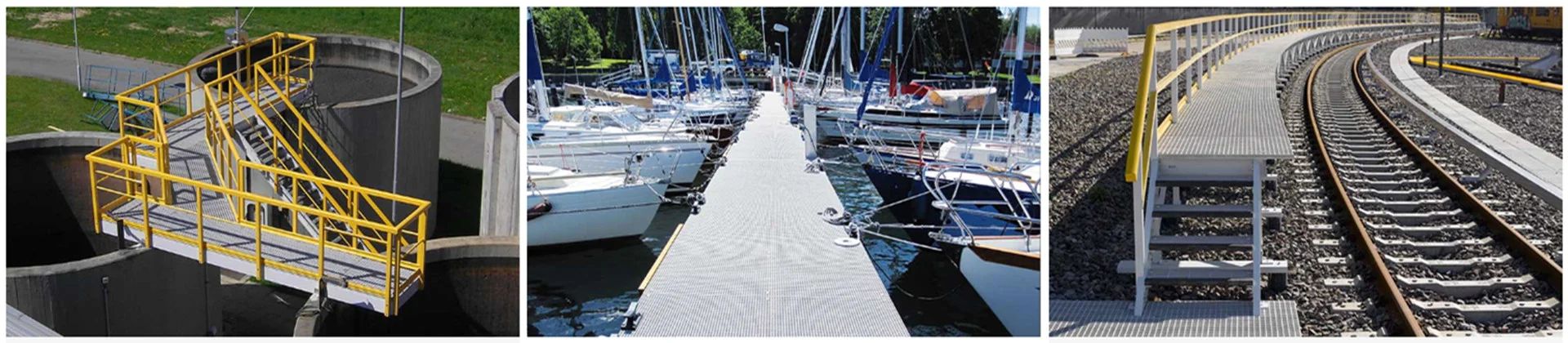
Introduction
A decade ago, I botched my first attempt at making a fiberglass deck—air pockets under the skin coat turned the surface into a bubble-wrap nightmare. Two weekends, three gallons of filler, and a bruised ego later, I learned an unforgettable lesson: success hinges on disciplined prep and cure control. In the years since, fiberglass decks have become my go-to solution for projects that demand a seamless, maintenance-light surface that shrugs off salt spray and foot traffic alike.
This guide distills field-tested tactics—plus insights from Unicomposite, an ISO 9001:2015-certified pultrusion manufacturer—so you can build a deck that stays rock-solid for decades.

how to make fiberglass deck
Understanding Fiberglass Deck Basics
What Is a Fiberglass Deck?
A fiberglass deck is a monolithic laminate made of:
-
Gelcoat (color & UV barrier)
-
Glass reinforcement (chopped strand, stitched mat)
-
Core (PVC or PET foam, balsa, or honeycomb)
-
Thermoset resin (typically vinyl-ester for high chemical resistance)
Key Advantages Over Wood & Composite
-
Corrosion immunity – ASTM B117 salt-spray testing shows < 1 % mass loss after 1,000 h.
-
Weight savings – 3–4 lb/ft², roughly half the weight of treated lumber at equivalent stiffness.
-
Dielectric safety – Non-conductive, perfect near switchgear.
-
Seamless waterproofing – A continuous shell, unlike plank systems that rely on caulked joints.
Planning & Design Considerations
Structural Requirements & Load Calculations
Most residential codes call for a 50 psf live load; commercial and rooftop terraces often specify 100 psf. A quick span check:
Fiberglass Deck
Need sealed calcs? Unicomposite’s engineering desk can supply PE-stamped documents and FEA models.

Material Selection: Resin, Reinforcement, Core Options
| Component | Best for | Note |
|---|---|---|
| Vinyl-ester resin | Chemical/UV exposure | 20 % premium vs. ortho, longer lifespan |
| Stitched biaxial + CSM | High flexural strength | Allows quick wet-out |
| 80 kg/m³ PVC foam | General decks | Closed-cell < 2 % water absorption |
Lifecycle modeling (Composite Deck Institute, 2024) shows the above stack-up pays back in < 5 years through avoided repairs.
Step-by-Step Fabrication Process
Surface Prep & Mold Construction
-
Build an accurate mold – Marine plywood sealed with epoxy or reuse GRP tooling. Flaws here echo forever.
-
Apply release agent – Two coats of semi-permanent wax plus a mist of PVA. Skipping this remains the #1 cause of stuck panels in Unicomposite’s 2025 defect log.
Laying Up Fiberglass Layers & Resin Application
-
Gelcoat – Spray 18–22 mil wet film; let tack.
-
Skin coat – 1-oz CSM locks the surface and minimizes print-through.
-
Structural lay-up – Alternate glass and core, wet-out thoroughly. A serrated roller forces out air pockets; I learned this the hard way on that first project!
-
Vacuum infusion (optional) – 35 % higher fiber volume and 25 % weight reduction compared with hand-lay.
Curing, Trimming & Finishing
-
Maintain 25 °C and ≤ 60 % RH for a full cure in 6–8 h with 1.5 % MEKP.
-
Trim edges with carbide blades; radius corners (≥ 5 mm) to kill stress risers.
-
Finish with a polyurethane non-skid; wet COF ≥ 0.7 per ASTM F1679.
Safety & Environmental Notes
PPE: Nitrile gloves, organic-vapor respirator, safety glasses, Tyvek sleeves.
Styrene exposure: OSHA PEL = 100 ppm (8 h TWA); keep shop ventilation ≥ 6 air changes/h.
End-of-life: Panels can be size-reduced and fed into cement kilns as alternative fuel; Unicomposite partners with regional recyclers for take-back programs.
Quality Control & Testing
Non-Destructive Tests (NDT) & Visual Inspection
-
Barcol hardness (ASTM D2583): Aim 40–45.
-
Tap test: Hollow thuds → voids > 0.25 in²; mark for repair.
Common Defects & Fixes
| Defect | Likely Cause | Remedy |
|---|---|---|
| Gelcoat blisters | Trapped styrene | Grind & fill with vinyl-ester putty |
| Dry spots | Low resin-to-glass ratio | Drill & syringe resin, re-roll |
| Delamination | Contaminated layers | Grind taper, patch with two plies |
Certification tip: Unicomposite’s ISO 9001:2015 program requires a 2 % random sample to pass ASTM D638 tensile tests (≥ 30 ksi) before shipment.
Case Study: Cooling-Tower Walkway Retrofit
Problem – A Gulf-coast power station’s galvanized steel grating was corroding every two years, forcing costly shutdowns.
Solution – 2,500 ft² of Unicomposite pultruded panels with silica-grit topcoat.
Results (2025 utility report)
-
Installation: 36 h vs. 96 h forecast for steel.
-
Maintenance: 75 % labor reduction over 10 years.
-
ROI: 2.8 years, including downtime costs.
Maintenance & Lifecycle Cost Analysis
Routine Inspection Checklist
-
Quarterly: Hose-down, visual damage scan.
-
Annually: Torque stainless anchors (28 ft-lb).
-
Every 5 yr: Recoat topcoat in high-UV zones.
20-Year Total Cost of Ownership
| Material | Initial $/ft² | 20-yr Upkeep | Total |
|---|---|---|---|
| Treated lumber | $ 5.50 | $ 11.00 | $ 16.50 |
| HDPE composite | $ 9.00 | $ 6.00 | $ 15.00 |
| Fiberglass | $ 11.50 | $ 2.50 | $ 14.00 |
Add downtime and fiberglass widens the gap even further.
Conclusion
Master these steps and your fiberglass deck will shrug off weather, chemicals, and heavy foot traffic for decades. When you’re ready to translate theory into a real-world success, contact Unicomposite for PE-stamped span tables, custom panel sizing, or a hands-on sample kit.
Frequently Asked Questions
-
How slippery is a fiberglass deck when wet?
Textured gelcoat or silica-grit finishes achieve wet COF ≥ 0.7, meeting most safety codes. -
Can I customize color and texture?
Yes—pigments are mixed into the gelcoat, and textures range from smooth marine finish to aggressive diamond plate patterns. -
What fasteners should I use?
316 SS screws or bolts with neoprene washers resist galvanic corrosion and maintain watertightness. -
Is it OK to cut openings for drains or wiring?
Absolutely; use carbide tools and seal cut edges with catalyzed resin to maintain structural integrity. -
How do I dispose of end-of-life panels?
Many regions accept fiberglass waste as cement-kiln feedstock; Unicomposite can facilitate recycling drop-off or pickup.


