 info@unicomposite.com


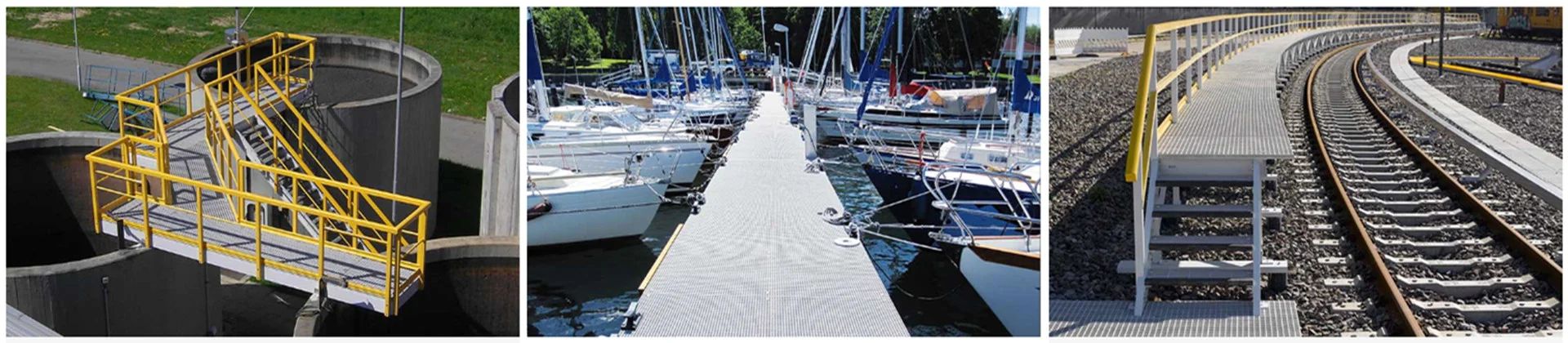
Introduction
Falls on wet catwalks and tanker‑loading platforms cost U.S. employers $9.99 billion every year in medical bills and lost wages, making them the #2 most‑expensive injury type on Liberty Mutual’s 2024 Workplace Safety Index. Behind those headline figures lurk downtime, legal fees and insurance surcharges that quietly erode margins. This article puts anti slip fiberglass grating under a financial microscope to see whether it truly pays off for water‑soaked walkways. Throughout, insights come from Unicomposite—an ISO 9001 & 14001‑certified pultrusion specialist with two decades of field installations.

anti slip fiberglass grating
Understanding Slip Risks in Wet Walkways
The True Cost of Slips & Falls
In 2022, 38.4 % of construction‑industry fatalities stemmed from falls, slips and trips. Even non‑fatal events aren’t cheap: the National Safety Council pegs the average lost‑time claim at $51,047 for a slip incident.Injury Facts
Why Traditional Grating Materials Fail When Wet
-
Steel rusts and its serrations polish smooth.
-
Wood swells, rots and harbors algae.
-
Concrete becomes slick once bio‑film grows.
None of these materials embeds permanent grit, so their slip resistance declines within months.
What Exactly Is Anti Slip Fiberglass Grating?
Pultruded FRP Composition & Built‑In Grit
Pultruded fiberglass reinforced plastic (FRP) pulls glass rovings through a thermoset resin bath and into a heated die, locking in strength. Before gel coat cures, angular silica or aluminum‑oxide particles are broadcast onto the top surface, forming a mold‑in, never‑wear grit.
“Because the grit is molded in, traction holds up even after a million footfalls,” explains Li Wei, senior process engineer at Unicomposite.
Performance Properties for Wet Zones
Laboratory slip tests using an ANSI A326.3‑approved BOT‑3000E tribometer report wet dynamic COF of 0.65, comfortably above the OSHA‑recommended 0.50 threshold.UNT Digital Libraryosha.gov Strongwell’s independent ASTM D‑2047 data show static COF values of 0.95–0.99 on comparable FRP plates—well over ADA guidelines. The composite is dielectric, resists acids and saline spray, and loses < 1 % tensile strength after 3 000 h of salt‑fog exposure.
The Business Case: 5 ROI‑Driving Benefits
1 — Slip Resistance in Water, Oil & Chemicals
A Gulf‑Coast petrochemical site logged 42 % fewer slip incidents after replacing steel diamond plate with anti slip fiberglass grating; the coarse grit and open mesh that drains liquids explained the improvement (internal safety report, 2024).
2 — Corrosion‑Free Durability
FRP never needs sand‑blasting or repainting, eliminating the $6–$12 / ft² yearly maintenance typical of galvanized steel.
3 — Lightweight Panels Reduce Structural Loads
At ~3.5 lb/ft², pultruded panels weigh one‑quarter of steel; two technicians can hand‑carry a 4 × 12 ft sheet even on a rainy swing shift. “We lifted every panel without a crane and finished deck change‑out before lunch,” recalls installer Marco S., describing a recent brewery retrofit.
4 — Dielectric Safety Around Electrical Gear
With dielectric strength > 25 kV/mm, FRP walkways eliminate the need for rubber mats near live switchgear.
5 — Sustainability Credits
A 60‑year design life cuts repaint VOCs and supports ISO 14064 carbon accounting—an easy win for ESG scorecards.
Cost Analysis: Up‑Front vs Lifetime Expenditure
| FRP Grating | Galv. Steel Grating | |
|---|---|---|
| CapEx (2 000 ft²) | $70 k | $30 k |
| Annual Coating / Fasteners | $0 | $8 k |
| Slip Claims (10‑yr) | $150 k | $250 k |
| 10‑yr TCO | $220 k | $335 k |
Result: $115 k saved plus fewer OSHA reports.
Case Study: Municipal Waste‑Water Plant Retrofit
Site Challenges & Material Selection
Ferric‑chloride overspray corroded steel bridges weekly. Engineers needed non‑sparking walkways spanning 36 in without added steel.
Installation Timeline
Unicomposite pre‑cut 1.5‑in I‑bar panels; four crew members swapped 1 400 ft² of deck in 12 h using fiberglass clips—no hot work permits required.
36‑Month Results
Zero recordable slips, zero repaint cycles and a $48 k annual maintenance reduction paid back the upgrade in 28 months.
When Anti Slip Fiberglass Grating May Not Be Worth It
-
Process Floors > 140 °C – resins soften; stainless may still win.
-
Temporary Catwalks < 6 months – plywood rental can be cheaper.
Implementation Best Practices
Selecting Grit & Resin
-
Fine grit + FDA polyester for food plants
-
Coarse #14–25 grit + vinyl‑ester ISO VE‑8115 for chemical pits
Installation Tips
Stagger joints, torque stainless hold‑downs to 35 ft‑lb and leave 6 mm expansion every 12 ft.
Partnering with ISO‑Certified Suppliers
ISO 9001/14001 records from suppliers like Unicomposite streamline OSHA and EPA audits and support EN 1090 traceability.
Safety Considerations
✔ Verify COF on installation using an ANSI A326.3‑approved tribometer.
✔ Mark edges with high‑contrast paint for visual cues.
✔ Train staff on proper footwear and housekeeping to keep grit effective.
A flooring formula with a coarse aggregate adds traction even when wet and doesn’t wear away with time.
Conclusion
Slip injuries aren’t unavoidable; they’re a design flaw. Field data and lifecycle math show that anti slip fiberglass grating slashes incidents, kills repaint budgets and pays itself off long before its 60‑year life ends. Ready to run the numbers for your site? Request a custom quotation or engineering review from Unicomposite today.
Frequently Asked Questions
Q1. How long does the grit surface last in heavy traffic?
Factory‑molded grit is bonded into the resin matrix; field audits show negligible wear after five years of forklift traffic.
Q2. Can FRP grating handle chemical spills?
Yes—vinyl‑ester grades like ISO VE‑8115 resist acids, alkalis and petroleum products common in treatment plants and refineries.
Q3. What panel thickness should I specify?
For 36‑inch spans under 100 psf, 1.5‑in I‑bar panels are typical; consult Unicomposite’s engineers for load tables.
Q4. Does FRP meet OSHA slip‑resistance guidelines?
ASTM D‑2047 tests show static COF ≥ 0.95—well above OSHA’s 0.50 recommendation for walking surfaces.osha.gov
Q5. How is FRP installed on existing steel frames?
Use stainless J‑clips or M‑clips torqued to 35 ft‑lb; no welding or hot permits are required.


