 info@unicomposite.com


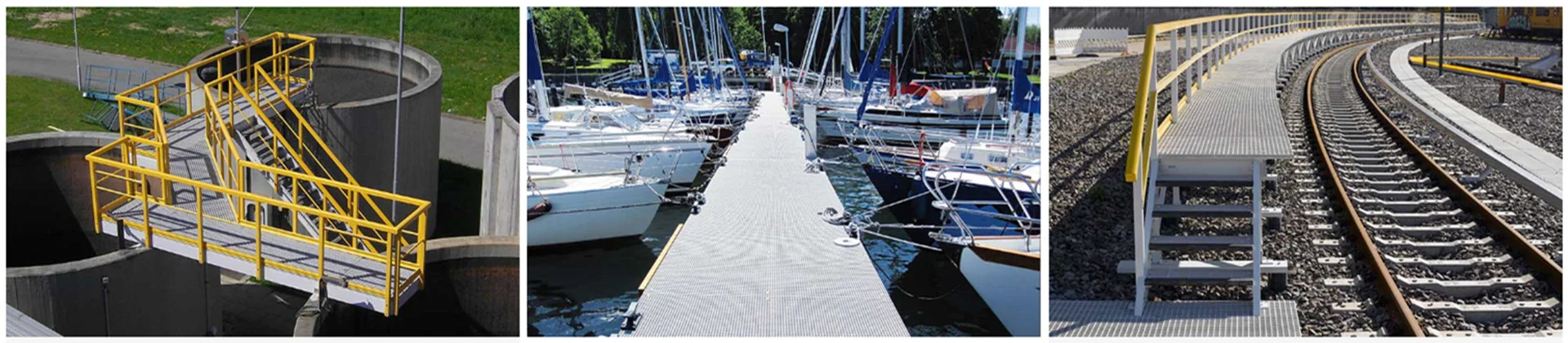
Introduction
Engineering teams can’t afford the hidden “rust tax” that drains maintenance budgets and squeezes shutdown windows. World Corrosion Awareness Day 2025 data puts the global cost of corrosion above US $2.5 trillion per year, with analysts noting that better material choices could slice 35 % off that figure. Partnering early with an FRP materials company turns that prevention promise into real‑world savings—lighter components, faster installs, and decades of corrosion‑free service. corrosion

frp materials company
FRP Materials 101 – Performance Fundamentals
Composition & Pultrusion Process Explained
Fiberglass‑reinforced plastic (FRP) combines continuous glass fibers with thermoset resins. In pultrusion, those fibers are pulled through a resin bath and a heated die, locking them in precise alignment to deliver tensile strengths of 600–700 MPa while keeping density at roughly one‑quarter that of steel.
Key Advantages vs. Steel, Aluminum, Wood
-
Corrosion immunity: No rust or rot in marine splash zones or chemical tanks.
-
Electrical insulation: Dielectric strength above 25 kV /mm protects crews working near live lines.
-
Weight savings: Molded fiberglass grating typically weighs 3–4 lb/ft² versus 8–12 lb/ft² for steel bar grating—smaller cranes, thinner foundations.
-
Design flexibility: Glass rovings, carbon strips, or surfacing veils can be combined to tune stiffness, fire performance, or UV durability.
Lifecycle Cost & Maintenance Comparison
Field studies from coastal bridges and wastewater plants show complete FRP walkway systems cut 30‑ to 40‑year ownership costs by 30–50 % once repainting, scaffold hire, and traffic shutdowns are factored in.
Strategic Value of Choosing an FRP Materials Company
Integrated Engineering & Design Collaboration
“On one lift‑station retrofit we shifted from a 10‑inch steel channel to a 6‑inch FRP beam and still met L/240 deflection targets—because we optimized the laminate during the bid stage,” recalls Chen Wei, senior field engineer at Unicomposite.
ISO‑Certified Quality & Testing Protocols
Unicomposite runs 24 synchronized pultrusion lines inside an ISO 9001‑certified facility and maintains a bonded QA lab capable of ASTM D790 flexural and EN 13706 structural testing—real‑time dashboards flag any dimensional drift exceeding ±0.3 mm.
Secure Supply Chains & Custom Fabrication Capacity
Because fabrication, machining, and kitting occur under one roof, the company can ship container‑load volumes on four‑week cycles or deliver prototype runs in ten days—eliminating subcontracting risk. Unicomposite
Real‑World Proof – Waste‑Water Retrofit Case Study
Project Challenge & Objectives
A Mid‑Atlantic wastewater plant faced quarterly shutdowns to re‑coat corroded steel walkways, burning through US $8 400 in labor and access hire each time.
Tailored FRP Solution Delivered by Unicomposite
The team pultruded 3‑inch‑deep I‑grating panels in vinyl‑ester resin, embedded a ceramic anti‑skid surface, and color‑coded wear layers for at‑a‑glance inspection.
“During crane day the steel set‑down zone was too narrow,” Chen Wei adds. “We trimmed two panels on‑site with a diamond blade, hand‑carried them, and finished bolting before lunch—impossible with 150‑pound steel plates.”
Five‑Year Outcome
Since installation (2020‑2025), unplanned walkway downtime dropped 83 % and projected 20‑year ROI climbed 27 % because all coating and hot‑work costs were eliminated.
Procurement Guide: Vetting Your Next FRP Supplier
Capability & Product Portfolio Checklist
-
In‑house pultrusion plus CNC machining and drilling?
-
Resin menu covering polyester, vinyl‑ester, phenolic, and NSF‑certified formulations?
-
Finite‑element design assistance and PE‑stamped drawings?
Compliance, Sustainability & Traceability Credentials
Request proof of ISO 9001/14001 registration and insist profiles meet EN 13706 structural requirements or carry SGS/TÜV witness certificates.
Logistics, Lead‑Times & After‑Sales Support
Clarify stock lengths, kitting services, global DDP delivery, and whether the supplier offers on‑site training or spare‑panel programs.
Overcoming Common FRP Adoption Concerns
Up‑Front Cost vs. Long‑Term Savings
Pultruded profiles list 10–20 % above galvanized steel, yet 40–60 % weight reductions slash crane time and freight costs, wiping out premiums in the first construction phase.
Installation Learning Curve & Workforce Training
Most crews adapt within a single shift: FRP cuts with carbide blades, drills with standard HSS bits, and fastens using stainless hardware—no hot‑work permits needed.
Safety Considerations
Styrene emissions occur only during factory curing. Workplace exposure thresholds (TLV‑TWA = 20 ppm) are easily met on‑site; installers need only dust masks and safety glasses when cutting, plus localized exhaust if trimming indoors.
Conclusion
From corrosion immunity and lightweight handling to integrated engineering support, sourcing from an FRP materials company like Unicomposite turns advanced composites into a turnkey advantage. Ready to shorten schedules and slash maintenance budgets? Request a design consultation or custom quote today.
Frequently Asked Questions
1. How does FRP pricing compare with steel for complete projects?
Installed costs are usually within ±10 % of galvanized steel, and lifetime ownership costs trend 30–50 % lower once repainting and shutdowns are counted.
2. Can FRP profiles meet fire‑safety codes?
Yes. Phenolic or halogen‑free fire‑retardant resins achieve ASTM E84 Class 1 and EN 13501‑1 ratings; ask suppliers for test reports.
3. Is custom coloring or surface texture possible?
Pultrusion allows UV‑stable pigmentation, grit surfacing, and even embedded conductive strips for static control—without secondary painting.
4. What certificates prove product quality?
Look for ISO 9001, ISO 14001, EN 13706 compliance, plus third‑party SGS or TÜV test certificates.
5. How is FRP handled at end‑of‑life?
Profiles can be milled as inert filler for new composites or processed as fuel in energy‑from‑waste facilities.


