 info@unicomposite.com


Introduction
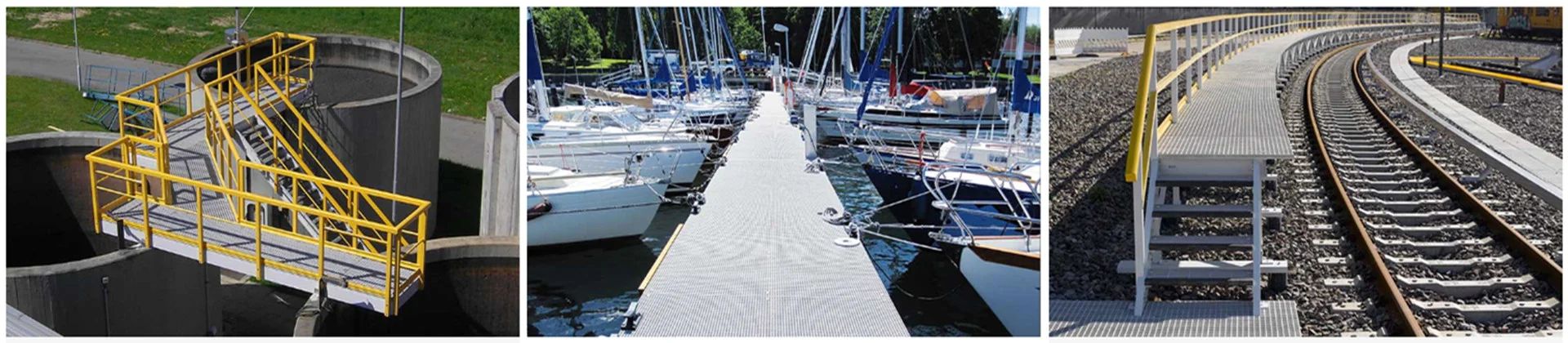
Fiberglass composite grating gives plant engineers and contractors a safer, lighter, and more durable alternative to painted steel in wet or corrosive areas. It resists rust and many chemicals, delivers high slip resistance, and cuts install labor thanks to low weight. That combination often lowers lifecycle cost even when the sticker price is higher. For B2B buyers who need engineering help or custom cutouts, working with a manufacturer–fabricator is the fastest path to a right-sized design. “If I can reduce repaint cycles and trip hazards in one move, that’s a win for reliability and safety,” notes a maintenance lead at a mid-size utility.
Unicomposite context: As an ISO-certified pultrusion manufacturer with in-house fabrication (pultrusion, Pulwound, SMC/BMC, and hand lay-up), Unicomposite supplies standard profiles and custom assemblies used across utilities, wastewater, cooling towers, agriculture, aquaculture, and marine applications.

fiberglass composite grating
How Fiberglass Composite Grating Works (Primer for Specifiers)
Product Types & Surfaces
Molded grating (integral mesh) prioritizes multidirectional strength and impact tolerance, while pultruded grating (bearing bars with mechanical ties) delivers high stiffness in the primary span direction for long, clean spans. Surfaces include grit for traction, meniscus/concave for easy cleaning, and integrated nosings on stairs. Tip: define the surface early—traction needs vary from food plants to substations.
Resin & Performance Options
Match resin to exposure: general-purpose polyesters for mild splash zones, isophthalic or vinyl ester for harsher chemicals, and phenolic for conservative fire/smoke profiles. Add UV inhibitors outdoors. Rule of thumb: near acids or caustics, upgrade to vinyl ester to reduce risk.
Key Specs to Define
Lock down span and deflection criteria, panel thickness, fastener/clip types, edge bands, and interfaces with steel or FRP framing. Ask for published flexural properties and slip-resistance data, and reference relevant test methods in your submittal.
Quick Span/Deflection Examples (Illustrative)
-
Molded 38 mm (1.5 in) panel at 914 mm (36 in) span targeting L/200: allowable live-load deflection ≈ 4.6 mm (0.18 in). If calculated deflection exceeds this, increase thickness or shorten span.
-
Pultruded 51 mm (2.0 in) panel at 1219 mm (48 in) span targeting L/240: allowable deflection ≈ 5.1 mm (0.20 in). Pultruded bearing bars carry longer spans when oriented correctly.
(Always verify with manufacturer span tables and your safety factors.)
Top 10 Applications for Fiberglass Composite Grating
1) Wastewater & Water Treatment Walkways and Trenches
Hydrogen sulfide, constant wetness, and cleaning chemicals punish steel. FRP trench covers and walkways hold traction when wet and avoid rust flaking. Spec tip: favor vinyl ester in headworks and grit surfaces near clarifiers. In a municipal upgrade, repaint-related work orders dropped roughly one-third over 12 months.
2) Chemical Processing Platforms & Spill Areas
Splash/spill zones demand chemical compatibility and easy cleanup. Solid-top (covered) panels help contain drips and direct washdown. Spec tip: orange or yellow panels improve hazard visibility. A blended-tank platform retrofit avoided a multi-day outage over two years due to corrosion-free supports.
3) Cooling Towers (Power & HVAC)
Humid, biocidal environments plus timber or FRP framing make towers ideal for lightweight panels. Solid-top can shield drift below, while molded mesh encourages airflow. Install note: panels hand-carry to decks, reducing crane time; contractors often cite double-digit labor savings versus checker plate.
4) Marine & Ports (Docks, Ramps, Piers)
Salt spray and intermittent immersion corrode steel fast. Non-conductive, non-sparking surfaces add safety for fueling docks. Spec tip: use color for wayfinding and edge awareness on gangways.
5) Food & Beverage Facilities
Frequent washdowns, sanitizers, and hygiene checks call for traction and good drainage. Choose grit on walkways and solid-top under process lines to keep debris out. Spec tip: plan lift-out panels for sanitation days.
6) Oil & Gas (Onshore/Offshore) and Petrochem
Non-sparking, corrosion-resistant catwalks and mezzanines reduce unplanned repairs. Where fire/smoke are critical, consult phenolic options. Spec tip: coordinate earthing/grounding strategy near electrical gear.
7) Mining & Metals (Processing Lines, Sumps)
Abrasive fines and corrosives challenge surfaces and bonds. Use impact pads or thicker molded panels in loading areas. Spec tip: choose dark colors to hide staining and plan periodic grit refresh.
8) Electrical Substations & Utilities
Dielectric safety matters around transformers and switchgear. FRP reduces touch potentials and corrosion near de-icing salts. Spec tip: verify creepage/clearance needs and keep panels clear of grounded structures.
9) Transportation Infrastructure (Rail, Transit, Airports)
Night-shift change-outs favor fast installs: light panels, fewer lifts, less noise. Spec tip: pultruded panels deliver stiff, long spans for platform edges; add contrasting nosings.
10) Agriculture & Aquaculture
Ammonia, salts, and biofouling challenge wood. FRP stays splinter-free and easy to sanitize for hatcheries and greenhouse aisles. Spec tip: light colors improve illumination and inspection visibility.
Selection & Specification Checklist (By Environment)
Corrosion Map & Resin Selection
List fluids, concentrations, temperatures, and exposure type (splash vs. immersion). Map each zone to a resin family and protective veil. “A 30-minute lab check up front can prevent years of field headaches,” a materials engineer notes.
Load/Span & Panel Geometry
Confirm live loads, concentrated loads at service points, and target deflection. Read span tables conservatively; add safety where workers push carts. Decide early whether molded or pultruded geometry fits the longest span.
Surface & Safety Requirements
Define traction, color, and visibility at edges/stair nosings. Plan for housekeeping: grit where slips are likely, meniscus where cleaning is constant. Align with corporate safety standards for walkways and stairs.
Fasteners & Interface Details
Use manufacturer clip kits, hold-downs at corners/mid-span, and corrosion-resistant hardware. Account for thermal movement and seal cut edges to prevent wicking.
Installation & Maintenance Best Practices
Pre-Install Planning
Create a panel layout drawing to minimize field cuts. Stage panels by area and label clearly. Foremen often shave hours by kitting panels per bay.
Cutting, Sealing & Edges
Cut with carbide or diamond blades; deburr and seal with compatible resin. Add edge bands at heavy-traffic or exposed ends. Tip: pre-seal shop cuts to speed field work.
Cleaning & Inspection Schedule
Set a quarterly inspection for fasteners and surface wear. Wash with mild detergent; refresh grit if polishing occurs. Teams that log inspections reduce nuisance slips and rework.
Mini-Case: Trench-Cover Change-Out (First-Person)
“Our wastewater headworks had rusting checker plate over 300 mm trenches. We swapped to FRP covers across three bays in one Saturday shift. Two techs handled panels by hand—no crane, only a small hoist for safety. Cutting for valve stems was straightforward with a diamond blade; we sealed edges as we went. Time-on-tools per bay dropped from about 3.5 hours to just under 2. During the 90-day inspection we re-torqued clips, pressure-washed the grit, and logged zero slip incidents. The biggest surprise? Housekeeping liked how easy it was to lift and clean under the covers.”
Safety Considerations
-
Slip-Resistance Verification: Validate wet/dry traction at handover and re-check during scheduled inspections; document any grit refresh.
-
Edge & Nosing Visibility: Use high-contrast nosings and color-coded panels at hazards.
-
Electrical Areas: Coordinate grounding/earthing around nearby equipment and maintain clearances.
-
Hot-Work Precautions: Control dust when cutting; use extraction and PPE. Follow site hot-work permits.
-
Fire/Smoke Classification: Disclose intended classification (e.g., tunnel, offshore, or general industrial) and confirm resin system meets it.
Cost & ROI: From Capex to Lifecycle Payback
Installed Cost Drivers
Freight, panel yield (cut plans), and on-site labor dominate. Lightweight panels reduce lifting gear and permit smaller crews. Estimator note: pre-cut kits can meaningfully trim install hours.
Simple ROI Calculator (Example)
Assumptions: 40 m² of platforms; steel capex $90/m² + paint $15/m² = $4,200; FRP capex $120/m² = $4,800; repaint cycle every 24 months (steel $1,000/event), FRP zero; labor shutdown cost $1,500/event avoided with FRP once in 3 years.
5-Year TCO:
-
Steel: $4,200 + 2 repaints × ($1,000 + $1,500) = $8,200
-
FRP: $4,800 + $0 + one avoided shutdown $1,500 benefit = $3,300 net advantage
(Use your actual rates; site conditions change outcomes.)
Standards, Compliance & Documentation
Standards & Test Methods at a Glance
-
ASTM D790 (flexural properties)
-
ASTM D2583 (Barcol hardness)
-
ASTM G154 (UV exposure)
-
ASTM E84 (flame spread/smoke developed)
-
OSHA 29 CFR 1910 Subpart D (walking-working surfaces)
-
Slip testing: ANSI A326.3 (DCOF) or ASTM F1679 (COF) as applicable
Material & Test Methods
Request flexural data, Barcol hardness, UV notes, and chemical compatibility statements. Referencing standard procedures keeps reviews objective and shortens approvals.
Submittals & QA — One-Page Checklist
-
Plan/elevation drawings and panel layout
-
Span tables with deflection criteria and load cases
-
Resin certificates and fire/smoke disclosure
-
Surface type (grit/meniscus), color, and nosing details
-
Clip/fastener schedule and interface notes
-
Edge-seal procedure for field cuts
-
Warranty terms and traceability (batch/lot)
Why Partner with a Manufacturer–Fabricator
Sidebar: How Engineering Support Works (Unicomposite)
-
ISO-certified manufacturing: documented QC with batch traceability and resin certs.
-
Design assistance: span checks, resin selection, and panel optimization for yield.
-
Pre-cut kits: labeled by bay/area; reduces field cutting and errors.
-
Multi-process shop: pultrusion, Pulwound, SMC/BMC, hand lay-up for custom assemblies and add-ons.
Working with a single accountable partner reduces change-order risk and compresses lead times.
Conclusion
Across wastewater, chemical plants, towers, ports, food facilities, energy, mining, transit, and ag/aquaculture, composite grating improves safety and durability while shrinking maintenance. Use the checklist here to set resin, surface, and span decisions; plan installation for low-drama turnovers; and document traction, fire/smoke, and QC up front. If you want help pressure-testing loads and layouts—or need pre-cut kits for a fast install—share your environment, span, and safety requirements with an engineering partner like Unicomposite to move from quote to installed with confidence.
Frequently Asked Questions
1) How do I choose between molded and pultruded panels?
Pick molded for multidirectional strength, impact tolerance, and complex cutouts; choose pultruded for long, stiff spans in one primary direction. Verify with span tables.
2) Which resin should I use near acids or caustics?
Vinyl ester is the conservative choice for harsh chemicals. For high fire/smoke scrutiny (offshore, tunnels), consult phenolic options and disclose classification needs early.
3) What surface provides the best slip resistance?
Grit surfaces deliver the highest wet traction; meniscus/concave is easier to clean in hygiene-critical areas. Confirm DCOF/COF with a slip test at handover.
4) Can panels be cut on site?
Yes. Use carbide/diamond blades, control dust, seal all cut edges, and follow hot-work permits. Pre-cut kits reduce field work and errors.
5) What belongs in my submittal?
Include drawings, panel layout, span tables with deflection criteria, resin/fire data, surface specification, fasteners, edge-seal procedure, warranty, and QC traceability.


