 info@unicomposite.com


Introduction
A walk way at an oil dam is the access path used for inspections, valve operation, and spill response around an oil containment basin. It lives in a messy reality of rain, oil film, grit, and cleaning chemicals. OSHA’s walking working surfaces rule sets the expectation clearly: surfaces should be “maintained free of hazards such as … corrosion, leaks, spills, snow, and ice.”
This guide shows how to spec a safer, longer lasting walkway system with a focus on traction, drainage, corrosion resistance, and connection details. It also uses a manufacturer’s lens: Unicomposite is an ISO certificated pultrusion manufacturer producing standard fiberglass profiles and custom composite parts that are commonly used in FRP walkway supports, frames, and handrail systems for industrial sites.

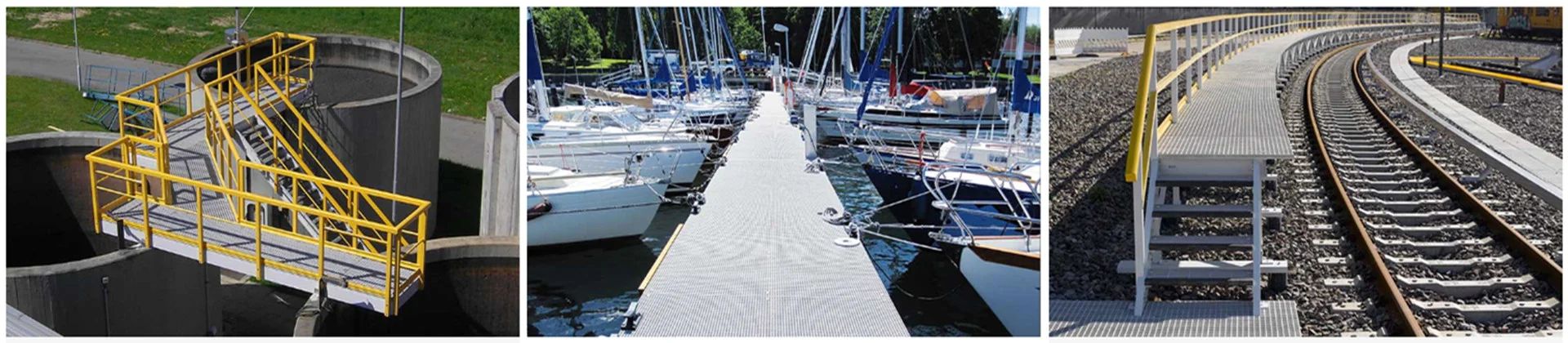
walk way at an oil dam
Field reality, why oil dam walkways become slip hazards
Most problems start small. A leak gets cleaned up, then residue and fine grit pack into the walking surface. The texture still looks aggressive, yet friction drops.
OSHA training material says slips, trips, and falls “cause nearly 700 fatalities per year” in the workplace, citing BLS. In oil containment areas, assume the surface will be contaminated at some point, then design so water and residue drain away and cleaning can restore grip.
What to build for:
- Predictable traction in wet, oily conditions.
- Drainage that limits puddling and hydroplaning.
- Hardware that stays tight and corrosion resistant.
- Clear access and egress during routine checks and emergencies.
Corrosion and exposure, picking materials that reduce rework
Containment zones combine standing water, UV, washdown chemicals, and abrasive grit. Fasteners, clips, and cut edges tend to fail first when corrosion protection is weak.
The NACE IMPACT study estimates the global cost of corrosion at about US$2.5 trillion, around 3.4% of global GDP. That figure is global, yet it mirrors a local truth: repeated recoating and repairs turn “low cost” walkways into recurring projects.
Material selection, in plain terms:
- Coated steel can work, with higher upkeep in wet containment areas.
- Stainless and aluminum can extend life, with higher upfront cost and site specific limits.
- FRP components are often chosen where corrosion resistance and low maintenance are priorities.
Spec tip: make cut edge treatment a line item. For FRP, include cut edge sealing requirements. For metal, require a realistic touch up and inspection plan.
Traction and drainage, choices that keep boots planted
Traction is a system of surface texture, drainage geometry, housekeeping, and lighting. OSHA’s final rule discussion highlights engineering controls like maintaining drainage and providing dry standing places where feasible. That aligns with oil dam access design.
Practical choices buyers can specify:
- Slip resistant surfaces suited to oily wet traffic, paired with cleaning methods that do not polish the texture.
- Open area grating where drainage is critical, balanced with your site’s expectations for tool drop, heel support, and housekeeping.
- High visibility edges and lighting so wet zones and elevation changes are obvious.
Add a simple maintenance note to the spec: remove oily grit before it packs into the surface, and assign an owner.
Copy ready specification and verification checklist
OSHA also requires each walking working surface support the maximum intended load and that employers provide safe access and egress. Put that into your RFQ so bidders price the same target.
Walkway spec sheet
- Environment: oil type, cleaning chemicals, UV, salt exposure, temperature range.
- Loads: maximum intended load, any cart loads, and a deflection feel target.
- Panel and span: panel depth, bearing direction, maximum span, support spacing.
- Surface: traction type, edge marking, and wet oily performance expectations.
- Hardware: clip pattern, fastener material, and corrosion suitability.
- Cut edges: sealing requirement and acceptance criteria for field cuts.
- Guarding: handrail and toe board needs based on your fall exposure.
- Documentation: span tables or engineering calcs, installation instructions, and as built drawings for custom layouts.
If fire documentation is required, ask for ASTM E84 reports that match the supplied resin system and configuration. ASTM E84 reports flame spread and smoke developed index.
Unicomposite’s role typically shows up in pultruded fiberglass profiles for supports and frames, plus custom composite fabrication for irregular basins and retrofit interfaces, which can reduce field cutting and fit up surprises.
Installation and maintenance that preserve traction and stability
Installation quality decides whether the design stays safe. BLS reports a median of 8 days away from work for days away from work cases. Even one slip incident can ripple into staffing, paperwork, and corrective work.
Installation steps that prevent recurring issues:
- Verify support spacing and level before panels arrive.
- Install clips per the supplier pattern, then re check after the first heavy rain and thermal swings.
- Seal cut edges and protect drilled holes per supplier guidance.
- Water test drainage and fix low spots immediately.
Maintenance rhythm:
- Inspect clips and fasteners at corners and transitions.
- Clean when oily grit is visible, not when the surface “looks bad.”
- Re inspect after spill response and after winter storms.
Conclusion
A walk way at an oil dam stays safer when traction, drainage, corrosion resistance, and connection details are specified as one system. Start with your exposure profile, define loads and spans, choose a surface that holds grip when oil and water mix, and verify documentation before purchase.
AMPP notes corrosion control practices have been projected to lower corrosion costs by 15% to 35% on a global basis, a useful reminder that prevention pays. If you want a tighter RFQ package, share basin dimensions, support spacing, traffic type, and environment notes so the spec can be finalized before fabrication.
Before you share this internally, remember the baseline expectation: surfaces should be “maintained free of hazards such as … corrosion, leaks, spills, snow, and ice.”
Frequently Asked Questions
Pick a slip resistant surface intended for wet and oily traffic, then match it to your cleaning method so texture performance is maintained over time. Combine it with drainage focused geometry to reduce pooling.
State the maximum intended load and any cart or tool loads, then require span tables or engineering calculations for your exact support spacing. Add a deflection target so the walkway feels stable underfoot.
Request it when your site or project requirements call for verified surface burning characteristics. Make sure the report matches the resin system and product configuration you will receive.
Uneven supports, skipped clip locations, unsealed cut edges, and poor drainage are the big ones. A short water test and a clip re check after early service conditions prevent many repeat problems.


