 info@unicomposite.com


Introduction
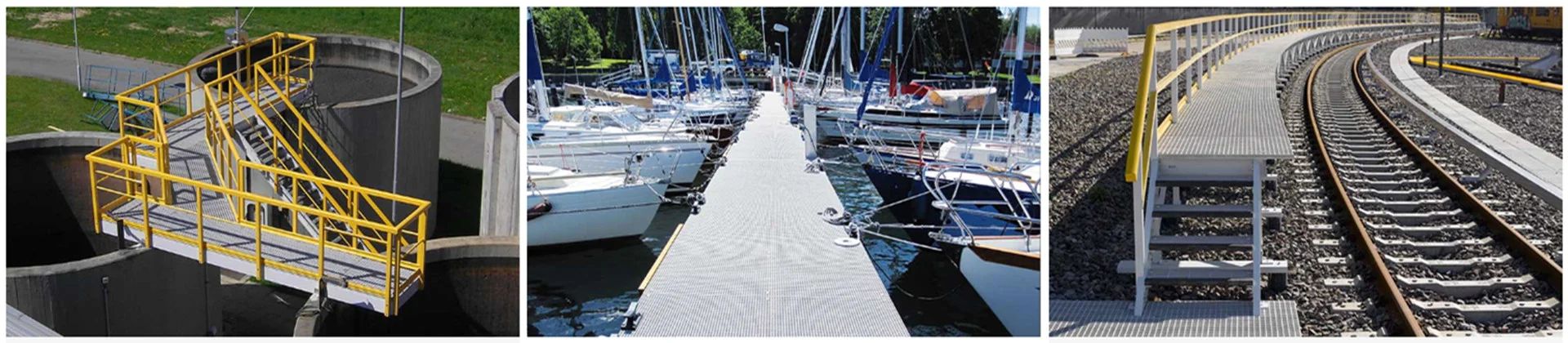
Fiberglass conveyor grating is a corrosion-resistant, non-conductive walking surface used on and around conveyor systems—access platforms, crossovers, mezzanines, pit covers, and drip trays. Plant engineers, maintenance managers, and OEMs choose it to improve uptime and safety while simplifying life-cycle maintenance. Compared with painted steel, it typically weighs much less, resists common chemicals and washdown solutions, and avoids recurring recoating cycles.
Why this guide helps: it explains where FRP grating fits around conveyors, how to specify it correctly, which standards matter, and what affects cost and lead time.
About the manufacturer (context only): Unicomposite is an ISO-certified pultrusion manufacturer with in-house fabrication. Their team supports resin selection, panel mapping, precision cut-outs, and QA documentation—useful when an installation must fit first time during a tight shutdown.

fiberglass conveyor grating
Understanding FRP Grating for Conveyor Areas
What it is & how it’s built
-
Pultruded FRP grating uses parallel bearing bars tied with cross-rods. It delivers high directional stiffness—great for longer spans and higher loads.
-
Molded FRP grating is a one-piece, bi-directional grid that spreads loads both ways and is friendly to field cut-outs.
Top surfaces:
-
Grit top for maximum slip resistance, especially in wet or oily zones.
-
Meniscus for easier cleaning where traction demands are moderate.
-
Covered (plate) top to stop fines and liquids from dropping through—popular over washdown and drip areas.
A surface veil adds UV resistance and cosmetics for outdoor decks.
Where it’s used around conveyors
-
Walkways and inspection platforms beside the belt
-
Crossover bridges at transfer points
-
Mezzanines and access around MCCs/VFDs (benefits from non-conductivity)
-
Sumps, pits, and washdown zones (corrosion/wet traction)
-
Marine and aggregate handling (UV stability and abrasion resistance)
Benefits vs. Steel/Aluminum: The Business Case
Safety, uptime, ergonomics
-
Non-conductive deck reduces shock risk near electrics.
-
Slip-resistant grit surfaces improve footing during sanitation.
-
Lightweight handling: typical FRP is roughly one-quarter the weight of steel by volume (range varies by profile), enabling two-person lifts where steel might require rigging—shortening shutdown windows.
First-person field note (anonymized supervisor): “On a weekend shutdown we swapped a 12-panel steel deck for FRP using two techs—no hoist. Rigging time dropped by about 90 minutes, and we reopened the line before shift change.”
Corrosion, cleaning, and total cost
-
No rust, delamination of paint, or undercutting at nicks.
-
Compatible with many CIP/washdown chemicals when resin is matched to exposure.
-
TCO upside: savings often accrue from avoided recoating, fewer corrosion repairs, and faster change-outs of modular panels.
Compliance viewpoint
-
Traction, railings, and walking-working surface rules still apply. FRP helps address traction and electrical isolation; choose flame-retardant grades where required by your AHJ.
How to Specify: A Step-by-Step Framework
Step 1 — Loads, spans, deflection
-
Define uniform and concentrated loads; consider impact at transfer points.
-
Many facilities plan for ~L/200 deflection at service load for comfort; critical access may need stiffer targets.
-
Use supplier span tables with appropriate safety factors.
Illustrative span/deflection snapshot (verify with manufacturer tables):
| Panel Height (pultruded) | Mesh/Open | Service Load Example | Max Span at ~L/200* |
|---|---|---|---|
| 25 mm (1 in) | 38×38 mm | 2.4 kPa (50 psf) | ~915 mm (36 in) |
| 38 mm (1.5 in) | 38×38 mm | 4.8 kPa (100 psf) | ~1065–1220 mm (42–48 in) |
| 51 mm (2 in) | 38×38 mm | 7.2 kPa (150 psf) | ~1370–1525 mm (54–60 in) |
*Values are typical, not certified; confirm with the exact profile, resin, and top surface.
Step 2 — Environment & resin selection
-
Isophthalic polyester: general industrial corrosion resistance at attractive cost.
-
Vinyl ester: harsher chemicals/higher temps; preferred for wastewater/chemical duty.
-
Add UV inhibitors outdoors and flame-retardant formulations if required.
Step 3 — Surface & mesh
-
Choose grit grade for traction vs. cleanability.
-
Covered tops over washdown or sensitive areas to contain drips and fines.
-
Heel-safe meshes or smaller openings where tools/fasteners can drop.
Step 4 — Profiles, thickness, color coding
-
Bearing bar height/web thickness drives stiffness.
-
Standard panel sizes speed procurement.
-
Use colors for visual management (e.g., yellow hazard edges, green walkways).
-
Edge banding stiffens cut perimeters and improves finish.
Step 5 — Hardware & interfaces
-
Specify M-clips/saddle clips matched to bar geometry; corner + intermediate clip spacing reduces rattle and creep.
-
Plan transitions to steel/aluminum with compatible fasteners; allow thermal expansion (FRP expands more than steel).
Standards & Codes At-a-Glance
-
Mechanical properties: ASTM D790 (flexural), related methods per supplier datasheets
-
Fire performance: ASTM E84 (flame spread/smoke development) or local equivalents
-
UV/weathering: ASTM G154/G155 (accelerated exposure)
-
Slip resistance: ANSI/NFSI B101.1/B101.3 or equivalent wet traction testing
-
Walking-working surfaces: OSHA 29 CFR 1910 (guardrails, toe-boards, openings)
Ask for certificates of conformance and current test reports aligned to your AHJ.
Installation & Maintenance Best Practices
Fast, clean installs
-
Survey steelwork for true spans and bearing lengths.
-
Pre-fit and mark cuts; seal exposed fibers per supplier guidance.
-
Clip layout: corners + mid-span supports; torque to spec and re-check after 24–48 hours.
-
Expansion gaps and slotted holes for long runs or temperature swings.
Maintenance playbook
-
Quarterly visual inspections of grit wear and clip tightness.
-
Re-grit kits for high-traffic zones when needed.
-
Panel-level replacement avoids tearing up whole decks.
-
Simple washdown; verify chemical compatibility with supplier.
Selection Guide by Use Case
Food & beverage washdown lines
-
Covered tops, fine grit, smooth drainage; resins compatible with alkaline cleaners/sanitizers.
-
Light-colored tops help QC spot residue.
Wastewater & chemical plants
-
Vinyl ester, corrosion-class hardware, and covered plates over channels; high-visibility edge striping.
Marine & outdoor aggregate handling
-
UV-stabilized surfaces with durable grit; plan for sand abrasion and dust loading.
Costing, Lead Times & Procurement
What drives price
Resin chemistry, panel height/thickness, surface (grit/covered), mesh/opening, machining, and quantity. Higher stiffness and specialty resins cost more.
Lead times & MOQs
Stock profiles/sizes ship faster; custom heights or colors add batching/tooling. Keeping a spare panel or two per line de-risks outages.
RFQ checklist (copy/paste)
-
Loads (uniform/point/impact) and target deflection; spans & supports
-
Environment, temperature, chemicals; UV and flame-retardant needs
-
Surface (grit/meniscus/covered), mesh opening, color & edge banding
-
Panel map/CAD with cut-outs and hardware type/spacing
-
QA docs: CoC, mechanical/fire/slip test reports, UV/weathering summary; ISO certificate scope
Anonymized Case Study
Problem: A coastal food processor’s painted-steel crossover above a washdown conveyor needed annual recoating, and slip incidents increased during sanitation.
Solution: Switched to vinyl-ester molded grating with covered top and fine grit, supplied as pre-cut, edge-banded panels with M-clips.
Outcome: Changeover completed within one shift; sanitation slip complaints dropped, and no recoating was required in the first two years.
Crew note: Manual handling only—no crane time booked.
Expert Perspective
“If you’re fighting rust scale or nuisance shocks near conveyors, non-conductive, corrosion-proof decking is the fastest reliability upgrade with the least operational disruption.”
— Reliability engineer, anonymized audit note
Why Partner with a Pultrusion Manufacturer
Applying Unicomposite’s capabilities (value-add, not a pitch): ISO-certified pultrusion, molded grating supply, and custom fabrication (panel mapping, precision cut-outs, edge banding). Experience across electricity, wastewater, cooling towers, agriculture, aquaculture, marine, and OEM applications translates directly to conveyor walkways and crossovers. Collaborate on spans, loads, and environment; receive engineered panel maps, resin guidance, and QA documentation. Pilot a small section before site-wide rollout.
Assumptions & Limitations
-
Weight and span values shown are typical ranges; always verify with project-specific span tables and safety factors.
-
Chemical compatibility depends on concentration, temperature, and exposure time; confirm with the resin supplier.
-
Fire/smoke requirements are jurisdiction-specific; align with your AHJ and request matching documentation.
Conclusion
When corrosion, sanitation, electrical safety, and uptime matter, fiberglass conveyor grating is a proven choice. Use the framework here—loads/spans, resin & environment, surface/mesh, hardware—to build a spec that meets compliance and reduces life-cycle work. If you’d like a second set of eyes, share drawings and an RFQ checklist; Unicomposite’s engineering team can review spans, propose a panel map, and line up QA docs for your shutdown window.
Frequently Asked Questions
1) Will FRP grating handle forklift traffic?
Standard pedestrian grating is not designed for forklifts. Where vehicles cross, specify heavy-duty pultruded profiles or separate steel tread plates/bridges engineered for wheel loads.
2) Which resin should I choose for CIP washdown?
Isophthalic polyester works for many alkaline cleaners; for stronger acids/solvents or higher temperatures, step up to vinyl ester. Share chemical SDS and temperatures to get a precise recommendation.
3) How slippery is FRP when wet?
Grit-top FRP is designed for wet traction and can be validated via recognized slip-test methods (e.g., ANSI/NFSI B101 series). Request test data that mirrors your conditions (wet, oily, sugary).
4) Can I cut FRP panels on site?
Yes—use appropriate blades, capture dust, and seal cut edges per supplier instructions to maintain corrosion resistance and appearance.
5) What documentation should I expect with delivery?
Certificates of conformance, mechanical/fire/slip test reports as applicable, UV/weathering summaries for outdoor use, and the supplier’s ISO certificate scope.


